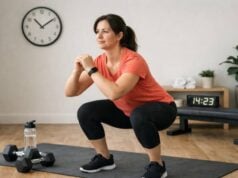
Starting cardio for weight loss does not need to mean punishing workouts, daily exhaustion, or trying to “burn off” every meal. A good beginner plan is simple: move often enough to raise your weekly activity, work at an effort you can repeat, and progress slowly so your body can adapt.
This plan is built for true beginners and people getting back into exercise after time off. It shows you how many days to do cardio, how hard to work, which sessions to use, and how to progress without burning out. You will also see how to make the plan more joint-friendly, how to tell whether the intensity is right, and how to support fat loss between workouts.
Table of Contents
- What This Plan Is Designed to Do
- How Hard Beginner Cardio Should Feel
- Easy Weekly Cardio Schedule
- The Cardio Workouts to Use
- How to Progress Over Six Weeks
- Safety, Recovery and Common Mistakes
- How to Support Fat Loss Between Workouts
What This Plan Is Designed to Do
A beginner cardio workout plan for weight loss should do three things well.
First, it should help you increase calorie burn in a way you can actually sustain. Cardio can support fat loss, but exercise alone usually produces modest scale changes unless it is paired with eating habits that keep you in a reasonable calorie deficit. That is why the best plan is not the hardest plan. It is the one you can repeat for weeks.
Second, it should improve your fitness. When your heart, lungs, legs, and general stamina improve, everyday movement gets easier. Stairs feel less punishing. Walks stop feeling like chores. You recover faster between sessions. That matters because better fitness makes it easier to stay active enough to keep losing weight.
Third, it should lower the “cost” of getting started. Many beginners quit because the first week is too intense. They get very sore, feel discouraged, or assume they have to do high-intensity intervals right away. In reality, most people do better when they begin with moderate effort, repeatable sessions, and a clear weekly structure.
This plan is built around that idea. It emphasizes:
- three main cardio sessions per week
- one optional easy movement day
- mostly moderate intensity
- gradual increases in time before dramatic increases in intensity
- enough recovery to keep you consistent
That means you are not trying to max out your effort. You are trying to build momentum.
It also helps to set realistic expectations from the beginning. In the first few weeks, the biggest wins may be consistency, better energy, improved mood, easier breathing during exercise, and more daily movement. Weight loss may show up quickly, slowly, or unevenly because the scale also reflects water, digestion, and normal day-to-day fluctuation. That does not mean the plan is not working.
A good beginner cardio routine is less about “shocking” the body and more about teaching it a new normal. When you string together manageable weeks, the plan starts compounding: more activity, better fitness, more confidence, and a better chance of sticking with the habits long enough to lose weight.
How Hard Beginner Cardio Should Feel
Most beginners do not need complicated heart-rate formulas. The easiest way to gauge effort is the talk test and a simple rating of perceived exertion, or RPE.
For most of your sessions, aim for moderate intensity. That usually feels like an RPE of about 4 to 6 out of 10:
- your breathing is faster, but controlled
- you feel warm after a few minutes
- you can still speak in short sentences
- you are working, but not struggling
That is the sweet spot for most beginner weight-loss cardio. It is hard enough to be useful and easy enough to repeat.
An easy effort feels more like a 2 to 3 out of 10. You can carry on a full conversation, and the session feels restorative rather than challenging. Easy movement is great for warm-ups, cooldowns, optional walking days, and recovery.
A hard effort is about 7 to 8 out of 10. Talking becomes difficult, and you need breaks sooner. This has a place later, but beginners usually do not need much of it in the first few weeks.
One common mistake is thinking the session only “counts” if you are drenched in sweat or out of breath. That is not true. You do not need to chase a precise fat-burning heart rate zone or turn every workout into a maximal effort test. For beginners, consistent moderate work usually beats heroic but inconsistent sessions.
Another mistake is starting with very aggressive intervals because they sound efficient. There is nothing wrong with intervals, but beginners usually benefit more from shorter, gentler changes in pace rather than all-out efforts. If you are curious about the trade-offs, the real decision is less dramatic than the usual HIIT vs steady-state cardio debate makes it sound. For weight loss beginners, both can help, but the best option is the one you can recover from and repeat.
A good self-check during a workout is this:
- Too easy: you never feel warmer, breathing barely changes, and the pace could continue for a very long time without effort
- About right: breathing is deeper, effort is noticeable, but you stay in control
- Too hard: you need frequent unplanned breaks, form gets sloppy, or you dread repeating the workout tomorrow
If you are restarting after a long break, carrying a lot of extra body weight, or dealing with low fitness, it is smart to begin one notch easier than you think you should. You can always progress next week. Starting a bit too hard is what usually interrupts momentum.
Easy Weekly Cardio Schedule
The schedule below gives you three structured cardio days, two lighter days, and enough recovery to stay consistent. It is designed for Weeks 1 and 2, when the goal is to build the habit and finish each week wanting to continue.
| Day | Session | Time | Effort | Main Goal |
|---|---|---|---|---|
| Monday | Steady cardio | 20 to 25 minutes | Easy to moderate | Build routine and base fitness |
| Tuesday | Easy walking or rest | 15 to 30 minutes optional | Easy | Recovery and daily movement |
| Wednesday | Gentle intervals | 18 to 24 minutes | Mostly moderate | Add variety without overdoing intensity |
| Thursday | Rest or mobility | Optional 10 to 20 minutes | Very easy | Recover and reduce soreness |
| Friday | Steady cardio | 25 to 30 minutes | Moderate | Increase weekly volume |
| Saturday | Optional long easy walk | 30 to 45 minutes | Easy | Extra calorie burn without heavy fatigue |
| Sunday | Rest | — | — | Recover for the next week |
This gives most beginners about 63 to 99 minutes of formal cardio, plus an optional easy day. That is a strong starting point even if it is below full public-health targets. You do not need to begin at the final goal.
Here is how to use the schedule:
- Treat Monday, Wednesday, and Friday as your “anchor” sessions.
- Use Tuesday and Saturday to keep moving, not to prove toughness.
- Keep Thursday and Sunday flexible. If your legs feel heavy, rest. If you feel good, do a short easy walk.
- Repeat the same weekly pattern for at least two weeks before making it harder.
For many beginners, walking is the best first choice because it is accessible, familiar, and easy to pace. If that is your main mode, this structure pairs well with a broader approach to walking for weight loss. If you prefer a bike, elliptical, or pool, the same weekly schedule still works.
Over time, you will want to move closer to broader weekly cardio targets for weight loss, but the fastest route there is not forcing long sessions immediately. It is building repeatable weeks first.
If your schedule is busy, do not scrap the plan. Shorten the session and keep the day. A 20-minute workout done consistently beats a “perfect” 45-minute workout that keeps getting postponed.
The Cardio Workouts to Use
You do not need a huge menu of workouts. A small set of repeatable sessions is easier to follow and easier to progress.
Workout 1: Steady beginner cardio
This is your baseline session.
- Start with 5 easy minutes.
- Move into 15 to 20 minutes at a steady moderate pace.
- Finish with 3 to 5 easy minutes.
Good options include brisk walking, treadmill walking, cycling, elliptical training, rowing at a comfortable pace, or swimming easy laps. The best choice is usually the one that feels sustainable and does not aggravate your joints.
Workout 2: Gentle beginner intervals
This is not sprint training. It is a beginner-friendly way to break up the session and make cardio feel less monotonous.
- Warm up for 5 minutes easy.
- Alternate 1 minute brisk and 2 minutes easy for 5 to 7 rounds.
- Cool down for 3 to 5 minutes.
Your “brisk” minutes should still feel controlled. You are not gasping. Think “noticeably harder than easy walking,” not “all out.”
Workout 3: Slightly longer easy session
This is often your Friday or Saturday option.
- Warm up for 5 minutes.
- Move at easy-to-moderate effort for 20 to 35 minutes.
- Cool down for 3 to 5 minutes.
This session helps build endurance and weekly calorie burn without a lot of recovery cost.
Low-impact swaps
If walking outside feels rough on your joints, switch the workout mode instead of quitting the plan. Many people do better with cycling, elliptical work, or water-based cardio, especially early on. If you are comparing options, a guide to the best cardio machine for weight loss can help you choose based on comfort, not hype.
Home exercisers can also rotate step-ups, marching, shadow boxing, basic dance cardio, or simple follow-along sessions. If impact bothers you, use low-impact home cardio rather than trying to force jumping drills your body is not ready for.
The main rule is simple: pick modes you can do often enough to improve. The “best” workout on paper is not better than the second-best workout you actually enjoy and repeat.
How to Progress Over Six Weeks
Beginners get in trouble when they try to progress everything at once. They add time, speed, hills, and extra days in the same week. A better strategy is to change one variable at a time.
| Weeks | Main Goal | What to Increase | What to Keep Stable |
|---|---|---|---|
| 1 and 2 | Learn the routine | Nothing yet | Keep effort moderate and recover well |
| 3 and 4 | Add a little volume | 5 minutes to one or two sessions | Do not make the sessions much harder |
| 5 and 6 | Reach a stronger weekly total | Add 5 more minutes or 1 to 2 interval rounds | Keep at least 1 full rest day |
By the end of Week 6, many beginners can handle something like:
- one 25 to 30 minute steady session
- one 25 to 30 minute interval-style session
- one 30 to 40 minute steady session
- one optional 30 to 45 minute easy walk
That can bring you near or past 150 minutes of weekly movement, depending on the version you use.
A few progression rules make this easier:
- Add time before intensity. Most beginners should extend workouts slightly before trying to make them much harder.
- Keep one easy day truly easy. Recovery supports progress.
- Repeat a week if needed. Progress is not ruined by staying at the same level for an extra week.
- Use soreness as information, not as a goal. Mild soreness is normal. Lingering fatigue is a sign to hold steady.
- Do less during stressful weeks. A “maintenance week” is better than quitting.
You can also use a simple readiness test: if you finish your current week feeling capable, not wrecked, you are probably ready for a small increase. If you are dragging, losing motivation, or skipping sessions, your current dose may already be enough for now.
Progress does not have to look dramatic. An extra five minutes per session, or one additional walking day, adds up fast across a month. That kind of progression is boring in the best possible way: safe, repeatable, and effective.
Safety, Recovery and Common Mistakes
The safest beginner cardio plan is the one that respects recovery. Weight loss does not improve when every session leaves you wiped out, inflamed, or too sore to move the next day.
Start each workout with a short warm-up. Three to five easy minutes is enough for many people, though some feel better with a little longer. Gradually increasing pace helps your breathing, joints, and muscles adjust. If you need extra help, a simple guide to warm-up, mobility, and recovery can make your sessions feel smoother.
Good recovery habits matter just as much:
- wear shoes that match the activity
- use surfaces that feel forgiving when possible
- keep at least one full rest day each week
- sleep enough to recover
- drink water and eat normally instead of “reward restricting”
If you have knee pain, ankle pain, significant obesity, or a history of impact-related issues, use lower-impact options sooner rather than later. Swapping to cycling, elliptical work, or other joint-friendly cardio options is often smarter than trying to push through discomfort.
Watch for a few common beginner mistakes.
Doing too much too soon
This is the biggest one. Starting with six days a week sounds motivated, but it often leads to missed workouts by Week 2. A smaller plan you can sustain is stronger than an ambitious plan that collapses.
Turning every session into a test
Some days should feel ordinary. Not every workout needs a personal best.
Using cardio to “erase” overeating
That mindset usually leads to frustration. Cardio supports fat loss, but it is not a perfect compensation tool.
Ignoring warning signs
Stop exercising and seek medical advice promptly if you get chest pain, fainting, unusual shortness of breath, or symptoms that feel out of proportion to the workout. If you have a heart, lung, or metabolic condition, or are returning after surgery, injury, or prolonged inactivity, it is wise to check with a clinician before starting.
The goal is not just to finish today’s session. It is to still be training next month.
How to Support Fat Loss Between Workouts
A cardio plan works better when the rest of your week supports it. The most important piece is energy balance. Weight loss still depends mainly on spending less energy than you take in over time, which is why a sustainable calorie deficit matters more than chasing the most exhausting workout.
That does not mean you need to make your diet extreme. It means your food intake should not quietly cancel out the activity you are adding. Beginners often overestimate calories burned and underestimate how quickly post-workout hunger can creep in.
A few habits help:
- build meals around protein and high-volume foods
- keep workout-day treats from becoming automatic rewards
- eat enough to recover, but do not assume exercise means unlimited intake
- stay hydrated, especially if you are walking outdoors in heat
- keep an eye on weekend habits, where many deficits disappear
It also helps to remember that fat loss is not driven only by workouts. Daily movement outside the gym matters too. Walking more, standing more, and generally reducing sedentary time can raise total daily energy expenditure through NEAT, which is often a bigger consistency win than adding another brutal cardio session.
That is why this plan includes easy walking and optional movement days. They help you avoid the all-or-nothing trap where “exercise” only counts if it feels formal or intense.
Try this simple support checklist:
- hit your planned cardio days
- add easy walking when you can
- keep meals structured rather than random
- sleep enough to recover and manage hunger
- track progress with more than the scale, including stamina, pace, time, and how your clothes fit
The best beginner cardio workout plan for weight loss is not just a weekly schedule. It is a routine that fits into your real life, improves your fitness, and helps you stay active enough for long enough that fat loss can happen.
References
- WHO guidelines on physical activity and sedentary behaviour 2020 (Guideline)
- Adult Activity: An Overview 2023 (Guideline)
- Aerobic Exercise and Weight Loss in Adults: A Systematic Review and Dose-Response Meta-Analysis 2024 (Systematic Review)
- Resistance training effectiveness on body composition and body weight outcomes in individuals with overweight and obesity across the lifespan: A systematic review and meta-analysis 2022 (Systematic Review)
- Obesity Management in Adults: A Review 2023 (Review)
Disclaimer
This article is for general educational purposes only and is not a substitute for personal medical advice, diagnosis, or treatment. If you have heart, lung, joint, or metabolic conditions, are pregnant, take medications that affect exercise tolerance, or have symptoms such as chest pain, dizziness, or unusual shortness of breath, speak with a qualified clinician before starting a new cardio program.
If this plan helped you, consider sharing it on Facebook, X, or your preferred platform so someone else can start with a realistic, beginner-friendly approach.