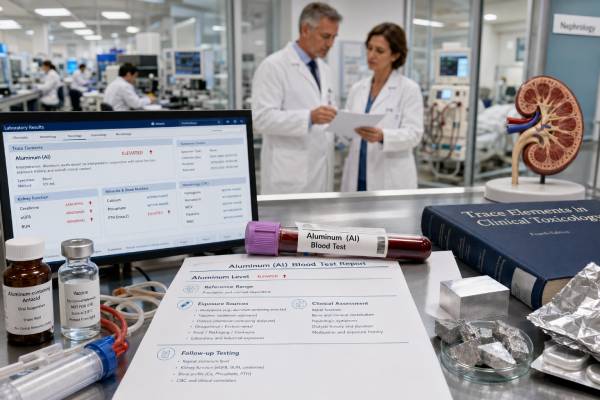
An aluminum blood test measures the amount of aluminum circulating in the blood, usually in serum or plasma. Doctors use it most often when a person has kidney failure, receives dialysis, has long-term exposure to aluminum-containing products, works around aluminum dust or fumes, or has symptoms that could fit aluminum toxicity. A small amount of aluminum exposure is common because aluminum is naturally present in the environment and appears in some foods, medicines, industrial materials, and medical products. In most healthy people, the gut absorbs only a small fraction and the kidneys remove absorbed aluminum efficiently. Risk rises when exposure is heavy, prolonged, injected into the bloodstream, or paired with reduced kidney function. A single result needs careful interpretation because collection contamination, recent medication use, dialysis timing, and kidney function can all change the number.
- An aluminum blood test usually measures aluminum in serum or plasma, reported in micrograms per liter (µg/L or mcg/L).
- A common reference range is about 0–9 µg/L for environmental exposure; some labs use a higher acceptable range for people on dialysis.
- High aluminum is most concerning in chronic kidney disease, dialysis, parenteral nutrition, high-dose antacid or phosphate binder use, and industrial exposure.
- Aluminum toxicity can affect the brain, bones, muscles, and red blood cells, especially when levels stay elevated.
- A royal blue-top trace-metal tube and metal-free handling are important because aluminum contamination can falsely raise the result.
- Urgent medical care is needed for confusion, seizures, severe weakness, or a high aluminum result in someone with kidney failure or dialysis treatment.
Table of Contents
- What the Aluminum Blood Test Measures
- Normal Range and High Aluminum Results
- When Doctors Order an Aluminum Blood Test
- Common Aluminum Exposure Sources
- Toxicity Symptoms and Health Risks
- Follow-Up Testing and Next Steps
- Reducing Exposure and Avoiding False Results
What the Aluminum Blood Test Measures
An aluminum blood test measures the concentration of aluminum in the liquid part of blood. Most clinical labs report it as aluminum in serum or plasma, usually in µg/L. The test is different from routine blood chemistry tests because aluminum is a trace metal, so collection and handling must prevent outside contamination.
Aluminum is not known to have a useful biological role in the human body. It is common in soil, water, food additives, cookware, industrial dust, some medicines, and some medical products. Ordinary dietary exposure rarely causes toxicity in people with normal kidney function. The intestine absorbs only a small amount of swallowed aluminum, and the kidneys remove much of what reaches the bloodstream.
Blood aluminum becomes more useful when exposure is unusual or the body cannot clear aluminum well. This is why the test is most often used in people with kidney failure, dialysis exposure, parenteral nutrition, heavy occupational exposure, or symptoms that suggest possible accumulation.
The test is usually performed by inductively coupled plasma mass spectrometry, often shortened to ICP-MS. This method can detect very small amounts of metals. Because aluminum is so common in the environment, the sample must be collected in the right tube, transferred into a certified metal-free container, and processed carefully.
A blood aluminum result can help answer several questions:
- Is there evidence of recent or ongoing aluminum exposure?
- Is a person with kidney disease accumulating aluminum?
- Could aluminum be contributing to bone pain, fractures, anemia, muscle weakness, or neurologic symptoms?
- Is a dialysis water, dialysate, medication, or nutritional product exposure being controlled?
- Does a high result need repeat testing because of possible contamination?
Blood aluminum is sometimes ordered as part of a broader heavy metals blood test panel, but it is often ordered separately because aluminum has specific collection requirements and a different risk profile than lead, mercury, arsenic, or cadmium.
Serum, plasma, whole blood, and urine are not the same
Most aluminum blood tests use serum or plasma. Serum is the liquid portion of blood after clotting. Plasma is the liquid portion collected with an anticoagulant. Whole blood includes cells plus plasma, and it is less commonly used for routine aluminum assessment.
Urine aluminum may be used in some exposure evaluations, especially when kidney function is normal and clinicians want to understand recent elimination. In people with kidney failure, urine testing may be less useful because urine output and kidney clearance are reduced.
A deferoxamine challenge test may be used by specialists in selected dialysis patients. Deferoxamine is a chelating medicine that can pull aluminum from body stores into the blood. A rise in aluminum after deferoxamine can suggest a larger total body burden. This is not a do-it-yourself test and should be supervised by clinicians experienced in kidney disease or medical toxicology.
Normal Range and High Aluminum Results
A common adult reference range for serum or plasma aluminum is about 0–9 µg/L for environmental exposure. Some laboratories list a dialysis-specific reference value, such as less than 40 µg/L, because people on dialysis may have different background risks and monitoring thresholds. Always use the reference interval printed on the actual lab report because methods and specimen types vary.
Aluminum results are usually reported in µg/L or mcg/L. These units mean the same thing. A result of 10 µg/L equals 10 mcg/L.
| Result pattern | Common meaning | What usually happens next |
|---|---|---|
| 0–9 µg/L | Often within the environmental exposure range for people without dialysis | Usually no action unless symptoms or exposure history are concerning |
| 10–39 µg/L | Mild elevation or possible recent exposure, depending on the lab and patient | Review collection method, kidney function, medicines, workplace exposure, and repeat if needed |
| 40–59 µg/L | More concerning, especially in dialysis or kidney disease | Assess dialysis water, medications, nutrition products, bone and blood markers, and possible contamination |
| 60–99 µg/L | Suggests significant accumulation or exposure in many clinical settings | Prompt medical review; specialists may consider further testing or treatment planning |
| 100 µg/L or higher | Often treated as a high-risk range, especially with symptoms or kidney failure | Urgent clinical evaluation, exposure removal, and specialist-guided management |
These ranges are practical guideposts, not universal diagnostic cutoffs. A person with severe kidney disease and bone pain may need attention at a lower level than a healthy person with a mildly elevated result after a suspected contaminated draw. A single mildly high result should not automatically be labeled “toxicity.”
High aluminum means aluminum in the blood is above the expected range for the person’s clinical situation. It does not always prove poisoning. The most common reasons for an unexpected high result are recent exposure, reduced kidney clearance, dialysis-related exposure, aluminum-containing medication use, parenteral nutrition exposure, occupational exposure, or specimen contamination.
Why kidney function changes the meaning
The kidneys are central to aluminum clearance. When kidney function is normal, absorbed aluminum is usually removed in urine. When kidney function is poor, aluminum can remain in the body longer and deposit in tissues, including bone. This is why a mildly or moderately high aluminum level is more concerning in someone with chronic kidney disease than in someone with healthy kidneys.
Doctors often interpret aluminum with kidney markers such as creatinine and eGFR. A low eGFR suggests reduced filtration capacity, which can make aluminum accumulation more likely. When kidney status is unclear, an eGFR blood test or kidney panel may help put the aluminum result in context.
False high results can happen
Aluminum is easy to contaminate. Regular blood collection tubes, non-certified containers, dust, needles, stoppers, or processing equipment can add trace aluminum to the sample. A result that does not fit the person’s exposure history or symptoms may need repeat testing with strict trace-metal collection.
A falsely high result is especially possible when the wrong tube was used. Aluminum testing usually requires a royal blue-top trace-metal tube, often with EDTA or no additive depending on the lab. The sample should be transferred promptly to a certified metal-free plastic transport tube.
When Doctors Order an Aluminum Blood Test
Doctors order aluminum testing when the result could change care. It is not a routine screening test for most people, and it is not used to diagnose vague fatigue, everyday brain fog, or general wellness concerns by itself.
The test is most useful when there is a clear exposure source, impaired clearance, or a symptom pattern that fits aluminum accumulation.
Common reasons include:
- Chronic kidney disease, especially advanced kidney failure
- Hemodialysis or peritoneal dialysis monitoring
- Past or current use of aluminum-containing phosphate binders
- Long-term or high-dose aluminum-containing antacid use
- Long-term sucralfate use, especially with kidney disease
- Parenteral nutrition, especially in premature infants or people with impaired kidney function
- Burn care or serious illness involving repeated intravenous products
- Industrial exposure to aluminum dust, fumes, or powders
- Unexplained bone pain, fractures, muscle weakness, or microcytic anemia in a higher-risk patient
- Neurologic changes in a dialysis patient, such as speech problems, confusion, myoclonus, or seizures
In kidney disease, aluminum testing is often interpreted with a renal function panel, calcium, phosphorus, parathyroid hormone, alkaline phosphatase, vitamin D status, and markers of anemia. Aluminum-related bone disease can overlap with other mineral and bone disorders of chronic kidney disease, so one number rarely gives the full answer.
Dialysis patients
Dialysis patients are a special group because aluminum exposure can occur through dialysate, dialysis water, and medications, while kidney clearance remains poor. Modern dialysis water standards and reduced use of aluminum-containing phosphate binders have made severe aluminum toxicity less common than it was decades ago, but monitoring still matters when symptoms, historical exposure, or local water concerns exist.
Possible dialysis-related clues include bone pain, fractures, proximal muscle weakness, anemia that does not respond as expected to iron and erythropoiesis-stimulating therapy, or new neurologic symptoms. In this setting, a high aluminum result should prompt review of dialysate water quality, medications, supplements, nutrition, and previous chelation history.
Infants and parenteral nutrition
Premature infants and infants with kidney problems are more vulnerable to aluminum from parenteral nutrition because their kidneys are immature or impaired and because calcium and phosphate solutions can contribute aluminum. Adults receiving long-term parenteral nutrition can also be monitored when risk is high, although modern product labeling and manufacturing controls have reduced exposure.
Workplace exposure
Workers may inhale aluminum-containing dust or fumes in industries such as aluminum production, welding, metal grinding, powder handling, abrasive blasting, and some manufacturing settings. Blood testing may be part of an occupational evaluation, but air monitoring, workplace controls, respirator assessment, and symptom review are often just as important.
Common Aluminum Exposure Sources
Aluminum exposure is common, but toxicity is uncommon in people with normal kidneys and ordinary daily exposure. The source, dose, route, duration, and kidney function determine risk.
Food is the main everyday source for most people. Aluminum can be naturally present in plant foods and may also come from food additives in some processed foods. Drinking water usually contributes less than food, although local water chemistry and treatment methods can affect levels.
Cookware is a frequent concern. Aluminum pots, pans, and foil can transfer small amounts of aluminum into food, especially acidic or salty foods cooked or stored for long periods. For most healthy adults, this is not a typical cause of toxic blood levels. People with advanced kidney disease or documented high aluminum may be advised to reduce avoidable exposure more carefully.
Medicines can be much more important than cookware. Aluminum hydroxide and related compounds have been used in antacids and phosphate binders. Sucralfate contains aluminum. Buffered aspirin and some antidiarrheal products may also contain aluminum compounds. Risk rises with high doses, long duration, kidney disease, and citrate-containing products that increase absorption.
Medical products matter because injected or infused aluminum bypasses the gut. Parenteral nutrition is the classic example. Some intravenous products, especially certain calcium and phosphate components used in nutrition solutions, can contain aluminum. Regulatory limits and labeling exist because prolonged parenteral exposure can be toxic, especially in premature infants and people with impaired kidney function.
Workplace exposure usually involves inhalation. Fine aluminum dust or fumes can irritate the eyes, skin, and respiratory tract. Some occupational settings may also involve other metals or chemicals, so a targeted occupational health evaluation is better than assuming aluminum is the only issue.
| Source | Typical concern level | Higher-risk situations |
|---|---|---|
| Food and drinking water | Usually low for healthy adults | Very high local contamination, unusual diets, kidney failure |
| Cookware and foil | Usually low | Frequent acidic cooking or storage, advanced kidney disease, documented high aluminum |
| Antacids and phosphate binders | Can be significant with repeated use | High doses, long-term use, citrate use, chronic kidney disease |
| Sucralfate | Usually monitored only in higher-risk patients | Kidney failure, prolonged therapy, other aluminum sources |
| Dialysis water or dialysate | Important in dialysis safety | Water treatment failure, historical exposure, unexplained dialysis symptoms |
| Parenteral nutrition | Important because exposure is intravenous | Premature infants, impaired kidneys, long-term therapy |
| Industrial dust or fumes | Depends on air levels and controls | Poor ventilation, inadequate respiratory protection, long-term exposure |
A useful exposure history includes medicines, supplements, dialysis details, kidney function, work tasks, hobbies, water source, parenteral nutrition, and recent hospital care. For anemia or abnormal blood cell findings, aluminum is only one possible explanation; a complete blood count helps show whether the pattern fits microcytic anemia, another anemia type, infection, inflammation, or a separate blood disorder.
Toxicity Symptoms and Health Risks
Aluminum toxicity usually develops when exposure is heavy or prolonged and clearance is reduced. Severe toxicity is uncommon in healthy people from normal food, water, or cookware exposure. It is more strongly associated with kidney failure, dialysis exposure, aluminum-containing medicines, and intravenous sources.
The organs most often discussed are the brain, bones, muscles, and blood-forming system.
Neurologic toxicity can include speech changes, confusion, memory and thinking problems, gait disturbance, myoclonic jerks, seizures, or coma. In dialysis patients, historical aluminum accumulation was linked to dialysis encephalopathy, also called dialysis dementia. This syndrome is much less common now, but new neurologic symptoms in someone on dialysis still require urgent medical evaluation.
Bone toxicity can include bone pain, osteomalacia, poor mineralization, fractures, and muscle weakness. Aluminum can interfere with bone remodeling and mineral metabolism, especially in people with kidney failure. It may also complicate the interpretation of parathyroid hormone and bone turnover patterns.
Blood effects can include microcytic anemia, meaning red blood cells are smaller than expected. This can resemble iron deficiency on a CBC, so clinicians usually compare aluminum with iron studies, inflammation markers, kidney disease status, and treatment response. A pattern such as low hemoglobin, low MCV, and poor response to typical anemia treatment may prompt a wider review. Articles on low hemoglobin and related anemia markers can help explain the blood count side, but aluminum testing is reserved for specific risk settings.
Muscle effects can include proximal myopathy, which often feels like trouble rising from a chair, climbing stairs, or lifting the arms overhead. Muscle weakness from aluminum toxicity is not specific; many conditions can cause similar symptoms, including vitamin D deficiency, thyroid disease, inflammatory muscle disease, nerve disorders, electrolyte problems, and deconditioning.
Aluminum and Alzheimer’s disease
Aluminum is often mentioned online in connection with Alzheimer’s disease, but an aluminum blood test is not an Alzheimer’s screening or diagnostic test. A high aluminum result should be evaluated for exposure and toxicity risk, especially kidney-related risk, but it does not diagnose dementia. Memory symptoms deserve a standard medical evaluation that reviews medications, sleep, mood, thyroid function, vitamin B12, neurologic disease, vascular risk, and other common causes.
When symptoms need urgent care
Seek urgent medical care for seizures, severe confusion, sudden speech problems, fainting, severe weakness, chest pain, shortness of breath, or coma. A dialysis patient with new neurologic symptoms should be evaluated promptly even before aluminum results return, because infection, stroke, electrolyte imbalance, uremia, medication effects, and other emergencies can look similar.
Follow-Up Testing and Next Steps
Follow-up depends on how high the result is, whether symptoms are present, and whether kidney function is normal. The first step is usually to confirm that the result is real. If the level is mildly elevated and does not match the clinical picture, repeat testing with correct trace-metal collection may be more useful than making major treatment decisions.
A clinician may review:
- The exact specimen type: serum, plasma, whole blood, or urine
- The collection tube and whether a certified metal-free tube was used
- Recent antacid, sucralfate, buffered aspirin, or phosphate binder use
- Dialysis schedule, dialysate water quality, and dialysis unit monitoring records
- Parenteral nutrition ingredients and duration
- Kidney function, urine output, creatinine, and eGFR
- Bone pain, fracture history, muscle weakness, neurologic symptoms, and anemia
- Workplace air exposure, personal protective equipment, and other metals
Additional tests may include calcium, phosphorus, alkaline phosphatase, parathyroid hormone, vitamin D, iron studies, ferritin, transferrin saturation, CBC, kidney markers, and urine aluminum. In selected dialysis patients, specialists may use deferoxamine challenge testing or bone biopsy, but these are not routine first steps.
Treatment starts with stopping or reducing the exposure source. That may mean changing antacids, avoiding aluminum-containing phosphate binders, reviewing sucralfate in kidney disease, correcting dialysis water problems, adjusting parenteral nutrition sources, or improving workplace controls.
Chelation therapy should only be used under medical supervision. Deferoxamine can help remove aluminum in selected patients, especially those with significant accumulation and kidney failure, but it has risks and timing issues. It can worsen some symptoms if used incorrectly, and it may need coordination with dialysis. Over-the-counter “detox” products are not appropriate treatment for aluminum toxicity and can delay real care.
Questions to ask after a high result
A high aluminum result is easier to interpret when the visit focuses on practical details. Useful questions include:
- Was the blood drawn in a royal blue-top trace-metal tube?
- Was serum or plasma transferred to a certified metal-free container?
- What reference range does this laboratory use?
- Is my kidney function normal?
- Could any current medicines contain aluminum?
- Do I need repeat testing before acting on this result?
- If I receive dialysis, have dialysate and water aluminum levels been reviewed?
- Do my symptoms fit aluminum toxicity or another condition?
- Should a nephrologist, occupational medicine clinician, or medical toxicologist be involved?
For people with occupational exposure, blood testing alone does not replace workplace assessment. Air sampling, ventilation, dust control, respiratory protection, hygiene practices, and review of other metal exposures may be needed.
Reducing Exposure and Avoiding False Results
Most people do not need an aluminum-free lifestyle. The aim is to reduce meaningful exposure when risk is real, not to fear every trace source. Aluminum is widely present in the environment, and the body can handle small absorbed amounts when kidney function is healthy.
People with advanced kidney disease should ask a clinician before using aluminum-containing antacids, phosphate binders, or sucralfate. Many alternatives exist, but the best choice depends on kidney function, phosphorus level, calcium balance, stomach symptoms, drug interactions, and other medical issues.
People receiving dialysis should follow their nephrology team’s monitoring plan. Dialysis centers have water treatment systems and safety checks designed to prevent aluminum exposure. A patient with unexplained bone pain, fractures, anemia, or neurologic symptoms should tell the dialysis team rather than trying to manage exposure alone.
People receiving parenteral nutrition should not stop nutrition therapy because of aluminum concerns. Instead, the care team can review product labeling, kidney function, duration of therapy, and whether aluminum monitoring is appropriate. Premature infants and people with impaired kidneys deserve special attention because they can accumulate aluminum more easily.
Workers should use the controls required for their job setting. This may include local exhaust ventilation, dust suppression, protective clothing, washing before meals, avoiding take-home dust, and fit-tested respiratory protection when indicated. Workplace aluminum exposure may occur with other hazards, so occupational health guidance should be specific to the task and material.
To reduce the chance of a false high aluminum test:
- Use the exact tube and container required by the performing laboratory.
- Tell the draw site that the test is for trace metals.
- Avoid collecting through equipment or containers not approved for trace-metal testing.
- Separate and transfer the sample as instructed.
- Repeat unexpected results before making major decisions when the clinical picture is not urgent.
- Bring a full medication and supplement list to the follow-up visit.
Food choices usually do not need extreme restriction. People who want to reduce avoidable exposure can limit frequent use of aluminum-containing antacids unless prescribed, avoid storing acidic foods in aluminum foil for long periods, vary processed foods, and follow local drinking water advisories if any exist. These steps are most relevant for people with kidney disease, documented high aluminum, or a clear exposure source.
References
- 071548: Aluminum, Serum or Plasma | Labcorp 2026 (Laboratory Test Directory)
- Toxicological Profile for Aluminum 2008 (Toxicological Profile)
- CDC – NIOSH Pocket Guide to Chemical Hazards – Aluminum 2019 (Official Reference)
- 21 CFR 201.323 — Aluminum in large and small volume parenterals used in total parenteral nutrition. 2026 (Regulation)
Disclaimer
An aluminum blood test should be interpreted by a qualified healthcare professional, especially in people with kidney disease, dialysis treatment, parenteral nutrition, or neurologic symptoms. Do not start chelation therapy, stop prescribed kidney medicines, or change dialysis-related care based only on a lab result. Seek urgent care for seizures, severe confusion, sudden speech changes, or serious weakness.