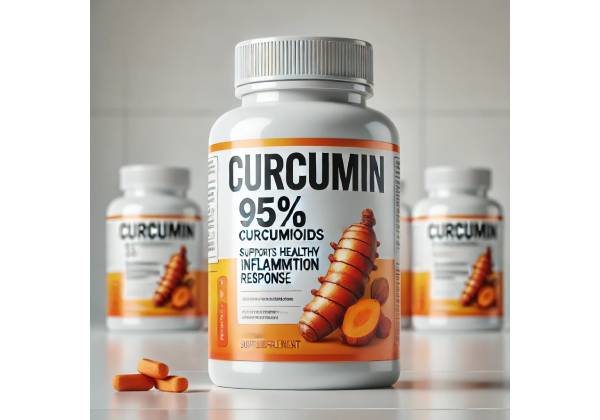
Curcumin sits in an unusual place in the supplement world. It is familiar enough to sound simple, yet complicated enough to confuse even careful shoppers. Most people know it as the bright yellow compound in turmeric, but the real questions are more practical: can it meaningfully help mood, focus, memory, or stress-related mental fatigue, and if so, in what form and at what dose?
Those questions matter because curcumin is often discussed as if it were one uniform product. It is not. Different extracts absorb very differently, and that changes both the likely benefit and the safety picture. The research is also uneven. Some findings are genuinely encouraging, especially around mood-related symptoms and inflammation-linked brain stress, while other claims still run ahead of the evidence.
This guide explains what curcumin may actually help, how it may work, who might consider it, how dosage and bioavailability shape results, and what to know about side effects, medication interactions, and realistic expectations.
Table of Contents
- What the Research Really Supports
- Why Absorption Changes Everything
- How Curcumin May Help
- Who May Want to Try It
- Dosage, Forms, and Timing
- Safety, Side Effects, and Interactions
What the Research Really Supports
Curcumin is often marketed as a supplement for almost everything: brain fog, depression, anxiety, memory, inflammation, aging, and even long-term cognitive protection. The more useful question is not whether it has biological activity, because it clearly does. The real question is where human evidence is strongest.
At this point, the most credible case for curcumin in mental wellness is as an adjunct, not a stand-alone fix. Some clinical trials and meta-analyses suggest it may help reduce depressive symptoms, and there is also early evidence that it may modestly ease anxiety in some groups. That does not make it equivalent to psychotherapy, antidepressants, or a formal anxiety treatment plan. It means it may offer added support for certain people, especially when inflammation, chronic illness, or persistent stress seem to be part of the picture.
The evidence for cognition is more mixed. A few studies show improvements in working memory, attention, processing speed, or mood under mental stress, particularly with more absorbable formulations. Other trials show little or no benefit, especially when standard, poorly absorbed curcumin was used. That pattern is important. It suggests the question is not just “does curcumin work,” but “which curcumin, for whom, and for what specific outcome?”
Here is the most practical way to read the research:
- Curcumin looks more promising for mood-related symptoms than for broad, reliable cognitive enhancement.
- It may be more useful when low-grade inflammation, metabolic strain, or chronic health stress are part of the clinical picture.
- It has not been proven to prevent dementia, reverse major cognitive decline, or reliably sharpen memory in healthy adults across the board.
- Results vary substantially between studies because formulations, doses, and participant groups vary substantially.
This is why curcumin belongs in the same cautious conversation as other focus supplements and so-called brain boosters. A supplement can be biologically interesting without being universally effective. Good marketing tends to flatten that nuance; good decision-making depends on keeping it.
For readers who want a realistic bottom line, curcumin is best understood as a potentially useful, evidence-informed option for selected mental wellness goals, especially as part of a broader plan. It is not a miracle compound, but it is not empty hype either. The value lies in matching the supplement to the right problem, the right formulation, and the right expectations.
Why Absorption Changes Everything
Curcumin has one issue that shapes almost every practical discussion about it: poor oral bioavailability. In plain terms, the body does not absorb standard curcumin very efficiently. Much of it passes through the digestive tract or is rapidly metabolized before it can meaningfully circulate.
This is the reason curcumin can seem both impressive and disappointing at the same time. In laboratory studies, it affects inflammatory pathways, oxidative stress, and signaling systems linked to brain health. But in real people, those effects depend heavily on whether enough of the compound actually reaches the bloodstream and tissues.
That has led manufacturers to develop “enhanced” formulations. These may pair curcumin with piperine from black pepper, bind it to phospholipids, use nanoparticles, micelles, or other delivery systems, or otherwise change the way it is absorbed. This is not just a technical detail. It may be the difference between a product that does almost nothing and one that produces a noticeable effect.
It also means milligrams on the label can be misleading. One capsule with a lower dose of a highly bioavailable curcumin may have a stronger real-world effect than a much larger dose of a standard powder. That is why two people can both say they “tried curcumin” and have completely different experiences.
A few practical implications follow from that:
- Formulation matters as much as dose.
- Studies using enhanced curcumin products cannot be assumed to apply to every generic turmeric capsule.
- Improved absorption may increase benefit, but it can also change the side-effect and interaction profile.
- Product comparison is difficult unless the brand clearly states the type of extract and delivery system.
This absorption problem also helps explain why curcumin is often discussed alongside broader strategies that reduce inflammation through multiple pathways, including sleep, movement, and food quality. A supplement can support the process, but it works best when it sits inside a larger anti-inflammatory pattern rather than trying to carry the whole burden alone. For many people, diet changes may matter just as much as a capsule, especially if the goal is mood stability or fewer brain-fog days. That is why the broader evidence around an anti-inflammatory eating pattern for depression often belongs in the same conversation.
In short, absorption is not a side note. It is one of the main reasons curcumin research looks inconsistent and one of the main reasons shoppers should read labels with more care than usual.
How Curcumin May Help
Curcumin draws interest in brain health because it appears to act on several processes that matter for mental function rather than just one. The main themes are inflammation, oxidative stress, neuroplasticity, and, possibly, communication between the gut, immune system, and brain.
Inflammation is the easiest place to start. Not all depression, anxiety, or mental fatigue is driven by inflammation, but in many people it is part of the background load. Chronic stress, poor sleep, metabolic dysfunction, obesity, and certain long-term health conditions can all push inflammatory signaling higher. Curcumin appears to influence pathways involved in that process, including NF-kappa B and various cytokines. That is one reason researchers are studying it as an adjunct in mood-related conditions rather than as a classic stimulant or sedative.
Oxidative stress is another likely piece. The brain uses a great deal of energy and is especially vulnerable to oxidative damage over time. Curcumin’s antioxidant effects may help explain why it is being studied in neuroprotection and cognitive aging, although human results remain more modest and less consistent than many headlines imply.
There is also interest in curcumin’s relationship with neuroplasticity-related signaling. Some studies suggest it may support brain-derived neurotrophic factor, or BDNF, and other pathways tied to neuronal resilience. That does not mean it “builds new brain cells” in any clinically proven sense, but it does support the broader idea that curcumin may be more relevant to brain maintenance and stress adaptation than to quick mental stimulation.
The gut-brain angle is worth mentioning too. Curcumin may affect gut inflammation and microbial balance in ways that indirectly influence mood and cognition. This does not mean everyone with low mood needs a gut protocol, but it helps explain why curcumin sometimes shows more benefit in people with metabolic or inflammatory strain than in healthy people chasing sharper focus.
A useful way to think about its potential mental effects is this:
- less inflammatory drag
- less oxidative stress
- steadier mood signaling
- possible support for memory and attention in selected groups
- better odds of benefit when the body is under chronic physiological strain
That pattern lines up with what many people describe subjectively: not a dramatic surge in energy, but a gradual sense of less mental heaviness, less reactivity, or slightly better clarity over time. When it helps, the change is often indirect. Someone sleeps a bit better, hurts a bit less, feels a bit less inflamed, and thinks a bit more clearly as a result.
This is also why curcumin may interest people dealing with the broader overlap between inflammation, brain fog, mood, and fatigue. The supplement does not solve that whole cluster by itself, but its mechanisms fit that pattern more plausibly than many products sold for “mental energy.”
Who May Want to Try It
Curcumin may be worth considering for adults who want adjunctive support for mood or brain function and have a reason to suspect inflammation is part of the story. That might include people with low mood tied to chronic stress, metabolic issues, chronic pain, inflammatory health conditions, or a general pattern of feeling mentally slowed when their physical health is off.
It may be a reasonable option for people who:
- feel mentally dull, heavy, or less resilient during periods of higher inflammatory stress
- have mild depressive symptoms and want to discuss an add-on strategy with a clinician
- notice that pain, poor diet, poor sleep, and mood tend to worsen together
- are interested in long-term brain health support but understand that the evidence is still evolving
- want something non-sedating and non-stimulating rather than a supplement that pushes alertness
It may be less useful for people whose main goal is instant focus, fast energy, or a dramatic memory boost. Curcumin is not usually the right tool for that. Even when it helps cognition, the effect tends to be gradual and more likely tied to reduced inflammation, better stress handling, or better overall metabolic health than to a sharp pharmacologic “kick.”
It is also important to be clear about what curcumin should not replace. It should not be used as a substitute for care in major depression, active suicidal thinking, panic disorder, bipolar symptoms, psychosis, or substance withdrawal. If mood symptoms are severe, persistent, or functionally impairing, a supplement should sit behind proper evaluation, not in front of it. The same applies when someone is trying to understand whether they are dealing with burnout, chronic stress, or a depressive disorder. In that situation, a more direct guide to depression symptoms and coping may be more useful than jumping straight to supplements.
Curcumin may make the most sense when the goal is support rather than rescue. That means using it as part of a plan that also covers food quality, sleep consistency, exercise, alcohol reduction, and treatment of any underlying condition. It fits best when the user can name a specific target, such as “I want to see whether this helps low mood linked to inflammation,” rather than “I want this to fix everything.”
A focused trial also works better than vague long-term use. If you decide to try curcumin, it helps to track one or two outcomes for six to eight weeks, such as mood steadiness, mental fatigue, or pain-related brain fog. That approach makes it easier to tell whether the supplement is actually helping or just becoming another pill in the routine.
Dosage, Forms, and Timing
Curcumin dosing is harder to simplify than it first appears. Research trials use very different products, and a dose only makes sense in the context of its formulation. An 80 mg dose of a highly absorbable curcumin is not comparable to 80 mg of standard curcumin powder. This is one of the main reasons shoppers should avoid comparing products by milligrams alone.
In human studies, doses have ranged from relatively low amounts of enhanced curcumin to several grams per day of conventional preparations. In practical supplement use, many products land somewhere in these broad patterns:
- standard extracts: often several hundred milligrams to 1,500 mg or more daily
- enhanced or bioavailable extracts: often lower milligram amounts because absorption is higher
- split dosing: common when the total daily dose is moderate or high
- short-to-medium trial periods: often 4 to 12 weeks in studies, sometimes longer
For real-world use, the smartest approach is usually conservative:
- Choose a standardized product from a company that clearly explains the formulation.
- Start with the manufacturer’s lower suggested dose, especially if the product includes an absorption enhancer.
- Take it with food unless the label says otherwise.
- Track one or two outcomes rather than relying on a vague impression.
- Reassess after six to eight weeks.
Timing is flexible. Curcumin is not strongly stimulating for most people, so it can often be taken in the morning or with lunch. Some people prefer split dosing with breakfast and dinner, especially if the product is taken for joint pain or general inflammatory support throughout the day. If it causes stomach upset, taking it with a meal is usually the better choice.
Form matters a great deal. You may see labels describing curcumin as phytosomal, micellar, liposomal, nano-curcumin, or combined with piperine. These are not all equivalent, but they are all trying to solve the same absorption problem. A cleaner label is usually a better sign than a flashy one. Helpful details include:
- the amount of curcuminoids, not just turmeric powder
- the type of delivery system used
- whether piperine is included
- third-party testing or quality certification
- a clear serving size without proprietary blends
Curcumin is also often stacked with omega-3s, magnesium, or other anti-inflammatory supplements. That is not automatically wrong, but combination products make it harder to tell what is working. If your goal is a fair self-test, a single-ingredient curcumin product is easier to judge than a blend.
Safety, Side Effects, and Interactions
Curcumin is generally better tolerated than many people expect, but “generally tolerated” is not the same as universally safe. The most common side effects are gastrointestinal and dose-related. These may include nausea, reflux, stomach upset, diarrhea, constipation, or a general sense that the supplement does not sit well. For many people, lowering the dose or taking it with food reduces these problems. For others, it simply is not a good fit.
A more important safety point is that the risk picture may differ between standard curcumin and highly bioavailable formulations. Improved absorption can be useful, but it may also increase the chance of side effects or interactions. Recent official safety guidance has also drawn attention to reported liver injury in some users of bioavailable curcumin products. These cases appear uncommon, but they matter. If someone develops unusual fatigue, dark urine, yellowing of the skin or eyes, poor appetite, or persistent nausea after starting curcumin, the supplement should be stopped and medical advice should be sought.
Medication interactions deserve the same level of caution. Curcumin is not a good candidate for casual use if you take multiple prescriptions and have not reviewed them with a clinician or pharmacist. Extra care is sensible for people taking:
- anticoagulants or antiplatelet medicines
- diabetes medications
- immunosuppressive therapies
- some chemotherapy agents
- other supplements or herbs with overlapping effects
Products that include piperine deserve special attention because piperine can alter the handling of other substances in the body. That may be helpful for curcumin absorption, but it can also complicate a medication routine.
Curcumin may also be a poor fit during pregnancy, and breastfeeding safety at supplement-level doses remains too uncertain for confident use. People with significant liver disease should be especially cautious. The same is true for anyone with unexplained fatigue, jaundice, or recent abnormal liver tests.
From a mental health perspective, one final caution matters: curcumin should not be used to self-manage severe depression, withdrawal symptoms, or major mood instability. A supplement can support recovery, but it should never delay needed care. This matters even more when mood symptoms coexist with heavy drinking, sleep disruption, or memory problems, because those patterns often need a broader evaluation than a supplement can provide. That is especially true when mental symptoms are tangled up with alcohol-related effects on sleep, memory, and anxiety.
The most balanced view is simple. Curcumin can be a useful supplement for the right person, in the right form, at the right dose, for the right reason. Safe use depends less on enthusiasm and more on product quality, medication awareness, and a willingness to stop if the body is giving the wrong signals.
References
- Turmeric: Usefulness and Safety | NCCIH 2026 (Official Fact Sheet)
- Bioavailability of Oral Curcumin in Systematic Reviews: A Methodological Study 2024 (Methodological Review)
- Curcumin and Cognitive Function: A Systematic Review of the Effects of Curcumin on Adults With and Without Neurocognitive Disorders 2024 (Systematic Review)
- Potential therapeutic benefits of curcumin in depression or anxiety induced by chronic diseases: a systematic review of mechanistic and clinical evidence 2025 (Systematic Review)
- Targeting cognitive aging with curcumin supplementation: A systematic review and meta-analysis 2025 (Systematic Review and Meta-Analysis)
Disclaimer
This article is for educational purposes only and is not medical advice. Curcumin supplements may interact with medications and may not be appropriate during pregnancy, with liver disease, or in people managing complex medical or psychiatric conditions. Do not use curcumin as a substitute for professional care for major depression, severe anxiety, substance withdrawal, or significant cognitive symptoms. A clinician or pharmacist can help you decide whether a specific curcumin product is appropriate for you.
If this article helped you, please consider sharing it on Facebook, X (formerly Twitter), or any other platform you prefer.