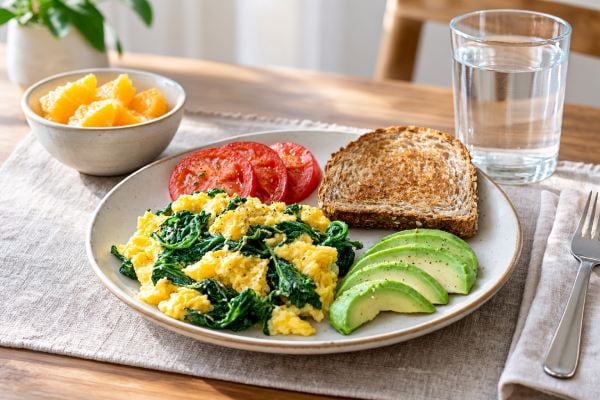
A blood-pressure-friendly breakfast does not need to be complicated. The most useful pattern is simple: build the meal around minimally processed foods that provide potassium, fiber, protein, and unsaturated fat while keeping sodium and added sugar modest. Oats with fruit and yogurt, whole-grain toast with avocado and an egg, or a bean-and-vegetable breakfast bowl can all fit. What matters most is the overall pattern and the portions you repeat most days, not a single “superfood.”
For people with high blood pressure, breakfast is also a practical place to cut hidden sodium. Many common morning foods—breakfast sandwiches, bacon, sausage, instant flavored oatmeal, pastries, and some restaurant meals—can use up a large share of the day’s sodium before lunch. A better breakfast can help you follow a DASH-style eating pattern, increase potassium-rich foods, and make the rest of the day easier to manage.
Table of Contents
- What Makes a Breakfast Blood-Pressure Friendly?
- Simple Breakfasts That Work
- How to Lower Sodium at Breakfast Without Eating Bland Food
- Potassium, Fiber, and Protein: The Breakfast Trio to Prioritize
- Breakfast Foods to Limit When Blood Pressure Is High
- Three Easy Breakfast Formulas to Repeat
- When Breakfast Changes Are Not Enough
What Makes a Breakfast Blood-Pressure Friendly?
The best breakfast for high blood pressure combines several helpful features at once. It is usually rich in plants, moderate in calories, low in heavily processed foods, and built from ingredients you can recognize. This is consistent with a DASH-style eating pattern, which emphasizes fruits, vegetables, whole grains, beans, nuts, low-fat dairy, and lower sodium intake.
The main nutrients to think about are potassium, fiber, protein, calcium, magnesium, and unsaturated fat. Potassium helps counterbalance some of sodium’s effects on blood pressure, while fiber supports fullness and cardiometabolic health. Protein makes breakfast more satisfying and can reduce the urge to graze on salty snacks later.
Sodium deserves special attention. The American Heart Association commonly recommends no more than 2,300 mg sodium per day and an ideal limit of about 1,500 mg for most adults, especially people with high blood pressure. You do not have to hit 1,500 mg perfectly every day to benefit from lowering sodium, but breakfast can make a large difference. A homemade bowl of plain oatmeal with berries may contain only a small amount of sodium, while a fast-food breakfast sandwich can contain several hundred milligrams or more.
A good practical target is to make most breakfasts from two or three whole-food components: a high-fiber carbohydrate, a protein source, and a fruit or vegetable. Add a small amount of healthy fat if needed for flavor and fullness. This formula is flexible enough for sweet or savory breakfasts and works with many cultural food patterns.
Simple Breakfasts That Work
You do not need special recipes to make breakfast more supportive of blood pressure. Start with meals you can assemble in five to ten minutes.
- Oatmeal with berries and yogurt: Cook plain rolled or steel-cut oats, then add berries, plain Greek yogurt, cinnamon, and a tablespoon of chopped walnuts or chia seeds. Choose unsweetened oats rather than flavored packets, which often contain more sodium and added sugar.
- Whole-grain toast with avocado and egg: Use one or two slices of whole-grain bread, mashed avocado, tomato, and a poached or boiled egg. Compare bread labels because sodium varies widely between brands.
- Plain yogurt bowl: Combine plain yogurt or kefir with fruit, oats, nuts, and seeds. This provides protein, calcium, potassium, and fiber without relying on salty breakfast meats.
- Bean-and-vegetable bowl: Warm low-sodium black beans with tomatoes, spinach, peppers, and leftover brown rice or quinoa. Beans make breakfast especially filling and are a useful alternative to sausage.
- Smoothie plus something chewable: Blend milk or unsweetened fortified plant milk with berries, spinach, oats, and plain yogurt. Pair it with a small handful of nuts or whole-grain toast so the meal is more satisfying.
If you prefer savory food, vegetables are especially useful because breakfast is often the meal where people eat the fewest. Leftover roasted vegetables, spinach, tomatoes, mushrooms, and peppers can go into eggs, beans, wraps, or grain bowls. For more potassium-rich options throughout the day, see fruits that support healthy blood pressure.
How to Lower Sodium at Breakfast Without Eating Bland Food
The biggest sodium reductions often come from changing packaged and restaurant foods rather than removing the salt shaker. Breakfast meats are a common example. Bacon, sausage, ham, and deli meat can be high in sodium even when the portion looks small. A breakfast sandwich can also combine salty meat, cheese, bread, and sauce in one meal.
Use flavor from ingredients that do not depend on sodium: cinnamon, berries, lemon, lime, garlic, onions, smoked paprika, cumin, black pepper, fresh herbs, and chili flakes. For savory oats or eggs, herbs and spices can make a lower-sodium meal taste complete.
Read the Nutrition Facts panel instead of relying on front-of-package claims. “Reduced sodium” means the food has less sodium than the regular version, but it may still be relatively salty. Compare similar products and choose the one with less sodium per serving. Bread, tortillas, cereal, cottage cheese, plant-based breakfast patties, and sauces are worth checking because sodium can vary dramatically between brands.
Canned beans are convenient and can fit well. Choose no-salt-added or low-sodium versions when possible. Draining and rinsing regular canned beans can remove some sodium. If you use cheese, treat it as a flavor accent rather than the main protein source.
People taking blood-pressure medicine should not automatically switch to potassium-based salt substitutes. These products can be helpful for some people but may be unsafe with kidney disease or medications that raise potassium. The safety of potassium-chloride salt substitutes depends on your health and medication list.
Potassium, Fiber, and Protein: The Breakfast Trio to Prioritize
Potassium-rich foods can be especially useful when they replace salty, highly processed foods. Good breakfast choices include bananas, oranges, kiwi, berries, avocado, potatoes, beans, yogurt, milk, leafy greens, and tomatoes. Whole foods are generally preferable to potassium supplements unless a clinician has recommended supplementation.
Fiber helps in a different way. Oats, barley, whole-grain bread, beans, fruit, chia, flax, and nuts increase fullness and support heart health. A high-fiber breakfast is also less likely to cause the quick hunger that can follow a pastry or sugary cereal. If your current diet is low in fiber, increase it gradually and drink enough fluid to reduce bloating or constipation.
Protein matters because a breakfast based only on refined carbohydrate may not keep you full. For many adults, roughly 20–30 g of protein at breakfast is a practical range, although individual needs vary. Examples include Greek yogurt, cottage cheese, eggs, tofu, beans, milk, or unsweetened soy milk. You do not need to force a high-protein diet; the goal is simply to include a meaningful protein source.
A useful plate-style approach is to combine one fiber-rich base with one protein and at least one produce item. Oatmeal + yogurt + berries works. Whole-grain toast + eggs + tomato works. Beans + vegetables + avocado works. The meal becomes even more blood-pressure friendly when you keep packaged sauces and salty meats small.
Breakfast Foods to Limit When Blood Pressure Is High
No single breakfast food is forbidden, but some choices make sodium, calories, and added sugar add up quickly. The foods most worth limiting are those you eat frequently and in large portions.
Processed breakfast meats are a major target because they can be high in sodium and saturated fat. Fast-food breakfast sandwiches and biscuits often combine several sodium sources. Pastries, donuts, and oversized muffins may contain less sodium than bacon but are usually high in refined flour, added sugar, and calories while providing little potassium or fiber. Sugary cereals can be easy to overeat and may leave you hungry soon after.
Also watch drinks. Sweet coffee beverages, energy drinks, and large juices can add substantial sugar. Caffeine can temporarily raise blood pressure in some people, especially those who are sensitive or who do not use it regularly. If you notice a consistent rise after coffee, learn more about caffeine and blood pressure and consider checking your response with home readings.
Restaurant breakfast deserves its own caution. Portions are often large and nutrition information can reveal surprisingly high sodium totals. A simple order—plain oatmeal, fruit, eggs without added cheese or meat, or yogurt—can be easier to control. If you eat restaurant breakfast often, choosing lower-sodium meals there may matter more than making tiny sodium cuts in foods you eat only occasionally.
Three Easy Breakfast Formulas to Repeat
A repeatable formula is more useful than an elaborate recipe you make once. The following combinations are easy to scale up or down.
| Breakfast | Simple build | Why it works |
|---|---|---|
| Oat bowl | Plain oats + berries + plain yogurt + walnuts | Fiber, potassium, protein, unsaturated fat |
| Savory toast | Whole-grain toast + avocado + egg + tomato | Whole grains, produce, satisfying protein |
| Bean bowl | Low-sodium beans + vegetables + whole grain + salsa with modest sodium | Fiber, plant protein, potassium, high volume |
Batch preparation makes these options easier. Cook oats or a grain for several days, portion washed fruit, hard-boil eggs, or keep rinsed canned beans ready in the refrigerator. You can also prepare overnight oats using plain oats, milk, yogurt, chia seeds, and fruit.
For a person who needs more calories—such as someone very active—add nuts, seeds, nut butter, an extra slice of whole-grain bread, or a larger grain portion. For someone trying to reduce calories, keep energy-dense toppings measured and use more fruit or vegetables for volume.
The key is consistency. One “perfect” breakfast cannot cancel a high-sodium diet, and one restaurant breakfast does not ruin an otherwise strong eating pattern. Aim for a breakfast you can repeat most days while your overall diet also includes vegetables, fruits, legumes, whole grains, and minimally processed protein foods.
When Breakfast Changes Are Not Enough
Diet can lower blood pressure, but it does not replace medical evaluation or prescribed treatment. If your readings are repeatedly high, use a validated upper-arm monitor and measure correctly. Sit quietly for about five minutes, keep your feet on the floor, support your arm at heart level, and avoid caffeine, smoking, and exercise shortly before the reading. If you are unsure whether your technique is accurate, review how to choose and use a home blood pressure monitor.
Breakfast changes are most effective when they are part of a broader plan that includes sodium reduction, adequate potassium from food, regular physical activity, good sleep, weight management when appropriate, limited alcohol, and medication when prescribed. Some people see meaningful blood-pressure improvement from lifestyle changes; others still need one or more medicines because genetics, age, kidney function, sleep apnea, and other factors also influence blood pressure.
Seek urgent medical care for very high blood pressure accompanied by symptoms such as chest pain, severe shortness of breath, new weakness or numbness, confusion, fainting, or severe neurologic symptoms. Do not try to manage an emergency by eating a potassium-rich meal or taking extra medication without medical guidance.
For most people, however, breakfast is a low-risk place to improve the daily pattern. Choose mostly whole foods, make sodium visible by reading labels, include a fruit or vegetable, and repeat the meals that are easy enough to become routine.
A useful way to judge breakfast is by substitution. If oatmeal replaces a sausage-and-cheese biscuit, the benefit comes from several changes at once: less sodium and saturated fat, more fiber and potassium, and usually fewer calories. If oatmeal is added to the same salty breakfast, the advantage is smaller. This substitution principle is one of the most practical ways to improve diet quality without counting every nutrient.
Portion size still matters. Nuts, avocado, and nut butter are heart-healthy but energy-dense. A tablespoon of nut butter or a small handful of nuts may be enough to add flavor and fullness. Fruit can usually be used more generously because it provides water and fiber along with potassium.
If you track home blood pressure, compare weekly averages rather than individual readings. Blood pressure naturally fluctuates with sleep, stress, hydration, bladder fullness, exercise, temperature, caffeine, and measurement technique. A lower-sodium breakfast may contribute to improvement, but a single reading cannot prove that one food caused it.
How to Shop for a Better Breakfast
A short label-reading routine can make breakfast choices much easier. For bread, cereal, and tortillas, compare sodium per serving and look for whole grains near the top of the ingredient list. For yogurt, choose plain or lightly sweetened versions and add your own fruit. For nut butter, look for products with nuts or seeds as the main ingredient and little added sodium or sugar. Frozen fruit and vegetables are useful because they are usually picked at peak ripeness and can be stored for weeks without waste.
Breakfast foods marketed as “heart healthy” can still vary widely. A cereal may be high in whole grains but also high in added sugar. A protein bar may have impressive protein but several hundred milligrams of sodium. A plant-based sausage may contain less saturated fat than pork sausage yet still be quite salty. Comparing two or three labels within the same category is often more useful than judging the front of the package.
When buying prepared foods, use sodium as a screening tool rather than a perfection test. If one option has 600 mg and another has 250 mg, the lower-sodium choice creates more room for the rest of the day. The same principle applies to restaurant breakfast: eggs with fruit and whole-grain toast usually give you more control than a sandwich built from meat, cheese, sauce, and a biscuit.
What About Eggs, Dairy, and Coffee?
Eggs can fit into a blood-pressure-friendly breakfast. They are naturally low in sodium unless salt, cheese, processed meat, or salty sauces are added. The same is true for many dairy foods. Plain yogurt and milk provide protein, calcium, and potassium, while some cheeses and cottage cheeses can be high in sodium. If you enjoy cottage cheese, compare brands and consider lower-sodium options.
Coffee is more individual. Caffeine can cause a temporary rise in blood pressure, often most noticeable in people who do not consume it regularly. If you are unsure whether coffee affects you, measure blood pressure before drinking it and again 30–120 minutes later on a few separate days. A consistent rise may justify a smaller serving, half-caffeinated coffee, or decaf. What you add matters too: large amounts of syrup, cream, or whipped topping can turn a simple beverage into a high-calorie dessert.
Breakfast should also work with your medication schedule. Some blood-pressure medicines can be taken with or without food, while others have specific instructions. Do not change timing simply because a meal contains potassium-rich foods. Follow the prescription label and ask a pharmacist if you are unsure.
A One-Week Practical Reset
If you want to improve breakfast without overhauling your whole diet at once, use a one-week reset. Pick two breakfasts from this article and alternate them. Keep ingredients simple enough that you can repeat them on busy mornings. At the end of the week, note which meal kept you fuller, which was easiest to prepare, and which had the lowest sodium based on your usual brands.
During the same week, measure home blood pressure at consistent times if your clinician has asked you to track it. Do not expect a dramatic change in seven days, but the exercise can reveal how much normal variation exists. The more valuable outcome is often discovering a breakfast routine that reduces daily sodium automatically. Once that habit is stable, improve lunch or dinner next. Small changes that persist tend to matter more than a short period of perfect eating.
References
- The blood pressure control effect of the sodium-restricted dietary approaches to stop hypertension diet: a systematic review 2024 (Systematic Review)
- Blood pressure impact of dietary practices using the DASH method: a systematic review and meta-analysis. 2025 (Systematic Review)
- Effect of low sodium and high potassium diet on lowering blood pressure and cardiovascular events 2024 (Review)
- Effect of changes in potassium intake on blood pressure: a dose-response meta-analysis of randomized clinical trials (2000-2024) 2025 (Meta-Analysis)
- Adherence to the DASH Diet and Risk of Hypertension: A Systematic Review and Meta-Analysis 2023 (Systematic Review)
Disclaimer
This article provides general nutrition information and is not a substitute for individualized medical care. If you have kidney disease, take medicines that affect potassium, or have difficult-to-control blood pressure, ask your clinician before making major sodium or potassium changes. Seek urgent care for severe blood-pressure elevations with concerning symptoms.