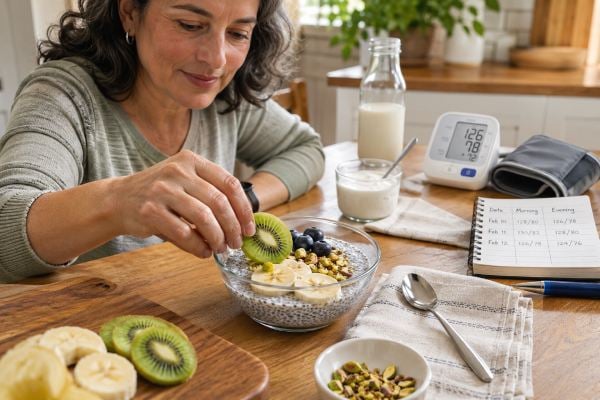
Chia pudding can fit well in a blood-pressure-friendly diet because chia seeds provide fiber, plant omega-3 fat, protein, and minerals, while the pudding can be built with potassium-rich fruit and low-sodium ingredients. Recent meta-analyses suggest chia consumption may modestly lower systolic and diastolic blood pressure, but the trials are small and varied, so chia should be treated as a helpful food—not a hypertension treatment by itself.
The bigger benefit comes from how you build the bowl. A useful chia pudding uses about 2 tablespoons of chia seeds with an unsweetened milk or yogurt base, fruit, and a small amount of nuts or seeds. It keeps added sugar and sodium low and fits the same pattern emphasized by the DASH diet. Potassium can help counterbalance sodium’s effects on blood pressure, but chia is only one contributor; milk, yogurt, fruit, beans, vegetables, and other whole foods can provide much more across the day. People with kidney disease or certain medications may need individualized potassium advice.
Table of Contents
- Can Chia Pudding Help Blood Pressure?
- What Chia Seeds Contribute
- Potassium and Blood Pressure
- How to Build a Blood-Pressure-Friendly Pudding
- Easy Chia Pudding Recipes
- Common Mistakes to Avoid
- Safety and When Food Is Not Enough
Can Chia Pudding Help Blood Pressure?
Yes, it can be part of a diet that supports healthier blood pressure, but expectations should stay realistic.
A 2025 systematic review and meta-analysis of eight randomized controlled trials involving 372 adults found that chia consumption was associated with lower systolic and diastolic blood pressure. Another 2024 review of 14 randomized trials found a smaller systolic benefit that appeared mainly in higher-dose groups. Those findings are encouraging, but they do not prove that a daily bowl of chia pudding will lower every person’s readings by the average amount seen in a pooled analysis.
The studies differ in several important ways: participants had different health conditions, chia doses varied, some trials used whole seeds while others used different preparations, and study durations were relatively short. That makes it hard to name a single “blood-pressure dose.”
Chia is most useful when it helps replace a less favorable breakfast or dessert. A pudding made with unsweetened milk, berries, and walnuts has a very different effect on the overall diet than a pastry, sweetened cereal, or salty breakfast sandwich. The benefit comes from the pattern: more fiber and unsaturated fat, less sodium and added sugar, and more minimally processed foods.
That pattern is consistent with the DASH diet for high blood pressure, which has far stronger evidence than any single seed. If you already have hypertension, chia should complement—not replace—home blood-pressure monitoring, exercise, sodium reduction, weight management when relevant, and prescribed medication.
What Chia Seeds Contribute
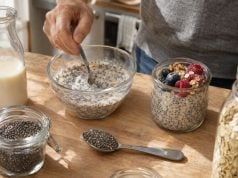
Chia seeds are unusually rich in fiber for a small serving. When mixed with liquid, their soluble and gel-forming fibers absorb water and create the familiar pudding texture. That viscosity slows the movement of food through the digestive tract and can make a meal more filling.
Fiber may also contribute modestly to blood-pressure control. A 2023 dose-response meta-analysis of randomized trials found that soluble-fiber supplementation reduced systolic and diastolic blood pressure by small average amounts. The effect was not specific to chia, but it supports the idea that fiber-rich foods belong in a hypertension-friendly pattern.
Chia also provides alpha-linolenic acid (ALA), a plant omega-3 fatty acid. ALA is not the same as the EPA and DHA found in fish, and only a small proportion is converted to those longer-chain omega-3 fats. Still, replacing saturated-fat-rich foods with seeds and other unsaturated-fat sources is consistent with cardiovascular nutrition guidance.
Other useful nutrients in chia include magnesium, calcium, plant protein, and some potassium. However, chia should not be advertised as a concentrated potassium supplement. A normal serving contributes to the day’s total, while fruit, vegetables, beans, potatoes, dairy foods, and some soy foods can provide larger amounts.
A common serving is about 2 tablespoons, which is enough to thicken roughly 1/2 to 3/4 cup of liquid depending on the texture you like. Starting with 1 tablespoon may be more comfortable if your usual diet is low in fiber.
Chia may also help cholesterol and triglyceride patterns in some studies. The evidence is mixed and dose-dependent, but it can be useful for people trying to improve several cardiovascular risk factors at the same time. The separate guide to chia seeds for cholesterol focuses on lipid outcomes and serving size.
Potassium and Blood Pressure
Potassium is important for blood-pressure regulation because it helps the kidneys excrete sodium and affects blood-vessel tone. Randomized-trial evidence supports a blood-pressure benefit from increasing potassium intake, particularly in people with hypertension.
The practical goal is usually to get potassium from a broad range of foods rather than from high-dose supplements. A chia pudding can help because it is easy to pair the seeds with potassium-containing ingredients.
Useful additions include:
- Banana
- Kiwi
- Berries
- Orange or mandarin segments
- Plain yogurt or milk
- Unsweetened soy milk
- Nuts and seeds
- A side of other potassium-rich foods later in the day, such as beans, lentils, potatoes, leafy greens, squash, or avocado
A banana-flavored chia pudding may contain much more potassium from the banana and milk than from the chia itself. That is not a problem. The cardiovascular benefit comes from the whole meal, not from proving that one ingredient does all the work.
The balance between sodium and potassium also matters. A breakfast that includes chia but is paired with salty processed meat, instant noodles, or a high-sodium packaged meal later in the day is not automatically blood-pressure friendly. Reducing sodium remains a core strategy, especially for people with hypertension. See the practical approach to a low-sodium diet for ways to lower intake without making food bland.
Potassium is not safe to increase aggressively for everyone. People with reduced kidney function may have trouble removing excess potassium from the blood. Certain medications—including some used for blood pressure, heart failure, and kidney protection—can also raise potassium. If you have kidney disease, heart failure, or have ever been told that your blood potassium is high, ask your clinician before deliberately increasing high-potassium foods or using potassium salt substitutes. The guide to potassium for blood pressure explains these exceptions in more detail.
How to Build a Blood-Pressure-Friendly Pudding
A basic chia pudding needs only chia seeds and liquid, but a balanced version should include enough protein and flavor to work as a meal or snack.
Start with the chia. Use about 2 tablespoons for a standard serving. If you are new to chia or prone to bloating, start with 1 tablespoon and increase gradually.
Choose an unsweetened liquid. Low-fat dairy milk and unsweetened soy milk provide meaningful protein. Unsweetened almond or oat beverages can work too, but protein varies widely by product. Check sodium because some plant milks contain more than expected.
Add fruit for natural sweetness. Berries, banana, kiwi, chopped pear, peaches, or cherries work well. Whole fruit adds fiber and micronutrients without requiring syrup.
Add a small amount of nuts or seeds. Walnuts, almonds, pistachios, or pumpkin seeds contribute unsaturated fats and minerals. One to 2 tablespoons is usually enough. Large handfuls can add a lot of calories quickly.
Use spices instead of sugar. Cinnamon, ginger, cardamom, cocoa powder, vanilla, citrus zest, and nutmeg can make the pudding taste sweeter without much added sugar.
Include protein if the pudding is a meal. Milk, soy milk, Greek yogurt, or skyr can help. A pudding made only from chia and a low-protein beverage may not keep everyone full through the morning.
The simplest ratio is roughly 2 tablespoons chia to 1/2 cup liquid, then adjust after it sets. Stir well, wait 5 to 10 minutes, stir again to break up clumps, and refrigerate for at least a couple of hours or overnight. If it becomes too thick, add more liquid before eating.
This format works well in a high-fiber breakfast pattern too, because blood pressure and cholesterol risks frequently overlap.
Easy Chia Pudding Recipes
These recipes use no added sugar by default. If you need more sweetness, first add extra fruit, vanilla, cinnamon, or a small amount of your usual sweetener. Portion sizes can be adjusted for your energy needs.
Berry-oat chia pudding
- 2 tablespoons chia seeds
- 1/2 cup unsweetened soy milk or low-fat milk
- 1/4 cup plain Greek yogurt
- 1/2 cup berries
- 1 tablespoon rolled oats
- Cinnamon or vanilla
Mix the chia, milk, yogurt, oats, and cinnamon. Refrigerate until thick, then top with berries. Oats add beta-glucan fiber, making this a useful option when high LDL and high blood pressure occur together.
Banana-walnut chia pudding
- 2 tablespoons chia seeds
- 1/2 to 3/4 cup unsweetened milk or soy milk
- 1/2 small banana, mashed
- 1 tablespoon chopped walnuts
- Cinnamon
Mash the banana into the liquid before adding chia. The banana provides sweetness and potassium; walnuts add unsaturated fat. Use the remaining half banana later if you want a larger fruit serving without making the pudding overly sweet.
Kiwi-lime chia pudding
- 2 tablespoons chia seeds
- 1/2 cup plain yogurt thinned with a little milk
- 1 kiwi, chopped
- Lime zest or a squeeze of lime
- 1 tablespoon chopped pistachios or almonds
Choose unsalted nuts. Salted toppings can quietly increase sodium, especially if you also eat packaged foods during the day.
Cocoa-cherry chia pudding
- 2 tablespoons chia seeds
- 1/2 cup unsweetened soy milk
- 1 tablespoon unsweetened cocoa powder
- 1/2 cup unsweetened cherries, fresh or frozen and thawed
- Vanilla
Cocoa gives the pudding a dessert flavor without chocolate syrup. Check frozen cherries for added sugar; plain frozen fruit should list only fruit.
Apple-cinnamon overnight chia pudding
- 2 tablespoons chia seeds
- 1/2 cup low-fat milk or unsweetened soy milk
- 1/2 apple, finely chopped with peel
- 1 tablespoon oats
- Cinnamon and nutmeg
Stir the apple in before refrigeration if you like a softer texture, or add it just before eating for more crunch.
Peach-almond chia pudding
- 2 tablespoons chia seeds
- 1/2 cup plain kefir or yogurt thinned with milk
- 1/2 to 1 small peach, chopped
- 1 tablespoon sliced unsalted almonds
- Vanilla or ginger
Plain kefir can add protein and fermented dairy cultures. Choose unsweetened versions because flavored kefir may contain substantial added sugar.
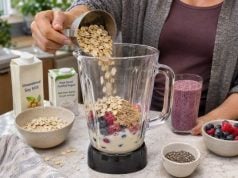
If you prefer a drinkable breakfast, many of the same ingredients work in heart-healthy smoothies. The pudding format is often more filling because you eat it slowly with a spoon.
Common Mistakes to Avoid
Adding a lot of honey, maple syrup, or agave. These are still added sugars. A teaspoon may fit some diets, but several tablespoons can turn a high-fiber breakfast into a dessert-sized sugar load.
Using sweetened plant milk plus sweetened yogurt plus granola. Added sugars can stack up across ingredients. Choose mostly unsweetened components and let fruit provide much of the sweetness.
Ignoring sodium on packaged ingredients. Chia itself is naturally low in sodium, but flavored milks, protein powders, granola, salted nuts, and prepared toppings may not be.
Assuming more chia produces more blood-pressure lowering. Research does not establish a precise dose-response for chia that justifies very large servings. Excess chia can cause gastrointestinal discomfort and adds calories.
Eating dry chia by the spoonful. Chia absorbs a large amount of liquid and expands. It is safer and more comfortable to mix it thoroughly into food or liquid. People with swallowing problems should be especially cautious with dry seeds.
Treating potassium as universally safe. High-potassium foods are beneficial for many people with hypertension, but not for everyone with kidney disease or medicines that raise potassium.
Using pudding as an extra meal. If weight loss is part of your blood-pressure plan, a nutrient-dense pudding can still contribute too many calories if it is added on top of breakfast rather than replacing a less helpful food.
A simple way to judge the bowl is to ask whether it resembles DASH: fruit, low-sodium ingredients, nuts or seeds, an appropriate dairy or plant-protein food, and little added sugar. Higher adherence to a DASH-style pattern is consistently associated with better blood-pressure outcomes.
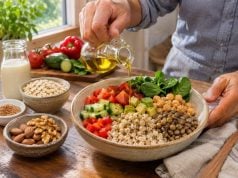
It also helps to think beyond breakfast. If chia pudding is your morning meal, the rest of the day still determines most of your sodium, potassium, fiber, and calorie intake. A DASH-style day might pair the pudding with a bean-and-vegetable lunch, fruit or unsalted nuts for a snack, and fish, tofu, or another lean protein with vegetables and a whole grain at dinner. That pattern gives you many potassium-rich foods instead of trying to force an unusually large amount into one bowl.
If weight loss is recommended for you, measure calorie-dense toppings at first. Two tablespoons of chia plus nuts, nut butter, coconut, granola, and dried fruit can make a small-looking bowl surprisingly energy-dense. You do not need to remove healthy fats; just choose one or two measured toppings. This matters because even modest weight loss can improve blood pressure in people with overweight, while a “healthy” breakfast that consistently pushes total calories above your needs may work in the opposite direction.
Safety and When Food Is Not Enough
Chia pudding is generally safe for most adults, but it should not distract from blood-pressure readings that require medical attention.
If you take antihypertensive medication, keep taking it as prescribed. Food changes can improve blood pressure enough that medication sometimes needs adjustment, but that decision should be based on repeated measurements and clinician guidance—not on dizziness or a single low reading.
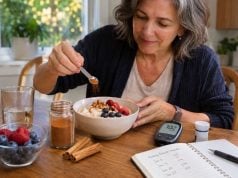
Measure blood pressure with good technique: sit quietly for several minutes, keep your back supported and feet flat, use the correct cuff size, and avoid relying on one isolated value. If home readings remain high, bring the log to your clinician. Lifestyle steps and medication often work best together.
If you want to know whether a dietary change is helping, compare averages rather than chasing day-to-day variation. Blood pressure naturally moves with stress, sleep, pain, caffeine, exercise, hydration, and medication timing. Keep the measurement routine consistent for a couple of weeks, then look at the trend. A lower average after an overall DASH-style change is more informative than a single good reading the morning after chia pudding.
Seek urgent medical care for very high blood pressure accompanied by symptoms such as chest pain, severe shortness of breath, new weakness or numbness, confusion, vision changes, or a severe unusual headache. A breakfast food is not an appropriate response to a possible hypertensive emergency.
People with kidney disease, swallowing difficulty, severe gastrointestinal narrowing, or a history of high potassium should get individualized advice before making chia or high-potassium foods a major daily habit. If fiber causes bloating, reduce the serving and increase gradually rather than forcing a large amount.
For most people, the best role for chia pudding is straightforward: it is a convenient vehicle for fiber, fruit, unsaturated fats, and low-sodium ingredients. The blood-pressure evidence for chia is promising but not definitive. Build the pudding to support the whole DASH-style pattern, monitor the numbers that matter, and use medication when it is indicated.
References
- The Effects of Chia Seed (Salvia hispanica L.) Consumption on Blood Pressure and Body Composition in Adults: A Systematic Review and Meta-analysis of Randomized Controlled Trials 2025 (Systematic Review)
- The impact of chia seeds on diabetes, blood pressure, lipid profile, and obesity indicators: Systematic review and meta-regression analysis of 14 randomized controlled trials 2024 (Systematic Review)
- Effect of changes in potassium intake on blood pressure: a dose-response meta-analysis of randomized clinical trials (2000-2024) 2025 (Meta-Analysis)
- Effect of soluble fiber on blood pressure in adults: a systematic review and dose-response meta-analysis of randomized controlled trials 2023 (Systematic Review)
- Impact of the Level of Adherence to the DASH Diet on Blood Pressure: A Systematic Review and Meta-Analysis 2023 (Systematic Review)
- The blood pressure control effect of the sodium-restricted dietary approaches to stop hypertension diet: a systematic review 2024 (Systematic Review)
Disclaimer
This article is for general education and does not replace individualized hypertension or kidney care. If you have chronic kidney disease, high blood potassium, swallowing problems, or take medicines that affect potassium, ask your clinician whether a high-potassium chia pudding fits your plan. Do not reduce or stop blood-pressure medication because of dietary changes without medical guidance.