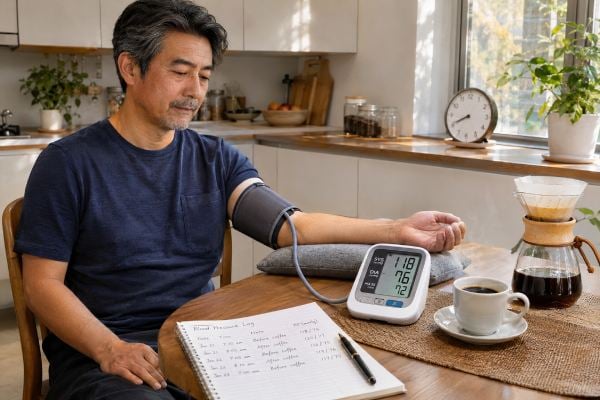
Coffee can raise blood pressure for a few hours after you drink it, yet regular coffee drinking does not appear to cause chronic hypertension in most adults. That seeming contradiction matters. Caffeine can temporarily tighten blood vessels and stimulate the nervous system, so a person who is sensitive to caffeine—or who rarely consumes it—may see a noticeable bump in systolic and diastolic pressure. With habitual intake, however, tolerance develops, and large observational studies generally do not show higher long-term hypertension risk from moderate coffee consumption. Coffee also contains polyphenols and other compounds that may partly offset caffeine’s short-term effects.
The practical question is not whether coffee is universally “good” or “bad,” but how your blood pressure responds to the amount, timing, and type you drink. For many adults, one to three cups a day can fit into a heart-healthy routine. People with uncontrolled hypertension, pronounced caffeine sensitivity, pregnancy, certain arrhythmias, or medication concerns may need a lower limit or individualized advice.
Table of Contents
- How Coffee Affects Blood Pressure
- Short-Term Rise vs Long-Term Hypertension Risk
- How Much Coffee Is Reasonable?
- Coffee Type, Brewing Method, and Add-Ins
- Who Should Be More Careful?
- How to Test Your Own Blood Pressure Response
- Bottom Line
- Practical Coffee and Blood Pressure Questions
How Coffee Affects Blood Pressure
The main immediate blood-pressure effect of coffee comes from caffeine. Caffeine blocks adenosine receptors, increases alertness, and can increase sympathetic nervous system activity. In practical terms, that can make blood vessels constrict and can modestly raise blood pressure for a limited period after a dose.
A 2023 systematic review and dose-response meta-analysis of randomized trials found that caffeine supplementation increased systolic blood pressure by about 1.9 mmHg and diastolic pressure by about 1.7 mmHg on average. Those are group averages, not guarantees for an individual. Some people barely respond, while others can see a larger rise, especially after a strong coffee when they have not consumed caffeine recently.
Coffee is more complex than caffeine alone. It also contains chlorogenic acids and other polyphenols that may influence vascular function, glucose metabolism, and inflammation. This helps explain why the cardiovascular findings for coffee as a beverage are not identical to the findings for isolated caffeine pills.
Genetics, habitual use, sleep, stress, nicotine, medications, and the amount of caffeine in the serving all change the response. A “cup” is also an unreliable caffeine unit. Eight ounces of brewed coffee might contain roughly 80–120 mg of caffeine, while a large coffee-shop drink can contain several times that amount.
If you are trying to interpret a high reading, first understand what a normal blood pressure reading means and use a repeatable measurement routine rather than judging your pressure from one reading after coffee.
Short-Term Rise vs Long-Term Hypertension Risk
The clearest finding is that caffeine can cause a short-term rise in blood pressure, particularly in people who do not use it regularly. The effect usually begins within about 30 minutes, often peaks within one to two hours, and then fades as caffeine is metabolized. Caffeine’s half-life is commonly around four to six hours, but it varies substantially from person to person.
Long-term risk looks different. A 2023 systematic review and meta-analysis of observational studies found no convincing increase in hypertension risk among habitual coffee drinkers. A 2024 comprehensive review reached a similar conclusion: coffee can cause an acute pressor effect, but regular intake has not been consistently linked to chronic hypertension.
Tolerance is one reason. With repeated caffeine exposure, the nervous system adapts, and the blood-pressure response often becomes smaller. This does not mean caffeine stops affecting everyone. People differ in their degree of tolerance, and a person may become more sensitive after taking a break from caffeine.
It also matters what outcome is being measured. A temporary rise from 126/78 mmHg to 136/84 mmHg for an hour is not the same as having an average home pressure in the hypertensive range day after day. Diagnosis depends on repeated measurements, ideally outside the clinic. A consistent home blood pressure monitoring routine is more informative than a reading taken after a rushed commute and a double espresso.
Moderate coffee intake has also been associated in many cohort studies with neutral or lower rates of several cardiovascular outcomes. That association does not prove that coffee prevents heart disease, because coffee drinkers differ from non-drinkers in many ways. Still, the overall evidence does not support telling most adults to stop moderate coffee solely to protect blood pressure.
How Much Coffee Is Reasonable?
For most healthy adults, total caffeine intake up to about 400 mg per day is commonly used as a practical upper limit. That is a caffeine limit, not a recommendation to consume 400 mg. Many people feel better and maintain steadier blood pressure with far less.
A useful way to think about intake is by dose rather than by cup count:
| Approximate caffeine intake | Practical interpretation |
|---|---|
| 0–100 mg/day | Low intake; often one small coffee or tea |
| 100–300 mg/day | Moderate range for many habitual users |
| 300–400 mg/day | Still within a common adult ceiling, but side effects become more likely in sensitive people |
| More than 400 mg/day | Higher exposure; more likely to cause insomnia, jitters, palpitations, or a blood-pressure rise |
The best amount is the lowest amount that gives you the enjoyment or alertness you want without causing problems. If one mug in the morning works, there is no cardiovascular advantage to forcing yourself to drink more because observational research sometimes finds favorable outcomes in moderate coffee drinkers.
Caffeine timing matters too. Poor sleep can worsen blood pressure regulation, appetite, stress, and resting heart rate. If afternoon coffee delays sleep, the indirect cardiovascular cost may matter more than the coffee’s short-lived blood-pressure bump. People who are sensitive to caffeine may need to stop six to ten hours before bedtime.
If you notice anxiety, a racing heartbeat, tremor, or a large pressure increase after caffeine, the issue may be caffeine sensitivity rather than coffee itself. Decaf can preserve much of the flavor and many non-caffeine coffee compounds with only a small amount of caffeine.
Coffee Type, Brewing Method, and Add-Ins
Blood pressure is only one part of heart health. The way coffee is prepared can affect cholesterol, and the additions can change a nearly calorie-free drink into a high-sugar, high-saturated-fat beverage.
Unfiltered coffee contains diterpenes called cafestol and kahweol. These compounds can raise LDL cholesterol. Boiled coffee, French press, Turkish coffee, Scandinavian-style boiled coffee, and some espresso-based drinks retain more diterpenes than paper-filtered coffee. A paper filter removes much of them.
For a person with high LDL cholesterol who drinks several cups daily, switching from unfiltered to paper-filtered coffee may be a useful small change. It will not replace treatment when LDL is significantly elevated, but it removes a source of cholesterol-raising compounds without requiring caffeine abstinence.
Add-ins also deserve attention. A plain brewed coffee has very few calories. A large flavored coffee with syrup, whipped topping, and cream can contain a substantial dose of added sugar and saturated fat. If coffee is a daily habit, that difference compounds over time.
Practical choices include:
- Use paper-filtered coffee if LDL cholesterol is a concern.
- Keep added sugar modest or gradually reduce sweetness.
- Choose milk or an unsweetened alternative instead of large amounts of heavy cream.
- Do not assume cold brew is automatically lower in caffeine; caffeine content depends on the recipe and serving size.
- Check coffee-shop nutrition information when ordering very large or highly concentrated drinks.
Coffee and caffeine are not interchangeable. Decaf still contains coffee polyphenols, while energy drinks can provide caffeine with other stimulants and large amounts of sugar. If palpitations are the concern, energy drinks and heart palpitations deserve separate consideration.
Who Should Be More Careful?
Most people with well-controlled hypertension do not need to eliminate coffee automatically. More caution is reasonable when blood pressure is uncontrolled or when caffeine reliably causes a large rise.
Consider reducing caffeine and discussing it with a clinician if any of the following apply:
- Your home blood pressure remains high despite treatment.
- A caffeinated drink repeatedly raises systolic pressure by roughly 10 mmHg or more.
- You get chest discomfort, marked shortness of breath, fainting, or severe palpitations after caffeine.
- You have a known rhythm disorder and caffeine appears to trigger symptoms.
- You are pregnant, when recommended caffeine limits are lower.
- You take stimulant medications or other products that can increase heart rate or blood pressure.
- You use multiple caffeine sources, such as coffee plus pre-workout products, energy drinks, or caffeine tablets.
Coffee is not a substitute for hypertension treatment. If your average pressure is high, the priorities are accurate measurement, sodium and alcohol moderation, healthy body weight, regular physical activity, sleep, and prescribed medication when indicated.
People with palpitations often assume coffee must be the cause. Sometimes it is, especially at high doses or in a caffeine-sensitive person, but evidence does not show that moderate habitual coffee universally causes atrial fibrillation. If skipped beats or rapid rhythms are recurring, read the warning signs in common causes of heart palpitations and seek medical evaluation rather than simply masking the issue by switching beverages.
How to Test Your Own Blood Pressure Response
A simple home experiment can show whether caffeine meaningfully changes your pressure. Do it only if you normally drink coffee and have not been advised to avoid caffeine.
- On a typical morning, sit quietly for five minutes before caffeine. Empty your bladder, keep your back supported and feet flat, and place a validated upper-arm cuff on bare skin.
- Take two readings one minute apart and record the average.
- Drink your usual coffee. Keep the dose typical; this is not a caffeine challenge test.
- Recheck blood pressure about 30–60 minutes later and again around 90–120 minutes later, using the same position and technique.
- Repeat on two or three different days before drawing conclusions.
Try to keep exercise, smoking, meals, stress, and decongestant use similar on test days because each can change blood pressure. Avoid measuring immediately after climbing stairs or rushing around the house.
If systolic pressure repeatedly rises around 5 mmHg or less and remains in a healthy range, the response is probably modest. If it repeatedly rises by 10 mmHg or more, or moves into a clearly high range, lowering the dose, switching to half-caf or decaf, or drinking coffee with food may help. A clinician can interpret the pattern if you already have hypertension.
Do not use this experiment to diagnose or exclude hypertension. If your baseline readings are repeatedly high, address the underlying blood pressure issue. If readings are very high—especially around 180/120 mmHg or higher—and you have chest pain, shortness of breath, weakness, confusion, vision changes, or other concerning symptoms, seek urgent medical care.
Bottom Line
Coffee is not inherently bad for blood pressure. Caffeine can cause a temporary rise, but moderate habitual coffee intake does not appear to raise long-term hypertension risk in most adults. Individual response is the deciding factor.
For many people, one to three cups of coffee a day—especially earlier in the day and without large amounts of sugar or cream—fits comfortably into a heart-healthy lifestyle. If you have hypertension, measure your pressure correctly and look at your average trend. If coffee repeatedly causes a meaningful spike, reduce the caffeine dose rather than assuming you must give up coffee entirely.
Choose the preparation with the rest of your risk profile in mind. Paper-filtered coffee can be a better choice for people concerned about LDL cholesterol, while decaf is useful for people who enjoy coffee but react poorly to caffeine. Most importantly, do not let the coffee question distract from stronger blood-pressure levers such as medication adherence, sodium intake, physical activity, sleep, weight management, and limiting excess alcohol.
Practical Coffee and Blood Pressure Questions
A few common situations explain why two people can receive different advice about coffee even when both care about heart health.
Should you skip coffee before checking blood pressure?
For a routine home reading, it is best to avoid caffeine, exercise, and smoking for at least 30 minutes beforehand. The goal is to measure your resting pressure, not your peak response to a stimulant. If you always measure immediately after coffee, you may overestimate your usual pressure. If you never measure after coffee, however, you may miss a clinically relevant spike. That is why a standard morning or evening routine and an occasional structured caffeine-response check answer different questions.
When bringing a home log to an appointment, note whether readings were taken before or after caffeine. A clinician can interpret a pattern much more accurately when the conditions are consistent.
Does decaf affect blood pressure?
Decaffeinated coffee usually contains only a small amount of caffeine, often a few milligrams per cup, although the amount varies. It is far less likely to cause the acute blood-pressure effect seen with regular coffee. Decaf still contains many of coffee’s non-caffeine compounds, including chlorogenic acids.
For someone who likes the taste and ritual but sees a clear pressure increase after caffeine, decaf is a practical compromise. Half-caf is another option if abrupt caffeine reduction causes headaches or fatigue.
Is espresso worse than drip coffee?
Not necessarily. A single espresso shot is concentrated but small, commonly providing around 60–75 mg of caffeine. A large brewed coffee can contain much more total caffeine. The relevant variable for blood pressure is the total caffeine dose, not how intense the drink tastes.
Brewing method matters more for cholesterol than pressure. Espresso retains diterpenes because it is not paper-filtered, but a single shot is a small volume. Multiple espresso drinks every day can add up, especially when combined with other unfiltered coffee.
What if coffee raises your pressure but you feel fine?
Symptoms are a poor guide to blood pressure. Hypertension is often silent, and a caffeine-related spike may also cause no symptoms. If a repeatable test shows a substantial rise, especially when baseline pressure is already high, reducing dose is reasonable even if you feel normal.
Try smaller servings, slower drinking, coffee with food, half-caf, or decaf. Then repeat the same home test. The goal is not zero change; it is avoiding a pattern that repeatedly pushes pressure into an unhealthy range.
Can coffee interact with blood-pressure medication?
Coffee does not broadly cancel antihypertensive drugs, but caffeine can transiently oppose their effect by raising vascular tone. It may also affect absorption of some medications when taken at the same time. The exact issue depends on the drug.
For example, certain beta-blockers and other cardiovascular drugs can alter how strongly you perceive the heart-rate response to caffeine. If you take several blood-pressure medicines and are still running high, review timing, adherence, sodium, alcohol, sleep, and caffeine with your clinician rather than assuming medication failure.
Does coffee dehydrate you enough to hurt the heart?
Moderate coffee intake contributes to daily fluid intake. Habitual caffeine users develop tolerance to much of its mild diuretic effect, so ordinary coffee consumption does not usually cause clinically important dehydration. Very high caffeine intake, hot weather, vigorous exercise, vomiting, or diarrhea are different situations.
If you are prone to palpitations or dizziness, hydration still matters. Water should remain your main fluid source during heavy exercise or heat exposure, and coffee should not be used as a substitute for fluid replacement.
What matters more than coffee for blood pressure?
For most people with hypertension, the major levers are much bigger than one or two cups of coffee. Medication adherence, dietary sodium, body weight, regular activity, alcohol intake, sleep apnea treatment, and adequate sleep can change average pressure far more.
That perspective helps avoid all-or-nothing thinking. If coffee raises your pressure slightly but your averages are well controlled, you may not need to eliminate it. If your pressure is high, reducing caffeine can help, but it should be one part of a broader plan rather than the only change.
References
- The effects of caffeine supplementation on blood pressure in adults: A systematic review and dose-response meta-analysis 2023 (Systematic Review)
- Coffee Consumption and Risk of Hypertension in Adults: Systematic Review and Meta-Analysis 2023 (Systematic Review)
- Coffee consumption and cardiometabolic health: a comprehensive review of the evidence 2024 (Review)
- Impact of Coffee Consumption on Cardiovascular Health 2023 (Review)
- The impact of coffee subtypes on incident cardiovascular disease, arrhythmias, and mortality: long-term outcomes from the UK Biobank 2022 (Cohort Study)
Disclaimer
This article is for general education and is not a substitute for personal medical advice. If you have uncontrolled hypertension, cardiovascular disease, pregnancy, medication interactions, or symptoms such as chest pain, fainting, or severe palpitations, discuss caffeine use with a qualified clinician. Seek urgent care for severe symptoms or a dangerously high blood pressure reading with signs of organ injury.