EGCG is the best-known catechin in green tea and one reason green tea extract appears in many healthy aging supplements. It sits in an interesting middle ground: promising enough to study for cholesterol, glucose control, blood pressure, oxidative stress, and body composition, but not strong enough to treat cardiometabolic disease on its own. The evidence points toward modest support, not dramatic transformation. Dose and form matter a lot. Brewed green tea has a long history of common use, while concentrated extracts deliver much larger catechin doses and carry a clearer liver-safety concern, especially at high EGCG intakes. Used carefully, EGCG fits best as a small add-on to food quality, exercise, sleep, and medical risk management. Used aggressively, it becomes a supplement with avoidable downsides.
Table of Contents
- What EGCG Is and How It Differs From Green Tea
- What EGCG Does and Does Not Prove for Healthy Aging
- Cardiometabolic Effects: Lipids, Glucose, Blood Pressure, and Weight
- Dose, Forms, Absorption, and Product Labels
- Safety, Liver Risk, and Medication Interactions
- Who Should Consider EGCG and Who Should Avoid It
- How to Use EGCG Without Guessing
What EGCG Is and How It Differs From Green Tea
EGCG stands for epigallocatechin gallate. It is one of the main catechins in green tea, a group of polyphenols that plants make for defense. In human nutrition, catechins attract attention because they interact with oxidative stress, inflammation, lipid handling, glucose metabolism, blood vessel function, and cell signaling.
Green tea comes from the leaves of Camellia sinensis. The same plant also gives us black, white, oolong, and dark teas. Processing changes the final chemistry. Green tea is not fermented in the same way black tea is, so it keeps more catechins. Black tea contains more oxidized polyphenols such as theaflavins. Both tea types have health-related compounds, but green tea is the richer natural source of EGCG.
A cup of brewed green tea usually delivers catechins in a food-level dose. The exact amount shifts with tea variety, leaf quality, water temperature, steeping time, and serving size. A green tea extract capsule is different. It concentrates catechins into a pill or powder, and some products deliver several cups’ worth of EGCG in one serving.
That difference matters more than the marketing. A person drinking two cups of green tea daily gets a beverage pattern with fluid, flavor, small caffeine exposure, and a mix of plant compounds. A person taking 500 mg of EGCG in capsules gets a concentrated bioactive dose without the same food context. Those are not identical interventions.
Green tea also contains caffeine and L-theanine. Caffeine raises alertness and, in sensitive people, worsens insomnia, palpitations, reflux, or anxiety. L-theanine gives tea part of its smoother feel compared with coffee. Decaffeinated green tea and decaffeinated extracts reduce caffeine exposure but still contain catechins.
EGCG is often discussed as an antioxidant, but that label is too simple. It does not work like a sponge that permanently “soaks up” free radicals. At realistic human doses, it likely works more through signaling. It influences enzymes, inflammatory pathways, nitric oxide biology, fat oxidation, gut microbes, bile acid handling, and cellular defense systems. That is why EGCG belongs in the broader conversation about coffee, tea, and longevity habits, not just in the supplement aisle.
What EGCG Does and Does Not Prove for Healthy Aging
EGCG has healthy aging appeal because cardiometabolic health strongly affects healthspan. Blood pressure, ApoB-containing lipoproteins, insulin resistance, visceral fat, fatty liver, and chronic low-grade inflammation shape long-term risk for heart disease, stroke, type 2 diabetes, kidney disease, and cognitive decline.
EGCG touches several of those pathways at once. That does not mean it slows biological aging in a proven, whole-body sense. Human trials mainly measure intermediate markers such as LDL cholesterol, fasting glucose, insulin, body weight, waist measures, inflammatory markers, and liver enzymes. Those markers matter, but they are not the same as fewer heart attacks, longer life, or slower frailty.
The most reasonable view is this: EGCG is a mild cardiometabolic support compound with stronger evidence for small changes in risk markers than for disease outcomes. It works best when the rest of the plan is already moving in the same direction.
A useful healthy aging standard is simple. A supplement earns consideration when it meets four tests:
- It targets a real risk pathway.
- It has human evidence, not only cell or animal data.
- It has a safety margin at ordinary doses.
- It does not distract from stronger interventions.
EGCG meets the first two tests fairly well. It partly meets the third, with a major warning about concentrated extracts and liver injury. It fails the fourth when people use it as a substitute for weight loss, blood pressure treatment, lipid management, resistance training, sleep repair, or a higher-fiber diet.
The “green tea burns fat” message also needs restraint. Green tea catechins and caffeine slightly raise energy expenditure in some studies, and some trials show small body-weight or BMI changes. The effect is not large enough to override excess calories, poor protein intake, low activity, or sleep debt. In practice, EGCG should not be treated as a weight-loss drug.
A better healthy aging frame is risk-marker nudging. EGCG might support a small reduction in LDL cholesterol, total cholesterol, fasting glucose, or body fat percentage over 8 to 12 weeks. A small change matters most when paired with the basics: protein-rich meals, high-fiber carbohydrates, unsaturated fats, regular aerobic work, and strength training.
This distinction also protects against supplement creep. In longevity circles, people often stack compounds that each promise a 2% improvement. The stack becomes expensive, hard to evaluate, and sometimes risky. EGCG deserves the same discipline as any other intervention: start with a reason, define the marker to track, use a conservative dose, and stop if it does not help.
Cardiometabolic Effects: Lipids, Glucose, Blood Pressure, and Weight
Clinical trials and meta-analyses suggest green tea and green tea extract produce modest cardiometabolic effects. The size of benefit varies by dose, baseline health, caffeine content, diet, duration, and the specific extract used.
Lipids and ApoB-related risk
The most consistent signal is a small improvement in blood lipids, especially total cholesterol and LDL cholesterol. EGCG and related catechins likely affect lipids through several routes: reduced intestinal cholesterol absorption, increased fecal bile acid loss, changes in liver lipid metabolism, antioxidant effects on LDL particles, and modest weight-related effects.
Small LDL reductions are useful, but they should not be oversold. A person with high LDL cholesterol, high non-HDL cholesterol, high ApoB, diabetes, or known atherosclerosis needs a full lipid strategy. EGCG is not a replacement for dietary saturated-fat reduction, soluble fiber, weight loss when needed, or prescribed lipid-lowering therapy.
For longevity-focused tracking, ApoB and non-HDL cholesterol often give a clearer picture than LDL alone. EGCG trials usually report LDL and total cholesterol, so the evidence does not always map perfectly to the best modern lipid markers. Readers who want a tighter lipid plan should pair supplement decisions with food moves that improve blood lipids and periodic lab testing.
Glucose and insulin resistance
Green tea supplementation shows mixed but encouraging effects on glycemic markers. Some analyses report improvements in fasting blood glucose, fasting insulin, or HbA1c, while others show weak or inconsistent changes. The signal appears more relevant in people with higher baseline metabolic risk than in already healthy people with normal glucose control.
EGCG may influence glucose handling through gut carbohydrate absorption, muscle glucose uptake, liver glucose production, inflammation, and adiponectin, a hormone involved in insulin sensitivity. Caffeine complicates the picture. Acute caffeine intake raises glucose in some people, especially when taken before a high-carbohydrate meal or under stress. That is one reason brewed tea, decaffeinated tea, and concentrated extract do not always produce the same response.
People using EGCG for metabolic health should track the same markers used for any glucose intervention: fasting glucose, A1c, fasting insulin when appropriate, waist size, post-meal energy, and response to carbohydrate meals. A supplement that does not move those markers after a reasonable trial does not deserve permanent shelf space. For a deeper lab-based approach, use A1c, fasting glucose, and fasting insulin together rather than relying on one number.
Blood pressure and vascular function
Green tea catechins have plausible vascular effects. They interact with nitric oxide, endothelial function, oxidative stress, and inflammation. Trials show small blood pressure changes, with diastolic blood pressure sometimes improving more consistently than systolic pressure.
Small blood pressure reductions still matter at a population level, but an individual with hypertension should not treat EGCG as blood pressure therapy. Home measurement, sodium reduction when salt-sensitive, potassium-rich foods, weight loss if needed, aerobic training, sleep apnea treatment, alcohol reduction, and medication remain stronger tools.
EGCG also does not solve arterial risk by itself. Cardiometabolic aging is cumulative. Blood pressure, lipids, glucose, smoking exposure, kidney function, sleep, and inflammation all interact. A small tea-extract effect looks better when the whole risk pattern is improving.
Body composition and waist measures
Green tea extract studies show small reductions in body weight, BMI, and body fat percentage in some pooled analyses. The effect is more noticeable in people with overweight or obesity than in lean, active adults. Waist circumference changes are less consistent.
The mechanism is likely a blend of catechin and caffeine effects on fat oxidation, energy expenditure, appetite, gut microbes, and insulin sensitivity. But the real-world effect is usually modest. Expecting a capsule to reduce visceral fat without meal structure, protein, steps, and resistance training sets up disappointment.
A more useful role for EGCG is support during an already well-designed fat-loss or metabolic reset period. That means the person has a protein target, a fiber target, a walking plan, and a resistance-training schedule. EGCG then becomes an optional nudge, not the engine.
Inflammation and oxidative stress
Some trials report improvements in oxidative stress markers, total antioxidant capacity, malondialdehyde, adiponectin, or C-reactive protein. These findings are interesting but less practical than lipids, glucose, waist, and blood pressure. Oxidative stress markers vary across labs and do not always translate into better outcomes.
The useful lesson is not “more antioxidants are always better.” Healthy aging requires redox balance, not blanket suppression of cellular signals. Exercise, heat, cold, fasting windows, and other mild stressors use reactive molecules as signals for adaptation. High-dose antioxidant strategies sometimes blunt those signals. EGCG at moderate doses fits better as a dietary polyphenol signal than as a high-dose antioxidant weapon.
Dose, Forms, Absorption, and Product Labels
EGCG dosing should start with the form. Brewed green tea, matcha, decaffeinated tea, standardized green tea extract, and isolated EGCG capsules do not behave the same way.
Brewed green tea is the most conservative option. Two to four cups daily gives a steady catechin pattern with lower safety concern than concentrated extracts. It also encourages a beverage swap: green tea often replaces sugar-sweetened drinks, late-day snacks, or extra coffee.
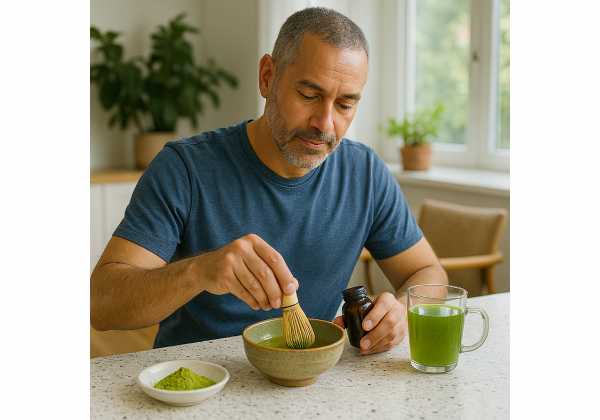
Matcha delivers powdered whole tea leaves. It often provides more catechins and caffeine than standard brewed green tea because the leaf powder is consumed rather than discarded. Quality matters because the whole leaf is ingested. People using matcha daily should choose reputable brands that test for contaminants.
Green tea extract is the supplement form. Labels vary widely. Some list “green tea extract 500 mg” without naming EGCG content. Others state “standardized to 45% EGCG” or give the EGCG amount per serving. The EGCG number is the number to watch.
A conservative extract trial usually stays in the range of 150 to 300 mg EGCG daily, taken with food. Some studies use higher doses, but higher is not automatically better. Liver-safety concerns rise as intake approaches 800 mg EGCG per day, and susceptible people do not always know they are susceptible.
Taking green tea extract on an empty stomach increases catechin exposure. That sounds good for potency but worse for safety. For everyday healthy aging use, take EGCG with a meal. Avoid taking it during prolonged fasting, aggressive dieting, dehydration, heavy alcohol use, or illness.
| Form | Best fit | Main caution |
|---|---|---|
| Brewed green tea | Daily beverage habit, low-dose catechin exposure | Caffeine sensitivity, reflux, iron absorption with meals |
| Matcha | Higher-catechin tea routine with stronger flavor | More caffeine and greater need for contaminant-tested products |
| Decaffeinated green tea | Catechin intake with less caffeine | Catechin amount varies by product |
| Green tea extract | Short, measurable supplement trial | Liver risk at high doses or in susceptible users |
| Isolated EGCG | Precise dosing when a clinician agrees | Less food-like, easier to overuse |
A good label gives the extract amount, total catechins, EGCG per serving, caffeine per serving, suggested dose, and third-party testing. Be cautious with products sold mainly for “fat burning,” “detox,” or rapid weight loss. These often combine EGCG with caffeine, synephrine, garcinia, yohimbine-like stimulants, laxatives, diuretics, or other liver-stressing botanicals.
Simple product rules help:
- Prefer products that state EGCG in mg per serving.
- Avoid proprietary blends that hide ingredient amounts.
- Choose third-party testing when possible.
- Do not combine multiple green tea products.
- Do not use high-dose EGCG during fasting or crash dieting.
- Treat 8 to 12 weeks as a trial, not an automatic lifetime habit.
Food timing also matters. Tea polyphenols reduce non-heme iron absorption when taken with iron-rich plant meals or iron supplements. People with low ferritin, heavy menstrual bleeding, vegetarian diets, or a history of iron deficiency should drink tea between meals rather than with iron-focused meals. They should also avoid taking EGCG capsules at the same time as iron.
Safety, Liver Risk, and Medication Interactions
Green tea as a beverage is generally safe for most adults in moderate amounts. Concentrated green tea extract needs more caution because liver injury has been reported, including rare severe cases. The risk is low compared with the huge number of users, but it is real enough to shape dosing.
The clearest safety signal concerns high-dose EGCG. Reviews and regulatory assessments have highlighted liver enzyme elevations at intakes around or above 800 mg EGCG per day. Liver injury from green tea extract often looks like acute hepatitis, with fatigue, nausea, abdominal pain, dark urine, jaundice, and marked ALT or AST elevation. It often improves after stopping the product, but severe cases have occurred.
This risk does not behave like ordinary dose toxicity in every case. Some reactions appear idiosyncratic, meaning they depend on individual susceptibility. Genetics, immune response, fasting state, product composition, and multi-ingredient formulas likely influence risk. A person can follow a label and still react poorly.
Risk rises in several common scenarios:
- Taking extract on an empty stomach.
- Using high-dose EGCG products.
- Stacking green tea extract with other fat-loss supplements.
- Taking extract during rapid weight loss or prolonged fasting.
- Drinking alcohol heavily.
- Having liver disease, fatty liver with elevated enzymes, hepatitis, or unexplained abnormal liver tests.
- Using medications or supplements known to stress the liver.
People with fatty liver deserve special care. EGCG is sometimes marketed for metabolic health and liver fat, but concentrated extracts are not automatically safe for the liver. Anyone with elevated ALT, AST, GGT, bilirubin, or known liver disease should speak with a clinician before using green tea extract. Lifestyle strategies and medical evaluation should come first; NAFLD screening with liver enzymes and imaging gives a safer starting point than guessing.
Medication interactions also matter. Green tea and EGCG products can interact with:
- Anticoagulants such as warfarin: large, inconsistent green tea intake can complicate vitamin K consistency and clotting management.
- Stimulants and high caffeine intake: combined effects can worsen palpitations, anxiety, blood pressure, or insomnia.
- Certain beta-blockers such as nadolol: green tea has been reported to reduce drug exposure.
- Iron supplements: tea polyphenols reduce non-heme iron absorption.
- Hepatotoxic medications or supplements: combined liver stress raises concern.
- Diabetes medications: improved glucose control sounds beneficial, but it can alter medication needs in people prone to low glucose.
Pregnant or breastfeeding people should avoid concentrated EGCG unless a qualified clinician specifically recommends it. Children and adolescents should not use green tea extract for weight control. People with eating disorders, active dieting extremes, or a history of supplement-related liver injury should avoid it.
Stop green tea extract and seek medical care if symptoms suggest liver injury: yellowing skin or eyes, dark urine, pale stools, persistent nausea, unusual fatigue, itching, right-upper-abdominal pain, or unexplained flu-like illness after starting the product.
Supplement safety also includes behavior. A clean trial uses one new supplement at a time, a defined dose, a defined endpoint, and a stop rule. That approach is part of safe self-experimentation in longevity, especially when a compound has both plausible benefits and known risks.
Who Should Consider EGCG and Who Should Avoid It
EGCG is most reasonable for adults who want a modest cardiometabolic nudge and already have the basics in place. It is less reasonable for people chasing rapid weight loss, “detox,” or a substitute for medical treatment.
A good candidate looks like this:
- Normal liver enzymes and no known liver disease.
- Stable medication routine.
- No history of supplement-related liver injury.
- Mildly elevated LDL, fasting glucose, waist size, or cardiometabolic risk.
- Willingness to track results after 8 to 12 weeks.
- Preference for tea first, extract second.
- No caffeine sensitivity, or use of a decaffeinated product.
A poor candidate looks like this:
- Elevated ALT or AST without a clear explanation.
- Active hepatitis, cirrhosis, cholestatic disease, or heavy alcohol use.
- Pregnancy or breastfeeding.
- Use of multiple fat-loss supplements.
- Current prolonged fasting or crash dieting.
- Warfarin use without clinician guidance.
- Prior reaction to green tea extract.
- Anxiety, insomnia, arrhythmia, or reflux worsened by caffeine.
For most adults, brewed green tea is the better first step. It offers a lower-dose, food-like pattern and supports a healthy beverage routine. A person who replaces an afternoon sweet drink with green tea improves more than catechin intake; they reduce sugar, calories, and snacking cues at the same time.
Extract makes more sense when a person wants a measurable trial and has a specific marker in mind. For example, someone with borderline fasting glucose and elevated waist circumference might test a decaffeinated extract providing 150 mg EGCG daily with lunch for 10 weeks while also walking after meals. That trial has a clear reason and a lower-risk dose.
It makes less sense to use EGCG when the main issue is untreated high ApoB, hypertension, diabetes, or obesity. Those deserve higher-yield interventions. A supplement can sit beside a treatment plan, but it should not delay it. The healthiest longevity plans separate biomarkers from outcomes and avoid confusing a small lab improvement with proven disease prevention; biomarkers and real-world benefits are related but not identical.
People with high cardiovascular risk should also avoid “natural means safe” thinking. Green tea extract is natural, concentrated, biologically active, and capable of harm at the wrong dose. Those four facts belong in the same sentence.
How to Use EGCG Without Guessing
EGCG works best as a short, structured experiment. The aim is not to feel productive by adding a capsule. The aim is to learn whether it improves a marker that matters to you without side effects.
Start with the lowest-risk version that fits your reason. For general health, use brewed green tea. For a supplement trial, use a standardized extract with a clearly listed EGCG amount.
A simple plan:
- Choose one reason: LDL cholesterol, fasting glucose, waist size, blood pressure, or replacing a less healthy drink.
- Record your baseline.
- Use the same dose daily for 8 to 12 weeks.
- Keep diet, exercise, caffeine, and medication changes stable where possible.
- Retest the same marker.
- Stop if there is no meaningful benefit or any safety concern.
For lipids, track LDL cholesterol, non-HDL cholesterol, and ideally ApoB. EGCG’s LDL effect is usually small, so do not judge it from one noisy result. A meaningful change should fit the broader pattern: better diet, stable weight or fat loss, and improved triglycerides or non-HDL cholesterol. For risk-focused testing, ApoB and non-HDL cholesterol are more useful than supplement hype.
For glucose, track fasting glucose, A1c, waist circumference, and post-meal patterns if you use a glucose meter or CGM. A small fasting glucose change means more when paired with better energy, fewer post-meal crashes, lower waist size, and improved fasting insulin.
For blood pressure, use proper home technique. Measure seated, rested, with the cuff at heart level, and average multiple readings over a week. A single lower reading after tea does not prove much. A consistent 2 to 4 mmHg shift in average blood pressure is more believable.
For body composition, track waist circumference and body weight weekly. Photos, belt fit, and strength performance add context. Do not use EGCG to justify under-eating. Muscle preservation matters more for healthy aging than a faster drop on the scale.
For safety, consider baseline liver enzymes before using extract, especially if you plan to take it longer than 8 weeks, have metabolic risk, take medications, or have a history of abnormal labs. Repeat testing if symptoms appear or if using a higher-dose product under professional supervision. Stop immediately if ALT or AST rises without another clear explanation.
A conservative EGCG supplement trial might look like this:
- Dose: 150 to 300 mg EGCG daily.
- Timing: with breakfast or lunch, not fasting.
- Duration: 8 to 12 weeks.
- Avoid: other fat-loss supplements, heavy alcohol, crash dieting, and multiple catechin products.
- Track: one primary marker and one safety marker.
- Stop rule: symptoms, abnormal liver enzymes, insomnia, palpitations, reflux, or no measurable benefit.
The best long-term EGCG strategy often becomes a tea habit rather than a pill habit. Green tea with breakfast, after lunch, or during an afternoon work break gives repeatable exposure with less risk. It also creates a ritual, and rituals matter because they hold behavior in place.
EGCG deserves neither dismissal nor hype. It is a biologically active green tea catechin with modest human evidence for cardiometabolic markers and a real safety boundary at high extract doses. Use it like a careful nudge, not a shortcut.
References
- The effects of green tea supplementation on cardiovascular risk factors: A systematic review and meta-analysis 2023 (Systematic Review) ([Frontiers][1])
- The effects of green tea extract supplementation on body composition, obesity-related hormones and oxidative stress markers: a grade-assessed systematic review and dose–response meta-analysis of randomised controlled trials 2024 (Systematic Review) ([Cambridge University Press & Assessment][2])
- Hepatotoxicity with High-Dose Green Tea Extract: Effect of Catechol-O-Methyltransferase and Uridine 5′-Diphospho-glucuronosyltransferase 1A4 Genotypes 2023 (Clinical Trial) ([PubMed][3])
- Statement on the Hepatotoxicity of Green Tea Catechins: Lay Summary 2024 (Statement) ([Committee on Toxicity][4])
- The role of tea in managing cardiovascular risk factors: potential benefits, mechanisms, and interventional strategies 2025 (Review) ([Frontiers][5])
- Green Tea 2020 (Review) ([NCBI][6])
Disclaimer
This article is educational and does not replace care from a qualified clinician. Green tea extract can affect liver enzymes and interact with medications, especially at high EGCG doses or when taken with other supplements. People with liver disease, abnormal liver tests, pregnancy, breastfeeding, complex medication routines, or high cardiometabolic risk should get professional guidance before using concentrated EGCG.