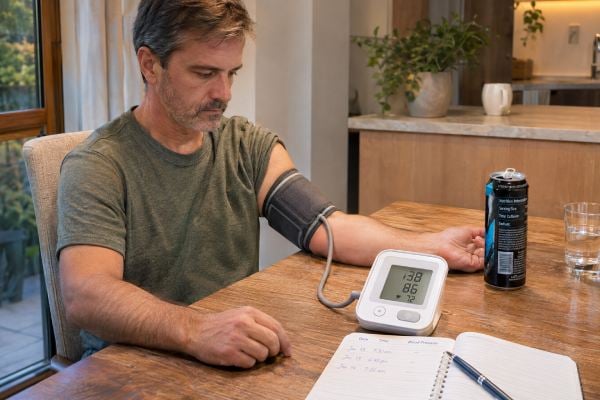
Energy drinks can raise blood pressure for several hours, mainly because of caffeine and other stimulant ingredients. In controlled trials, the average rise is usually modest, but some people have a much larger response—especially if they already have hypertension, are caffeine-sensitive, use nicotine or stimulant medicines, drink several cans quickly, or consume energy drinks before hard exercise. Sodium can add to the problem in some products, although it is usually a secondary issue compared with stimulants. Sugar, dehydration, sleep loss, and intense exercise can also change the cardiovascular response. A single elevated reading after an energy drink does not automatically mean you have chronic hypertension, but repeated stimulant-driven spikes are not ideal if your blood pressure is already difficult to control. The safest approach is to check the caffeine dose, avoid stacking stimulants, keep total sodium reasonable, and pay attention to warning signs such as chest pain, fainting, severe palpitations, or a very high blood-pressure reading with symptoms.
Table of Contents
- How Energy Drinks Raise Blood Pressure
- Caffeine Dose, Timing, and Individual Sensitivity
- Sodium, Sugar, and Other Ingredients
- Who Is Most Likely to Have a Problem
- Combinations That Increase Risk
- Blood-Pressure and Heart Safety Red Flags
- Safer Ways to Get Energy and Focus
How Energy Drinks Raise Blood Pressure
The main acute blood-pressure effect of an energy drink comes from stimulants, especially caffeine. Caffeine blocks adenosine receptors and can increase sympathetic nervous system activity, vascular tone, and circulating stress hormones. The result can be a temporary rise in systolic and diastolic pressure.
A 2023 systematic review and meta-analysis of randomized trials found that energy drinks increased systolic and diastolic blood pressure in healthy adults. The average systolic increase was most pronounced about 60–80 minutes after consumption, and the average diastolic increase was most pronounced later. These are group averages, not a prediction for every person.
Energy drinks differ from coffee in an important way: the caffeine dose can be large, easy to consume quickly, and combined with other ingredients. One can may contain roughly 80 mg of caffeine, while larger cans and concentrated “energy shots” may contain 200–300 mg or more. Some products add guarana or other caffeine-containing botanicals, so the total stimulant exposure can be less obvious than the front label suggests.
The cardiovascular effect can also last longer than the brief feeling of alertness. Caffeine has a half-life of several hours in many adults, meaning a substantial fraction remains in the body long after you finish the drink. Genetics, pregnancy, liver function, smoking status, and medications can alter how quickly caffeine is cleared.
A temporary rise in blood pressure does not mean every energy drink causes permanent hypertension. The concern is greater when high doses are used repeatedly, blood pressure is already high, or the drink is combined with other stressors that raise heart rate and vascular tone.
If you want a broader look at caffeine itself, caffeine and blood-pressure limits explains why dose and individual sensitivity matter.
Caffeine Dose, Timing, and Individual Sensitivity
The same amount of caffeine can feel very different from one person to another. Habitual users may develop partial tolerance to the pressor effect, while people who rarely use caffeine can experience a larger increase in pressure, shakiness, anxiety, or palpitations.
Research on caffeine supplementation supports a dose-related blood-pressure effect. A 2023 systematic review and dose-response meta-analysis found significant increases in both systolic and diastolic blood pressure in adults using caffeine supplements, with larger effects at higher exposure levels.
For practical use, read the total caffeine per container rather than assuming one can equals one serving. Some products list caffeine by serving while the can holds two servings. Others include ingredients such as guarana, yerba mate, green tea extract, or kola nut that contribute additional caffeine.
Timing matters too. An energy drink consumed right before a blood-pressure check can make the reading less representative of your usual resting pressure. If you are monitoring for hypertension, avoid caffeine, exercise, nicotine, and other acute stimulants for at least 30 minutes before a resting measurement, and follow a consistent home routine.
People who notice a reproducible 10–20 mm Hg increase after caffeine may be particularly sensitive. That does not automatically mean caffeine must be eliminated, but it is a reason to reduce the dose, avoid concentrated energy drinks, and discuss the pattern if blood pressure is otherwise high.
Symptoms can be misleading. Some people feel stimulated with only a small pressure change, while others have a larger pressure rise without feeling much different. Measuring is more useful than relying on sensation alone.
Energy-drink serving size is one of the easiest places to underestimate stimulant exposure. A small can may contain about the caffeine of a cup of coffee, while a large can or concentrated shot can deliver several cups’ worth quickly. Some labels state “caffeine from all sources,” while others list individual ingredients. If a product uses guarana, remember that guarana naturally contains caffeine; a proprietary blend can make the true total harder to judge.
The rate of consumption matters. Drinking 200–300 mg of caffeine over a few minutes can create a higher peak exposure than sipping the same amount across several hours. Peak exposure is relevant to jitteriness, palpitations, and short-term blood-pressure response. Body size also matters, so a fixed 200 mg dose represents a larger mg/kg exposure in a smaller person.
Caffeine metabolism can be prolonged by pregnancy and by certain medications, while smoking can speed it. Genetic differences in liver enzymes also contribute to why one person can drink an energy drink late in the day with little effect and another experiences hours of insomnia and a pounding heartbeat.
Sodium, Sugar, and Other Ingredients
Caffeine is usually the main blood-pressure issue, but energy drinks are mixtures. Sodium, sugar, and other compounds can change the overall effect.
Sodium
Many energy drinks contain 100–300 mg of sodium per can, though some contain more. That is not enormous by itself, but it matters if you drink several cans or already eat a high-sodium diet. People with hypertension are generally advised to reduce dietary sodium because chronic high intake raises blood pressure.
The 2025 U.S. hypertension guideline recommends keeping sodium below 2,300 mg per day and aiming closer to 1,500 mg per day when feasible for stronger blood-pressure reduction. A 300 mg drink therefore represents 20% of a 1,500 mg target.
If sodium is a recurring issue in your diet, common high-sodium foods to limit may make a bigger difference than focusing on one beverage.
Sugar
Some energy drinks contain 30–60 g of added sugar. Sugar is not usually responsible for the immediate stimulant-like blood-pressure rise, but large regular intakes can add calories, worsen triglycerides, and make weight control harder. Excess body weight and poor metabolic health contribute to long-term hypertension risk.
Sugar-free versions avoid that calorie load but do not remove caffeine or other stimulants. “Zero sugar” should not be interpreted as “no cardiovascular effect.”
Taurine and other additives
Taurine, B vitamins, glucuronolactone, ginseng, and other ingredients are common. Taurine itself has been studied for possible blood-pressure effects, but an energy drink is a complex mixture, and the net acute cardiovascular effect in trials is generally stimulatory. The presence of vitamins does not neutralize a high caffeine dose.
Some formulations contain proprietary blends, making it harder to know the dose of individual compounds. If the stimulant content is unclear, that uncertainty is itself a reason for caution.
Who Is Most Likely to Have a Problem
Most healthy adults will not develop a medical emergency from a single standard energy drink, but risk is not evenly distributed.
People who should be especially cautious include those with:
- Hypertension or frequent blood-pressure spikes
- Known arrhythmias or unexplained palpitations
- Coronary artery disease, heart failure, or cardiomyopathy
- Congenital long-QT syndrome or another inherited electrical disorder
- A history of fainting during exercise
- Chronic kidney disease
- High anxiety or panic symptoms triggered by stimulants
- Pregnancy, because caffeine clearance is slower and intake recommendations are lower
- Use of prescription stimulants, decongestants, nicotine, or other sympathomimetic drugs
Children and adolescents are also more vulnerable to high stimulant doses relative to body size. Energy drinks are not equivalent to sports drinks and are not needed for routine youth athletics.
A 2025 systematic review of energy drinks and the cardiovascular system found frequent reports of increased systolic and diastolic blood pressure across included studies, along with heart-rate and ECG changes. The studies were heterogeneous and often involved young healthy participants, which means they may underestimate risk in people with established cardiovascular disease.
If your blood pressure is already above goal, blood-pressure spikes and common triggers can help you identify whether stimulants are one part of a larger pattern.
Age and pregnancy change the margin for error. Children and teenagers have lower body mass, so a standard can can deliver a much larger caffeine dose per kilogram than it does in an adult. Energy drinks also make it easy to consume caffeine rapidly, which is one reason pediatric and adolescent health guidance generally discourages their use.
During pregnancy, caffeine is cleared more slowly. People who are pregnant should follow pregnancy-specific caffeine guidance rather than adult energy-drink limits, and high-dose energy drinks are a poor way to meet an alertness need. The products may also contain herbal ingredients that have not been studied adequately in pregnancy.
Older adults with hypertension may be more sensitive to pressure changes because arterial stiffness, kidney function, and medication use can alter the response. A drink that caused little trouble years earlier may not have the same effect after hypertension or heart disease develops.
Combinations That Increase Risk
Energy drinks become more concerning when combined with other stimulants or physiologic stress.
Energy drinks plus nicotine
Nicotine raises sympathetic activity, heart rate, and blood pressure. Combining nicotine with a high-caffeine drink can amplify palpitations and pressure spikes. This applies to cigarettes, vaping, nicotine pouches, and other nicotine products.
Energy drinks plus stimulant medication
Prescription stimulants for ADHD and some over-the-counter decongestants can also raise heart rate or blood pressure. The combination may be tolerated by some people, but it should not be assumed safe simply because each product is legal. Ask the prescriber or pharmacist about total stimulant load.
Energy drinks before intense exercise
Exercise naturally raises systolic blood pressure. A 2022 systematic review and meta-analysis found that caffeinated energy drinks increased systolic blood pressure during exercise compared with control conditions in healthy adults. For someone prone to hypertension, this is a reason to avoid using a high-dose energy drink as a pre-workout.
Energy drinks with sleep deprivation
People often use energy drinks to compensate for too little sleep. Sleep loss itself can increase sympathetic activation and worsen blood-pressure control. Using larger stimulant doses to push through exhaustion can create a cycle of poor sleep followed by more caffeine.
Energy drinks with alcohol
Caffeine can reduce the feeling of sedation without reducing alcohol impairment. The combination can encourage longer drinking sessions and make it harder to recognize intoxication. It also adds another source of dehydration and cardiovascular stress.
If you are unsure whether an energy drink is affecting your pressure, a short home experiment can be informative. On several days when you are rested and otherwise following your normal routine, measure blood pressure before the drink and again about 30, 60, and 120 minutes afterward. Use the same cuff and seated technique each time. Do not perform this experiment if your clinician has told you to avoid stimulants or if you have had severe reactions.
Look for a reproducible pattern rather than one number. Blood pressure naturally varies with stress, talking, exercise, bladder fullness, pain, and measurement technique. A consistent rise after the same drink is more meaningful than a single isolated reading. If the increase is large or your baseline pressure is already above goal, switching to a lower-caffeine drink is a simple intervention.
The same principle applies to medication. Do not change antihypertensive doses to “cover” an energy drink. Blood-pressure medicines are prescribed for sustained control, while the beverage is an optional exposure. Removing or reducing the trigger is generally safer than adjusting medication around it without medical guidance.
Blood-Pressure and Heart Safety Red Flags
Most temporary caffeine-related pressure increases settle as the stimulant wears off, but some situations need urgent evaluation.
Seek emergency medical care for an energy-drink-related episode if you have:
- Chest pressure, squeezing, or pain
- Fainting or near-fainting
- Severe shortness of breath
- A sustained very fast or irregular heartbeat with weakness or dizziness
- New neurologic symptoms such as facial droop, arm weakness, confusion, or difficulty speaking
- A very high blood-pressure reading with symptoms such as severe headache, chest pain, shortness of breath, neurologic changes, or vision disturbance
A home blood-pressure number should always be interpreted with symptoms and context. If a reading is extremely high, sit quietly and recheck with proper technique. Do not repeatedly consume caffeine to stay alert while waiting for the number to come down.
People with repeated elevated readings should be evaluated for hypertension rather than assuming every high number is “just caffeine.” Proper measurement is essential; home blood-pressure technique explains cuff position, rest time, and repeat readings.
Palpitations without chest pain or fainting are often benign, but frequent episodes after energy drinks are a reason to stop the trigger and discuss the symptoms, especially if there is a family history of sudden cardiac death.
Safer Ways to Get Energy and Focus
If you use energy drinks mainly for alertness rather than taste, lower-dose options can provide the benefit with less cardiovascular stimulation.
For many adults, coffee or tea offers a more predictable caffeine dose and fewer added stimulant ingredients. You can also use half-caffeinated coffee, smaller servings, or tea when you want a gentler effect. If caffeine clearly raises your pressure, decaffeinated coffee or non-caffeinated tea removes the main stimulant.
Food and sleep matter more than another can. A meal or snack with protein, fiber, and slow-digesting carbohydrate can help prevent the energy crash that sometimes drives repeat stimulant use. Examples include yogurt with berries and nuts, oatmeal with seeds, fruit with peanut butter, or a whole-grain sandwich with lean protein.
For exercise, water is usually sufficient for sessions under about an hour. Longer or hotter sessions may justify an electrolyte or carbohydrate drink, but it does not need to contain a stimulant. If your goal is hydration, choose a true hydration product rather than an energy drink.
If you regularly need high-dose caffeine to function, review sleep duration and quality. sleep deprivation and cardiovascular risk explains why using stimulants to mask chronic sleep loss is not a neutral strategy.
The simplest cardiovascular rule is: the more stimulant you need, the more important it is to know your blood-pressure response. One low-dose caffeinated drink may be tolerable; multiple high-caffeine cans, especially with nicotine, stimulant medication, intense exercise, or sleep loss, create a much less predictable situation.
References
- The Effects of Energy Drinks on the Cardiovascular System: A Systematic Review 2025 (Systematic Review)
- Acute effects of energy drink consumption on cardiovascular parameters in healthy adults: a systematic review and meta-analysis of randomized clinical trials 2023 (Systematic Review)
- Effects of caffeinated energy drinks on cardiovascular responses during exercise in healthy adults: a systematic review and meta-analysis of randomized controlled trials 2022 (Systematic Review)
- The effects of caffeine supplementation on blood pressure in adults: A systematic review and dose-response meta-analysis 2023 (Systematic Review)
- Caffeine and Cardiometabolic Health: Evidence, Controversies, and Clinical Considerations 2026 (Review)
- 2025 AHA/ACC/AANP/AAPA/ABC/ACCP/ACPM/AGS/AMA/ASPC/NMA/PCNA/SGIM Guideline for the Prevention, Detection, Evaluation, and Management of High Blood Pressure in Adults: A Report of the American College of Cardiology/American Heart Association Joint Committee on Clinical Practice Guidelines 2025 (Guideline)
Disclaimer
This article provides general education and is not a substitute for medical evaluation. If you have hypertension, heart disease, an arrhythmia, recurrent fainting, or take stimulant medication, discuss energy-drink use with your clinician. Seek urgent care for chest pain, fainting, severe shortness of breath, neurologic symptoms, or a very high blood-pressure reading with concerning symptoms.