Garlic may lower blood pressure modestly in some people with hypertension, but it should be viewed as a complementary food or supplement—not a replacement for proven blood pressure treatment. Clinical trials and recent meta-analyses suggest that certain garlic preparations, including aged garlic extracts, can reduce systolic and diastolic blood pressure by a few millimeters of mercury on average, with larger changes reported in some studies. The size of the effect varies because garlic products differ in preparation, active compounds, dose, and quality, and many trials are small or short. Eating garlic as part of a heart-healthy diet is generally safe for most adults, while concentrated supplements deserve more caution. Garlic can cause stomach upset and may increase bleeding risk, especially when combined with anticoagulants, antiplatelet drugs, or surgery. If your blood pressure is high, use garlic as one piece of a broader plan that includes accurate blood pressure measurement, sodium control, exercise, sleep, and medication when needed.
Table of Contents
- What the Evidence Shows
- How Garlic Might Affect Blood Pressure
- Garlic in Food vs Garlic Supplements
- How to Use Garlic in Food
- Garlic Supplement Safety and Interactions
- Who Should Be Cautious
- How to Fit Garlic Into a Blood Pressure Plan
What the Evidence Shows
The best summary is that garlic supplements can produce a modest blood pressure reduction in some adults with hypertension, but the evidence is not strong enough to treat garlic like a standard antihypertensive medication.
Recent reviews of randomized trials have generally found reductions in systolic blood pressure, with smaller and less consistent changes in diastolic pressure. The exact average differs across analyses because the trials use different garlic preparations, doses, durations, and patient groups. Some studies enroll people with untreated hypertension, while others add garlic to prescribed medication in people whose blood pressure remains above goal.
This variability matters. “Garlic” in research may mean aged garlic extract, dried garlic powder, standardized preparations, black garlic extracts, or other products. A clove of garlic in dinner is not equivalent to a capsule used in a clinical trial.
The effect also appears more likely to be noticeable when blood pressure starts high. If your systolic pressure is already near normal, there is less room for a supplement to lower it. That is common across many lifestyle and dietary interventions.
A few millimeters of mercury can matter at a population level, but that does not mean a supplement can safely replace medication. Modern hypertension treatment often aims for substantial and sustained pressure reduction because stroke, heart attack, kidney disease, and heart failure risk rises with higher blood pressure over time. Garlic is best viewed as an adjunct.
Why the research is harder to interpret than a drug trial
Garlic studies are unusually difficult to compare because the intervention is not one standardized chemical. Different trials may use aged extracts, powders, oils, black garlic, or preparations standardized to different sulfur compounds. Even when two studies list similar milligram doses, the biologically active content may differ. Trial duration also varies, and some studies include only a few dozen participants.
Blood pressure measurement methods add another layer. Office readings can fall simply because participants become more comfortable with repeated visits. Home or ambulatory monitoring gives a more complete picture, but not every garlic trial uses it. Small studies are also more likely to produce unstable estimates, so a large average reduction in one trial should not be assumed to apply to everyone.
Recent meta-analyses combine many of these trials and generally point in the same direction, but the exact size of benefit is uncertain. That is why the safest interpretation is “possibly helpful, usually modest” rather than “proven natural replacement for medication.” If a product lowers your home average by a few points without causing side effects or interactions, that may be useful. If it does nothing, continuing it indefinitely because a study showed benefit in another population makes little sense.
For the broader evidence-based lifestyle picture, non-drug habits that support lower blood pressure work best when several are combined rather than relying on one supplement.
How Garlic Might Affect Blood Pressure
Garlic contains sulfur-containing compounds that change when the clove is cut, crushed, aged, heated, or processed. These compounds are thought to influence several pathways related to blood pressure.
Potential mechanisms include:
- improved nitric oxide signaling, which helps blood vessels relax;
- effects on hydrogen sulfide pathways involved in vascular tone;
- mild inhibition of angiotensin-converting enzyme activity in experimental settings;
- antioxidant and anti-inflammatory effects;
- possible improvements in arterial stiffness and endothelial function.
These mechanisms are biologically plausible, but they do not prove that any garlic product will reliably lower blood pressure in a particular person. Human outcome data matter more than laboratory mechanisms.
Aged garlic extract is often studied because the aging process changes the chemical profile and can make the product easier to tolerate than raw garlic. S-allyl cysteine is one of the compounds used to standardize some aged-garlic products. Other formulations contain different amounts of allicin-related compounds or precursors.
This is one reason supplement labels can be confusing. Two bottles that both say “garlic 1,000 mg” may not deliver the same active compounds. The milligram weight alone does not tell you whether the product resembles what was tested in a trial.
Garlic may also have small effects on LDL cholesterol and glucose in some studies, but those possible benefits should not be exaggerated. If LDL, diabetes, or blood pressure needs treatment, use therapies with direct evidence for that problem rather than expecting one supplement to correct several risk factors at once.
Garlic in Food vs Garlic Supplements
Garlic used in cooking and garlic taken as a concentrated supplement should be treated differently.
Garlic as food
Garlic is a useful flavor ingredient in a heart-healthy diet because it can help food taste satisfying with less salt, butter, or heavy sauce. That may indirectly support blood pressure by making a lower-sodium eating pattern easier to maintain.
One clove of fresh garlic provides a small amount of nutrients but not a therapeutic dose comparable with most supplement trials. You should eat garlic because you enjoy it and because it helps build flavorful, minimally processed meals—not because one or two cloves are guaranteed to lower blood pressure by a specific amount.
Garlic supplements
Supplements concentrate garlic compounds and are more likely to resemble research interventions. They also carry more interaction and quality-control concerns.
Aged garlic extract has some of the better blood-pressure evidence, but even within that category formulations differ. Some trials have used around 1,000–1,200 mg/day or standardized amounts of S-allyl cysteine, while other products and studies use different doses. A separate review of aged garlic extract doses studied for blood pressure is useful if you are specifically considering supplementation.
Do not assume that more is better. Higher doses can increase gastrointestinal side effects and may increase interaction risk without producing a proportionally greater benefit.
Supplement regulation also differs from prescription drug regulation. Product identity, purity, and active-compound content can vary. Third-party quality testing can reduce some uncertainty, but it does not prove that a supplement will work for you.
What to look for if you are considering a supplement
Start by matching the product type to the evidence rather than buying the bottle with the largest number on the front. If the research you are relying on used aged garlic extract standardized to a particular compound, a generic garlic-oil capsule is not automatically equivalent. Look for a clear ingredient list, the amount per serving, the number of capsules required, and any standardization information the manufacturer provides.
Avoid products that hide the actual amount inside a “proprietary blend.” That makes it difficult to compare what you are taking with a clinical trial or even to know whether your dose changes when you switch brands. Be cautious with products that promise to “cure hypertension,” replace medication, detox arteries, or lower blood pressure by a guaranteed amount. Those claims go beyond the evidence.
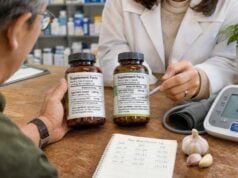
Keep a simple record if you start a supplement: product name, daily amount, start date, home blood pressure average, and any side effects. Measure blood pressure under the same conditions each time. A meaningful change should show up in repeated averages, not one unusually low reading after a quiet morning.
If you develop dizziness, faintness, unusual bruising, nosebleeds, black stools, vomiting blood, or any other sign of possible bleeding, stop self-experimenting and seek medical advice promptly. Likewise, if your blood pressure is falling because your prescribed treatment is working, your clinician may need to adjust medication; do not make that change on your own.
How to Use Garlic in Food
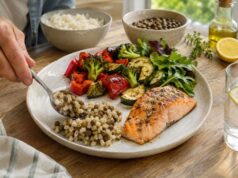
For most people, the safest and most practical use of garlic is culinary. It can help replace salt-heavy flavorings and make vegetables, beans, fish, and whole grains more appealing.
Try garlic in:
- roasted vegetables with olive oil and lemon;
- bean or lentil soups made with lower-sodium broth;
- tomato sauces without large amounts of added salt;
- yogurt-based dips with herbs;
- marinades for fish, chicken, tofu, or mushrooms;
- hummus and other bean spreads;
- sautéed greens with vinegar or citrus;
- whole-grain dishes with herbs and spices.
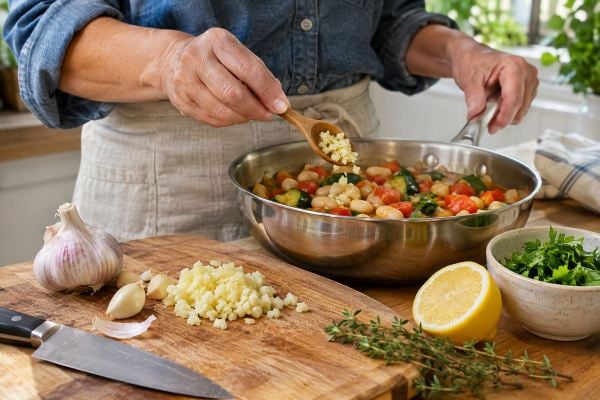
Crushing or chopping fresh garlic and letting it sit briefly before cooking is often recommended to allow enzyme-driven formation of allicin-related compounds. However, you do not need to micromanage preparation for cardiovascular benefit. The much larger dietary question is whether garlic helps you eat more minimally processed foods with less sodium and saturated fat.
If blood pressure is your goal, garlic works especially well as part of a DASH-style eating pattern. Garlic, herbs, citrus, vinegar, pepper, and spices can make lower-sodium meals taste complete rather than bland.
A practical example is replacing bottled pasta sauce, salty sausage, and extra cheese with a homemade tomato sauce flavored with garlic, onion, herbs, olive oil, and vegetables. The blood-pressure advantage comes from the entire swap, not from garlic alone.
There is no need to eat raw garlic if you dislike it. Raw garlic can be harsh on the stomach and may worsen reflux. Roasting, sautéing, or adding garlic late in cooking changes its flavor and chemistry, but a sustainable heart-healthy meal matters more than preserving a theoretical maximum amount of one compound.
Also avoid assuming that garlic salt and garlic powder are interchangeable. Pure garlic powder can add flavor with little sodium, while garlic salt contains salt and may contribute substantially to daily sodium intake. Check the ingredient list. If lowering blood pressure is the goal, plain garlic, garlic powder, herbs, vinegar, citrus, and spices are usually better flavor-building tools than heavily salted seasoning blends.
Finally, garlic-heavy meals do not cancel out restaurant sodium, alcohol, or missed medication. Think of garlic as a flavor strategy first and a possible modest blood-pressure aid second. That framing keeps the benefit realistic and makes it easier to focus on the changes that have the strongest evidence and the greatest likely effect on long-term cardiovascular risk across months and years, not just a single blood pressure reading alone today.
Garlic Supplement Safety and Interactions
Garlic in normal food amounts is safe for most people. Concentrated supplements can cause more problems.
Common side effects include:
- garlic breath and body odor;
- heartburn or reflux;
- abdominal discomfort;
- gas;
- nausea;
- diarrhea in some people.
The most important interaction concern is bleeding. Garlic supplements may affect platelet function. That matters if you take anticoagulants such as warfarin, apixaban, rivaroxaban, dabigatran, or edoxaban, or antiplatelet drugs such as aspirin or clopidogrel.
The exact clinical significance varies, but the combination deserves professional review rather than guesswork. If you take a medicine that affects bleeding, tell your prescriber and pharmacist before starting a garlic supplement.
Surgery is another concern. Because of possible bleeding effects, your surgical team should know about garlic supplements well before a procedure. Do not decide on your own how many days to stop them; follow the surgeon’s or anesthesiologist’s instructions.
Garlic may also modestly lower blood pressure or blood sugar. If you take antihypertensive or glucose-lowering medication, monitor for symptoms such as lightheadedness or unusually low readings, especially after adding a concentrated supplement.
Raw garlic applied to the skin is not a safe home remedy. It can cause severe irritation and chemical burns. Eating garlic and placing raw garlic directly on skin are completely different exposures.
Who Should Be Cautious
Talk with a clinician before using a concentrated garlic supplement if you:
- take an anticoagulant or antiplatelet medicine;
- have a bleeding disorder;
- are preparing for surgery or a procedure;
- take multiple blood pressure medicines and sometimes have low readings;
- use diabetes medication and are prone to hypoglycemia;
- have significant reflux or gastrointestinal sensitivity;
- are pregnant or breastfeeding and want to take more than normal food amounts;
- have an allergy to garlic or related allium plants.
People with very high blood pressure should be especially careful about using supplements as a delay tactic. If readings are repeatedly 180/120 mmHg or higher, or if severe hypertension is accompanied by chest pain, shortness of breath, neurologic symptoms, confusion, or severe headache, that requires urgent medical assessment—not a supplement experiment.
If your office readings are high but home readings are not, proper confirmation matters. White coat hypertension and masked hypertension are real, and home or ambulatory monitoring can prevent decisions based on a few misleading readings.
How to Fit Garlic Into a Blood Pressure Plan
If you enjoy garlic, use it freely in food as part of a lower-sodium, plant-forward eating pattern. If you are considering a supplement, treat it like a real intervention with a baseline, a safety check, and follow-up—not like a harmless seasoning in capsule form.
A sensible approach is:
- Measure blood pressure correctly. Sit quietly for five minutes, use the right cuff size, support your arm, and take repeated home readings rather than reacting to one number.
- Fix the big lifestyle drivers first. Sodium, alcohol, excess weight, low activity, poor sleep, and untreated sleep apnea often matter more than any supplement.
- Review medications and interactions. Ask a clinician or pharmacist whether garlic is compatible with your prescription drugs.
- Choose a standardized product if using a supplement. Avoid assuming that raw-garlic-equivalent milligrams predict effectiveness.
- Track results. Compare home blood pressure averages over several weeks. Stop if you develop troublesome side effects or unusually low readings.
- Keep prescribed treatment in place. Do not reduce or stop blood pressure medicine unless your clinician tells you to.
For many people, improving sodium intake produces a more predictable blood-pressure benefit than adding garlic. If your diet is heavy in restaurant meals, packaged foods, or cured meats, reducing the biggest sodium traps should usually come before fine-tuning supplements.
Blood pressure is a long-term risk factor, so consistency matters. A supplement taken intermittently cannot compensate for a pattern of high sodium, heavy alcohol use, poor sleep, or missed medication. Garlic can be a reasonable extra tool, but it works best when the foundation is already strong.
References
- The effect of garlic on the lowering of blood pressure in the patients with hypertension: an updated meta-analysis and trial sequential analysis 2025 (Systematic Review)
- Effects of Garlic Supplementation on Cardiovascular Risk Factors in Adults: A Comprehensive Updated Systematic Review and Meta-Analysis of Randomized Controlled Trials 2025 (Systematic Review)
- The Effect of Aged Garlic Supplementation on Blood Pressure and Lipid Profile: A Dose-Response Grade-Assessed Systematic Review and Meta-Analysis of Randomized Controlled Trials 2025 (Systematic Review)
- Antihypertensive Effects of an Optimized Aged Garlic Extract in Subjects with Grade I Hypertension and Antihypertensive Drug Therapy: A Randomized, Triple-Blind Controlled Trial 2023 (RCT)
- Garlic: Usefulness and Safety | NCCIH 2025 (Official Fact Sheet)
- 2024 ESC Guidelines for the management of elevated blood pressure and hypertension 2024 (Guideline)
Disclaimer
This article is for general education and does not replace medical advice. Garlic supplements can interact with anticoagulants, antiplatelet medicines, blood pressure drugs, and other treatments, and may increase bleeding risk. Do not stop prescribed hypertension medication or use garlic to treat severely elevated blood pressure without medical guidance.