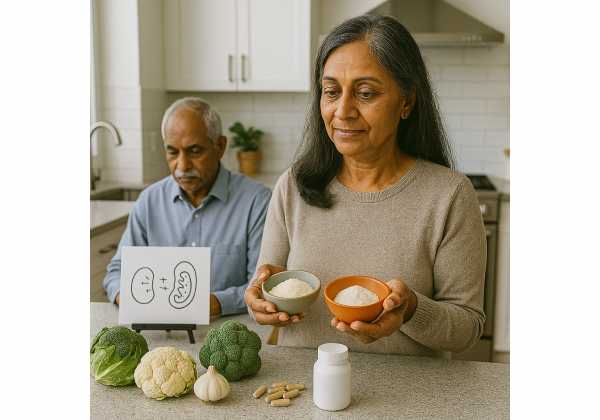
GlyNAC is a supplement pairing glycine with N-acetylcysteine, two building blocks the body uses to make glutathione. Interest in GlyNAC grew because several human studies found that older adults often show lower glutathione status, higher oxidative stress, and signs of weaker mitochondrial fuel use. In small clinical trials, GlyNAC improved several markers linked with aging biology, including glutathione levels, oxidative stress, inflammation, insulin resistance, mitochondrial function, gait speed, strength, and some cognitive measures. Those findings are promising, but they do not prove that GlyNAC extends human lifespan or prevents age-related disease.
The most sensible way to view GlyNAC is as a targeted redox and mitochondrial support strategy. It belongs in the “interesting but still early” category: more human trials, larger sample sizes, and longer follow-up are still needed before it deserves broad anti-aging claims.
Table of Contents
- What GlyNAC Is
- Glutathione, Mitochondria, and Aging
- What Human Studies Found
- Who Might Consider It
- Dose, Forms, and Timing
- Safety, Cautions, and Interactions
- How to Track Results
- Realistic Expectations
What GlyNAC Is
GlyNAC means glycine plus N-acetylcysteine. Glycine is a small amino acid used in collagen, bile acids, creatine, heme, DNA-related pathways, and glutathione production. N-acetylcysteine, often shortened to NAC, is a modified form of cysteine. Cysteine is sulfur-containing and often rate-limiting for glutathione synthesis.
Glutathione is made from three amino acids: glutamate, cysteine, and glycine. The body usually has enough glutamate, while cysteine and glycine become more relevant when demand rises. GlyNAC tries to supply both at the same time rather than giving glutathione directly.
That distinction matters. A glutathione capsule or liposomal glutathione product gives preformed glutathione. GlyNAC gives precursors so cells make glutathione through their own regulated pathway. This matters because glutathione is not only an “antioxidant.” It is part of a redox control system, meaning it helps cells handle stress, recycle other antioxidants, protect proteins, support detoxification chemistry, and maintain cellular signaling.
Glycine also has separate roles beyond glutathione. It contributes to collagen structure, sleep regulation, one-carbon metabolism, and the conjugation of certain compounds in the liver. A deeper discussion of those roles belongs in glycine for longevity. NAC also has separate effects, including mucus-thinning activity, sulfur donation, and glutamate-related signaling effects, covered more fully in NAC for longevity.
GlyNAC research focuses on the combination because aging rarely involves one isolated shortage. Older adults often have several overlapping changes: lower glutathione reserves, higher oxidative stress, reduced mitochondrial flexibility, low-grade inflammation, insulin resistance, and declining physical function. A supplement that influences several of those pathways at once attracts attention, especially when early human studies show measurable changes.
GlyNAC is not a substitute for protein, exercise, sleep, glucose control, or medical treatment. It is also not a proven longevity drug. Its strongest evidence relates to glutathione restoration, redox balance, and mitochondrial fuel metabolism in small human studies.
Glutathione, Mitochondria, and Aging
Glutathione is one of the body’s main intracellular defense molecules. Cells use reduced glutathione, called GSH, to neutralize reactive molecules and protect proteins, lipids, and DNA. During that process, glutathione becomes oxidized, forming GSSG. The ratio between reduced and oxidized glutathione gives researchers a window into cellular redox status.
Aging is often linked with lower glutathione availability and a weaker ability to recover from oxidative stress. Oxidative stress means reactive molecules exceed the cell’s ability to control them. That does not mean all reactive oxygen species are bad. Small bursts of oxidative signaling help the body adapt to exercise, heat, fasting, infection, and repair. The problem is chronic overload without enough recovery.
This is why antioxidant strategy requires restraint. The aim is not to erase every oxidative signal. The aim is to restore the cell’s ability to respond and recover. That broader concept is covered in redox balance and antioxidants.
Mitochondria sit at the center of this discussion because they produce cellular energy and generate reactive oxygen species as part of normal metabolism. Healthy mitochondria switch between fuels, produce ATP efficiently, and signal stress in a controlled way. Aging and metabolic disease often shift this pattern toward lower efficiency, higher oxidative burden, and poorer fuel flexibility.
GlyNAC research is built on a simple chain of reasoning:
- Older adults often show glutathione deficiency or impaired glutathione redox status.
- Glycine and cysteine are needed to make glutathione.
- NAC supplies cysteine, while glycine supplies glycine.
- Restoring glutathione status appears to improve oxidative stress handling.
- Better redox handling can support mitochondrial fuel oxidation and reduce downstream stress signals.
The most interesting part of GlyNAC is not that it “boosts antioxidants.” The more useful idea is that glutathione status and mitochondrial function appear tightly linked. When glutathione is low, mitochondria face more oxidative strain. When mitochondria work poorly, cells create more stress signals. That loop can affect inflammation, insulin sensitivity, endothelial function, physical performance, and possibly cognition.
This does not mean GlyNAC fixes aging. It means GlyNAC targets a plausible aging-related bottleneck. The early human evidence supports that idea enough to justify further research, but not enough to treat GlyNAC as a proven age-reversal therapy. Mitochondrial maintenance also depends on training, nutrient sufficiency, sleep, and mitophagy, the process of clearing worn-out mitochondria. Supplements work best when those basics are already moving in the right direction.
What Human Studies Found
Human GlyNAC research is promising, but the study base is still small. The strongest signals come from older-adult trials led by Baylor researchers, plus a separate randomized trial in healthy older adults and a short pilot study in type 2 diabetes.
The 2021 pilot trial followed eight older adults and compared them with younger adults. Older participants took GlyNAC for 24 weeks, then stopped for 12 weeks. At baseline, the older adults had lower glutathione, higher oxidative stress, impaired mitochondrial fuel oxidation, more inflammation, more insulin resistance, weaker physical function, and worse scores on some cognitive measures compared with younger adults. After supplementation, many of these measures improved. After stopping, several benefits declined.
The 2023 randomized trial gave older adults GlyNAC or an alanine placebo for 16 weeks. The study included 24 older adults and 12 young adults for comparison. The older adults receiving GlyNAC improved glutathione deficiency, oxidative stress, mitochondrial dysfunction, inflammation, insulin resistance, endothelial dysfunction, and physical function measures such as gait speed and muscle strength. The placebo group did not show the same pattern of improvement.
A separate 2022 randomized trial studied 114 healthy older adults for 2 weeks using three total daily GlyNAC doses: 2.4 g, 4.8 g, or 7.2 g in a 1:1 ratio. Overall, GlyNAC did not significantly improve the primary glutathione endpoint compared with placebo across the whole group. In a post-hoc subgroup with higher oxidative stress and lower baseline glutathione, the medium and high doses increased glutathione generation. This trial adds an important caution: healthier older adults without clear glutathione demand do not always show strong changes, especially over only 2 weeks.
The type 2 diabetes pilot study was short but mechanistically interesting. Ten adults with type 2 diabetes took GlyNAC for 14 days, with 10 non-diabetic adults used as controls. Before supplementation, the diabetes group had lower mitochondrial fatty acid oxidation, higher mitochondrial glucose oxidation, higher insulin resistance, and higher free fatty acids. After 2 weeks, mitochondrial fatty acid oxidation improved by about 30%, mitochondrial glucose oxidation fell by about 47%, insulin resistance fell by about 22%, and free fatty acids fell by about 25%. Those findings need replication in larger, placebo-controlled trials.
| Human study | Design | Main findings | Main limitation |
|---|---|---|---|
| 2021 older-adult pilot | Eight older adults, 24 weeks GlyNAC, 12-week withdrawal | Improved glutathione, oxidative stress, mitochondrial function, inflammation, insulin resistance, strength, gait speed, and some cognition measures | Very small, open-label design |
| 2022 healthy older-adult trial | 114 healthy older adults, 2 weeks, three dose levels | Safe and well tolerated; primary glutathione endpoint not improved overall; subgroup with high oxidative stress and low glutathione responded | Short duration and healthier study population |
| 2022 type 2 diabetes pilot | Ten adults with type 2 diabetes, 14 days | Improved mitochondrial fuel oxidation and insulin resistance markers | Small, short, not a large randomized outcomes trial |
| 2023 older-adult randomized trial | 24 older adults randomized to GlyNAC or alanine placebo for 16 weeks | Improved glutathione deficiency, oxidative stress, mitochondrial function, inflammation, insulin resistance, physical function, and aging-hallmark measures | Small sample and surrogate outcomes |
The honest reading is straightforward: GlyNAC has human data, and the findings are stronger than many longevity supplement claims. At the same time, the evidence still relies heavily on biomarkers and functional measures in small groups. No trial has shown that GlyNAC prevents dementia, prevents frailty, reduces heart attacks, extends lifespan, or lowers mortality.
The studies also suggest that baseline status matters. People with higher oxidative stress, lower glutathione status, insulin resistance, or functional decline appear more likely to show measurable changes than healthy adults with good reserves. This pattern fits many nutrient-based interventions: the clearer the deficit or demand, the more visible the response.
Who Might Consider It
GlyNAC makes the most sense for adults who have a plausible reason to target glutathione and mitochondrial stress. The strongest research signal is in older adults, especially those with signs of metabolic strain, physical decline, or elevated oxidative stress markers. It also has early pilot evidence in type 2 diabetes, though people with diabetes need clinician guidance because supplements that affect insulin resistance belong inside a broader medication and monitoring plan.
GlyNAC is more plausible for:
- Adults over 60 with declining walking speed, grip strength, or exercise tolerance.
- People with insulin resistance, elevated fasting insulin, high triglycerides, or central adiposity.
- Adults with high inflammatory or oxidative stress burden.
- People with low protein intake or low glycine-rich food intake.
- Adults already addressing sleep, movement, protein, and glucose control but looking for a targeted add-on.
GlyNAC is less compelling for a healthy, active 35-year-old with good sleep, strong fitness, normal glucose markers, and no signs of oxidative stress burden. In that person, the likely gain is smaller and harder to measure.
This is where testing and function matter. A person with normal A1c but high fasting insulin has a different metabolic picture from someone with both normal glucose and normal insulin. Pairing supplement decisions with A1c, fasting glucose, and fasting insulin gives a clearer starting point. Physical measures also matter because GlyNAC trials reported changes in gait speed, grip strength, and walking capacity. Simple measures from functional longevity tests often reveal more than a long supplement list.
GlyNAC also belongs in a broader nutrition context. Glycine is abundant in collagen-rich foods, gelatin, slow-cooked connective tissue, skin-on poultry, and collagen peptides. Cysteine comes from protein-rich foods such as poultry, eggs, dairy, legumes, meat, and fish. Someone eating very little protein, very few sulfur-containing foods, and very little collagen-rich food might notice more from correcting the dietary pattern than from buying a branded GlyNAC product.
For cognitively healthy adults, GlyNAC is not a proven brain supplement. The cognition findings in older-adult studies are interesting but preliminary. For muscle, the same caution applies: GlyNAC is not a replacement for resistance training, protein distribution, creatine, or fall-prevention work. It is best viewed as a possible support for the cellular environment that allows training and recovery to work better.
Dose, Forms, and Timing
Human GlyNAC studies have used a range of doses. The Baylor older-adult studies commonly used about 100 mg/kg/day of glycine and 100 mg/kg/day of NAC. For a 70 kg adult, that equals about 7 g glycine plus 7 g NAC daily, which is much higher than many commercial supplement routines. The 2022 healthy older-adult trial used lower fixed total daily doses of 2.4 g, 4.8 g, and 7.2 g of combined GlyNAC in a 1:1 ratio for 2 weeks.
That dose difference matters. A full research-style dose is not the same as taking one capsule of NAC and a small scoop of glycine. It also means self-experimenting at trial-level doses should involve medical review, especially for adults taking medications or managing chronic disease.
Common practical approaches include:
- Low-dose entry: 600 mg NAC plus 1–3 g glycine daily.
- Moderate supplemental range: 600–1,200 mg NAC plus 2–5 g glycine daily.
- Research-style dosing: weight-based dosing near 100 mg/kg/day of each ingredient, used only with professional guidance.
The best starting point is conservative. Glycine is often sold as a powder and has a mildly sweet taste. NAC is usually sold as capsules or tablets and has a sulfur smell. Some products combine both, but many people buy them separately to adjust each dose.
Taking GlyNAC with food often improves stomach tolerance. Dividing the dose also helps, especially when total intake rises above a few grams per day. A morning and evening split is common. Some people prefer glycine in the evening because glycine also has sleep-related research, but GlyNAC studies were not designed as sleep trials.
Avoid jumping directly to high doses. A simple titration plan is easier to tolerate:
- Start with the lowest planned dose for 3–7 days.
- Increase gradually if digestion, sleep, headaches, and energy feel stable.
- Hold a consistent dose for 8–12 weeks before judging results.
- Track objective markers rather than relying only on “energy.”
GlyNAC does not need to be taken forever to learn from it. A defined trial period, such as 8–16 weeks, gives enough time to watch trends in function, waist circumference, fasting markers, and tolerance. The 2021 pilot found that several improvements declined after stopping, which suggests ongoing intake was needed to sustain those effects in that study. That does not mean everyone needs indefinite use. It means a person should decide based on measurable response, cost, and safety.
Safety, Cautions, and Interactions
GlyNAC was generally well tolerated in published human studies, including the 2022 healthy older-adult trial. Still, “well tolerated in trials” does not mean risk-free for every person. Trial participants are screened, monitored, and often healthier than real-world supplement users with multiple medications.
Possible side effects include nausea, reflux, gas, bloating, loose stool, headache, unpleasant sulfur burps from NAC, and changes in sleep or vivid dreams in sensitive users. Higher doses increase the chance of stomach symptoms. Taking GlyNAC with meals and increasing slowly reduces that risk.
NAC needs extra caution in several situations. People using nitroglycerin or nitrate medications should review NAC with a clinician because the combination can increase headache, flushing, or low blood pressure risk. People taking anticoagulants or antiplatelet drugs should ask before using high-dose NAC, especially before procedures. Adults with asthma or a history of bronchospasm should be cautious. Anyone with active cancer treatment, severe liver disease, severe kidney disease, cystinuria, pregnancy, breastfeeding, or complex psychiatric illness should not self-prescribe high-dose GlyNAC.
People with diabetes or on glucose-lowering medication should monitor carefully. GlyNAC has early evidence of improving insulin resistance markers, which sounds positive, but any change in glucose handling matters when medications are involved. Adjusting supplements without glucose monitoring creates avoidable risk.
NAC also has a unique regulatory history in the United States. The FDA has stated that NAC is excluded from the dietary supplement definition because it was approved as a drug before being marketed as a supplement, while also stating an intent to exercise enforcement discretion for certain NAC-containing products labeled as dietary supplements. In practical terms, NAC remains widely sold, but its regulatory status is more complicated than many amino acid products.
Quality matters. Choose products that list the exact amount of glycine and NAC per serving and use third-party testing when available. Avoid blends that hide doses behind “proprietary formula” labeling. GlyNAC research used known amounts of both ingredients, so unclear labels make meaningful tracking impossible.
How to Track Results
GlyNAC is easiest to evaluate when you track both biomarkers and function. Many people focus only on how they feel, but energy and mood shift for many reasons. Objective measures help separate a true signal from noise.
Useful baseline markers include:
- A1c, fasting glucose, and fasting insulin.
- Lipid panel, especially triglycerides and HDL.
- hs-CRP as a broad inflammation marker.
- ALT, AST, creatinine, and eGFR for basic liver and kidney context.
- Blood pressure and waist circumference.
- Body weight and waist-to-height ratio.
- Grip strength, gait speed, sit-to-stand time, or 6-minute walk distance.
- Sleep quality, training recovery, and digestive tolerance.
For inflammation context, hs-CRP and other inflammation markers give a useful starting point, though they do not specifically measure glutathione. Direct glutathione testing exists, but it is less standardized for routine self-tracking and not always easy to interpret. Many clinics do not use it for supplement decisions.
A practical tracking schedule:
| Time point | What to check | Why it helps |
|---|---|---|
| Before starting | Medication review, symptoms, waist, blood pressure, glucose markers, liver/kidney labs, function test | Sets a clean baseline and flags safety issues |
| Weeks 1–2 | Digestive tolerance, headaches, sleep, blood pressure if relevant | Identifies early side effects before dose escalation |
| Weeks 8–12 | Waist, blood pressure, fasting glucose or home glucose patterns, grip or gait test | Shows whether function and metabolic trends are moving |
| Weeks 12–16 | Repeat selected labs and functional tests | Matches the timeframe used in several human studies |
Do not change five supplements at once. If GlyNAC starts at the same time as creatine, berberine, a new protein plan, sauna, and interval training, the results become hard to interpret. This is especially important for people who run personal experiments. Good supplement testing uses stable habits, a defined start date, consistent dosing, and preselected outcomes.
Physical function deserves special attention. If gait speed, grip strength, sit-to-stand performance, or walking distance improves while training stays stable, that signal matters. It does not prove GlyNAC caused the improvement, but it gives a better clue than a vague sense of “feeling younger.”
Realistic Expectations
GlyNAC is one of the more interesting nutraceuticals in aging research because it has human data tied to plausible biology. It targets glutathione deficiency, oxidative stress, mitochondrial dysfunction, inflammation, and insulin resistance, all of which overlap with aging biology. That makes it more compelling than supplements supported only by cell studies or animal lifespan claims.
Still, GlyNAC is not proven to reverse aging. The strongest studies are small, short, and focused on surrogate outcomes. Surrogate outcomes are measurements that stand in for deeper health effects. Improved glutathione status, gait speed, mitochondrial fuel oxidation, or insulin resistance is meaningful, but it is not the same as fewer fractures, less dementia, fewer cardiovascular events, or longer life.
A reasonable expectation is subtle-to-moderate improvement in recovery, metabolic markers, or physical function in people with a real redox or metabolic burden. A less reasonable expectation is dramatic age reversal in a healthy person already doing the basics well.
Common mistakes include:
- Treating GlyNAC as a lifespan supplement instead of a glutathione and mitochondrial support strategy.
- Using high doses without checking medications or kidney and liver context.
- Ignoring protein intake, strength training, and walking capacity.
- Taking many new supplements at once and then guessing which one helped.
- Expecting immediate results from a pathway that studies over weeks to months.
- Buying proprietary blends that do not disclose doses.
GlyNAC works best as part of a larger healthspan plan. Protein intake supports muscle and amino acid sufficiency; daily protein targets deserve attention before advanced supplements. Resistance training gives the body a reason to build and preserve strength; a structured strength training plan has stronger real-world evidence for healthy aging than any glutathione supplement. Walking, zone 2 cardio, sleep regularity, and cardiometabolic risk reduction remain the foundation.
The smartest use of GlyNAC is measured and specific. Choose it because your situation matches the research logic: older age, signs of oxidative or metabolic stress, declining function, or a clinician-guided reason to support glutathione. Use a clear dose, track outcomes, watch tolerance, and stop if there is no measurable benefit.
GlyNAC has earned attention. It has not earned hype. The evidence suggests a promising pathway for glutathione restoration and mitochondrial support, especially in older adults with measurable stress or decline. Larger trials will decide whether those biomarker and function improvements translate into durable healthspan benefits.
References
- Supplementing Glycine and N-Acetylcysteine (GlyNAC) in Older Adults Improves Glutathione Deficiency, Oxidative Stress, Mitochondrial Dysfunction, Inflammation, Physical Function, and Aging Hallmarks: A Randomized Clinical Trial 2023 (RCT)
- Glycine and N-acetylcysteine (GlyNAC) supplementation in older adults improves glutathione deficiency, oxidative stress, mitochondrial dysfunction, inflammation, insulin resistance, endothelial dysfunction, genotoxicity, muscle strength, and cognition: Results of a pilot clinical trial 2021 (Pilot Clinical Trial)
- A Randomized Controlled Clinical Trial in Healthy Older Adults to Determine Efficacy of Glycine and N-Acetylcysteine Supplementation on Glutathione Redox Status and Oxidative Damage 2022 (RCT)
- GlyNAC (Glycine and N-Acetylcysteine) Supplementation Improves Impaired Mitochondrial Fuel Oxidation and Lowers Insulin Resistance in Patients with Type 2 Diabetes: Results of a Pilot Study 2022 (Pilot Clinical Trial)
- Glycine and N-acetylcysteine supplementation, with or without exercise, in brain health and functional aging: implications for sarcopenia and frailty in older adults 2026 (Review)
- Guidance for Industry: Policy Regarding N-acetyl-L-cysteine 2022 (Guidance)
Disclaimer
This article is educational and does not replace care from a qualified health professional. GlyNAC can affect pathways related to oxidative stress, blood pressure, glucose metabolism, and medication tolerance, so people with chronic disease, pregnancy, breastfeeding, upcoming surgery, or prescription medications should review it with a clinician before use.