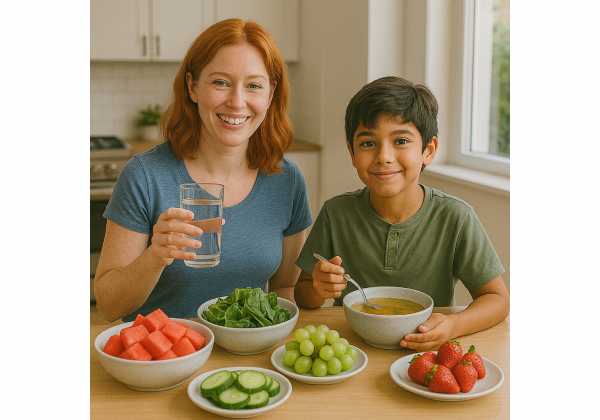
Hydration supports blood volume, temperature control, digestion, kidney function, joint comfort, attention, and physical performance. Plain water does most of the work, but food carries a meaningful share of daily fluid, especially when meals include fruits, vegetables, soups, yogurt, and broths. This becomes more important with age because thirst signals often weaken, appetite changes, some medications increase fluid loss, and hot weather or illness raises needs quickly.
Hydration-rich foods also bring the nutrients linked with healthier aging: potassium, magnesium, vitamin C, folate, carotenoids, polyphenols, and fiber. A bowl of vegetable soup, a plate of cucumbers and tomatoes, or a serving of berries with yogurt hydrates while improving diet quality. The best approach is simple: drink fluids regularly, then build meals that contain water, minerals, fiber, and protein together.
Table of Contents
- Why Hydration-Rich Foods Support Longevity
- Best Hydrating Fruits for Daily Meals
- Best Hydrating Vegetables and How to Use Them
- Broths, Soups, and Stews: Hydration with More Staying Power
- How to Build Hydrating Meals That Still Satisfy
- Special Considerations for Older Adults, Heat, Exercise, and Medications
- Common Mistakes with Hydration-Rich Foods
- A Simple Daily Plan for Hydration-Rich Eating
Why Hydration-Rich Foods Support Longevity
Hydration-rich foods work because they pair water with structure. Fruits and vegetables hold water inside plant cells, along with fiber, minerals, organic acids, and phytochemicals. Soups and broths deliver fluid in a savory form that many people tolerate well when appetite is low. Yogurt, kefir, oatmeal, chia pudding, and stewed fruit add another advantage: they hold water in soft textures that are easy to chew and digest.
Food usually supplies a smaller share of total water than beverages, but it still matters. Many adults get roughly one-fifth to one-third of daily water from food, with higher amounts when meals contain plenty of produce, soups, milk, yogurt, and cooked grains. This helps explain why two people who drink the same amount of plain water do not always have the same hydration pattern. A dry diet of crackers, bread, chips, and grilled meat creates a different fluid demand than a diet with soup, fruit, salad, beans, and cooked vegetables.
Hydration-rich eating also supports healthier aging through diet quality. High-water produce tends to be lower in calorie density and higher in potassium. Potassium helps balance the blood-pressure effects of high sodium intake, while fiber supports bowel regularity, cholesterol management, and steadier blood sugar. For a broader fluid strategy, pair these foods with the basics in hydration and electrolytes for healthy aging.
Water-rich foods also help with common barriers. People who dislike drinking plain water often accept fluid better through melon, citrus, herbal tea, broth-based soup, smoothies, or cucumber salad. People with small appetites often manage soup more easily than a dry plate. People prone to constipation benefit when fluid arrives with soluble and insoluble fiber rather than as water alone.
Aging increases the value of these small, repeated hydration cues. Thirst can become less reliable. Kidney concentrating ability changes. Some adults avoid drinking because of urinary urgency, nighttime bathroom trips, or mobility limits. Hydration-rich meals spread fluid across the day without requiring large drinks at one time.
Best Hydrating Fruits for Daily Meals
Fruits are useful hydration foods because they combine water, potassium, vitamin C, polyphenols, and natural sweetness. Whole fruit works better than juice for daily use because it keeps the fiber and slows intake. A cup of fruit with breakfast, lunch, or an afternoon snack often adds 100–200 mL of water, depending on the fruit and portion.
Watermelon, strawberries, cantaloupe, oranges, grapefruit, peaches, pineapple, and berries all bring high water content with different nutrient strengths. Melons are especially fluid-rich. Citrus adds vitamin C and acidity that makes water or salads taste fresher. Berries supply less total water than melon by weight, but they offer dense polyphenols and fiber for a modest calorie load.
Fruit also helps hydration when appetite drops. Cold fruit tastes refreshing during warm weather and often appeals when heavier foods do not. Soft fruit works well for people with chewing problems. Stewed apples, pears, and berries give a gentler option for sensitive digestion.
| Fruit | Why it helps | Easy use |
|---|---|---|
| Watermelon | Very high water content, refreshing, potassium | Cubes with mint, feta, or lime |
| Strawberries | Water, vitamin C, polyphenols, fiber | With yogurt, oats, or chia pudding |
| Oranges | Water, vitamin C, potassium, natural acidity | Whole fruit after meals or in salads |
| Cantaloupe | Water, beta-carotene, potassium | Breakfast bowl with cottage cheese |
| Peaches | Soft texture, water, gentle sweetness | Sliced into kefir or plain yogurt |
| Grapefruit | Water and bright flavor | Morning fruit or salad segments |
Grapefruit deserves a medication note. It interacts with several drugs, including some statins, calcium channel blockers, antiarrhythmics, and transplant medications. Anyone taking long-term prescriptions should ask a pharmacist before adding grapefruit regularly.
Fruit portions still count as carbohydrate. Most adults do well with 1–3 servings of whole fruit per day, adjusted for appetite, activity, blood sugar response, and total meal pattern. Pairing fruit with protein or fat improves staying power. Examples include berries with Greek yogurt, orange slices with walnuts, melon with cottage cheese, or peaches with kefir.
For people watching glucose spikes, whole fruit usually fits best after a protein-rich meal or as part of a mixed snack. Very large fruit-only smoothies, juice blends, and dried fruit portions raise sugar load quickly. People using glucose data to adjust food choices often find that berries, citrus, kiwi, and whole stone fruit produce gentler responses than juice or large portions of tropical fruit. The same principle appears in broader food habits that flatten blood sugar spikes.
Best Hydrating Vegetables and How to Use Them
Vegetables offer hydration with less sugar than fruit and more savory meal options. Cucumber, lettuce, zucchini, celery, tomatoes, bell peppers, radishes, mushrooms, cabbage, and leafy greens all add water while increasing food volume. This helps meals feel larger without relying on refined starches or oversized portions.
Raw vegetables provide crunch and water. Cooked vegetables provide softness, warmth, and easier digestion for people who struggle with large salads. Both count. A longevity-focused pattern usually works best when it includes both: raw produce for freshness and cooked vegetables for volume, minerals, and comfort.
Cucumber and tomato are the easiest daily pair. Add olive oil, lemon, herbs, and a modest pinch of salt, and they become a hydrating side dish that fits breakfast, lunch, or dinner. Zucchini works in omelets, soups, sheet-pan meals, and pasta alternatives. Leafy greens add water but shrink when cooked, so use generous handfuls. Mushrooms release water during cooking and bring savory depth to soups, eggs, and grain bowls.
Vegetables also help hydration because they improve potassium intake. Potassium-rich choices include spinach, beet greens, Swiss chard, tomatoes, potatoes, winter squash, edamame, and beans. A higher-potassium diet from whole foods supports blood pressure control, especially when sodium intake stays moderate. This is closely tied to sodium and potassium balance for longevity.
A simple vegetable target is 2–4 cups per day, split across meals. People with low appetites can start with smaller servings: half a cup of cooked vegetables at lunch, a cup of soup at dinner, and sliced cucumber or tomato as a snack. Consistency beats large salad bowls that appear twice a month.
Use these combinations to make vegetables more appealing:
- Cucumber, tomato, parsley, lemon, and olive oil
- Zucchini, mushrooms, garlic, and eggs
- Lettuce cups with tuna, chickpeas, or chicken salad
- Bell peppers with hummus or Greek yogurt dip
- Spinach wilted into lentil soup
- Cabbage and carrots simmered into broth
- Roasted tomatoes blended into soup
- Celery and mushrooms in barley or chicken soup
People prone to bloating often tolerate cooked vegetables better than large raw salads. Start with zucchini, carrots, spinach, peeled cucumber, mushrooms, and well-cooked green beans before increasing cabbage, onions, broccoli, and legumes. Fiber supports the gut, but the dose needs a gradual ramp. A steady increase works better with the strategies in a fiber for longevity guide than a sudden jump from low fiber to very high fiber.
Broths, Soups, and Stews: Hydration with More Staying Power
Broth-based meals are among the most practical hydration foods for aging well. They deliver fluid, sodium or potassium depending on ingredients, warmth, aroma, and easy-to-chew textures. They also slow the pace of eating, which helps satiety. A bowl of vegetable soup before or during a meal often reduces the need for heavier portions while increasing produce intake.
Broth has one major caution: sodium varies widely. Restaurant soups, canned broths, bouillon cubes, ramen packets, and packaged bone broths often contain large sodium loads. Sodium is not automatically harmful; the body needs it for fluid balance, nerves, and muscles. The problem is chronic excess, especially in people with hypertension, kidney disease, heart failure, fluid retention, or salt-sensitive blood pressure.
Choose “low sodium” or “no salt added” broths when soup appears often. Build flavor with onion, garlic, celery, carrots, mushrooms, herbs, vinegar, lemon, ginger, pepper, bay leaf, tomato paste, or miso used sparingly. Salt can then be added with control rather than arriving hidden in the base.
Bone broth is not magic, but it is useful when it helps someone drink more fluid or eat more protein-rich meals. Its collagen content varies by brand and recipe, and the mineral content is often overstated. Treat it as a savory fluid base, not a complete meal. To turn broth into a longevity meal, add vegetables, beans or lentils, herbs, and a protein source.
Stews hydrate too, even when they look less “watery” than soup. A lentil stew, minestrone, chicken vegetable stew, or bean chili contains water held in vegetables, legumes, and sauce. These meals often provide more fiber and protein than clear broth, making them better for appetite control and muscle maintenance.
| Choice | Hydration benefit | Longevity upgrade |
|---|---|---|
| Vegetable soup | Fluid plus potassium-rich produce | Add beans, lentils, or shredded chicken |
| Lentil soup | Fluid held with fiber and protein | Add spinach, tomatoes, and olive oil |
| Chicken broth | Savory fluid, useful during low appetite | Use low-sodium broth and add vegetables |
| Miso soup | Warm fluid and fermented flavor | Use modest miso; add tofu and greens |
| Tomato-based stew | Water-rich sauce and vegetables | Add beans, herbs, and extra vegetables |
Soup also helps constipation when it combines fluid with fiber. Lentils, beans, barley, oats, vegetables, and potatoes all hold water in the gut and support stool softness. Anyone increasing beans or lentils should do it gradually, starting with half-cup servings and drinking enough fluids across the day. This fits well with anti-constipation nutrition for aging.
How to Build Hydrating Meals That Still Satisfy
Hydration-rich meals need protein, fiber, and healthy fat to last. A fruit bowl alone hydrates but rarely satisfies for long. A salad without protein often leaves people hungry. Clear broth without vegetables or protein helps fluid intake but does not provide a complete meal.
Use a simple structure: fluid-rich produce, protein, slow carbohydrate or legumes, and a healthy fat. This makes hydration part of normal eating rather than a separate task.
Examples:
- Greek yogurt, strawberries, chia seeds, and walnuts
- Omelet with zucchini, mushrooms, spinach, and tomato
- Lentil soup with carrots, celery, tomatoes, and olive oil
- Tuna salad lettuce cups with cucumber and fruit on the side
- Chicken vegetable soup with beans or barley
- Cottage cheese with cantaloupe and pumpkin seeds
- Tofu miso soup with mushrooms, bok choy, and soba
- Bean chili with tomatoes, peppers, onions, and avocado
Breakfast is a good place to add water-rich foods because many adults wake mildly underhydrated. Coffee and tea contribute fluid, but breakfast becomes more balanced when it also includes fruit, yogurt, vegetables, or cooked grains. Oatmeal made with milk or water, topped with berries and ground flaxseed, carries more fluid than toast and jam. Eggs with tomatoes and spinach hydrate more than eggs with dry crackers.
Lunch often works well as a bowl, soup, or salad plate. A high-fiber lunch based on lentils, beans, vegetables, yogurt sauce, and fruit provides fluid and minerals without a heavy afternoon crash. People who want more ideas can adapt high-fiber lunches for healthy aging by adding broth, cucumber, tomatoes, citrus, or berries.
Dinner should restore fluid without overloading the bladder before bed. Broth-based soups, cooked vegetables, stewed tomatoes, and fruit desserts work well earlier in the evening. People who wake often to urinate usually do better by front-loading fluids from morning through late afternoon, then keeping evening fluids moderate.
Hydrating snacks help when meals are small. Good options include:
- Orange slices and a handful of nuts
- Kefir with berries
- Cucumber rounds with hummus
- Watermelon with feta and mint
- Tomato juice with low sodium, if blood pressure allows
- Chia pudding with kiwi
- Cottage cheese with peaches
- A small mug of low-sodium broth
Texture matters. Crunchy raw foods feel refreshing, but soft foods help during dental problems, reflux flares, illness, or fatigue. Smooth soups, stewed fruit, yogurt bowls, smoothies with protein, and soft cooked vegetables keep hydration going when chewing feels like work.
Special Considerations for Older Adults, Heat, Exercise, and Medications
Hydration needs rise when the body loses more fluid or when intake drops. Hot weather, fever, diarrhea, vomiting, sweating, air travel, high altitude, high-protein diets, alcohol, and some medications all shift the balance. Older adults face extra risk because thirst, kidney function, mobility, and appetite often change together.
Watch for early signs of poor fluid intake: dark urine, dry mouth, headache, dizziness on standing, constipation, unusual fatigue, confusion, muscle cramps, and reduced urination. These signs do not prove dehydration by themselves, but they deserve attention, especially during heat, illness, or medication changes.
Some medications require extra awareness. Diuretics, some blood pressure medicines, laxatives, SGLT2 inhibitors for diabetes or heart failure, and certain bladder medications affect fluid balance or thirst. People taking these should ask their clinician how much fluid is appropriate, especially if they also have kidney disease, heart failure, liver disease, or low sodium levels.
During heat, hydration-rich foods work best when paired with regular drinks and cooling habits. Watermelon, citrus, cucumber, tomato salads, chilled soups, yogurt, and smoothies are useful, but they do not replace fluids during heavy sweating. Add electrolytes when sweat losses are high, meals are small, or heat exposure lasts for hours. A salty broth or oral rehydration solution has a place during fluid loss from vomiting or diarrhea, but routine high-sodium sipping is not ideal for blood pressure.
Exercise adds another layer. Short easy walks usually need no special drink beyond normal meals and water. Longer sessions, hot conditions, or heavy sweating require planned fluid. After training, a meal with soup, fruit, yogurt, potatoes, beans, or vegetables restores water and minerals while also supporting recovery. Protein still matters because muscle is central to healthy aging.
People with urinary urgency often restrict fluids too aggressively. This backfires when concentrated urine irritates the bladder and worsens constipation. A better plan spreads fluids earlier in the day, uses water-rich foods at meals, limits large drinks late at night, and discusses bladder symptoms with a clinician.
People with swallowing problems need medical guidance. Thin liquids increase aspiration risk in some conditions, while thickened fluids require careful planning to maintain hydration. Soft fruits, soups with safe textures, yogurt, and pureed vegetables often help, but the safest texture should come from a speech-language pathologist or care team.
Common Mistakes with Hydration-Rich Foods
The most common mistake is treating water-rich foods as a full replacement for drinking. Fruits, vegetables, soups, and yogurt support hydration, but most adults still need regular beverages. Plain water, sparkling water, milk, unsweetened tea, and coffee all contribute fluid. Food improves the pattern; it does not remove the need to drink.
Another mistake is relying on juice. Juice contains water and nutrients, but it removes most fiber and makes sugar easy to overconsume. A small glass fits some diets, especially with meals, but whole fruit is the better daily habit. Smoothies sit in the middle. They keep more fiber than juice, but large blended portions go down quickly. Add protein, keep portions moderate, and avoid turning a smoothie into a fruit-only drink.
High-sodium soup is another trap. Soup has a health halo because it feels light and nourishing, yet sodium adds up quickly. A single packaged soup meal can supply a large share of a day’s sodium. Choose low-sodium bases, dilute salty broths with water, add extra vegetables, and season with herbs and acids.
Raw salad overload causes problems too. A large salad helps hydration, but it does not automatically make a complete meal. Without protein, fat, and enough energy, it leaves many people hungry. For older adults with low appetite, huge raw salads can crowd out protein. Add eggs, fish, beans, tofu, chicken, yogurt dressing, olive oil, nuts, seeds, avocado, or cheese.
Skipping protein at hydrating meals weakens the longevity value. Muscle maintenance needs regular protein, especially in midlife and beyond. A bowl of vegetable soup becomes more useful with lentils, beans, tofu, chicken, fish, Greek yogurt on the side, or eggs. Hydration and protein should work together, not compete.
Some people also ignore seasonality. Summer makes raw produce easy, while winter often calls for warm soups, stewed fruit, cooked greens, and herbal tea. A seasonal rhythm keeps the habit appealing. The same idea applies to seasonal eating for healthy aging: match food choices to weather, appetite, and local availability.
A final mistake is chasing “alkaline,” “structured,” or exotic waters while leaving meals dry and low in produce. The body regulates blood pH tightly. Expensive hydration claims rarely outperform a steady routine of water, mineral-rich foods, vegetables, fruit, and sensible sodium intake.
A Simple Daily Plan for Hydration-Rich Eating
A strong hydration-food routine spreads fluid across the day. It does not require measuring every milliliter or eating only watery foods. Start with one water-rich choice at each meal, then add a soup or fruit-based snack when needed.
Morning: drink water after waking, then include fruit or vegetables at breakfast. Good choices include berries with yogurt, oatmeal with stewed apples, eggs with tomatoes and spinach, or cottage cheese with melon.
Midday: build lunch around vegetables or soup. Try lentil soup, a tomato-cucumber salad with tuna, a grain bowl with greens and yogurt sauce, or a chicken vegetable soup with beans. Add water, tea, or sparkling water with the meal.
Afternoon: use a hydrating snack if energy dips. Fruit with nuts, kefir with berries, cucumber with hummus, or a small broth mug works better than dry crackers or sweets alone.
Evening: include cooked vegetables, stew, or a broth-based dish, but avoid pushing most of the day’s fluid into the final hours. This protects sleep for people prone to nighttime urination.
A simple plate formula works across cuisines:
- Half the plate: water-rich vegetables or soup
- One quarter: protein, such as fish, poultry, eggs, tofu, beans, lentils, yogurt, or cottage cheese
- One quarter: slow carbohydrate, such as potatoes, oats, barley, brown rice, whole grains, beans, or fruit
- Add: olive oil, avocado, nuts, seeds, herbs, citrus, or vinegar for flavor and healthy fats
Hydration-rich eating also benefits from meal prep. Keep washed fruit, sliced cucumber, cherry tomatoes, low-sodium broth, cooked lentils, Greek yogurt, and frozen berries ready. Make one soup each week and freeze portions. Add greens to leftovers. Keep citrus or kiwi visible. People eat more water-rich foods when they are easy to grab.
Use urine color as a rough daily cue, not a medical test. Pale yellow usually suggests adequate fluid intake. Very dark urine, low urination, dizziness, or confusion deserves attention. Supplements, B vitamins, beets, medications, and some foods change urine color, so symptoms and context matter.
The most durable habit is also the simplest: pair every meal with fluid and produce. Water plus fruit at breakfast, soup or salad at lunch, cooked vegetables at dinner, and a protein-rich hydrating snack create a steady rhythm. Over time, this pattern supports hydration, digestion, blood pressure, appetite control, and the nutrient density that healthy aging requires.
References
- Hydration Strategies in Older Adults 2025 (Review)
- Hydration Status in Older Adults: Current Knowledge and Future Challenges 2023 (Review)
- Interventions to Improve Hydration in Older Adults: A Systematic Review and Meta-Analysis 2021 (Systematic Review)
- Fluid and water balance: a scoping review for the Nordic Nutrition Recommendations 2023 2023 (Scoping Review)
- Fruit and Vegetable Intake and Mortality: Results From 2 Prospective Cohort Studies of US Men and Women and a Meta-Analysis of 26 Cohort Studies 2021 (Meta-Analysis)
- Contribution of Water from Food and Fluids to Total Water Intake: Analysis of a French and UK Population Surveys 2016 (Analysis)
Disclaimer
This article is educational and does not replace care from a qualified health professional. People with kidney disease, heart failure, liver disease, swallowing problems, low blood sodium, uncontrolled blood pressure, or medications that affect fluid balance should ask their clinician for individualized hydration guidance. Seek medical care for confusion, fainting, severe weakness, very low urination, persistent vomiting or diarrhea, or signs of heat illness.