A luteal phase defect hormone test usually centers on progesterone, but one blood result cannot prove whether the luteal phase is “good” or “bad.” The luteal phase begins after ovulation and ends when the next period starts. During this time, the corpus luteum—the temporary structure left behind after an egg is released—produces progesterone to prepare and support the uterine lining. Testing can help confirm that ovulation probably occurred, identify a very short luteal phase, and uncover thyroid, prolactin, ovarian, or hypothalamic problems that may disrupt the cycle. Timing matters more than the calendar date: progesterone is generally checked about 6–8 days after ovulation, not automatically on cycle day 21. Results also need context because progesterone rises and falls in pulses throughout the day. A clinician may combine cycle tracking, hormone tests, ultrasound, and the broader fertility history before deciding whether treatment or further evaluation is appropriate.
- A progesterone result above about 3 ng/mL usually supports recent ovulation, but it does not measure luteal-phase quality by itself.
- Test progesterone about 6–8 days after ovulation, or roughly 7 days before the expected period, rather than using day 21 for every cycle.
- A luteal phase shorter than about 10 days may deserve evaluation, especially when it repeats or occurs with infertility or early pregnancy loss.
- Low progesterone can reflect incorrect test timing, delayed or absent ovulation, or an underlying condition—not necessarily a permanent hormone deficiency.
- Thyroid disease, high prolactin, low energy availability, major stress, and some ovulatory disorders can interfere with normal luteal function.
Table of Contents
- What Luteal Phase Defect Means
- Who May Need Luteal Phase Testing
- How to Time a Progesterone Test
- Understanding Progesterone Results
- Other Tests and Cycle Tracking
- Causes of Abnormal Luteal Function
- Treatment and Follow-Up
- Questions and Common Mistakes
What Luteal Phase Defect Means
Luteal phase defect, also called luteal phase deficiency, describes a cycle in which progesterone exposure may be too brief or insufficient to support normal changes in the uterine lining. The concept sounds simple, but diagnosing it is difficult. There is no single blood level, biopsy finding, symptom pattern, or cycle length that reliably separates fertile from infertile women.
After ovulation, the emptied ovarian follicle becomes the corpus luteum. Luteinizing hormone supports this structure, which secretes progesterone and some estradiol. Progesterone changes the endometrium from a proliferative lining into a secretory lining that can receive an embryo. If pregnancy begins, human chorionic gonadotropin, or hCG, signals the corpus luteum to keep producing progesterone until placental hormone production is established. If pregnancy does not occur, the corpus luteum regresses, progesterone falls, and menstruation starts.
A normal luteal phase is often about 11–17 days. A recurrent interval of fewer than 10 days from ovulation to the next period is commonly described as a short luteal phase, although a short phase can occur occasionally in otherwise normal cycles. This finding becomes more meaningful when it repeats and appears alongside difficulty conceiving, irregular ovulation, or another endocrine problem.
Luteal phase defect is not the same as “low progesterone” on one test. Progesterone secretion is pulsatile, meaning the level can change several-fold within a few hours. A blood draw taken during a natural dip may look low even when total daily exposure is adequate. Likewise, a result taken too early or too late can miss the mid-luteal peak.
The practical goal of testing is therefore broader than finding one cutoff. Clinicians ask whether ovulation occurred, whether the timing and length of the luteal phase are consistent, and whether an identifiable disorder is interfering with follicle development or corpus luteum function.
Who May Need Luteal Phase Testing
Testing may be reasonable when cycle history suggests inconsistent ovulation or when a fertility evaluation is already underway. It is not usually needed simply because a person wants to know a progesterone number in an otherwise regular cycle.
Common reasons to discuss testing include:
- Repeated cycles in which the period begins fewer than 10 days after a clearly detected ovulation
- Difficulty conceiving after 12 months when younger than 35, or after 6 months at age 35 or older
- Irregular, widely spaced, or absent periods
- Repeated anovulatory cycles, meaning no egg appears to be released
- Unexplained spotting for several days before menstruation
- Symptoms or history suggesting thyroid disease, elevated prolactin, polycystic ovary syndrome, or low energy availability
- A fertility treatment cycle in which luteal support is part of the protocol
Premenstrual spotting, breast tenderness, mood changes, and pelvic symptoms are not specific tests for progesterone deficiency. Some people with normal ovulation have these symptoms, while others with ovulatory dysfunction have few obvious clues. The most useful starting information is often a well-kept record of cycle dates, ovulation estimates, bleeding, medicines, and major health changes.
Infertility evaluation should not focus only on the luteal phase. Age, egg supply, fallopian tube openness, semen factors, uterine conditions, and intercourse timing can matter as much or more. A fertility hormone test panel may help answer selected questions, but no hormone panel replaces a complete fertility assessment.
Seek earlier medical review when periods stop for three months, bleeding is unusually heavy, pelvic pain is severe, or pregnancy is possible. A positive pregnancy test with one-sided pain, shoulder pain, dizziness, or heavy bleeding needs urgent assessment because those symptoms can occur with ectopic pregnancy or significant blood loss.
How to Time a Progesterone Test
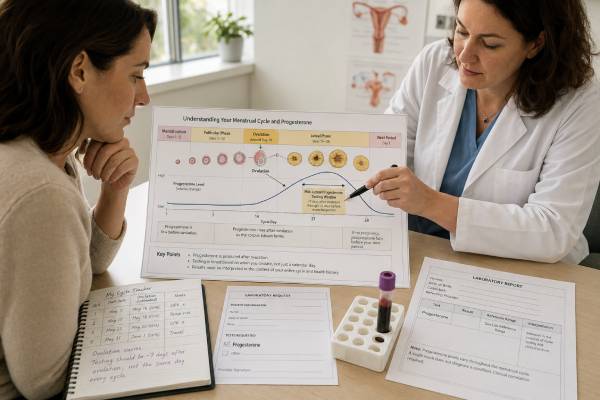
The best time for a serum progesterone test is about 6–8 days after ovulation, when progesterone is expected to be near its peak. Another practical rule is approximately 7 days before the next expected period. This timing is often called “mid-luteal,” even though the exact middle varies by cycle.
The familiar “day 21 progesterone test” assumes a 28-day cycle with ovulation around day 14. It can work in that narrow situation. It is poorly timed for someone who ovulates on day 10, day 20, or at different times from month to month. For a 35-day cycle with likely ovulation around day 21, testing around day 28 is more logical. For a 24-day cycle with likely ovulation around day 10, testing around day 16–18 may be more useful.
Several methods can estimate ovulation:
- Urine LH surge test: Ovulation often follows a positive result by roughly 24–36 hours, although timing varies and some people have multiple surges.
- Cervical mucus: Clear, slippery, stretchable mucus usually appears near the fertile window, but it does not prove ovulation.
- Basal body temperature: A sustained temperature rise occurs after ovulation and confirms the shift retrospectively rather than predicting it.
- Ultrasound monitoring: Repeated scans can follow follicle growth and show evidence that a follicle has ruptured. This is more precise but usually reserved for fertility care.
- Cycle tracking: Regular cycles can provide a reasonable estimate, but calendar apps predict rather than directly detect ovulation.
A day 21 progesterone test should therefore be interpreted as an ovulation-timed test, not a fixed-date rule.
No special fasting is usually required for progesterone alone. Follow the laboratory’s instructions and tell the clinician about hormonal medicines, fertility drugs, progesterone supplements, contraceptives, pregnancy, and the date of the last period. Progesterone treatment can raise the measured value and make a natural-cycle result difficult to interpret.
When timing is uncertain, one test may be repeated in another cycle or paired with ultrasound. Some specialists obtain more than one progesterone measurement, but even serial values cannot establish a universally accepted definition of luteal phase defect. The purpose of repeat testing should be clear before blood is drawn.
Home urine progesterone-metabolite tests offer another way to observe post-ovulation hormone patterns, but they measure a urinary breakdown product rather than serum progesterone. Hydration, urine timing, device thresholds, and cycle variability can affect the reading. These products may support cycle awareness, yet an abnormal home pattern should be discussed with a clinician rather than treated as a confirmed diagnosis.
Understanding Progesterone Results
Progesterone units and reference intervals vary. U.S. laboratories often report nanograms per milliliter, or ng/mL; many other laboratories use nanomoles per liter, or nmol/L. To convert ng/mL to nmol/L, multiply by about 3.18. Always use the range and units printed on the report.
A mid-luteal progesterone level above approximately 3 ng/mL, about 9.5 nmol/L, generally provides presumptive evidence that ovulation occurred recently. It does not show that the egg was healthy, that implantation will occur, or that the luteal phase is adequate for pregnancy. There is no single “optimal” natural-cycle progesterone cutoff endorsed as a diagnostic test for luteal phase deficiency.
| Result pattern | What it may suggest | What to check next |
|---|---|---|
| Low result before expected ovulation | Normal follicular-phase physiology | Confirm cycle day and ovulation timing |
| Above about 3 ng/mL at the right time | Recent ovulation is likely | Interpret with cycle length and clinical question |
| Low result at presumed mid-luteal timing | Mistimed draw, delayed ovulation, anovulation, or a transient progesterone dip | Review LH tracking, repeat if useful, and assess underlying causes |
| High result during treatment | Medication effect or multiple corpora lutea after stimulation | Use the fertility clinic’s protocol-specific target |
One value can fluctuate sharply because the corpus luteum releases progesterone in pulses. The laboratory range may also be broad because levels differ by cycle day, number of ovulated follicles, pregnancy status, and assay method. A value of 4 ng/mL and a value of 14 ng/mL may both occur in ovulatory cycles, yet neither alone predicts whether conception will happen.
A “low” result often needs a timing check before any diagnosis. Suppose an LH surge occurs on cycle day 18, but blood is drawn on day 21. That sample is only a few days after the surge and may precede peak progesterone. The same person might have a clearly higher result if tested on day 25 or 26.
Progesterone in early pregnancy is a different question. A single low value can be associated with a nonviable pregnancy, but it cannot reliably identify the pregnancy’s location or determine the outcome by itself. Serial hCG testing and ultrasound are usually more informative. Never change prescribed progesterone solely because of an isolated report without speaking with the treating clinician.
For a fuller explanation of units and cycle-specific interpretation, see the progesterone test in women guide.
Other Tests and Cycle Tracking
There is no validated stand-alone “luteal phase defect panel.” Testing is selected according to the cycle pattern and symptoms. The most useful additional tests look for conditions that disrupt ovulation or follicle development.
TSH and sometimes free T4 assess thyroid function. Both overt hypothyroidism and hyperthyroidism can disturb menstrual cycles. Mild TSH variation does not automatically explain infertility, so results should be interpreted in clinical context.
Prolactin may be checked when periods are absent or irregular, ovulation is inconsistent, or there is unexplained milk discharge. Prolactin can rise temporarily after stress, exercise, sex, nipple stimulation, or a difficult blood draw. A mildly high result is often repeated under calmer conditions. The prolactin test in women article explains common follow-up steps.
FSH, estradiol, and AMH can contribute to ovarian reserve assessment, especially when age, prior ovarian surgery, chemotherapy, or an unusual cycle pattern raises concern. These tests estimate aspects of egg quantity or ovarian response; they do not diagnose luteal phase defect and do not directly measure egg quality.
Androgen tests may help when irregular ovulation occurs with acne, increased facial or body hair, or scalp hair thinning. Testosterone and related markers are often used when evaluating possible polycystic ovary syndrome.
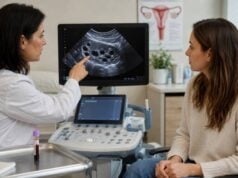
Pelvic ultrasound can assess the ovaries, follicles, uterine lining, fibroids, polyps, and other structural issues. In monitored fertility cycles, ultrasound can establish the likely ovulation date more accurately than a calendar.
Endometrial biopsy was once used to “date” the uterine lining. It is no longer considered a reliable routine test for luteal phase deficiency because fertile and infertile women can show similar variations, and results do not consistently predict reproductive outcomes. Routine biopsy for this purpose adds discomfort without providing a dependable answer.
Tracking two or three cycles may reveal more than repeating random blood tests. Record the first day of full-flow bleeding, LH surge dates, temperature shifts, mid-cycle symptoms, spotting, and the start of the next period. The interval from likely ovulation to menstruation is more informative than total cycle length alone.
Causes of Abnormal Luteal Function
When luteal function appears abnormal, the next question is whether follicle development or ovulation was disrupted earlier in the cycle. The corpus luteum grows from the follicle, so a weak or mistimed follicular phase can produce a less effective luteal phase.
Potential contributors include:
- Hypothalamic disruption: Major calorie restriction, low body weight, intense exercise, psychological stress, illness, or rapid weight change can reduce the brain signals that coordinate ovulation.
- Polycystic ovary syndrome: PCOS commonly causes delayed, inconsistent, or absent ovulation. Progesterone may remain low because no corpus luteum forms in an anovulatory cycle.
- Thyroid disease: Significant thyroid dysfunction can alter cycle length and ovulation.
- Hyperprolactinemia: Persistently high prolactin can suppress gonadotropin-releasing hormone and interfere with ovulation.
- Reproductive aging or diminished ovarian reserve: Follicle recruitment and hormone patterns change with age, and cycles can become shorter or less predictable.
- Chronic medical illness: Uncontrolled diabetes, inflammatory disease, and other systemic conditions may affect reproductive signaling.
- Medications: Some antipsychotics, anti-nausea medicines, opioids, hormonal treatments, and fertility drugs can change prolactin, ovulation, or measured progesterone.
A short luteal phase can also appear without a clear disease. It may be transient after childbirth, breastfeeding, stopping hormonal contraception, travel, acute illness, or a period of unusual stress. One unusual cycle is less concerning than a persistent pattern.
Endometriosis and other infertility diagnoses sometimes coexist with suspected luteal problems, but coexistence does not prove that progesterone deficiency caused the infertility. The label should not distract from evidence-based evaluation of the uterus, tubes, ovaries, semen, and age-related factors.
An irregular period hormone panel may be useful when the cycle pattern itself is abnormal. Testing should be targeted rather than ordering every reproductive hormone at once, because broad panels can create incidental findings that do not explain the problem.
Treatment and Follow-Up
Treatment depends on the underlying cause and whether the person is trying to conceive. There is no universal treatment for an isolated low progesterone result in a natural cycle.
When low energy availability, excessive training, or rapid weight loss is suppressing ovulation, restoring adequate nutrition and adjusting activity may improve cycle signaling. Thyroid disease and persistent hyperprolactinemia require cause-specific management. PCOS-related anovulation may be treated with ovulation induction when pregnancy is desired, along with management of metabolic and endometrial risks.
Progesterone support is standard in many assisted reproductive technology protocols because ovarian stimulation, egg retrieval, or medication timing can alter luteal physiology. Clinics may use vaginal, oral, or injected progesterone and follow a protocol based on the treatment type. A serum level obtained during supplementation cannot be interpreted like an untreated natural-cycle result.
For natural cycles or unexplained infertility, evidence that empiric progesterone improves live birth is limited and depends on the exact clinical situation. Some clinicians prescribe it after ovulation, particularly after ovulation induction or in selected recurrent pregnancy-loss care, but practice varies. Progesterone should not start before ovulation unless the protocol specifically requires it, because early administration can interfere with normal cycle timing.
Over-the-counter progesterone creams are not a reliable substitute for prescribed treatment. The amount absorbed may be inconsistent, product labeling can be unclear, and use may delay evaluation of anovulation, thyroid disease, or pregnancy complications.
Follow-up is most useful when it answers a defined question. Examples include repeating a correctly timed progesterone level after an initially mistimed draw, checking prolactin again after a mild elevation, confirming thyroid results, or monitoring ovulation during treatment. Repeated monthly testing without a change in management often adds cost and anxiety without improving care.
During pregnancy, contact the treating team promptly for bleeding or pain. Emergency assessment is warranted for severe one-sided pain, fainting, shoulder-tip pain, heavy bleeding, chest pain, or shortness of breath.
Questions and Common Mistakes
Does a low day 21 progesterone result prove luteal phase defect?
No. First confirm whether day 21 was actually 6–8 days after ovulation. A low value can result from an early blood draw, late ovulation, no ovulation, or a normal short-term dip. The result becomes useful only when matched to the cycle timeline.
Can progesterone confirm pregnancy?
Progesterone is not the primary pregnancy test. Urine or blood hCG confirms pregnancy. Progesterone may provide supporting information in selected early-pregnancy evaluations, but it cannot determine pregnancy location and should not replace ultrasound or serial hCG when those are indicated.
Is there an ideal progesterone level for implantation?
There is no single natural-cycle number that guarantees implantation. Fertility clinics may use treatment-specific targets, especially for frozen embryo transfer or assisted reproduction, but those targets should not be applied to every unmedicated cycle.
Does premenstrual spotting always mean low progesterone?
No. Spotting can occur with hormonal fluctuation, cervical irritation, polyps, fibroids, infection, contraception, pregnancy-related bleeding, or no identifiable disease. Persistent or new bleeding deserves evaluation rather than automatic progesterone treatment.
Should the test be repeated every month?
Usually not. Repeat testing is reasonable when timing was wrong, ovulation is uncertain, or the result will change a treatment decision. A well-timed result plus cycle history is often more helpful than several random measurements.
The most common errors are testing on a fixed calendar day, treating a single number as a diagnosis, comparing results across different units, and beginning supplements before the evaluation is complete. A better approach is to identify the likely ovulation date, test for a specific reason, and interpret the result alongside the entire cycle and fertility history.
References
- Diagnosis and treatment of luteal phase deficiency: a committee opinion — 2021, American Society for Reproductive Medicine committee opinion.
- Evidence-based guideline: unexplained infertility — 2023, Human Reproduction guideline.
- What is the effectiveness and safety of luteal support in infertile women trying to conceive by intrauterine insemination (IUI) or by sexual intercourse? — 2022, Cochrane evidence summary.
- Diagnostic and therapeutic use of oral micronized progesterone in endocrinology — 2024, review article.
- The efficacy and safety of luteal phase support with progesterone following ovarian stimulation and intrauterine insemination: A systematic review and meta-analysis — 2022, systematic review and meta-analysis.
- Fertility evaluation of infertile women: a committee opinion — 2021, American Society for Reproductive Medicine committee opinion.
Disclaimer
This article is for general education and does not diagnose luteal phase deficiency or replace individualized medical care. Hormone results must be interpreted with cycle timing, symptoms, medicines, pregnancy status, and the laboratory’s own reference range. Seek urgent care for severe pain, fainting, or heavy bleeding, especially when pregnancy is possible.