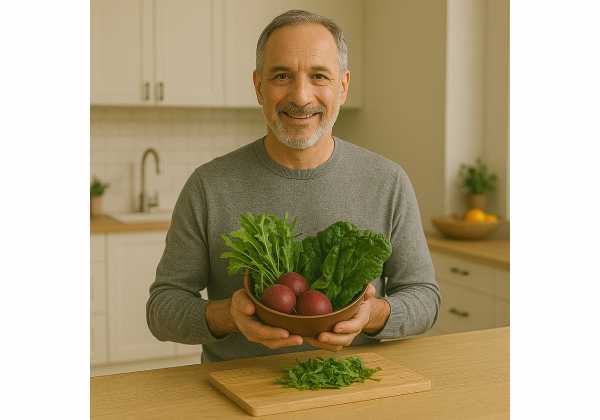
Nitrate-rich vegetables deserve a regular place in a longevity-focused diet because they support blood vessel function, blood pressure control, exercise capacity, and healthy circulation. Beets, arugula, spinach, Swiss chard, celery, lettuce, and watercress contain natural nitrate, which the body turns into nitric oxide, a signaling molecule that helps blood vessels relax and deliver oxygen more efficiently. These vegetables also bring fiber, potassium, magnesium, folate, vitamin K, vitamin C, carotenoids, and polyphenols, so their value goes far beyond nitrate alone.
The strongest everyday approach is simple: eat leafy greens often, use beets as a colorful root vegetable, and protect the oral bacteria that help convert nitrate into useful compounds. Nitrate-rich foods work best as part of a full eating pattern built around plants, protein, healthy fats, and minimally processed meals. They do not replace medication, exercise, or medical care, but they are one of the most practical food tools for vascular healthspan.
Table of Contents
- How Nitrate-Rich Vegetables Work
- Best Nitrate-Rich Vegetables
- Beets, Arugula, and Greens: How They Compare
- Longevity Benefits: Blood Pressure, Exercise, and Brain Blood Flow
- How to Eat More Nitrate-Rich Vegetables
- Common Mistakes, Safety, and Medication Considerations
- A Simple Weekly Nitrate Vegetable Plan
How Nitrate-Rich Vegetables Work
Nitrate-rich vegetables help the body make nitric oxide through a pathway that starts in the mouth. After you eat arugula, beets, spinach, or similar vegetables, nitrate enters the bloodstream. The salivary glands then concentrate some of it back into saliva. Oral bacteria on the tongue convert nitrate into nitrite. After swallowing, nitrite turns into nitric oxide and related compounds in the stomach, blood, and tissues.
Nitric oxide matters because it tells blood vessels to relax. Relaxed vessels allow blood to move with less resistance, which supports healthy blood pressure and oxygen delivery. Nitric oxide also affects platelets, mitochondria, skeletal muscle, and endothelial cells. Endothelial cells line the inside of blood vessels; healthy endothelial function is one of the major signs of vascular aging going in the right direction.
This pathway is different from the nitric oxide made by enzymes inside the body. The dietary nitrate pathway becomes especially useful when oxygen is lower, acidity is higher, or blood flow is under stress. That makes it relevant during exercise, uphill walking, heat exposure, and other moments when muscles and blood vessels need efficient oxygen delivery.
Vegetable nitrate also arrives in a protective food matrix. Leafy greens and beets contain vitamin C, polyphenols, minerals, and fiber. This matters because nitrate in vegetables behaves differently from nitrite used in cured meats. Vegetables provide antioxidant compounds that help steer nitrogen chemistry toward nitric oxide signaling rather than harmful nitrosamine formation. Cured and processed meats have a different matrix: salt, heme iron, high-heat cooking, preservatives, and fewer protective plant compounds.
There is no official daily requirement for nitrate. A practical food target is one serving of nitrate-rich vegetables most days, with two servings on days when blood pressure, endurance exercise, or high-vegetable eating is a priority. Research often uses concentrated beetroot juice or nitrate doses in the range of a few hundred milligrams, but food-based eating does not need supplement precision. A large handful of arugula, a bowl of spinach, or a serving of beets contributes meaningfully, especially when repeated over time.
Nitrate-rich vegetables fit naturally into a Mediterranean-style longevity pattern, where greens, legumes, olive oil, fish, nuts, herbs, and minimally processed foods work together. The nitrate pathway is one reason that “eat more greens” is not vague advice. It has a real vascular mechanism behind it.
Best Nitrate-Rich Vegetables
The richest nitrate foods are usually leafy greens and certain root vegetables. Nitrate levels vary by soil, sunlight, season, farming practices, storage, and plant variety. Greenhouse-grown leaves, winter leaves, and vegetables grown with higher nitrogen availability often contain more nitrate. This variation is normal and does not make the foods unsafe for healthy adults.
Arugula, also called rocket, often ranks near the top. Spinach, Swiss chard, beet greens, lettuce, celery, cress, parsley, fennel, radish, bok choy, and beetroot also provide useful amounts. Beets get the most attention because beetroot juice is easy to study in trials, but arugula and other leafy greens are often equally impressive per gram.
| Vegetable | Why it helps | Easy serving idea |
|---|---|---|
| Arugula / rocket | Often very high in nitrate; peppery flavor wakes up simple meals | 2 packed cups in a salad, sandwich, omelet, or grain bowl |
| Beetroot | Good nitrate source plus betalain pigments and natural sweetness | ½ to 1 cup roasted, steamed, grated, or blended into hummus |
| Spinach | Nitrate plus magnesium, folate, carotenoids, and vitamin K | 1 cup cooked or 2 to 3 cups raw in salads, soups, or smoothies |
| Swiss chard and beet greens | Leafy greens from the same plant family as beets; mineral-rich | Sauté with olive oil, garlic, lemon, and beans |
| Celery and fennel | Moderate nitrate, high crunch, useful for snacks and salads | Slice into tuna salad, lentil salad, soups, or yogurt dips |
| Watercress and other cress | Peppery greens with nitrate and glucosinolates | Add to eggs, potatoes, fish, sandwiches, or soups after cooking |
| Lettuce varieties | Lower than arugula in many cases but easy to eat in larger amounts | Use as the base for a high-protein lunch salad |
For everyday eating, the best nitrate-rich vegetable is the one you enjoy enough to repeat. Arugula is excellent, but a person who dislikes it will do better with spinach, romaine, celery, beetroot, or Swiss chard. Repetition beats perfection.
Fresh, frozen, cooked, and raw forms all count. Raw arugula and lettuce are convenient because they need no cooking. Cooked spinach and chard shrink down, which makes a larger serving easier to eat. Roasted beets keep well for several days and add color to meals. Frozen spinach is one of the easiest options because it is cheap, compact, and ready for soups, eggs, stews, and pasta.
Organic and conventional choices both provide nitrate. Organic vegetables are not automatically lower or higher in nitrate in a way that changes the practical advice. Wash produce well, store it cold, and eat a variety of leaves and roots rather than relying on one vegetable every day.
Beets, Arugula, and Greens: How They Compare
Beets, arugula, and greens each bring a different advantage. Beets are the most studied, arugula is one of the most nitrate-dense, and leafy greens are the easiest to turn into a daily habit.
Beets: the best-studied nitrate food
Beetroot is popular because it delivers nitrate in a concentrated, measurable form. Beetroot juice, beet shots, beet powder, and cooked beets have all been used by athletes and people focused on blood pressure. Whole beets provide fiber and chewable food volume, while juice and shots deliver more nitrate quickly with less fullness.
Whole beets also contain betalains, the red and yellow pigments that give beets their color. Betalains have antioxidant and anti-inflammatory properties in lab studies, and beets provide folate, manganese, potassium, and naturally occurring betaine. Roasted beets work well in salads, lentil bowls, yogurt dips, and side dishes.
A useful serving is ½ to 1 cup cooked beets. Beetroot juice products vary widely, but concentrated sports-style shots often aim for a nitrate dose in the few-hundred-milligram range. Supplements and shots are more like tools than everyday food. For most adults, meals built around vegetables are a better foundation than chasing a nitrate number. People who want a more concentrated option for training or blood pressure often compare food with beetroot and nitrate supplements, but supplements deserve more caution because dose, purity, sugar content, and medication interactions matter.
Arugula: the underrated nitrate powerhouse
Arugula often contains more nitrate than beetroot by weight. It also has a strong peppery flavor, so it turns a plain meal into something sharper and more interesting. A few handfuls of arugula on eggs, fish, beans, pasta, pizza, or soup can raise vegetable intake without much prep.
Arugula belongs to the cruciferous vegetable family, along with broccoli, cabbage, kale, and watercress. That means it brings sulfur-containing plant compounds along with nitrate. Its flavor comes from these compounds, and that bitterness is part of its nutritional personality.
The main drawback is spoilage. Arugula wilts quickly if stored wet or crushed. Keep it dry, refrigerate it in a breathable container, and use it early in the week. If raw arugula tastes too sharp, mix it half-and-half with romaine, spinach, or butter lettuce. Lemon, olive oil, yogurt, tahini, goat cheese, beans, eggs, and oily fish soften its bite.
Spinach, chard, and beet greens: practical daily workhorses
Spinach, Swiss chard, and beet greens make nitrate-rich eating easy because they fit into cooked meals. They also provide magnesium, potassium, folate, carotenoids, and vitamin K. Spinach is especially convenient because it works raw or cooked. Chard and beet greens taste stronger but become mild when sautéed with garlic, olive oil, and lemon.
The main caution is oxalate. Spinach, beet greens, Swiss chard, and beetroot are higher-oxalate foods. Most adults tolerate them well, but people with calcium oxalate kidney stones or high urinary oxalate often need personalized guidance. Rotating lower-oxalate nitrate options such as arugula, romaine, celery, fennel, and cress helps maintain variety.
Cooked greens also make it easier to eat enough plants without overwhelming the stomach. A large pile of raw spinach cooks down to a small serving. Add cooked greens to beans, fish, poultry, tofu, eggs, potatoes, soups, and whole grains. This approach improves nitrate intake while also supporting higher daily fiber intake when paired with legumes, vegetables, and whole-food carbohydrates.
Longevity Benefits: Blood Pressure, Exercise, and Brain Blood Flow
Nitrate-rich vegetables support longevity most directly through vascular health. Blood vessels age along with the rest of the body. They stiffen, lose some nitric oxide signaling, and respond less smoothly to changes in blood flow. A diet rich in leafy greens and beets supports the endothelial system that keeps vessels flexible.
Blood pressure and endothelial function
Vegetable nitrate has its clearest human evidence in blood pressure and endothelial function. Beetroot juice trials often show a reduction in systolic blood pressure, especially in people with elevated blood pressure. The effect is not a replacement for medication, sodium reduction, weight management, sleep, or exercise, but it is meaningful because even small average reductions in systolic blood pressure matter at the population level.
Food works best as a pattern. A nitrate-rich salad added to a salty, low-potassium diet will not undo everything else. The stronger strategy combines nitrate-rich vegetables with potassium-rich foods, adequate protein, legumes, fruit, nuts, olive oil, and less ultra-processed food. People focused on blood pressure should also consider the wider dietary pattern described in blood-pressure-friendly eating for healthy aging.
Timing matters less for general health than consistency. For exercise or a blood pressure experiment, nitrate-rich foods are often eaten 2 to 3 hours before the desired effect because nitrate and nitrite levels rise after intake. For normal meals, daily repetition matters more than exact timing.
People tracking blood pressure at home should measure properly. Sit quietly, use a validated cuff, support the arm, and take repeat readings at consistent times. A week of readings before and after a dietary change gives more useful information than one isolated number. For more structured tracking, proper home blood pressure measurement helps separate real changes from normal day-to-day variation.
Exercise efficiency and muscle function
Nitrate-rich vegetables help muscles use oxygen more efficiently during exercise. This is why beetroot juice became popular among endurance athletes. The benefit is usually modest, but it can matter during cycling, running, rowing, hill walking, intervals, and repeated efforts.
For longevity, the exercise angle is not only about athletic performance. Better exercise tolerance helps people train consistently. Consistent training supports VO₂max, muscle function, insulin sensitivity, balance, and independence with age. A nitrate-rich lunch before an afternoon workout, or beets with dinner before a morning session, is a simple experiment.
The people most likely to notice a performance effect are recreationally active adults doing steady endurance or repeated moderate-to-hard efforts. Elite athletes sometimes respond less because their baseline nitric oxide and oxygen delivery systems are already highly trained. Beginners may feel no obvious boost, but the vegetables still support the overall diet.
Nitrate vegetables pair well with training meals. Try beetroot with Greek yogurt and walnuts, arugula with eggs and sourdough, spinach in a bean soup, or a rice bowl with salmon, greens, and olive oil. These meals combine nitrate with protein and carbohydrates, which supports recovery and energy. For people building a full eating rhythm around training, daily protein targets for longevity remain just as important as vegetables.
Brain blood flow and cognitive aging
The brain depends on steady blood flow. Nitric oxide supports blood vessel dilation, and some studies suggest nitrate-rich foods influence cerebral blood flow, especially in older adults. Evidence for direct cognitive improvement is less settled than the evidence for blood pressure and vascular function, so it is better to frame nitrate-rich vegetables as brain-supportive rather than brain-enhancing.
This distinction matters. A salad will not sharpen memory overnight. But a diet that supports blood pressure, endothelial function, glucose control, and inflammation also supports the brain’s long-term environment. Hypertension, insulin resistance, poor sleep, inactivity, and low diet quality all increase strain on the brain. Nitrate-rich greens help address one part of that vascular picture.
For cognitive longevity, the most useful plate is not a single “brain food.” It is a repeated pattern: leafy greens, colorful vegetables, berries, beans, fish or other protein, olive oil, nuts, and minimally processed carbohydrates. Nitrate-rich greens fit naturally into brain-healthy Mediterranean and MIND-style eating because those patterns already emphasize green leafy vegetables.
How to Eat More Nitrate-Rich Vegetables
The easiest way to eat more nitrate-rich vegetables is to attach them to meals you already repeat. Do not create a complicated plan that depends on fresh juicing, elaborate salads, or ingredients that spoil before you use them. Build small defaults.
Start with one of these meal anchors:
- Add 2 handfuls of arugula or spinach to lunch.
- Keep cooked beets in the refrigerator for bowls and salads.
- Add frozen spinach to soups, eggs, lentils, pasta sauce, or curry.
- Use romaine, arugula, or watercress as a base under leftovers.
- Serve sautéed chard or beet greens with beans, fish, tofu, or chicken.
- Blend a small amount of cooked beet into hummus or yogurt dip.
- Use celery, fennel, and parsley to add crunch and nitrate to salads.
Raw greens are convenient, but cooked greens often work better for people who struggle with large salads. A cooked vegetable side can feel warmer, softer, and easier to digest. Cooked greens also pair well with olive oil, garlic, lemon, vinegar, herbs, and spices.
The best flavor formula is simple: bitter or earthy vegetables need acid, fat, salt, and texture. Arugula tastes better with lemon and olive oil. Beets taste better with vinegar, yogurt, citrus, goat cheese, walnuts, lentils, dill, or horseradish. Spinach tastes better with garlic, mushrooms, eggs, beans, or feta. Chard tastes better when the stems are chopped small and cooked longer than the leaves.
A useful longevity plate includes protein, produce, and healthy fat at the same meal. Nitrate-rich vegetables handle the produce role well, but they should not crowd out protein. Older adults need enough protein to protect muscle, and greens alone will not do that. Build meals around fish, yogurt, eggs, tofu, tempeh, poultry, beans, lentils, or lean meat, then add nitrate-rich vegetables around that base.
For blood sugar control, combine nitrate vegetables with protein and fiber-rich carbohydrates. A beet and arugula salad with lentils, salmon, and olive oil is steadier than beet juice taken with a sweet pastry. People tracking glucose often find that vegetable-forward meals with protein flatten the rise after eating. This overlaps with food habits that reduce post-meal glucose spikes.
For meal prep, choose one raw green and one cooked option each week. For example, buy arugula for quick lunches and roast beets for bowls. The next week, use romaine and frozen spinach. This rotation prevents boredom and spreads nutrients across different plant families.
Common Mistakes, Safety, and Medication Considerations
Nitrate-rich vegetables are safe and beneficial for most adults, but several mistakes reduce their value or create unnecessary concern.
The first mistake is confusing vegetable nitrate with processed meat nitrate. These are not equivalent food exposures. In vegetables, nitrate comes with vitamin C, polyphenols, potassium, fiber, and low energy density. In cured meats, nitrate and nitrite appear with salt, heme iron, saturated fat in some products, smoking, curing, and high-heat cooking. The food matrix changes the health meaning.
The second mistake is using strong antiseptic mouthwash several times a day without a clear reason. Oral bacteria help convert nitrate to nitrite. Frequent use of chlorhexidine or strong antibacterial mouthwash can blunt this pathway. This does not mean oral hygiene is bad. Brushing, flossing, dental cleanings, and treating gum disease support health. The point is more specific: do not overuse antiseptic rinses casually, especially if you are trying to benefit from nitrate-rich vegetables. When a dentist prescribes chlorhexidine for a short period, follow the plan.
The third mistake is relying on beet juice while ignoring the rest of the diet. Beet juice delivers nitrate, but it does not replace leafy greens, beans, protein, healthy fats, or lower-sodium meals. Whole foods bring more satiety and broader nutrition. Juice or shots make the most sense for targeted use, such as before a demanding workout, when whole vegetables are not practical, or when a clinician-approved blood pressure plan includes structured nutrition changes.
The fourth mistake is assuming more is always better. Very high nitrate supplement doses are not necessary for daily health. Excessive beetroot juice can cause stomach upset, diarrhea, red urine, or red stool. Red urine or stool after beets, called beeturia, is usually harmless, but it can be alarming if unexpected. If red discoloration appears when you have not eaten beets, seek medical advice.
Kidney stone history deserves attention. Spinach, Swiss chard, beet greens, and beets are higher in oxalate. People with calcium oxalate stones often need to moderate high-oxalate foods, pair them with calcium-containing foods at meals, hydrate well, and follow individualized guidance. Lower-oxalate nitrate choices such as arugula, romaine, celery, fennel, and some lettuces can keep nitrate vegetables in the diet without overloading spinach and beet greens.
People taking blood pressure medication should introduce concentrated nitrate products carefully. Food servings of greens are usually appropriate, but beetroot shots, powders, and large juice doses can lower blood pressure in some people. If you already run low, feel lightheaded, or take multiple blood pressure medications, track readings and discuss concentrated nitrate use with a clinician.
People using nitrate medications for chest pain, phosphodiesterase-5 inhibitors for erectile dysfunction or pulmonary hypertension, or complex heart medications should get professional guidance before using concentrated beetroot shots or nitrate supplements. Normal vegetable intake is part of healthy eating, but concentrated products can act more like a physiologic tool.
People on warfarin do not need to avoid leafy greens, but they do need consistency because greens contain vitamin K. The usual advice is steady intake, not avoidance. Sudden large changes in spinach, chard, kale, arugula, or other greens can affect anticoagulation management. Clinician-guided monitoring matters.
Food safety matters for older adults and people with weakened immune systems. Wash greens, refrigerate them promptly, avoid slimy leaves, and use prewashed greens by the date on the package. Cooked beets and greens should be stored cold and eaten within a few days. For broader kitchen habits, food safety for older adults is part of longevity nutrition, not a separate concern.
A Simple Weekly Nitrate Vegetable Plan
A good nitrate vegetable plan should feel boringly repeatable. The aim is not to eat beets at every meal. The aim is to make nitrate-rich vegetables show up often enough that they become part of your normal circulation-supportive diet.
Use this weekly rhythm as a starting point:
- Choose two nitrate-rich vegetables for the week: one raw option and one cooked option.
- Prep the cooked option once, such as roasted beets, sautéed chard, or frozen spinach soup.
- Add the raw option to lunches, sandwiches, omelets, leftovers, or bowls.
- Use nitrate-rich vegetables before two exercise sessions if you want to test performance or stamina.
- Track blood pressure for one week if blood pressure is a personal focus.
Here is a simple example week:
| Day | Nitrate-rich choice | Meal idea |
|---|---|---|
| Monday | Arugula | Turkey, hummus, and arugula wrap with fruit |
| Tuesday | Spinach | Eggs with spinach, mushrooms, and whole-grain toast |
| Wednesday | Beets | Lentil bowl with roasted beets, yogurt, walnuts, and herbs |
| Thursday | Romaine and celery | Chicken or tofu salad with romaine, celery, olive oil, and lemon |
| Friday | Swiss chard | Beans with sautéed chard, garlic, olive oil, and brown rice |
| Saturday | Arugula and beets | Pre-workout salad with beets, arugula, feta, chickpeas, and citrus |
| Sunday | Watercress or spinach | Soup finished with greens after cooking |
The plan works because it repeats without becoming rigid. It includes raw greens, cooked greens, roots, legumes, protein, healthy fats, and herbs. It also avoids the trap of making nitrate vegetables a supplement-like ritual. The vegetables belong inside meals.
For people who dislike beets, skip them. Use arugula, spinach, romaine, celery, parsley, fennel, or cress. For people who dislike salads, use cooked greens. For people who travel, choose restaurant salads, vegetable soups, spinach omelets, beet sides, or grocery-store salad kits with added protein. For people cooking for one, frozen spinach and vacuum-packed cooked beets reduce waste.
Nitrate-rich vegetables also fit seasonal eating. In spring, use arugula, watercress, radishes, and tender lettuces. In summer, use romaine, celery, beet salads, and chilled soups. In fall and winter, use roasted beets, sautéed chard, spinach soups, and warm bowls. Seasonal variety keeps the habit fresh while still supporting the same vascular pathway.
The most useful measure of success is not a perfect nitrate estimate. It is a visible pattern: greens on most days, beets or cooked greens several times a week, and fewer meals built around refined starch and processed meat. Over months and years, that pattern supports blood pressure, endothelial function, exercise capacity, gut health, and nutrient density. Nitrate is one important reason these foods help, but the whole vegetable carries the benefit.
References
- Associations between Vegetable Nitrate Intake and Cardiovascular Disease Risk and Mortality: A Systematic Review 2024 (Systematic Review)
- The Cardioprotective Role of Nitrate-Rich Vegetables 2024 (Review)
- Nitrate Derived From Beetroot Juice Lowers Blood Pressure in Patients With Arterial Hypertension: A Systematic Review and Meta-Analysis 2022 (Systematic Review)
- The effects of nitrate on the oral microbiome: a systematic review investigating prebiotic potential 2024 (Systematic Review)
- Nitrate monitoring in spinach and lettuce – surveillance programme 2025 (Official Report)
- Source-specific nitrate intake and all-cause mortality in the Danish Diet, Cancer, and Health Study 2024 (Cohort Study)
Disclaimer
This article is educational and does not replace care from a qualified health professional. People with kidney stone history, low blood pressure, cardiovascular disease, anticoagulant use, nitrate medications, or multiple blood pressure medications should discuss major diet changes or concentrated beetroot products with their clinician. Seek medical care for unexplained red urine or stool, dizziness, chest pain, fainting, or sudden changes in blood pressure.