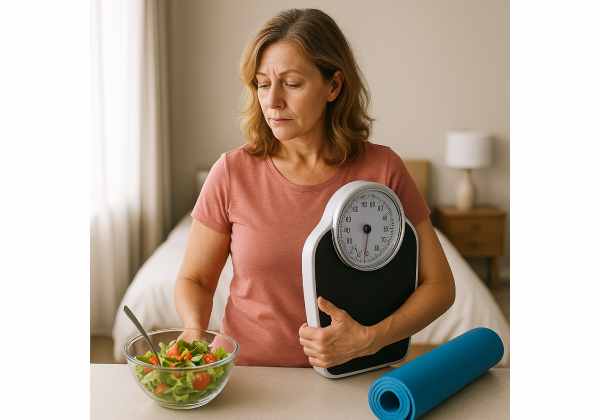
If fat loss feels harder in your 40s and 50s, that is not just in your head. Perimenopause and midlife can change where fat is stored, how well you sleep, how hungry you feel, how hard workouts feel, and how much daily movement you naturally do. That does not mean progress is impossible. It means the strategy often needs to get a little more specific.
The most effective approach is usually not a crash diet or endless cardio. It is a tighter mix of protein, strength training, movement, sleep support, and realistic calorie control. This article explains why plateaus get more common in midlife, which nutrition and activity tweaks tend to work best, and when a stall may point to something beyond food and exercise.
Table of Contents
- Why midlife plateaus feel different
- Make sure it is a real stall
- Nutrition tweaks that help most
- Activity changes that move the needle
- Sleep, stress, and symptoms matter
- When to get more support
Why midlife plateaus feel different
Perimenopause does not break fat loss physics, but it does make plateaus easier to run into. The biggest issue is usually not that your body suddenly stops responding to a calorie deficit. It is that several smaller changes start stacking up at the same time.
Estrogen fluctuations and the later drop around menopause can shift fat storage toward the abdomen. Aging also tends to reduce lean mass over time if you are not actively training to keep it. Less muscle usually means slightly lower energy expenditure, and that can shrink the calorie gap that used to work. On top of that, many women in midlife are juggling poor sleep, hot flashes, caregiving stress, long work hours, joint aches, and less unstructured movement than they had ten years earlier.
That combination can create a frustrating pattern:
- You are eating “pretty well,” but portions drift up.
- You are doing workouts, but your step count is lower.
- The scale is jumpier because of hormone-related fluid shifts.
- You feel more tired, so recovery is worse and effort feels higher.
- Hunger and cravings are harder to manage after rough nights.
This is why a midlife plateau often feels less predictable than a stall in your 20s or early 30s. It is not only about calories. It is about calories, body composition, activity, sleep, and symptoms all pulling in the same direction.
Another reason the plateau feels personal is that body composition can change even when scale weight does not move much. Some women notice a thicker waistline, softer midsection, and less muscle tone despite eating in a way that used to maintain their weight. That does not mean they are doing everything wrong. It means their old autopilot habits may no longer be enough.
The good news is that the basics still work. They just work better when they are adjusted to the realities of midlife. In practice, that usually means:
- Prioritizing muscle retention, not just lighter scale weight
- Being more intentional about protein and fiber
- Using walking and strength training together
- Taking sleep disruption seriously rather than treating it like a side issue
- Avoiding the urge to respond to every flat week with a harsher diet
This last point matters. A plateau during perimenopause is often made worse by overcorrection. Someone sees a stubborn scale, cuts food too hard, gets hungrier and more tired, moves less, then concludes her body is broken. In reality, the plan became too hard to sustain.
The more useful mindset is this: midlife plateaus are common because more variables affect the trend at once. That makes the process more nuanced, but not hopeless. The women who do best are often the ones who stop chasing dramatic weekly drops and start building a setup they can actually repeat.
Make sure it is a real stall
Before you change calories or double your cardio, make sure you are looking at a true plateau. In perimenopause especially, scale weight can get noisy. Hormone shifts, poor sleep, high-sodium meals, constipation, hard training, alcohol, travel, and cycle-related water retention can all hide fat loss for days or even weeks.
A better definition of a real stall is this: your weekly average weight has been flat for about 2 to 4 weeks, and waist measurements, photos, or clothing fit are not improving either. One week of stubborn weigh-ins is not enough evidence.
That is why your tracking method matters so much. Use the same conditions as often as you can:
- Weigh in the morning after using the bathroom
- Compare weekly averages, not isolated days
- Measure waist circumference once or twice per week
- Make a note of poor sleep, restaurant meals, and unusual soreness
- Track your cycle if you still have one, even if it is irregular
Women in perimenopause are especially prone to mistaking temporary water retention for fat gain. If that sounds familiar, it helps to understand the difference between a real plateau and phantom plateaus from water retention.
You should also rule out simple adherence drift. Midlife plateaus often develop quietly through patterns like these:
- “Healthy” snacks that add up
- A glass or two of wine most nights
- More bites while cooking or cleaning up
- Larger restaurant portions on weekends
- Less precise measuring of oils, dressings, nuts, cheese, or nut butter
None of those habits means you failed. They just mean your current routine may be closer to maintenance than you realized.
A short audit can save you from an unnecessary cut. For 7 to 14 days, tighten the routine before changing anything:
- Eat from a more repeatable meal structure.
- Measure calorie-dense foods more carefully.
- Keep sodium and alcohol more consistent.
- Bring your step count back to a normal range.
- Watch the average, not the daily fluctuation.
That process is often enough to reveal whether you were truly stalled or simply masked by inconsistency. It is also why a structured 2 to 4 week plateau check is smarter than reacting emotionally after a few rough mornings on the scale.
There is one more important point: if your waist is shrinking, your clothes fit better, and your strength is stable or improving, the scale alone is not the full story. Midlife fat loss sometimes looks more like recomposition than rapid scale loss. Muscle retention becomes more valuable, and slower visual progress can still be meaningful progress.
The goal of this step is not to delay action forever. It is to make sure you are solving the right problem. Many midlife plateaus are real. Many others are temporary noise layered on top of an already stressful season of life.
Nutrition tweaks that help most
When progress slows in midlife, the best nutrition changes are usually simple, not trendy. Most women do not need a radical cleanse, an ultra-low-carb reset, or a tiny calorie budget. They need meals that control hunger better, preserve lean mass, and reduce the little calorie leaks that appear when life gets busy.
The biggest lever is usually protein. Midlife is a time when holding onto muscle matters more, not less. Higher-protein meals tend to be more filling and can make a moderate deficit easier to sustain. For many women, a practical starting point is to anchor each meal with a real protein source instead of trying to “catch up” at dinner. If you want a more precise target, use a sensible protein intake range by body weight and build meals around it.
The second lever is fiber and food volume. Appetite often gets harder to manage when sleep is poor or stress is high. Meals built around vegetables, fruit, beans, high-fiber grains, potatoes, Greek yogurt, and lean proteins usually work better than low-volume snack foods, even when the calories look similar on paper. That is where daily fiber targets and food swaps can make a plateau diet feel much more manageable.
The third lever is portion realism. Midlife plateaus often come from foods that are nutritious but easy to underestimate:
- Olive oil
- Trail mix
- Cheese
- Nut butters
- Granola
- Wine and cocktails
- Restaurant salads with rich dressings
- “Just a few” crackers, chips, or sweets
That does not mean these foods are bad. It means they are easy to overshoot when your margin for error is smaller than it used to be.
This quick table can help you choose the next nutrition tweak:
| What you notice | Likely issue | Most useful tweak |
|---|---|---|
| Hungry all afternoon and evening | Protein and fiber are too low earlier in the day | Add a protein-based breakfast and a higher-fiber lunch |
| Eating “healthy” but not losing | Portions of calorie-dense foods drifted up | Measure oils, snacks, dressings, and extras for 1 to 2 weeks |
| Night cravings after dinner | Undereating earlier, poor sleep, or habit eating | Use a more balanced dinner and plan a structured evening snack if needed |
| Low energy for workouts | Carbs are too low around training | Move some carbs to pre- and post-workout meals |
| Weekend weight bounce and flat weekly trend | Social eating and alcohol erase the deficit | Use planned portions and fewer liquid calories on weekends |
For many women, the most productive diet shift is not “eat less of everything.” It is “eat more deliberately.” A plate that makes fat loss easier in midlife usually includes:
- A clear protein portion
- Produce or another high-fiber food
- A reasonable carb portion matched to activity
- Enough fat for taste and satiety, but not an accidental double serving
That is why the plate method and visual portions are often more helpful than rigid perfection. They create enough structure to move the trend without turning every meal into a math problem.
If you need a calorie change, keep it modest. Midlife plateaus often respond to cleaner execution and slightly better food composition before they require a deeper cut.
Activity changes that move the needle
If you are only using exercise to burn calories, you will usually end up disappointed. In perimenopause and midlife, activity does much more than that. It helps preserve lean mass, supports insulin sensitivity, improves waist measurements, offsets the natural drop in daily movement, and can make weight maintenance easier after loss.
The most useful foundation is strength training. That does not mean you need bodybuilding workouts. It means you should give your muscles a reason to stay. Two to four well-designed sessions per week can go a long way, especially if you focus on compound movements, progressive overload, and consistency rather than random classes that leave you sweaty but not stronger.
A good midlife fat-loss training mix usually looks like this:
- Strength training: 2 to 4 sessions per week
- Walking or steady movement: most days
- Optional cardio: added based on fitness, recovery, and preference
- Mobility and recovery: enough to keep the plan sustainable
For women who feel intimidated by lifting, a structured 3-day beginner strength plan is often a better starting point than doing more and more cardio. Strength work helps protect the muscle that supports metabolism and function, and it often improves body composition even when scale loss is slower than expected.
The second major lever is walking and daily movement. Midlife plateaus are often driven by a quiet drop in non-exercise activity. You still do your formal workouts, but you sit more, fidget less, and move less between tasks. That is why walking is not “too easy to matter.” It matters because it is repeatable.
If your step count has fallen, bringing it back up may help more than adding one punishing HIIT workout. Many women do well with one of these simple upgrades:
- Add 2,000 to 3,000 steps per day
- Take a 10-minute walk after one or two meals
- Use short movement breaks during desk work
- Keep weekends active instead of letting them become fully sedentary
Those changes work especially well when paired with a broader plan to increase daily calorie burn without formal exercise.
Cardio still has a place, but it should support the plan, not carry it. Too much hard cardio can backfire if it spikes hunger, worsens recovery, or crowds out strength training. For many midlife women, a combination of brisk walking, a few moderate cardio sessions, and consistent lifting is more effective than chasing exhaustion.
Pay attention to recovery too. If joints hurt, sleep is poor, and fatigue is high, more is not automatically better. A plateau often breaks not when you train harder, but when you train more intelligently:
- Lift enough to challenge muscle
- Move often enough to stay out of a sedentary rut
- Use cardio as a tool, not punishment
- Recover well enough to repeat the week
That is the pattern that tends to work in midlife: enough resistance work to protect muscle, enough movement to keep expenditure from drifting down, and enough recovery to make the whole setup sustainable.
Sleep, stress, and symptoms matter
Many midlife plateaus look like nutrition problems on the surface but are heavily shaped by sleep disruption and menopause symptoms underneath. If you are waking up with night sweats, sleeping lightly, or lying awake at 3 a.m., that affects far more than your mood the next day. It usually affects hunger, cravings, movement, recovery, patience, and training quality.
That is why sleep is not a side note in perimenopause weight management. It is part of the plan.
Poor sleep tends to make plateaus harder in several ways:
- Hunger and snack urges feel stronger
- High-effort workouts feel worse
- Recovery and soreness get worse
- You move less the next day
- Emotional eating becomes more likely
- Scale weight may rise from stress and water retention
This creates a frustrating loop. You sleep badly, feel drained, crave quick energy, move less, and then assume the answer is stricter dieting. But stricter dieting can increase stress and make the whole cycle worse.
This is one reason women with midlife plateaus often benefit from fixing the “background” problems first:
- Make caffeine cutoffs earlier in the day
- Keep alcohol limited, especially if it worsens night waking
- Use a cooler room and breathable bedding if hot flashes are a problem
- Keep dinner satisfying enough that you are not battling hunger at bedtime
- Build a more consistent wind-down routine
If sleep has clearly become part of the problem, it helps to treat it with the same seriousness as calories. A focus on repairing sleep debt and stalled fat loss often improves adherence more than another macro adjustment.
Stress is the other major hidden variable. Midlife is often a season of overlapping demands: work pressure, aging parents, teenagers, financial strain, relationship stress, and less personal recovery time. Chronic stress does not override energy balance, but it can make a calorie deficit far harder to stick to. It also pushes many women into the exact habits that flatten progress:
- Grazing without noticing
- Eating standing up or in the car
- Reaching for convenient comfort foods
- Skipping workouts because decision fatigue is high
- Treating weekends as relief from weekday restriction
This is where a more forgiving structure helps. Instead of trying to be perfect, aim to make the next decision easier. That might mean repeating two breakfasts, pre-planning a few dinners, keeping protein snacks visible, or using brief stress-management habits that interrupt emotional eating. Tools like practical strategies for stress-related cravings can reduce the friction that makes midlife plateaus feel inevitable.
If hot flashes, insomnia, or mood shifts are severe, do not just “push through.” Symptom management can meaningfully improve your ability to follow through on nutrition and activity changes. In some cases, that matters more than any tweak to your macros.
When to get more support
A plateau during perimenopause is common. A plateau that lasts despite a well-run plan deserves a closer look. The goal here is not to assume something is medically wrong every time progress slows. It is to know when the stall is no longer just about habits.
A good next step may be professional support if any of these apply:
- You have been genuinely consistent for several weeks with no trend change
- Your cycles became very irregular or bleeding changed significantly
- Fatigue, poor sleep, or hot flashes are severe
- You are gaining weight quickly rather than simply stalling
- Strength is falling fast and recovery is poor
- You suspect a medication, thyroid issue, insulin resistance, or sleep apnea may be involved
- Restriction is starting to trigger binge eating, obsessive tracking, or burnout
Midlife plateaus often have overlapping causes. That is why outside support can be useful. A registered dietitian can help you tighten calories without making the plan miserable. A qualified trainer can make strength work more effective and joint-friendly. A clinician can help assess whether symptoms, medication changes, or another health issue are part of the picture.
This is especially important if you keep telling yourself, “I’m doing everything right.” Sometimes that is true. Sometimes the missing piece is not discipline, but information. A weight stall can reflect a need to review your diet setup, but it can also be a reason to ask whether a broader issue is worth checking. If that feels relevant, consider guidance on when to see a doctor about weight gain or trouble losing.
It also helps to redefine what success looks like in this phase of life. For some women, the most meaningful win is not rapid scale loss. It is:
- Smaller waist measurements
- Better strength
- More stable energy
- Fewer cravings
- Holding weight steady instead of gaining
- Building a routine that survives stressful weeks
That is not settling. It is setting a target that matches the biology and logistics of midlife. Preventing gradual annual gain can be a major health win. So can losing body fat slowly while preserving muscle and function.
Finally, do not let comparison poison the process. Advice built around younger bodies, shorter timelines, and fewer life demands is often a poor fit here. Midlife fat loss usually rewards patience, structure, and recovery more than extremes. The women who keep progressing are often not the ones doing the harshest plan. They are the ones doing a good plan for long enough to let it work.
References
- Weight Gain in Midlife Women 2024 (Review)
- The Importance of Nutrition in Menopause and Perimenopause-A Review 2024 (Review)
- The effects of exercise training on body composition in postmenopausal women: a systematic review and meta-analysis 2023 (Systematic Review and Meta-Analysis)
- Resistance training for postmenopausal women: systematic review and meta-analysis 2023 (Systematic Review and Meta-Analysis)
- The role of lifestyle medicine in menopausal health: a review of non-pharmacologic interventions 2025 (Systematic Review)
Disclaimer
This article is for general educational purposes only and is not a substitute for medical advice, diagnosis, or treatment. If your plateau comes with heavy or unusual bleeding, severe sleep disruption, rapid weight gain, suspected medication effects, or symptoms that interfere with daily life, discuss it with a qualified clinician rather than trying to solve it with bigger diet cuts alone.
If this article helped, please share it on Facebook, X, or your preferred platform so more women can approach midlife plateaus with a practical plan instead of unnecessary self-blame.