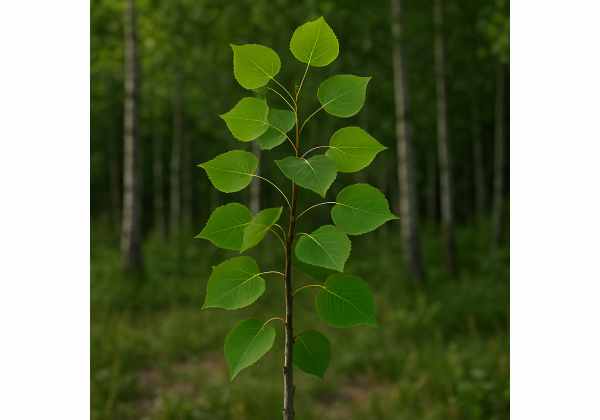
Quaking aspen, Populus tremuloides, is one of North America’s most recognizable trees, valued not only for its shimmering leaves and pale bark, but also for a long record of traditional medicinal use. Indigenous and folk traditions have used the inner bark, leaves, and occasionally the buds for fever, aches, digestive upset, urinary irritation, and topical care. What gives the tree its herbal relevance is a family of compounds called salicinoids, along with tannins, flavonoids, and other polyphenols that help explain its bitter, astringent, pain-easing, and anti-inflammatory reputation.
Still, quaking aspen is best approached with realism. It is not as standardized or as clinically studied as willow bark, and much of what is said about it comes from traditional use, phytochemical analysis, and preclinical work rather than strong human trials. That does not make it unhelpful. It means the herb is most useful when used thoughtfully, in modest amounts, and for the kinds of short-term complaints it has historically been matched with.
Top Highlights
- Quaking aspen is most often used traditionally for mild pain, feverish discomfort, and rheumatic soreness.
- Its bark and leaves also have astringent properties that may support minor digestive and urinary irritation.
- A traditional tincture range is about 2 to 4 mL up to 3 times daily, but no modern standardized clinical dose exists.
- People with aspirin sensitivity, active ulcers, bleeding risk, pregnancy, or regular anticoagulant use should avoid self-treatment.
Table of Contents
- What quaking aspen is and why it has medicinal value
- Key compounds and medicinal properties of quaking aspen
- Quaking Aspen for pain, fever, and inflammatory discomfort
- Digestive, urinary, and topical folk uses
- How to prepare and use bark, leaves, and related parts
- Dosage, timing, and practical best practices
- Safety, side effects, interactions, and who should avoid it
What quaking aspen is and why it has medicinal value
Quaking aspen is a fast-growing deciduous tree in the willow and poplar family, Salicaceae. It is famous for its round, flattened leaf stalks that let the leaves tremble in even a light breeze, giving the tree its common name. Although it is primarily known as a forest species, it also belongs to a group of trees with a long medicinal history. In herbal practice, the inner bark is the most important part, though leaves and occasionally buds or twigs have also been used.
The medicinal interest in quaking aspen comes from the same broad chemical family that gives willow its herbal reputation. The bark and leaves contain salicinoid phenolic glycosides, including salicin-related compounds, along with tannins and flavonoids. In older herbal systems, that translated into a plant considered bitter, astringent, mildly antiseptic, pain-easing, and supportive for fevers, rheumatic pain, diarrhea, and urinary irritation.
Historically, quaking aspen was used in several Indigenous traditions in North America. Ethnobotanical records describe preparations for colds, arthritic pain, digestive upset, urinary complaints, and some topical uses. Those records matter, because they show that the plant was not only noticed for its wood or ecological role, but repeatedly selected for symptoms involving inflammation, infection, irritation, or excess heat.
It is important, however, not to overstate the evidence. Quaking aspen is not one of the most heavily studied medicinal trees. Much of its modern relevance comes from a combination of traditional knowledge and later chemical work showing that the tree contains biologically active salicylates and polyphenols. That makes it plausible as a herbal remedy, but not fully established by large modern trials.
One useful way to place quaking aspen in context is to compare it with other poplar remedies, including poplar buds used in traditional topical medicine. Bud remedies tend to be more resinous and skin-focused, while quaking aspen bark is more often used for internal decoctions and bitter, astringent support. The family resemblance is there, but the herbal personality is different.
Quaking aspen also has practical value because it sits between foodless medicine and strong pharmaceutic-like herbs. It is not a kitchen staple, but it is also not an extreme remedy. It is most useful when symptoms are mild to moderate, the person understands that traditional herbs often work gradually, and the preparation is chosen well. Its best-known lane is still short-term support for discomfort, irritation, and mild inflammatory complaints rather than long-term tonic use.
Key compounds and medicinal properties of quaking aspen
The medicinal profile of quaking aspen begins with salicinoids, a group of phenolic glycosides characteristic of the Salicaceae family. These include salicin and structurally related compounds such as salicortin, tremulacin, tremuloidin, and populin-related derivatives. These molecules are central to the tree’s reputation for pain relief, fever support, and anti-inflammatory action.
Salicin is the best known because it is historically tied to the development of salicylate-based medicine. In the body, it is metabolized differently than aspirin, but it still contributes to the broader salicylate effect associated with pain and inflammation support. Quaking aspen does not depend on salicin alone, though. Like many traditional tree medicines, it works through a whole matrix of compounds rather than a single star ingredient.
Important classes of compounds in quaking aspen include:
- salicinoid phenolic glycosides, which are linked to pain-relieving and anti-inflammatory effects
- flavonoids, which may contribute antioxidant and tissue-protective activity
- tannins, which add astringency and help explain some digestive and topical uses
- phenolic acids and related polyphenols, which deepen the antioxidant profile
- sterols, triterpenes, and other bark constituents identified in extract studies
This mixed chemistry makes sense of the herb’s old uses. The salicinoids explain why it was used for pain, fever, and rheumatic discomfort. The tannins help explain why bark decoctions were used for diarrhea and irritated mucous membranes. The flavonoids and polyphenols add broader antioxidant and antimicrobial plausibility.
From a practical standpoint, the main medicinal properties usually associated with quaking aspen are:
- mild analgesic support
- anti-inflammatory activity
- febrifuge or fever-supportive action
- astringent effects on mucosa and skin
- possible antimicrobial activity in certain extracts
- mild bitter-tonic influence on digestion and appetite
These properties are best interpreted conservatively. Quaking aspen is not a substitute for prescription analgesics, antibiotics, or fever management in serious illness. But as a traditional bark remedy, its chemistry is coherent. It behaves exactly like the kind of herb that would have been used historically for aches, chills, bowel looseness, and irritated tissue.
This is also where comparison with willow bark for salicylate-rich pain support becomes useful. Willow is better standardized and more clinically studied, while quaking aspen remains more traditional and species-specific. Quaking aspen may feel somewhat broader in folk use because of its tannins and astringency, but it is less predictable as a modern supplement.
Another point worth noting is that the plant part matters. Bark chemistry is not identical to leaf chemistry, and leaf chemistry is not identical to bud chemistry. Most traditional internal use focuses on bark, especially the inner bark or young bark from twigs and small branches. That is one reason bark decoctions remain the most sensible traditional preparation. The bark carries the bitter, salicylate-rich, astringent identity of the herb most clearly.
In short, quaking aspen’s medicinal value comes from a layered chemistry. Salicinoids give it its pain-and-fever reputation, tannins give it its drying and tightening action, and flavonoids and polyphenols round out its protective profile.
Quaking Aspen for pain, fever, and inflammatory discomfort
If there is one area where quaking aspen fits most naturally into herbal practice, it is mild pain and inflammatory discomfort. Traditional uses consistently point toward body aches, rheumatic soreness, feverish states, chills, and the kind of generalized inflammatory discomfort that comes with colds, overexertion, or chronic joint stiffness.
This traditional use is not hard to understand. The bark contains salicinoids, and salicylate-rich tree medicines have been used for centuries when pain and inflammation overlap. Quaking aspen is not identical to aspirin, and it should not be presented as such, but it belongs to the same broader medicinal logic. It tends to make the most sense for dull, persistent, or systemic discomfort rather than sharp, severe, or emergency pain.
A realistic picture of possible benefits includes:
- support for mild musculoskeletal aches
- temporary easing of rheumatic stiffness
- support during feverish, achy colds
- modest reduction in the sense of inflammatory discomfort
- mild relief where pain and tension coexist
For many herbalists, quaking aspen is less about dramatic pain relief and more about restoring a measure of ease. That matters, because it sets the right expectations. If someone wants immediate, powerful relief, they are likely to be disappointed. If they want a traditional bark remedy that may soften discomfort over several doses, the herb makes more sense.
Fever support is similar. Older herbal systems used quaking aspen for intermittent fevers, chills, and general feverish malaise. Modern users should interpret that carefully. A bark decoction may help some people feel more comfortable during a minor viral illness, but it is not a replacement for hydration, medical evaluation, or targeted treatment when fever is high, persistent, or accompanied by red-flag symptoms.
Joint and rheumatic discomfort are another traditional area. Quaking aspen was used for “rheumatism” in the older sense, a broad category that included arthritic aches, weather-sensitive soreness, and inflammatory body pain. In that respect it overlaps with white willow as another salicylate-centered tree remedy, though quaking aspen is generally treated more as a folk bark medicine than as a standardized analgesic herb.
Its best role is probably as a short-term support herb in mild cases. Someone with a cold, body aches, low-grade fever, and a history of tolerating salicylate-rich herbs may find it reasonable. Someone with severe arthritis, autoimmune inflammation, or recurrent headaches needs stronger evidence and better assessment than quaking aspen can provide.
There is also a “how it feels” aspect to the herb. Bitter bark decoctions often create a grounded, earthy, old-fashioned kind of support. They do not feel like modern symptom suppressors. They feel like they are working with the body rather than quickly overriding symptoms. For some people, that is exactly the appeal.
The key is not to oversell. Quaking aspen may help with mild pain, feverish discomfort, and inflammatory aches, especially when used early and appropriately. It does not justify broad claims of proven clinical efficacy. Its strength lies in being a reasonable, coherent, salicylate-rich traditional option.
Digestive, urinary, and topical folk uses
Quaking aspen has a broader traditional use history than pain relief alone. Bark teas and decoctions were also used for digestive upset, loose stools, urinary irritation, appetite support, and certain topical complaints. These uses are less discussed today, but they fit the plant’s chemistry surprisingly well.
The digestive side comes mostly from tannins and bitterness. Tannins help tighten and tone irritated mucosa, while bitter principles may stimulate digestive secretions in low or moderate amounts. This helps explain why quaking aspen appears in older accounts as a remedy for diarrhea, weak digestion, and appetite loss. The herb is not primarily a demulcent or soothing mucilage herb. It is more of a drying, toning, bitter-astringent bark.
This makes it better suited to:
- mild diarrhea or bowel looseness
- digestive upset accompanied by excess secretion
- sluggish appetite in someone who tolerates bitters well
- short-term gut irritation rather than chronic bowel disease
Its urinary reputation is also worth mentioning, though evidence is even thinner here. Ethnobotanical sources describe quaking aspen in preparations for urinary irritation and some genitourinary complaints. The exact reason is not fully clear, but a combination of mild bitterness, astringency, and antimicrobial potential may have contributed to its use. This does not make it a first-choice modern urinary herb. Still, it gives historical context to why the plant was valued in general village and forest medicine.
For topical use, quaking aspen has been applied more traditionally to irritated skin, minor wounds, and inflamed tissue, especially in poultices, washes, or salve-like forms. Bark and leaf preparations are not as famous for skin use as more resinous poplar buds, but the astringent and antimicrobial logic remains. The herb may help dry overly moist irritated tissue and support surface comfort.
This is where comparison with witch hazel as a classic topical astringent is useful. Both herbs are better matched to damp, irritated, or inflamed tissue than to dry, fragile, or already over-tight skin. Quaking aspen is less commonly used in modern skincare, but its traditional logic is similar.
That said, the limits matter. Quaking aspen is not a proven treatment for urinary tract infection, inflammatory bowel disease, serious diarrhea, or infected wounds. Its historical use belongs in the category of supportive folk care, not definitive medical management. Severe symptoms always change the equation.
A balanced summary of this section would be:
- Digestive use is plausible when diarrhea, irritation, and mild weakness are the main pattern.
- Urinary use is more historical than well-proven, and should be treated cautiously.
- Topical use makes the most sense for minor, superficial issues rather than serious skin disease.
- The herb works best when its bitter and astringent qualities are actually needed.
This broader use profile adds depth to quaking aspen’s identity. It is not only a pain bark. It is a modest but versatile medicinal tree with astringent, bitter, and salicylate-based actions that can overlap in useful ways.
How to prepare and use bark, leaves, and related parts
How quaking aspen is prepared matters a great deal. This is not a plant where every form performs equally well. The bark is the most traditional medicinal part, and the simplest preparations remain the most sensible. In most cases, a decoction or tincture of the bark is more practical than a capsule made from random powdered material.
The bark is usually taken from young branches or twigs rather than from deeply furrowed older trunks. Inner bark or thinner young bark is preferred because it is easier to process and often more aligned with traditional practice. Leaves have also been used, but they are generally secondary to bark for internal medicine.
Common forms include:
- bark decoction or simmered tea
- alcohol tincture
- powdered or cut dried bark
- bark-and-leaf combinations
- topical washes and compresses
- occasionally salve-style preparations, especially in broader poplar formulas
A decoction is usually the best starting point for internal use because bark releases its constituents more reliably when simmered or steeped well. Tinctures are convenient and portable, but they vary in strength. If the label does not clearly state plant part, extraction ratio, and alcohol percentage, it is harder to judge what you are actually taking.
Topical use is simpler. A cooled decoction or strong tea can be applied as a wash or compress. This fits the herb’s astringent role and avoids unnecessary complexity.
A few practical best practices improve results:
- Use clearly identified quaking aspen, not “some poplar bark.”
- Harvest modest vertical strips from young branches only, never ring-bark a live tree.
- Dry bark well before storage to prevent mold.
- Favor fresh small batches of tea over old reheated decoctions.
- Avoid gathering from roadsides, industrial zones, or contaminated forest edges.
This tree also raises a sourcing issue that many herb guides gloss over. Because quaking aspen is abundant, people sometimes assume any wild tree is fair game. But medicinal bark harvesting can injure the tree if done carelessly. Sustainable collection means taking only small amounts, rotating trees, and working from branches or pruned material when possible.
In terms of use strategy, quaking aspen is closer to a short-course herbal tool than a daily superfood. You prepare it for a reason: a mild feverish cold, aching joints, digestive looseness, or a need for topical astringency. That makes it different from nutrient herbs that can simply be folded into ordinary routines.
It may also be paired conceptually with herbs used for urinary or drainage support, though not always in the same formula. For instance, if a person is thinking about traditional urinary herb categories, goldenrod as a classic urinary support herb is usually more directly targeted than quaking aspen. That comparison helps keep quaking aspen in its proper lane: broad folk support rather than a specialized urinary remedy.
The best preparations, then, are the traditional ones. Bark decoction for internal use, tincture for convenience, and cooled bark tea for topical application. Simpler forms usually match the herb better than highly processed modern formats.
Dosage, timing, and practical best practices
Dosage for quaking aspen needs careful wording because there is no modern, widely accepted standardized clinical dose for Populus tremuloides bark. Most practical guidance comes from traditional herbal use, not from large controlled trials. That means dosing should be conservative, symptom-specific, and short-term.
For bark decoction, traditional practice often uses about 1 to 2 teaspoonfuls of dried bark per cup of water, simmered or steeped for around 10 to 15 minutes, taken up to 3 times daily. For tincture, older herbal guidance commonly falls in the range of 2 to 4 mL, also up to 3 times daily. These are traditional working ranges, not clinically validated prescriptions.
A reasonable dosing approach is:
- start low, especially if you are new to bitter tree-bark remedies
- use it for short periods tied to a clear symptom
- reassess after 24 to 72 hours in acute situations
- stop if the herb seems irritating or unhelpful
- do not use escalating doses to chase stronger effects
Timing depends on the goal. If the bark is being used for appetite and bitter digestive support, taking it before meals may make sense. If the goal is body aches, feverish discomfort, or loose stool, between-meal dosing is usually more practical. For topical use, timing matters less than freshness and cleanliness of the preparation.
The herb’s best use is often short and deliberate:
- A couple of days during a mild, achy cold.
- Several doses during transient bowel looseness.
- A short trial for mild rheumatic soreness.
- A temporary wash or compress for minor topical irritation.
This short-course pattern is important. Quaking aspen is not the kind of herb most people should take indefinitely. Repeated daily use increases the chance of stomach irritation or unnecessary salicylate exposure, especially in people who are already using anti-inflammatory medication or aspirin-like products.
Another practical point is preparation strength. A very weak tea may do almost nothing, while an overly strong decoction may feel harsh, drying, or nauseating. Tree barks often require a little patience to prepare well, but they also punish over-concentration. Moderate strength usually works best.
Common mistakes include:
- assuming more bark means better pain relief
- using random bark from an unidentified poplar species
- taking it alongside aspirin without thinking about overlap
- using it for chronic symptoms that need medical evaluation
- confusing traditional range with proof of standardized safety
This is one of the reasons some people may prefer other salicylate-rich herbs for routine use. For example, meadowsweet and other gentler salicylate-containing herbs may feel easier on some constitutions, even if quaking aspen has a stronger bark-medicine tradition.
The most responsible dosage advice for quaking aspen is not a rigid formula. It is a method: keep doses moderate, match them to clear short-term needs, and use the plant more like a traditional remedy than a daily supplement.
Safety, side effects, interactions, and who should avoid it
Quaking aspen is often described as a gentle tree remedy, but that description only holds when it is used appropriately. Because it contains salicylate-like compounds, the safety conversation overlaps with willow bark and aspirin-like sensitivity. That does not mean it is inherently dangerous, but it does mean some people should avoid it entirely.
The main groups who should not self-treat with quaking aspen include:
- people with aspirin or salicylate allergy
- children and teenagers with feverish illness
- people who are pregnant or breastfeeding
- anyone with active stomach ulcers or significant gastritis
- people taking anticoagulants or antiplatelet drugs
- those preparing for surgery
- people with severe kidney disease or unexplained bleeding
Children deserve special mention. Even though quaking aspen is a traditional herb, salicylate-containing plants are generally not the right choice for children with viral illness because of the broader concern associated with aspirin-like compounds. Caution here is far more important than nostalgia for folk remedies.
Possible side effects can include:
- stomach upset
- nausea from strong bark decoctions
- heartburn or irritation in sensitive users
- allergic rash
- dizziness in rare cases
- constipation or excessive dryness if overused for its astringency
Drug interactions are not fully mapped in modern literature, but reasonable caution is still necessary. Salicylate overlap with aspirin, NSAIDs, anticoagulants, and possibly some anti-inflammatory supplements is the most obvious issue. Even if quaking aspen is milder than pharmaceutical aspirin, mixing several agents in the same lane is not wise without guidance.
There is also a condition-matching issue. Some of the biggest problems with traditional herbs come not from toxicity, but from misapplication. Quaking aspen is a poor choice for severe pain, prolonged fever, bloody diarrhea, suspected urinary infection with fever, or chronic inflammatory disease being managed without diagnosis. In those cases, delay is the real danger.
Topical safety is usually better, but not limitless. Avoid using concentrated bark preparations on deep wounds, large damaged skin areas, or visibly infected tissue without professional advice. Even astringent washes can irritate if used too often on fragile skin.
A final practical concern is misidentification and contamination. Not every “aspen” bark preparation in informal markets is truly Populus tremuloides, and not every wild tree grows in a clean environment. Correct identification and responsible sourcing matter more with tree medicine than people sometimes realize.
The safest way to think about quaking aspen is this: it is a traditional bark remedy with a coherent but moderately active chemistry. It deserves the same respect you would give any salicylate-rich herb. Used briefly, modestly, and by the right person, it can be appropriate. Used casually in the wrong situation, it can become irritating, unhelpful, or risky.
References
- Populus salicinoids: a thriving subfield in the omics era 2025 (Review)
- Quantification of Salicylates and Flavonoids in Poplar Bark and Leaves Based on IR, NIR, and Raman Spectra 2022
- Extraction of Phenolic Compounds from Populus Salicaceae Bark 2022 (Review)
- Phytochemical Screening of Quaking Aspen (Populus tremuloides) Extracts by UPLC-QTOF-MS and Evaluation of their Antimicrobial Activity 2018
- Traditional use of medicinal plants in the boreal forest of Canada: review and perspectives 2012 (Review)
Disclaimer
This article is for educational purposes only and does not replace medical advice, diagnosis, or treatment. Quaking aspen is a traditional herbal remedy, not a proven treatment for arthritis, infection, chronic pain, urinary tract disease, or high fever. Seek prompt medical care for severe pain, persistent fever, dehydration, blood in the stool or urine, allergic symptoms, or any condition that is worsening rather than improving.
If you found this article helpful, please share it on Facebook, X, or another platform you prefer.