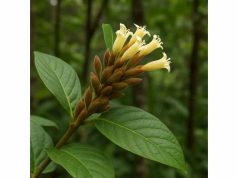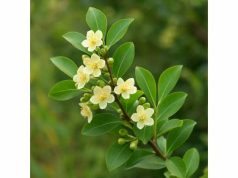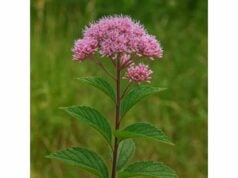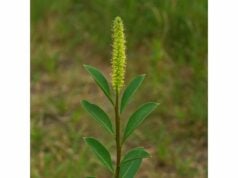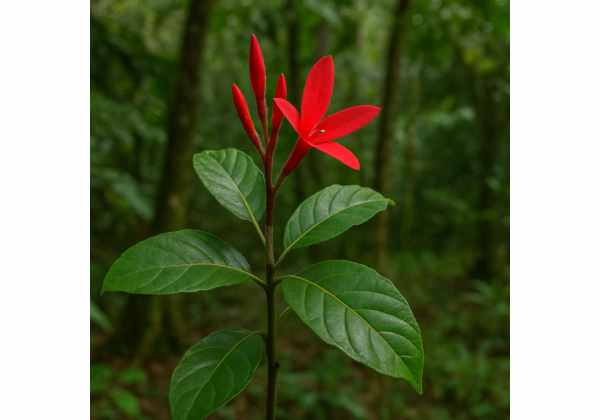
Quassia amara, often called bitterwood or amargo, is one of the classic intensely bitter medicinal plants of tropical America. Traditionally, its wood, bark, and sometimes leaves have been used as a bitter tonic for poor appetite, sluggish digestion, intestinal complaints, fever, and external parasite problems. Modern research helps explain some of that reputation: the plant contains quassinoids such as quassin, neoquassin, and simalikalactones, compounds linked to marked bitterness and a range of biological effects in laboratory studies.
Still, Quassia is a plant that rewards careful expectations. Its strongest modern human evidence is not for broad internal disease treatment, but for a few topical dermatologic uses, especially in small studies on rosacea and seborrheic dermatitis. By contrast, many of the most exciting claims around malaria, blood sugar, ulcers, and liver protection remain mostly preclinical. That does not make the herb unimportant, but it does mean dosage, duration, and safety deserve special attention. Used thoughtfully, Quassia may be a useful bitter or topical botanical, but it is not a casual cure-all.
Quick Summary
- Quassia is best known as a very bitter traditional herb used for appetite and sluggish digestion.
- The strongest human evidence is topical, with 4% extract gel studied for rosacea and seborrheic dermatitis.
- Internal benefits for blood sugar, liver protection, ulcers, and malaria are still driven mainly by laboratory and animal research.
- Topical human studies have most often used 4% extract gel over about 6 weeks.
- Avoid self-use during pregnancy, while trying to conceive, or if you have active ulcer irritation or major digestive sensitivity.
Table of Contents
- What Quassia is and why it has been used
- Key compounds and medicinal properties in Quassia
- Traditional and practical uses for appetite, digestion, and bitter tonic support
- Topical uses for skin parasites, rosacea, and seborrheic dermatitis
- What the research actually says about Quassia benefits
- Quassia dosage, forms, and how to use it cautiously
- Side effects, interactions, and who should avoid Quassia
What Quassia is and why it has been used
Quassia amara is a small tropical shrub or tree in the Simaroubaceae family, native to parts of Central and South America. It is widely known as bitterwood because nearly every traditional description of the plant begins with its taste. The wood and bark are strikingly bitter, and that bitterness has shaped both its historical use and its modern reputation. In older herbal systems, intensely bitter plants were often used to stimulate appetite, “awaken” digestion, and counter a sense of heaviness after meals. Quassia fits that pattern very clearly.
The parts most often discussed in medicinal use are the wood, bark, and leaves. Depending on the region, these have been prepared as infusions, decoctions, tinctures, lotions, or washes. Traditional applications have included poor appetite, dyspepsia, constipation, intestinal worms, fever, malaria-like illness, and topical use for lice or other parasites. The breadth of that list is impressive, but it also explains why modern readers need caution. Traditional range does not equal modern proof.
Another important detail is product identity. The word “quassia” has sometimes been used loosely in commerce, and some older pharmacopoeial traditions discuss related bitter woods, especially Picrasma excelsa, under similar naming. For a consumer, that means label clarity matters. A product sold simply as “quassia bark” or “quassia wood” may not always reflect the same plant species or preparation style.
In practical herbal language, Quassia belongs to the family of digestive bitters. It is closer in spirit to strong pre-meal bitters than to soothing demulcent herbs. That distinction matters because the herb is often better suited to low appetite and sluggish digestion than to burning gastritis or active ulcer pain. Readers comparing bitter digestive herbs may find it useful to contrast Quassia with gentian as another classic digestive bitter, since both are valued more for their signal effect on digestion than for simple nutritional support.
Historically, the plant also developed a reputation for parasite-related uses. This included internal folk use and external applications such as lotions or tinctures for lice. Modern evidence supports some topical dermatologic interest, but many internal antiparasitic claims still rely more on tradition or preclinical models than on strong human trials.
So what is Quassia, in the most useful modern sense? It is an intensely bitter tropical medicinal plant with a strong traditional role in digestive stimulation and some credible topical skin applications. But it is also a plant whose reputation has grown faster than its clinical evidence base. Understanding both sides is the key to using it responsibly.
Key compounds and medicinal properties in Quassia
Quassia’s defining chemistry comes from quassinoids, a group of highly oxygenated degraded triterpenes that are responsible for much of the plant’s intense bitterness and much of its research interest. Among the best-known compounds are quassin, neoquassin, simalikalactone D, and simalikalactone E. These are the names that appear most often when scientists investigate Quassia’s antimalarial, anti-inflammatory, antiparasitic, cytotoxic, and digestive-related effects.
Quassin is often treated as a signature bitter constituent. It is one of the reasons Quassia has such a forceful taste, and it helps explain why the herb has long been classified as a bitter tonic. Neoquassin is closely related, while simalikalactones have attracted more attention in antimalarial and cytotoxicity research. That does not mean every preparation contains them in the same amounts. Leaf tea, wood extract, bark extract, and topical gel can differ substantially in chemical profile.
Beyond quassinoids, Quassia may also contain alkaloids, including canthin-6-one derivatives, as well as other minor constituents that contribute to its broader pharmacology. These compounds help explain why the plant has been studied for more than just bitterness. The main medicinal properties proposed in the literature include:
- Bitter tonic and appetite-stimulating action
- Digestive stimulation
- Anti-inflammatory activity
- Antiparasitic activity
- Antimalarial activity
- Antiulcer or gastroprotective effects in some models
- Antidiabetic and hepatoprotective potential in preclinical work
The key word in several of those phrases is “potential.” Many of Quassia’s most exciting properties have been demonstrated in cell studies, animal models, or chemical analyses, not in large well-controlled human trials. This is especially true for malaria, diabetes, liver protection, and anticancer discussions. The chemistry is compelling, but chemistry alone does not establish clinical usefulness.
Quassia is therefore a good example of a herb that looks impressive in the laboratory while remaining more modest in real-world evidence. That is not unusual in botanical medicine. Many plants show broad mechanistic promise but only a narrow set of clinically demonstrated uses. Readers who are familiar with other strong bitter botanicals may notice some overlap with wormwood and related digestive-parasitic bitter traditions, though Quassia is chemically distinct and should not be treated as interchangeable.
One more practical point deserves emphasis: different compounds may support different uses. A wood-based bitter tonic intended for appetite stimulation is not the same thing as a leaf tea studied for antimalarial quassinoids, and neither is the same as a topical gel used in dermatology. This is why generic marketing phrases like “supports immunity, detox, digestion, skin, and metabolism” can be misleading. The medicinal properties of Quassia depend heavily on the plant part, the extraction method, and the intended route of use.
A balanced summary would be this: Quassia’s main “key ingredients” are quassinoids, especially quassin-related compounds, and these support its identity as a very bitter, biologically active plant. But only a small portion of its proposed pharmacology has been tested well enough in humans to justify confident therapeutic claims.
Traditional and practical uses for appetite, digestion, and bitter tonic support
If Quassia has one internal use that still makes practical sense today, it is as a bitter tonic for poor appetite and sluggish digestion. Traditional systems often used intensely bitter herbs before meals to stimulate salivation, prime gastric secretions, and make the body more ready to eat. In that context, Quassia is not meant to soothe the gut the way marshmallow root or slippery elm might. It is meant to activate digestion through bitterness.
This old pattern of use still has logic. Many people experience a type of digestive discomfort that is not fiery or inflamed, but slow, heavy, and under-responsive. They feel uninterested in food, or meals sit heavily, or they notice fullness after relatively small portions. In those cases, a bitter herb may be more suitable than a calming carminative. Quassia traditionally fits that role.
Common traditional digestive uses have included:
- Temporary loss of appetite
- Sluggish digestion
- Mild dyspeptic discomfort
- A sense of heaviness after meals
- Constipation linked to digestive inactivity
- Bitter support in recovery after illness
At the same time, the herb should not be romanticized. Traditional use does not automatically justify routine self-treatment for ulcers, major reflux, unexplained abdominal pain, inflammatory bowel disease, or chronic nausea. In fact, because Quassia is so bitter, it may be a poor fit for people whose digestive tract already feels irritated. Strong bitters can increase secretory activity and may aggravate burning symptoms in sensitive users.
That is why Quassia is best thought of as a selective digestive herb rather than a general stomach remedy. People who want a bitter but gentler digestive comparison sometimes look at dandelion as a milder bitter digestive option, especially when they want broader food-herb use and less aggressive bitterness. Quassia usually sits at the more intense end of the spectrum.
There is also a traditional antiparasitic angle. Older texts and folk practices describe oral and rectal use of quassia infusions or preparations for worms and intestinal disturbance. Modern readers should approach this carefully. Those uses are historically interesting, but they do not replace modern diagnosis or treatment for suspected parasitic infection. If someone has ongoing diarrhea, weight loss, or exposure-related concerns, a clinician and appropriate testing matter more than a bitter decoction.
The practical modern role of Quassia internally is therefore fairly narrow but still relevant. It may appeal most to people who want a classic bitter, taken thoughtfully, before meals, for temporary digestive sluggishness or appetite loss. It is much less convincing as a broad antimicrobial cleanse, an at-home antiparasitic program, or a proven metabolic herb.
Used this way, Quassia reflects an older herbal principle that still survives in modern practice: sometimes the value of a plant lies not in calming or suppressing a symptom, but in nudging the body’s own digestive readiness. That is the most coherent internal use of Quassia, and also the one least likely to be distorted by hype.
Topical uses for skin parasites, rosacea, and seborrheic dermatitis
Quassia’s strongest human evidence is topical, not internal. This is one of the most important things readers should know, because many herb articles do the reverse and focus heavily on broad internal claims while barely mentioning the better-supported skin uses.
Historically, Quassia has been used externally for lice and other skin parasite problems. Older clinical reports on head lice suggested quassia tincture could be useful, and this use helped establish the plant’s reputation as more than a digestive bitter. The mechanism is not fully defined in everyday clinical terms, but the literature often discusses antiparasitic and anti-inflammatory actions, as well as effects on parasite-related processes rather than a simple harsh insecticidal burn.
More modern interest has centered on inflammatory skin disorders. Two small human studies are especially notable. In rosacea, a topical gel containing 4% Quassia extract was studied over six weeks and showed encouraging improvement with good tolerability. In facial seborrheic dermatitis, a 4% Quassia amara gel also performed well in a randomized comparative trial. These are not enormous landmark trials, and they do not make Quassia a first-line universal dermatology treatment. But they are real human signals, and stronger than the evidence behind many internal claims.
Topical Quassia may be worth considering in discussions around:
- Papulopustular rosacea
- Facial seborrheic dermatitis
- Mild inflammatory skin states where antiparasitic and anti-inflammatory effects are relevant
- Historical or adjunctive head lice care
Still, context matters. Quassia is not a general substitute for prescription dermatology. Rosacea and seborrheic dermatitis are complex conditions with overlapping triggers, barrier dysfunction, inflammatory pathways, and microbial or Demodex-related contributions. A topical botanical may help some people, but it does not erase the need for diagnosis, trigger control, and appropriate skin care.
Readers comparing botanicals for scalp or skin use may naturally look at tea tree for antimicrobial and skin-focused applications. That is a reasonable comparison because both plants have topical reputations, though they behave very differently. Tea tree is an essential oil-driven topical antimicrobial, while Quassia is a bitter extract with a more specialized research niche.
One advantage of Quassia’s topical evidence is that it creates a more grounded modern use profile. Instead of promising that the plant treats everything from diabetes to cancer, a careful reader can say something much more believable: Quassia appears most useful in topical skin applications, particularly where inflammation and parasite-related factors intersect.
This also affects how the herb should be marketed and used. A standardized topical formula, used on a diagnosed skin condition, is far more defensible than improvised internal use. People who are interested in Quassia for skin support should think in terms of finished, well-formulated products rather than homemade strong washes or crude extracts, especially on reactive facial skin.
In short, topical Quassia is where tradition and modern evidence overlap most clearly. That does not make it mainstream dermatology, but it does make it one of the more plausible and practical ways the plant may still be used today.
What the research actually says about Quassia benefits
Quassia is a plant where the difference between “interesting” and “proven” really matters. If you scan laboratory and preclinical literature, the herb can seem almost endlessly promising. It has been studied for antimalarial, antiparasitic, anti-inflammatory, antiulcer, antihyperglycemic, hepatoprotective, cytotoxic, and antimicrobial effects. But when you narrow the question to human evidence, the picture becomes much smaller.
The most convincing human use remains topical. Small clinical studies support 4% Quassia extract gel for rosacea and seborrheic dermatitis, with good tolerability and meaningful improvement. Those findings are worth taking seriously, even though they still need larger and more independent confirmation.
Internal uses are a different story. Research on blood sugar lowering, for example, continues to look promising in animals. A 2025 mouse study reported dose-dependent reductions in fasting blood glucose with aqueous leaf extract, but that is still a preclinical model. It may support future research, yet it does not justify calling Quassia a proven diabetes therapy.
The same pattern appears in liver protection and ulcer work. Animal studies suggest that Quassia extracts may reduce oxidative stress, improve some lipid or liver markers, and show gastroprotective effects in experimental ulcer models. These are meaningful signals, but they remain early-stage findings. They help explain traditional interest, not settle modern treatment questions.
Antimalarial claims need especially careful wording. Quassinoids from Quassia amara, particularly simalikalactones, have shown notable antiplasmodial activity in laboratory settings. That is scientifically important. Yet the same research also emphasizes that human clinical data are insufficient and that traditional leaf tea should not simply be recommended as malaria treatment without proper clinical study. In a serious infection, that warning matters enormously.
So what does the evidence really support?
- Traditional digestive bitter use is plausible, but not strongly validated by modern clinical trials.
- Topical use for rosacea and seborrheic dermatitis has the best direct human support.
- Antimalarial, antidiabetic, antiulcer, and hepatoprotective effects remain mainly preclinical.
- Broad marketing claims about cancer, “detox,” or internal parasite cleansing are far ahead of current evidence.
This difference is useful for readers because it prevents both cynicism and exaggeration. Quassia is not fake. It does have biologically active compounds and a few credible uses. But it is also not a well-proven internal multi-system herb in the modern evidence-based sense.
If your main interest is botanical antiparasitic tradition or skin-oriented plant care, Quassia deserves attention. If your goal is a proven internal herb for metabolic or gastrointestinal disease, the bar should be higher. In that case, stronger evidence-backed choices often make more sense than relying on Quassia’s promising but unfinished research profile.
That is the fairest reading of the current literature: Quassia is a legitimate plant with real pharmacologic interest, but most of its large internal health claims should still be treated as research questions, not settled answers.
Quassia dosage, forms, and how to use it cautiously
Quassia dosing is one of the areas where people most often want a neat answer and least often get one. There is no modern, universally accepted oral clinical dosing standard for Quassia amara. Traditional use varies by plant part, region, and preparation, and the modern literature is too mixed to produce a single reliable internal dose range that fits every form.
That means the first responsible point is simple: no standardized oral human dose has been clinically established for appetite, blood sugar, liver support, or antiparasitic use.
The main forms you may encounter include:
- Bark or wood chips for decoction or infusion
- Bitter tinctures or liquid extracts
- Powdered bark or wood
- Topical gels or creams
- Lotions or tinctures intended for external parasite use
From a practical perspective, route of use matters more than almost anything else. The best-studied human topical form has been a 4% extract gel, used over about six weeks in rosacea and seborrheic dermatitis research. That is the clearest preparation reference currently available in the literature.
Internal use is far less standardized. Traditional bitter-tonic practice often involves very small amounts relative to food-herb dosing because the taste is so strong. But that old-world practice does not automatically translate into a modern self-care dose, especially when commercial extracts vary widely in concentration and product identity.
If someone still wants to explore oral Quassia, a cautious framework is much more important than an aggressive dose:
- Verify the botanical identity as Quassia amara.
- Use a reputable single-ingredient product.
- Start with the lowest labeled amount.
- Use it only for short-term digestive bitter purposes, not as a broad disease treatment.
- Stop if it worsens stomach irritation, nausea, or burning.
Topical use is easier to discuss because the available clinical studies give a clearer benchmark. A finished product around 4% extract, used for several weeks, is far more defensible than improvised homemade facial use. This matters because crude high-bitter preparations can irritate already sensitive skin if used carelessly.
People comparing internal digestive bitters may also find that Quassia is often more intense than they actually need. Someone who wants aromatic digestive support, for example, might be better served by peppermint for a gentler digestive strategy rather than a very strong bitter tonic. Quassia is not a beginner herb in taste or in effect.
The bigger lesson is that Quassia dosing should be driven by humility. There is enough evidence to discuss it intelligently, but not enough to hand out simple, confident oral dosing formulas for every goal. Use the topical data where it exists, treat internal use conservatively, and avoid turning uncertain traditional dosing into false precision.
Side effects, interactions, and who should avoid Quassia
Quassia’s intense bitterness is one clue to its safety profile. The same qualities that make it useful as a bitter tonic can also make it irritating or unsuitable for some people. The most likely short-term problems with internal use are digestive: nausea, stomach irritation, excessive bitterness, appetite suppression in the wrong context, or worsening of burning upper-GI symptoms.
People with active gastritis, peptic ulcer disease, or strong reflux symptoms should be especially careful. A strong bitter may stimulate secretory activity in ways that are uncomfortable or counterproductive. This is one reason Quassia should not be treated as a general “stomach herb.” It fits sluggish digestion better than inflamed digestion.
Topical use is not automatically risk-free either. Even though small studies suggest good tolerability in rosacea and seborrheic dermatitis, sensitive skin can react unpredictably to botanical extracts. Patch testing and cautious first use are sensible, especially on the face.
The biggest safety warning in the literature is reproductive caution. Animal studies have raised concern about antifertility and reproductive toxicity effects, particularly in males, with bark extracts. This does not prove the same effect in ordinary human use, but it is enough reason to avoid Quassia during pregnancy, breastfeeding, and attempts to conceive. It also supports a cautious stance on long-term internal use in people concerned about fertility.
Groups who should avoid or only use Quassia with professional guidance include:
- Pregnant or breastfeeding people
- People trying to conceive
- Those with active peptic ulcer or severe gastritis
- Individuals with significant digestive sensitivity
- Anyone using the herb for a serious infection instead of proper treatment
- People with highly reactive facial skin using homemade topical preparations
Drug interaction data are not well developed, but caution still makes sense. Because Quassia has been explored for glucose-lowering and digestive effects, it is reasonable to be careful when combining it with diabetes treatment, strong GI-active medications, or multiple bitter herbal formulas. The absence of well-documented interactions is not the same as proof of no interaction.
There is also a quality-control issue. Since “quassia” may be used loosely in commerce, product substitution or inconsistent plant sourcing can create avoidable risk. A mislabeled bitter wood product is not just a quality problem; it can change the safety profile.
The safest overall attitude is selective, not fearful. Quassia is not an automatically dangerous herb, but it is also not a casual everyday tonic for everyone. Short-term, well-chosen use is much easier to justify than long-term, unsupervised experimentation. Topical use in finished products currently has the clearest human support. Internal use deserves more caution, especially when the intended goal is ambitious.
That balance is ultimately the most responsible one: respect the plant’s potency, respect the gaps in evidence, and avoid using tradition as a substitute for safety data.
References
- Evaluation of the Blood Glucose-Lowering Effect of the Aqueous Leaf Extract of Quassia amara L. (Simaroubaceae) on Alloxan-induced Diabetes in Male ICR Mice (Mus musculus) 2025
- Recent Advances in the Management of Rosacea through Natural Compounds 2024 (Review)
- Herbal Therapy for the Treatment of Seborrhea Dermatitis 2022 (Review)
- Quassinoid constituents of Quassia amara L. leaf herbal tea. Impact on its antimalarial activity and cytotoxicity 2009
- A comprehensive evaluation of the reproductive toxicity of Quassia amara in male rats 2003
Disclaimer
This article is for educational purposes only and does not replace medical advice, diagnosis, or treatment. Quassia amara is a potent bitter botanical with limited modern human evidence for internal use, and it should not be used as a substitute for medical care in malaria, parasitic infection, diabetes, ulcer disease, or chronic skin conditions. Because reproductive safety concerns have been raised in animal studies, avoid use during pregnancy, breastfeeding, and while trying to conceive unless a qualified clinician advises otherwise. Product identity and concentration can also vary widely.
If this article was useful, please share it on Facebook, X, or any other platform that suits your audience.