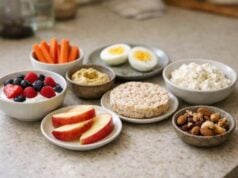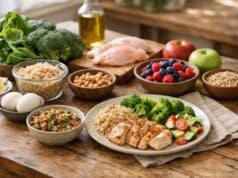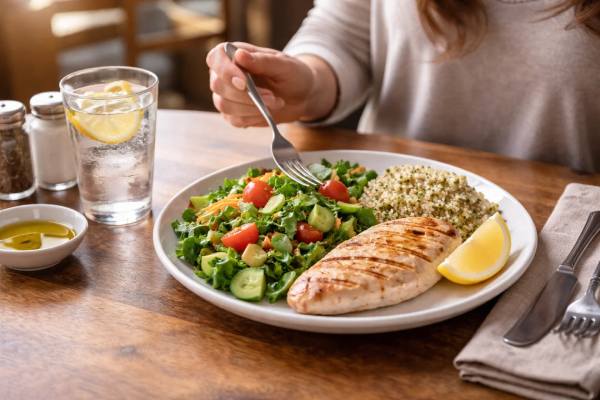
Restaurant meals under 500 calories can absolutely fit a weight-loss plan, but the best orders are not always the ones marketed as “light.” What works is usually a combination of lean protein, controlled portions, sensible sides, and fewer hidden calories from sauces, oils, cheese, breading, and drinks.
That is the real skill when eating out: recognizing which menu items are naturally easier to fit into a calorie deficit and which ones only look healthy at first glance. Below, you will find how to judge a menu quickly, the best low-calorie restaurant orders by cuisine type, smart breakfast and coffee-shop picks, and the simple swaps that matter most when you want a meal that is satisfying without drifting over target.
Table of Contents
- Why Under 500 Calories Can Work
- How to Spot a Good Low-Calorie Order
- Best Low-Calorie Orders by Restaurant Type
- Best Breakfast and Coffee Shop Orders
- The Swaps That Save the Most Calories
- How to Stay Full After a Lighter Meal
- Common Restaurant Mistakes That Push Calories Up
Why Under 500 Calories Can Work
A restaurant meal under 500 calories is not magic, but it can be a very useful target. For many people trying to lose weight, it creates enough room in the day for other meals, snacks, and some flexibility without making eating out feel off-limits. It also tends to reduce the “I already blew it” mindset that often turns one restaurant meal into an all-day overeating spiral.
That said, the goal is not to force every restaurant meal into an artificially tiny box. A 430-calorie meal that leaves you starving an hour later is not necessarily better than a 550-calorie meal that is balanced, satisfying, and prevents later snacking. The reason the under-500 range is useful is practical: it usually encourages better menu choices, more awareness of portions, and fewer calorie-dense extras.
In real life, restaurant meals run high for a few predictable reasons. Portions are often large, oils and sauces are generous, side dishes are calorie-dense, and drinks add up fast. Even meals that sound clean can end up surprisingly heavy once butter, dressings, cheese, creamy toppings, or bread baskets enter the picture. That is why people who do well with eating out usually do not rely on willpower alone. They use a few consistent filters.
The best low-calorie restaurant meals usually have these traits:
- one obvious protein source
- vegetables, fruit, broth, or salad for volume
- a modest starch portion instead of multiple starches
- limited fried elements
- sauce, dressing, or cheese used selectively rather than piled on
This approach fits especially well into a broader calorie deficit strategy, because it helps control restaurant calories without forcing you to avoid restaurants completely. It also works best when paired with the same basic logic you would use for healthier takeout choices: prioritize protein, control extras, and do not let one meal become an excuse to overdo the rest of the day.
A final point matters here: calorie counts at restaurants should be treated as guides, not precision instruments. Portion variation, substitutions, and cooking methods can shift totals. That does not make menu information useless. It just means you should use it to make better decisions, not to chase perfect mathematical certainty.
How to Spot a Good Low-Calorie Order
The fastest way to order well is to scan a menu in the right order. Do not start by reading the most tempting categories first. Start by identifying the likely protein options, then figure out how they are cooked, what they are served with, and what extras are likely doing most of the calorie damage.
A strong low-calorie restaurant order often starts with grilled, roasted, baked, steamed, broiled, poached, or seared protein. That does not mean these words automatically equal low calorie, but they are usually a better starting point than crispy, breaded, battered, smothered, creamy, loaded, stuffed, or hand-breaded.
Then look at the meal structure. A good order often follows a simple pattern:
- Protein first.
- Vegetables, salad, broth, or fruit second.
- One starch or one indulgent extra, not several.
- Sauces and dressings controlled instead of automatic.
This is where many people miss the obvious problem. The main dish may be reasonable, but the calorie overflow comes from the add-ons: fries plus garlic bread, chips plus queso, sweetened drinks, aioli, ranch, buttery vegetables, multiple tortillas, or a “healthy” salad loaded with cheese, nuts, dried fruit, and creamy dressing.
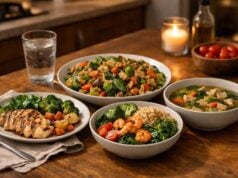
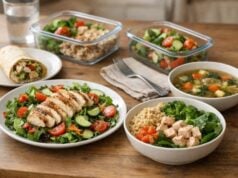
A useful question is not “What is the lowest-calorie thing here?” It is “What is the easiest meal here to keep balanced?” Sometimes that is a grilled chicken sandwich without mayo and with fruit instead of fries. Sometimes it is a bowl with lean protein, vegetables, salsa, and rice in a controlled portion. Sometimes it is soup and salad with dressing on the side.
Two small rules improve decisions fast:
- If a meal already has cheese, creamy sauce, fried coating, or avocado, it probably does not need another calorie-dense add-on.
- If the plate includes bread, fries, rice, and dessert-like drinks, it probably contains more energy than it first appears.
Restaurant eating gets much easier when you already know what foods usually work best in a deficit. That is why it helps to understand what to eat in a calorie deficit and to use basic portion-size cues when you do not have perfect nutrition information. A palm-sized protein, a fist-sized starch, plenty of vegetables, and measured sauces is not glamorous advice, but it holds up well almost everywhere.
The best restaurant order is often the one that looks a little plain on the menu and a lot better once you customize it.
Best Low-Calorie Orders by Restaurant Type
The smartest low-calorie restaurant orders are usually pattern-based rather than item-based. Menu items change. Portions vary. But the same order structures tend to work again and again.
| Restaurant type | Good order pattern | Why it works | Common calorie trap |
|---|---|---|---|
| Mexican | Chicken or shrimp tacos, fajitas without heavy extras, burrito bowl with lean protein and controlled rice | Protein is easy to find and salsa adds flavor cheaply | Chips, queso, sour cream, large flour tortillas, double rice |
| Italian | Grilled chicken or fish, minestrone soup, marinara-based dishes, side salad with dressing on the side | Tomato-based dishes are usually easier to fit than creamy ones | Alfredo, bread basket, fried starters, giant pasta portions |
| Chinese or stir-fry | Steamed or lightly stir-fried protein with vegetables, broth soup, sauce on the side, small rice portion | Easy to emphasize protein and vegetables | Fried rice, breaded chicken, sugary sauces, large shared appetizers |
| Burger or grill | Single burger or grilled chicken sandwich with mustard, lettuce, tomato, and fruit or side salad | Simple swaps cut a lot of calories quickly | Fries, mayo-heavy sauces, bacon, double patties, shakes |
| Deli or sandwich shop | Turkey or grilled chicken sandwich on standard bread with extra vegetables and lighter condiments | Easy to control bread, sauces, and cheese | Large subs, extra cheese, oil-heavy dressings, chips and cookies |
| Mediterranean | Chicken kebab plate, grilled fish, salad with protein, hummus in a measured portion | Protein and vegetables are usually prominent | Large pita portions, multiple dips, heavy oil, rice plus fries |
| Sushi | Sashimi, simple rolls, miso soup, edamame | Lean protein can stay relatively light | Tempura rolls, spicy mayo, cream cheese, crunchy toppings |
A few cuisine-specific notes make these patterns even more useful.
At Mexican restaurants, fajitas are often one of the easiest wins when you focus on protein, peppers, onions, salsa, and one or two tortillas instead of treating the meal like a build-your-own feast. Taco plates can also work well when you skip the automatic chips-and-dip routine. For more cuisine-specific guidance, it helps to know what tends to work at Mexican restaurants and which broader strategies overlap with high-protein fast food choices.
At Italian restaurants, grilled seafood, chicken with vegetables, broth-based soups, and marinara-based dishes tend to be easier to fit than creamy pasta, breaded entrées, or layered cheese-heavy classics. A plate does not need to be low carb to work, but a restaurant pasta portion is often large enough for two meals. Half now and half later is often the real low-calorie move, especially at places where entrées arrive oversized.
At Chinese and similar takeout spots, the easiest wins often come from steamed proteins, vegetable-heavy dishes, and sauce control. Much of the calorie difference between two meals comes from breading, oil, and sweet sauces rather than the protein itself. Orders that look restrained on the surface but come swimming in sauce can climb fast. That is why a little strategy goes a long way when ordering at Chinese restaurants.
Across cuisines, the best order is often the one with the fewest stacked extras. Not the saddest plate. Just the one where the calories are doing visible work instead of hiding in every layer.
Best Breakfast and Coffee Shop Orders
Breakfast restaurants and coffee shops can be surprisingly difficult places to stay under 500 calories. The reason is not just pastries and sugary drinks. It is how quickly calories stack when a breakfast sandwich, hash browns, flavored latte, and pastry all show up together and still feel like a “normal breakfast.”
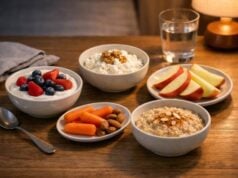
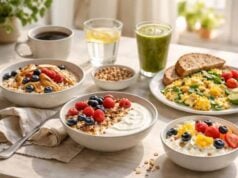
The best breakfast orders under 500 calories usually center on eggs, yogurt, oatmeal, fruit, or a sandwich with straightforward ingredients. A good breakfast restaurant meal often looks like one of these:
- two eggs with fruit and dry toast instead of a full breakfast platter
- egg white or egg-based veggie omelet with a lighter side
- oatmeal with fruit and nuts used modestly
- Greek yogurt parfait with fruit and controlled granola
- breakfast sandwich with egg and lean protein, skipping heavy sauces and oversized pastries
- cottage cheese or yogurt bowl with fruit if available
The main breakfast traps are not hard to spot once you know them:
- pancakes, waffles, and French toast with syrup and butter
- breakfast burritos with cheese, sour cream, and large tortillas
- omelets that are really cheese and oil delivery systems
- giant bakery muffins that count more like cake
- sweet coffee drinks that quietly add 200 to 400 calories
Coffee shops deserve special attention because drinks can make or break the meal. A plain coffee, cold brew, Americano, cappuccino, or latte with minimal add-ins is very different from a blended drink with syrup, whipped cream, and flavored drizzle. Pairing a lighter coffee drink with a protein-forward breakfast is usually much easier than trying to “save calories” on food while drinking them instead.
That is where it can help to borrow ideas from lower-calorie coffee shop orders or from simple low-calorie breakfast options that already balance protein and fullness well.
One overlooked strategy at breakfast spots is to treat restaurant breakfast like lunch in disguise. Eggs plus turkey bacon or turkey sausage, fruit, and toast often works better than sweet breakfast foods that spike hunger and leave you wanting more. Another good move is deciding ahead of time whether you want your carbs in the meal or the drink, but not both loaded at once.
Breakfast out becomes much easier when you stop trying to “be good” with a tiny order and instead choose a meal that is satisfying, protein-aware, and free of the most obvious extras.
The Swaps That Save the Most Calories
The biggest calorie savings at restaurants usually do not come from choosing a completely different meal. They come from changing two or three details that matter more than they appear to on the menu.
The highest-impact restaurant swaps are often these:
- fries to fruit, salad, broth soup, or vegetables
- creamy dressing to dressing on the side
- mayo-heavy sandwich to mustard, salsa, or lighter sauce
- fried protein to grilled or roasted
- large burrito to taco plate or bowl
- creamy pasta sauce to marinara or lemon-based sauce
- regular soda, juice, or sweet tea to water, diet soda, unsweetened tea, or coffee
- full appetizer plus entrée to entrée only, or shared appetizer plus lighter main
These changes work because they cut calories where restaurants tend to over-deliver them: oil, sugar, fried coatings, and oversized starch portions. They also preserve the part of the meal you probably care about most. You still get the restaurant experience. You just stop paying such a high calorie price for automatic extras.
Drinks are one of the easiest places to save a meaningful amount. Many people pay attention to the entrée and then casually order a sweet cocktail, refillable soda, sweet tea, lemonade, or dessert coffee that adds the equivalent of a second snack or even a small meal. If you drink alcohol, it helps to know the basic trade-offs around alcohol and weight loss. If you do not want extra liquid calories, sticking to water, coffee, and tea strategies makes restaurant meals much easier to manage.
Another smart move is asking for calorie-dense extras on the side even when you plan to use them. This is not about being fussy. It is about creating a stopping point. A side cup of dressing, aioli, or queso gives you control. A kitchen-applied pour often removes it.
One subtle but effective restaurant habit is deciding before the meal begins which indulgence matters most to you. Maybe it is the fries, the bread basket, the dessert, or the drink. Picking one keeps the experience enjoyable while preventing the all-at-once pattern that pushes meals well past a useful calorie range.
Restaurant meals rarely become too high in calories because of one dramatic decision. They become too high because of four small automatic ones. That is why the best swaps are the ones that interrupt the automatic part.
How to Stay Full After a Lighter Meal
The best restaurant meal under 500 calories is not just the one that fits your target. It is the one that still leaves you stable afterward. If a meal is technically low calorie but leaves you thinking about snacks all afternoon, it may not be the best practical choice for weight loss.
The easiest way to improve fullness is to protect protein. A lighter meal based mostly on lettuce, broth, or a half sandwich often looks disciplined, but it may not be enough. A grilled chicken salad, taco plate with lean protein, yogurt and egg breakfast, or rice bowl with controlled carbs usually performs better because it has more structure.
Fiber and volume matter too. Meals with vegetables, fruit, beans, broth, or higher-volume sides tend to sit better than tiny portions of rich foods. That does not mean you need a giant salad every time. It means the meal should include something that adds size without relying entirely on fat or refined starch.
If your restaurant meal ends up lighter than expected, the answer does not have to be “just tough it out.” A planned follow-up snack can be smarter than reaching a point where you overeat later. Good backup choices include fruit with Greek yogurt, a protein shake, cottage cheese, edamame, or one of several high-protein snacks that can close the gap without turning into a second full meal.
This is especially useful when eating out forces compromise. Maybe the only decent restaurant option near work is smaller than ideal. Maybe your breakfast was rushed, or lunch ended up lighter than intended. In those moments, a reasonable follow-up snack is often better than pretending hunger will disappear.
Another practical tip is not “saving up” so aggressively for a restaurant meal that you arrive ravenous. Going into lunch or dinner extremely hungry makes bread baskets, chips, baskets of fries, and impulse add-ons much harder to resist. A small pre-meal protein snack can sometimes lead to a better restaurant choice than white-knuckling your way to the table.
The real goal is not to make restaurant meals as small as possible. It is to make them controlled, satisfying, and compatible with the rest of the day. Under 500 calories works best when the meal still behaves like a meal.
Common Restaurant Mistakes That Push Calories Up
Most restaurant meals do not end up too high in calories because someone ordered dessert on purpose. They end up too high because the extras, defaults, and “healthy” assumptions quietly pile up.
One common mistake is focusing only on the entrée. The sandwich may be reasonable, but the side, drink, and sauce turn it into something very different. Another is choosing salads that look virtuous but come packed with fried toppings, heavy dressing, cheese, candied nuts, tortilla strips, and dried fruit. Those meals can be satisfying, but they are not automatically low calorie.
A second big mistake is underestimating restaurant fats. Oil is often used generously because it improves flavor and texture. Butter finishes vegetables. Dressings are poured freely. Sauces are richer than they look. Avocado, cheese, aioli, and nuts all have value, but at restaurants they can show up in amounts that are far larger than people would use at home.
A third mistake is trying to compensate emotionally after a heavier meal. Someone orders more than planned, then decides the day is ruined and keeps eating. That pattern does more damage than the original meal. A better response is simple: enjoy the meal, move on, and resume your normal plan at the next eating occasion.
The most common “health halo” mistakes include:
- wraps assumed to be lighter than sandwiches
- smoothie bowls treated like small meals
- grain bowls loaded with oils and sauces
- salads with multiple calorie-dense toppings
- sushi rolls with crunchy toppings and mayo-based sauces
- soups paired with bread, chips, and rich sides
- coffee drinks treated like beverages instead of dessert
This is why restaurant eating becomes easier when you stop asking whether a dish is healthy and start asking whether it is easy to fit. Many dishes can be nutritious and still too calorie-dense for your current goal. Others may not look like diet food but fit beautifully because the portions are clearer and the macros are more useful.
A final trap is believing you need to be perfect every time you eat out. You do not. Weight loss usually improves more from repeated good-enough restaurant choices than from occasional flawless ones. A grilled entrée with vegetables, a measured starch, and a calorie-free drink is not exciting advice, but it works across dozens of restaurant situations.
The best restaurant habits are the boring ones you can repeat: check the menu early, pick protein first, control sides and drinks, and let one indulgence be enough. That is how restaurant meals stay enjoyable without constantly knocking you off track.
References
- Menu Labeling Requirements 2023 (Official Guidance)
- Menu labeling and portion size control to improve the out-of-home food environment: A scoping review 2024 (Scoping Review)
- Calorie (energy) labelling for changing selection and consumption of food or alcohol 2025 (Systematic Review)
- Menu Labeling and Calories Purchased in Restaurants in a US National Fast Food Chain 2023 (Natural Experiment)
- Obesity Management in Adults: A Review 2023 (Review)
Disclaimer
This article is for general educational purposes only. Restaurant calorie counts, portion sizes, and preparation methods can vary, and personal nutrition needs may differ based on health conditions, medications, and weight-loss goals, so this information is not a substitute for advice from a qualified clinician or registered dietitian.
If this article helped, please share it on Facebook, X, or your preferred platform so more people can find practical ways to eat out without losing progress.