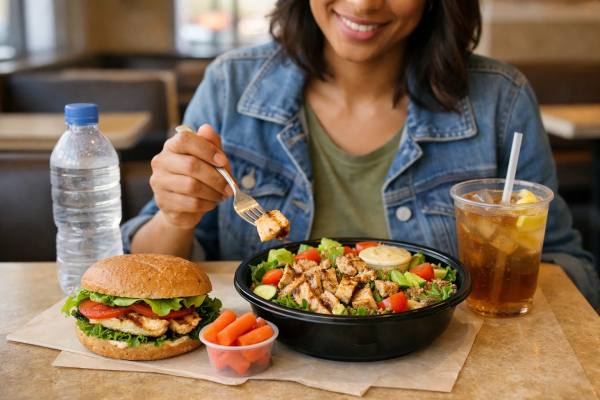
Fast food can fit into a weight-loss plan when you order with a clear strategy instead of relying on whatever looks healthiest at first glance. The best picks usually have a solid protein source, a reasonable calorie total, and fewer extras that quietly drive up calories without adding much fullness. That often means grilled items over crispy ones, smaller portions over combo meals, and simple customizations that cut sauces, cheese, and sugary drinks.
This guide explains how to spot the best fast food orders for weight loss, which types of meals tend to work best, how to build higher-protein and lower-calorie combinations, and how to avoid the common ordering mistakes that turn one quick meal into a major calorie overshoot.
Table of Contents
- What makes a fast food order weight-loss friendly
- Best types of fast food orders
- How to order high-protein lower-calorie meals
- Smart picks by fast food category
- What to skip or limit
- How to fit fast food into a calorie deficit
- Sample fast food order combinations
- Common fast food mistakes that slow fat loss
What makes a fast food order weight-loss friendly
A fast food order becomes more weight-loss friendly when it does three things well: it keeps calories reasonably controlled, provides enough protein to satisfy you, and avoids spending too many calories on low-satiety extras.
That matters because fast food is rarely a problem just because it is fast food. The bigger issue is usually how easy it is to order a meal that is large, highly palatable, and low in fullness for the calories. A sandwich, fries, soda, sauce, and dessert can push a single meal far beyond what many people realize. But a simpler order built around lean protein and a modest portion can work much better.
The best fast food orders for weight loss usually share these traits:
- They center on protein. Chicken, turkey, lean beef, eggs, beans, or fish tend to make the meal more satisfying.
- They avoid liquid calories. Soda, sweet tea, shakes, and specialty coffee drinks add calories quickly.
- They keep portion size in check. A smaller sandwich or bowl is often easier to fit than a full combo.
- They minimize added fats and sugar. Mayo-heavy sauces, creamy dressings, extra cheese, and fried toppings can change the whole meal.
- They use calories where they matter. A filling entrée is usually a better use of calories than fries plus a sugary drink.
A useful mental filter is to ask whether the meal would still make sense if you plated it at home. A grilled chicken sandwich with a side salad and water probably would. A double burger, large fries, soda, and dessert probably would not.
This does not mean fast food needs to be “clean” to fit your plan. It just needs structure. If you already understand the basics of how a calorie deficit works and which foods make a deficit easier, ordering well at a drive-thru becomes much less confusing. The goal is not to make fast food perfect. It is to make it good enough to fit your day without triggering a calorie spiral.
Best types of fast food orders
Some fast food meal types are simply easier to fit into a fat-loss plan than others. When people struggle with fast food and weight loss, it is often because they keep choosing the categories that are easiest to overeat: fried combo meals, oversized burgers, cheesy burritos stacked with sauces, and meals built around fries instead of protein.
The strongest categories are usually the ones that let you start with a lean or leaner protein and customize from there.
| Meal type | Why it often works | Watch out for |
|---|---|---|
| Grilled chicken sandwich | Usually lower in calories and higher in protein than fried options | Mayo, cheese, bacon, oversized buns |
| Protein bowl | Easy to build around chicken, steak, beans, rice, and vegetables | Large portions, sour cream, queso, chips |
| Salad with added protein | Good meal volume when paired with chicken or other protein | Crispy toppings, creamy dressing, fried protein |
| Breakfast sandwich or egg-based meal | Can provide decent protein in a moderate portion | Sausage, extra cheese, hash browns, sweet drinks |
| Smaller burger with side swap | More realistic than pretending burgers never fit | Double patties, large fries, sugary beverages |
A few order styles tend to work especially well:
- grilled chicken sandwich with mustard instead of mayo
- burrito bowl with chicken, beans, salsa, lettuce, and a moderate scoop of rice
- salad with grilled chicken and dressing on the side
- breakfast sandwich with egg and leaner meat, plus coffee without a high-calorie add-on
- a smaller burger with apple slices, fruit, or no side at all
These work because they start with something that actually fills you up. A protein-based order gives you a better chance of staying satisfied than trying to “save calories” with a small snack-like meal and then ending up hungry again an hour later.
This is also why many people do better choosing a real entrée rather than piecing together random “healthy” sides. A proper high-protein meal tends to be easier to control than a low-protein order that leaves you chasing fullness. That principle overlaps with what makes high-protein, low-calorie meals effective in general.
How to order high-protein lower-calorie meals
The best fast food orders for weight loss are usually built, not discovered. In other words, you do not need a secret menu or a perfect “diet” item. You need a repeatable method for making the menu work in your favor.
A simple formula is:
- Choose the protein first.
- Pick grilled, baked, roasted, or leaner options when available.
- Keep one main carb source instead of stacking several.
- Cut or reduce high-calorie extras.
- Choose a zero-calorie or low-calorie drink.
This method works across most chains, even when the menu style changes.
Start with protein
The first question should be: what is the strongest protein option here? That might be grilled chicken, a burger patty, eggs, turkey, beans, fish, or steak. Once you have that, the rest of the decision becomes easier.
Protein matters because it improves fullness and makes the meal feel more like a meal. If your order is mostly bread, chips, cheese, sauces, and drink calories, it is easier to overeat and still feel unsatisfied.
Keep the structure simple
A good fast food order usually has:
- one protein source
- one main carb source
- one or two lower-calorie add-ons like vegetables or fruit
- water, unsweetened tea, diet soda, or black coffee
For example, a grilled chicken sandwich is easier to fit than a grilled chicken sandwich plus fries plus nuggets plus a milkshake. A burrito bowl works better when you choose rice or chips as the main carb, not both.
Use customizations that matter
Not all customizations are equal. Asking for lettuce instead of tomato will not change the meal much. Asking for sauce on the side, no mayo, half the cheese, no crispy topping, or no creamy dressing often will.
The most useful swaps are usually:
- grilled instead of crispy
- sauce on the side
- no mayo or less mayo
- light cheese or no cheese
- skip fries or choose the smallest size
- water or diet drink instead of regular soda
This is where a practical understanding of how to build a high-protein plate and portion awareness for weight loss becomes surprisingly helpful. Even at a fast food counter, the same basic structure applies.
Smart picks by fast food category
Different types of fast food restaurants call for different strategies. You do not order well at a burger chain the same way you order well at a burrito place or sandwich shop.
Burger chains
The best options are often:
- single burger instead of double or triple
- grilled chicken sandwich
- burger without bacon and heavy sauce
- apple slices, fruit cup, or no side instead of fries
- water, diet soda, or unsweetened tea
A smaller burger can fit just fine. The trouble usually starts when it becomes a full combo with large fries and a sugary drink.
Mexican-style fast food
These restaurants are often easier to manage because they allow more customization. Stronger picks include:
- burrito bowl instead of a large burrito
- chicken or steak plus beans, salsa, lettuce, and fajita vegetables
- moderate rice portion
- light cheese or sour cream, or skip one of them
- no chips unless that is your chosen carb indulgence for the meal
If you want more detailed category-specific ideas, these strategies line up well with what works when ordering at Mexican restaurants.
Sandwich shops
The best strategy is usually:
- choose turkey, chicken, roast beef, tuna in moderation, or egg-based protein
- use mustard or vinegar-heavy condiments instead of creamy dressings
- load up vegetables
- choose standard bread portions instead of oversized rolls
- skip chips or cookies unless you build them into the plan intentionally
Breakfast fast food
Better choices usually include:
- egg-based sandwiches
- egg white or grilled breakfast options if available
- breakfast wraps with moderate portions
- coffee without a high-calorie flavor bomb added to it
The fast weight-gain trap here is often not the sandwich itself. It is the biscuit, hash browns, sweet coffee drink, and pastry added on top.
Chicken chains
These are easier to navigate when you choose:
- grilled chicken items
- smaller nugget portions paired with fruit or a lighter side
- wraps or sandwiches with lighter sauces
- no large fries, loaded mac and cheese, or milkshake combos
Across all categories, the guiding question stays the same: what combination gives you the most protein and satisfaction for the fewest unnecessary calories?
What to skip or limit
The easiest way to improve a fast food order is often not by finding a magic low-calorie item, but by spotting the parts of the meal that add a lot of calories without adding much fullness.
The most common calorie traps are:
- large fries
- regular soda and sweet tea
- milkshakes and frozen drinks
- mayo-heavy sauces
- creamy dressings
- extra cheese
- bacon
- double or triple meat upgrades
- chips added to an already carb-heavy meal
- desserts added automatically because they “sound small”
Many of these foods are not inherently off-limits. They are just easy to underestimate. A small add-on repeated often can erase a deficit faster than people realize.
A useful rule is to pick one indulgent feature, not four. If you really want fries, keep the sandwich simpler and skip the sugary drink. If you want the burger exactly as it comes, choose a lighter side. If you want dessert, make the rest of the meal tighter.
It also helps to watch out for “healthy-looking” meals that are not actually lower in calories. Salads can be especially misleading when they include crispy chicken, tortilla strips, candied nuts, creamy dressing, and cheese. A salad is not automatically lighter than a sandwich. In some cases, it is the opposite.
This is similar to the broader issue of foods that make a calorie deficit harder. The problem is not just calorie density. It is how easy those foods are to pile on without feeling satisfied.
Another major issue is liquid calories. Drinks do very little for fullness compared with solid food. That is why one of the highest-value fast food changes is simply switching from a regular soda, sweet coffee, or shake to water, unsweetened tea, black coffee, or a diet drink.
How to fit fast food into a calorie deficit
Fast food works best for weight loss when you treat it as one meal in a bigger system, not as a free pass or a disaster. A single fast food meal does not make or break fat loss. The weekly pattern matters more.
The first step is to think in terms of meal budgeting. If you know lunch is likely to be fast food, it helps to make the rest of the day more predictable. That might mean a higher-protein breakfast, a lighter dinner with vegetables and lean protein, or avoiding random snack calories before you order.
A practical approach looks like this:
- Keep the fast food meal focused on protein and moderate calories.
- Avoid turning it into a large combo unless you have planned for it.
- Make the rest of the day normal, not punishing.
- Get back to your usual structure at the next meal.
This matters because many people respond to fast food in unhelpful extremes. They either treat it like a cheat meal and overdo everything, or they panic afterward and try to “undo” it by barely eating, which often leads to more hunger and overeating later.
Fast food is also easier to fit when the rest of your diet is built around solid basics. If most of your meals are high in protein, fiber, and volume foods, one restaurant or drive-thru meal is much less likely to derail progress. That is the same logic behind a flexible dieting approach and realistic healthy takeout choices.
Another smart tactic is using fast food strategically when you need convenience. A reasonably portioned high-protein order is often a better choice than getting too hungry, skipping a meal, and later overeating whatever is easiest to grab. In other words, a “good enough” drive-thru order can sometimes protect your deficit better than waiting for a perfect meal that never happens.
Sample fast food order combinations
The exact nutrition will vary by restaurant, but the order patterns below show what usually works best. The point is not memorizing one perfect menu item. It is learning the structure of a better fast food meal.
| Order style | What it includes | Why it works |
|---|---|---|
| Grilled sandwich meal | Grilled chicken sandwich, fruit side or no side, water | Good protein, controlled calories, fewer fried extras |
| Burrito bowl build | Chicken or steak, beans, salsa, lettuce, vegetables, moderate rice | High protein and better fullness than chips and queso |
| Lean burger approach | Single burger, no mayo, side salad or no side, diet drink | Keeps burger calories more manageable |
| Breakfast protein combo | Egg sandwich, black coffee or low-calorie coffee, fruit if available | More filling than pastry and sweet drink combinations |
| Salad with real protein | Grilled chicken salad, dressing on the side, no fried topping | Higher volume and better protein than many snack-style lunches |
A few realistic examples:
- grilled chicken sandwich, no mayo, water
- burrito bowl with chicken, black beans, fajita vegetables, salsa, lettuce, and light cheese
- single burger, no bacon, no regular soda
- breakfast sandwich with egg and lean meat, coffee without sugary add-ins
- grilled chicken nuggets or strips plus fruit and a diet drink
These orders tend to work because they are satisfying enough to count as a meal without drifting into combo-meal territory. They also help you avoid the problem of eating something tiny, staying hungry, and then buying more food an hour later.
If your bigger challenge is snacking before or after the fast food meal, it may help to build the rest of your day around high-protein snacks or smart snacks in the 100 to 250 calorie range. The better your overall structure is, the less likely one quick meal is to turn into an all-day overeating pattern.
Common fast food mistakes that slow fat loss
Most fast food mistakes are not dramatic. They are small choices that feel harmless in the moment but add up quickly across the week.
One common mistake is assuming the sandwich is the problem when the real issue is the extras. A burger or chicken sandwich can fit into a calorie deficit much more easily than the fries, sauce packets, and sugary drink sitting next to it.
Another mistake is relying only on the word “salad.” A salad without enough protein may leave you hungry, while a salad with fried chicken, heavy dressing, cheese, and crunchy toppings may be more calorie-dense than a smaller sandwich.
A third issue is treating fast food as a reward event instead of a practical meal. Once the order becomes “I already ate out, so I might as well get the big combo and dessert,” the meal stops being a convenience choice and becomes a calorie blowout.
Other common errors include:
- arriving overly hungry and ordering reactively
- not checking menu details when calories and macros are available
- stacking carbs by getting buns, fries, chips, and soda together
- assuming grilled always means low calorie even when sauces are heavy
- skipping meals earlier in the day and then overeating at dinner
There is also a mindset issue. Many people fall into a perfection trap where one fast food meal makes them feel off-plan, and that leads to more overeating. That is not a fast food problem. It is a consistency problem. If that pattern sounds familiar, work on the same mindset issues that drive all-or-nothing eating and weak day-to-day consistency.
The goal is not to make fast food your ideal nutrition strategy. It is to make sure convenience does not automatically mean a huge calorie surplus. A solid fast food order is simply one more skill that helps you stay in control when life gets busy.
References
- Obesity Management in Adults: A Review 2023 (Review)
- Protein, fiber, and exercise: a narrative review of their roles in weight management and cardiometabolic health 2025 (Review)
- Menu Labeling Requirements 2023 (Guidance)
- Healthy diet 2026 (Fact Sheet)
Disclaimer
This article is for general educational purposes only and is not a substitute for medical or nutrition advice. If you have a medical condition, take medication, are managing blood sugar, or have a history of disordered eating, talk with your doctor or a registered dietitian before making major diet changes.
If this article helped, share it on Facebook, X, or your preferred platform so someone else can make smarter fast food choices too.