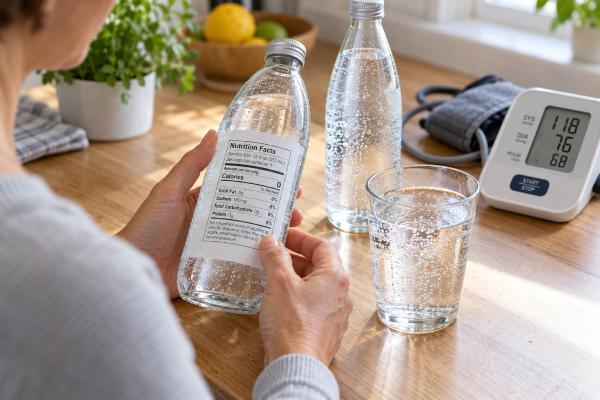
Plain, unsweetened sparkling water is generally a blood-pressure-friendly drink. Carbonation itself has not been shown to raise blood pressure in healthy adults, and sparkling water can help with hydration when it replaces sugary drinks, alcohol, or high-sodium beverages. The main issue is not the bubbles. It is what comes with them. Some mineral waters contain a meaningful amount of sodium, flavored products may include added sugar or sweeteners, and certain people with heart failure, kidney disease, or sodium-sensitive hypertension may need to pay closer attention to the label.
Research on sparkling water specifically is smaller than the evidence base for sodium, hydration, and blood pressure overall. Still, available trials suggest that even some sodium-bicarbonate-rich mineral waters do not necessarily increase blood pressure, although results cannot be applied to every person or every product. The safest approach is simple: choose unsweetened sparkling water, check sodium, and treat it as one part of an overall heart-healthy drinking pattern.
Table of Contents
- Does Sparkling Water Raise Blood Pressure?
- Sodium in Sparkling Water: When It Matters
- Possible Benefits for Blood Pressure and Heart Health
- Which Types of Sparkling Water Are Best?
- Who Should Be More Careful?
- How to Use Sparkling Water in a Blood-Pressure-Friendly Diet
- Common Questions About Sparkling Water and Blood Pressure
Does Sparkling Water Raise Blood Pressure?
For most people, plain carbonated water does not appear to raise blood pressure simply because it contains carbon dioxide bubbles. Carbonation changes the sensory experience of water and lowers its pH, but it does not act like caffeine, nicotine, or another stimulant that predictably increases heart rate or blood pressure.
The direct research is limited, so it is important not to overstate the evidence. Studies have tested several kinds of carbonated mineral water, often with very different mineral profiles. In a 2010 randomized crossover trial, healthy adults drank 500 mL per day of a sodium-rich carbonated natural mineral water for several weeks. Their blood pressure did not increase compared with a lower-mineral water. More recently, a randomized intervention in 94 adults compared a sodium- and bicarbonate-rich mineral water with a low-sodium, low-bicarbonate water for 28 days. Blood pressure changes were similar between groups.
Those findings are reassuring, but they do not mean sodium never matters. Mineral waters can contain sodium as bicarbonate, chloride, or other salts, and people respond differently to dietary sodium. The blood-pressure effect of sodium is also influenced by the accompanying anion, the rest of the diet, kidney handling of sodium, age, and salt sensitivity.
A useful way to think about sparkling water is this: carbonation is usually neutral; the product’s ingredients and mineral content determine whether it is a smart everyday choice.
This distinction matters because “sparkling water” is an umbrella term. It can describe:
- Plain seltzer made by adding carbon dioxide to water
- Naturally carbonated mineral water
- Club soda with added minerals or sodium salts
- Flavored sparkling water with no calories
- Sweetened sparkling drinks that may contain sugar
- Energy-style sparkling drinks that contain caffeine or stimulants
These products can have very different effects on a person trying to control hypertension.
Sodium in Sparkling Water: When It Matters
The sodium number on the label is more important for blood pressure than the presence of bubbles. Sodium intake has a well-established relationship with blood pressure, especially in people who are salt sensitive, older, living with chronic kidney disease, or already diagnosed with hypertension.
The 2025 U.S. high blood pressure guideline continues to emphasize sodium reduction as part of lifestyle treatment. If you are already working on a low-sodium eating pattern, a high-sodium beverage can quietly add to your daily total.
How much sodium is “a lot” in sparkling water?
There is no single sparkling-water cutoff used in hypertension guidelines, but practical label reading helps. Many plain seltzers contain 0 mg sodium. Others contain only a few milligrams per serving. Some club sodas and mineral waters contain substantially more.
For example, if a 12-ounce can contains 75 mg sodium and you drink four cans, that is 300 mg sodium before counting any food. That may still fit into a person’s daily plan, but it is no longer nutritionally trivial.
A simple rule is to compare products and choose the lower-sodium option when you drink sparkling water frequently. This is especially useful if your diet already includes restaurant meals, breads, sauces, deli meats, canned soups, cheese, or other major sodium sources. Understanding how sodium affects blood pressure is more useful than avoiding carbonation across the board.
Sodium bicarbonate is not the same as sodium chloride
Some mineral waters contain a large amount of sodium paired mainly with bicarbonate rather than chloride. Older and newer controlled studies suggest that sodium-bicarbonate-rich mineral water may have a smaller blood-pressure effect than an equivalent sodium load from sodium chloride, the main component of table salt.
That does not make high-sodium mineral water automatically safe for everyone. The evidence comes from relatively small studies, often in healthy or selected adults, and it does not override an individualized sodium restriction given for heart failure, kidney disease, resistant hypertension, or fluid retention.
If your clinician has told you to limit sodium to a specific amount, count beverage sodium toward that total regardless of the mineral source.
Possible Benefits for Blood Pressure and Heart Health
Sparkling water is not a blood-pressure treatment, but it can have indirect advantages when it helps someone drink more water or replace a less healthy beverage.
It can make hydration easier
Hydration supports normal circulation and blood-volume regulation. Severe dehydration can reduce circulating volume and trigger compensatory changes in heart rate and vascular tone. On the other hand, rapidly drinking a large amount of water can temporarily raise blood pressure in people with autonomic failure or orthostatic hypotension. That “osmopressor” response is a special clinical situation and should not be confused with the effect of ordinary hydration in most adults.
A 2024 systematic review of randomized trials that changed daily water intake found that evidence for many proposed health benefits of simply drinking more water remains limited. In other words, more water is not automatically better once hydration needs are met. The practical benefit of sparkling water is often behavioral: people may enjoy it enough to choose it instead of soda or alcohol.
It can replace sugar-sweetened drinks
Replacing regular soda, sweet tea, lemonade, or sugary energy drinks with unsweetened sparkling water removes added sugar without adding calories. That can support weight management and metabolic health over time, both of which matter for blood pressure.
If you want a broader comparison, a guide to drinks that fit a blood-pressure-friendly diet can help distinguish water-based options from beverages that add sugar, sodium, caffeine, or alcohol.
It may help reduce alcohol intake
For some people, sparkling water works as a satisfying substitute for beer, wine, or mixed drinks because it still feels like a “special” beverage. Reducing alcohol can lower blood pressure in people who drink above recommended amounts. Try sparkling water over ice with citrus, mint, cucumber, or frozen berries when you want a nonalcoholic option that still has flavor and texture.
It may support adherence to a heart-healthy diet
The best dietary plan is one you can maintain. If carbonation makes water more appealing, it may help you stay consistent with a DASH-style or Mediterranean-style eating pattern. Sparkling water does not supply the potassium, magnesium, fiber, or plant compounds found in whole foods, but it can fit comfortably alongside them.
Which Types of Sparkling Water Are Best?
For everyday use, choose unsweetened sparkling water with little or no sodium and no stimulant ingredients. The front of the package is less useful than the Nutrition Facts and ingredient list.
| Type | What to Look For | Blood-Pressure Consideration |
|---|---|---|
| Plain seltzer | Water and carbon dioxide | Usually the simplest choice; often sodium-free |
| Flavored sparkling water | No added sugar; low sodium | Usually fine if flavorings do not come with sugar or stimulants |
| Mineral water | Check sodium per serving | Can range from very low to relatively high in sodium |
| Club soda | Added sodium bicarbonate or other salts | Often contains more sodium than plain seltzer |
| Sweetened sparkling drink | Added sugars and serving size | Less favorable for routine use, especially if it replaces water |
| Caffeinated sparkling water | Caffeine amount per can | Caffeine can temporarily raise blood pressure in some people |
A flavored sparkling water can still be a good choice if the flavor comes from natural flavoring and the drink remains unsweetened. “Zero sugar” products may contain nonnutritive sweeteners. These do not generally create the same immediate glucose load as sugar, but they are not necessary for hydration. If you enjoy them, they can be used as a transition away from sugary soda.
Be more cautious with products marketed as “sparkling energy water.” These may contain caffeine, guarana, or other stimulants. The carbonation is not the concern; the stimulant dose is.
Also check serving size. A bottle may list nutrition information for one serving even when the bottle contains more than one. If you routinely drink the whole container, calculate sodium and caffeine for the entire bottle.
Who Should Be More Careful?
Most people with uncomplicated hypertension can drink plain sparkling water, but several situations call for more attention.
People with heart failure or prescribed fluid limits
If you have heart failure, advanced kidney disease, cirrhosis, or another condition that requires fluid restriction, sparkling water still counts as fluid. A zero-calorie beverage is not “free” when total fluid intake is limited.
A clinician may also ask you to limit sodium because sodium promotes fluid retention. In that case, high-sodium mineral water or club soda may be a poor fit even if it does not raise blood pressure immediately.
People with sodium-sensitive or resistant hypertension
Some people experience a larger blood-pressure response to sodium than others. Salt sensitivity becomes more common with age and is also associated with kidney disease, diabetes, and certain patterns of hypertension. If your numbers improve noticeably on a lower-sodium diet, choosing sodium-free seltzer is an easy way to avoid giving back part of that benefit.
If you are unsure whether your home readings are truly controlled, a consistent home blood pressure monitoring routine is more informative than judging your response from a single reading after a drink.
People with reflux, bloating, or swallowing problems
Carbonation can increase belching and abdominal fullness. In some people it aggravates reflux symptoms. That is not a cardiovascular problem, but it can make sparkling water uncomfortable enough that plain water is a better choice.
People with swallowing disorders may also need individualized advice about carbonated beverages and liquid consistency.
People who drink very large amounts
There is rarely a reason to force excessive fluid intake. Drinking far beyond thirst and physiologic need can, in extreme cases, dilute blood sodium and cause hyponatremia. This is uncommon in everyday life but is another reminder that hydration should be adequate rather than excessive.
How to Use Sparkling Water in a Blood-Pressure-Friendly Diet
The easiest strategy is to treat sparkling water as an optional form of water, not as a therapeutic product.
- Start with the label. Choose 0 mg sodium when available, especially if you drink several servings a day.
- Keep it unsweetened. Added sugar turns a simple hydration choice into a sugary beverage.
- Watch caffeine. If a product contains caffeine, note the dose and whether your blood pressure responds to it.
- Use it to replace, not add. Swapping sparkling water for soda or alcohol is more useful than adding it on top of those drinks.
- Flavor it yourself. Citrus wedges, mint, berries, ginger, or cucumber add flavor without sodium.
- Pair it with the bigger priorities. Blood pressure responds far more to overall sodium intake, body weight, physical activity, alcohol intake, sleep, medication adherence, and dietary pattern than to carbonation.
If your blood pressure is elevated, nutrition changes work best as a package. A DASH-style eating pattern emphasizes fruits, vegetables, whole grains, legumes, nuts, and lower-fat dairy while reducing excess sodium and highly processed foods. Sparkling water can simply be the beverage that fits alongside that pattern.
It is also worth checking whether your sparkling water habit is displacing other useful foods or drinks. For example, someone who drinks carbonated water throughout meals may feel full quickly and eat less. That may be helpful for some people, but older adults with poor appetite or unintended weight loss should prioritize adequate nutrition rather than filling up on calorie-free drinks.
Common Questions About Sparkling Water and Blood Pressure
Can sparkling water lower blood pressure?
Not directly in a reliable, clinically meaningful way. A few mineral-water studies have reported neutral or favorable changes in certain cardiovascular markers, but sparkling water should not be viewed as a treatment for hypertension. Any benefit is more likely to come from hydration or replacing less healthy beverages.
Does carbon dioxide constrict blood vessels?
The carbon dioxide dissolved in a drink is not equivalent to a sustained rise in carbon dioxide in the bloodstream. Most of the gas is released in the stomach or exhaled after absorption. There is no good evidence that ordinary carbonated water causes chronic vasoconstriction or hypertension.
Is club soda worse than seltzer for high blood pressure?
It can be, depending on the brand. Seltzer is often just water plus carbon dioxide, while club soda commonly contains added sodium salts. Compare the sodium line on the label rather than relying on the product name.
Is sparkling mineral water okay if it has sodium?
Often yes, especially if the sodium amount is modest and your overall diet is controlled. But if you have been given a specific sodium limit, count it. Some sodium-bicarbonate-rich mineral waters have not increased blood pressure in trials, yet individual responses and mineral compositions differ.
Can sparkling water replace all plain water?
For many healthy adults, it can provide part or even most of daily fluid intake if it is unsweetened and well tolerated. There is no requirement that water be still. Variety may be more practical: still water with meals and exercise, sparkling water when you want flavor or texture.
Should I stop sparkling water before a blood pressure reading?
Plain, caffeine-free sparkling water is unlikely to meaningfully distort a routine reading. What matters more is proper measurement technique: sit quietly for about five minutes, support your back and arm, keep feet flat, use the correct cuff size, and avoid exercise, nicotine, and caffeine shortly beforehand.
What if my blood pressure rises after I drink it?
A single higher reading does not prove cause and effect. Blood pressure varies from moment to moment. If you suspect a specific product, check its sodium and caffeine content, then compare several properly measured readings on different days. Persistent readings in the hypertensive range deserve medical review rather than repeated self-testing around one beverage.
The bottom line is straightforward: plain sparkling water is generally compatible with good blood pressure control. Choose low-sodium, unsweetened options, pay attention to any added caffeine, and focus most of your effort on the dietary and lifestyle factors with much stronger evidence.
References
- Blood Pressure Stability and Plasma Aldosterone Reduction: The Effects of a Sodium and Bicarbonate-Rich Water – A Randomized Controlled Intervention Study. 2024 (RCT)
- Outcomes in Randomized Clinical Trials Testing Changes in Daily Water Intake: A Systematic Review 2024 (Systematic Review)
- Hydration Status in Older Adults: Current Knowledge and Future Challenges 2023 (Review)
- Hemodynamic Effects of the Osmopressor Response: A Systematic Review and Meta-Analysis 2023 (Systematic Review)
- 2025 AHA/ACC/AANP/AAPA/ABC/ACCP/ACPM/AGS/AMA/ASPC/NMA/PCNA/SGIM Guideline for the Prevention, Detection, Evaluation and Management of High Blood Pressure in Adults: A Report of the American College of Cardiology/American Heart Association Joint Committee on Clinical Practice Guidelines 2025 (Guideline)
- Sodium-rich carbonated natural mineral water ingestion and blood pressure 2010 (RCT)
Disclaimer
This article provides general health information and is not a substitute for individualized medical advice. If you have hypertension, heart failure, kidney disease, a prescribed sodium or fluid restriction, or repeated high blood pressure readings, ask your healthcare professional which beverages and daily limits are appropriate for you.