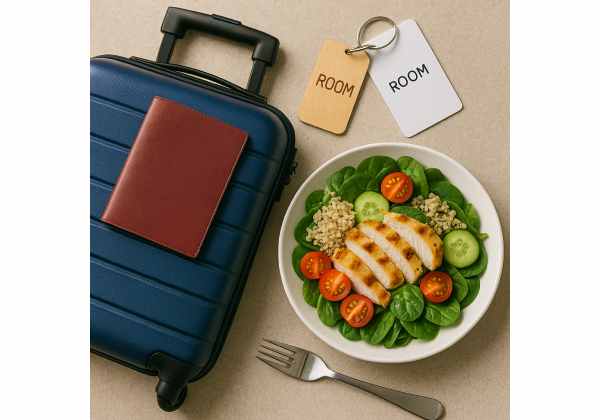
Travel can scramble even solid routines. The airport breakfast is mostly pastries, lunch happens later than planned, dinner becomes restaurant food again, and the hotel room seems designed for sitting, snacking, and watching one more screen before bed. By the time you get home, the scale may be up, your sleep is off, and it feels like the trip erased your progress. In most cases, it did not. Travel weight gain is often less about one dramatic mistake and more about a few repeated patterns: long sitting, meal timing drift, low protein, low movement, poor sleep, extra alcohol, and the “I’m away, so it does not count” mindset. A strong travel routine for weight loss does not require perfect control. It requires a plan that works on planes, in hotels, and at restaurants without turning the trip into a rigid diet. This guide shows how to set realistic goals, manage transit days, handle hotel food, eat out with less guesswork, and recover quickly if the trip goes off plan.
Table of Contents
- Set the Right Travel Goal
- Plan Flight and Transit Days
- Make Hotels Work for You
- Eat Out Without Losing Control
- Protect Sleep, Steps and Appetite
- Reset Quickly After Travel Slipups
Set the Right Travel Goal
One of the biggest travel mistakes is using the wrong goal. Many people leave for a three-day work trip, a long weekend, or a family vacation and expect fat-loss conditions that barely match normal life. Then they judge the whole trip as a failure because they did not eat like they were home, track everything, or lose weight while dealing with airports, restaurants, time-zone changes, and social events.
A better starting point is to ask what a successful travel week actually looks like. In many cases, the best goal is not aggressive weight loss. It is controlled damage, stable habits, and a fast return to normal. For a short trip, success may mean:
- keeping portions reasonable most of the time
- eating enough protein at two meals a day
- walking daily
- limiting alcohol instead of forbidding it
- avoiding late-night grazing in the hotel room
- coming home ready to resume your normal routine immediately
That is not “settling.” It is smart planning. Travel compresses control. You often cannot choose every meal, your schedule shifts, and your sleep may be worse than usual. A realistic goal protects progress better than an all-or-nothing mindset that collapses after the first airport sandwich or restaurant dessert.
This matters especially because travel can create temporary weight spikes that are not the same as fat gain. A salty restaurant meal, a long flight, extra carbs, less sleep, constipation, and lower routine movement can all push the scale up for a few days. That is why it helps to treat travel more like a short maintenance phase than a moral test. If you want a good mental model for that, a travel week often works best when approached like holding the line during holidays or travel rather than trying to force perfect fat loss in imperfect conditions.
It also helps to decide your “non-negotiables” before you leave. Pick two or three habits that matter most, such as:
- I will not skip protein at every meal.
- I will walk every day, even if briefly.
- I will stop eating when dinner is over unless I planned otherwise.
These habits act like anchors. They give the trip structure without making it feel joyless.
A final mindset shift helps a lot: do not evaluate travel success only by the scale the next morning. Water shifts after flights and restaurant meals are common. If you need a reminder of how misleading that can be, understanding water, glycogen, and short-term scale changes makes travel fluctuations far less alarming.
The right travel goal is not perfection. It is keeping the trip from becoming a five-day slide that quietly turns into two more messy weeks at home.
Plan Flight and Transit Days
Flight days are often where travel routines begin to break. You wake early, rush out the door, miss your normal breakfast, spend hours sitting, and start making food decisions in places designed around convenience and impulse. Airports, gas stations, train stations, and long drives are all easier when you assume the day will not run smoothly and plan for that in advance.
The simplest travel rule is this: do not arrive at transit hungry and unprepared. Hunger plus delay plus limited options usually leads to oversized portions, snack grazing, or the “I already blew it” feeling by midafternoon.
A strong transit-day plan usually includes:
- eating a real meal before leaving when possible
- carrying one or two backup foods
- treating hydration as part of the routine
- making one good-enough decision at a time instead of trying to rescue the whole day later
Hydration matters more than many travelers expect. Dry cabin air, caffeine, alcohol, salty meals, and disrupted timing can all make you feel flat, puffy, or hungrier than you actually are. That does not mean you need to force liters of water on a schedule. It means having a practical plan for staying hydrated with water, coffee, and tea instead of drifting through the day dehydrated and mistaking that for cravings.
Backup food is equally useful. This is not about carrying a full meal in your backpack. It is about preventing a long gap from turning into a vending-machine dinner. Good travel foods are portable, non-messy, and at least somewhat filling. Think in terms of protein and fiber first. A small kit might include:
- a protein bar you actually tolerate
- roasted chickpeas or nuts in portioned packs
- fruit that travels well
- jerky or another shelf-stable protein
- instant oatmeal cups for hotel use
- single-serve nut butter or crackers if they help you stay steady
If you need ideas that fit this role, a short list of smart 100- to 250-calorie snacks can cover a lot of awkward travel gaps without turning into constant grazing.
Movement during transit matters too, even in small doses. Stand when you can. Walk the terminal instead of sitting at the gate the whole time. Take the long route to the restroom. On road trips, add short stops instead of trying to white-knuckle six straight hours. These choices do not need to burn huge calories to be useful. They reduce stiffness, break up passivity, and help you feel more in control of the day.
A final tip: stop aiming for perfect airport food. Aim for decent structure. Look for protein, produce, and a reasonable portion. Even a basic sandwich, yogurt, salad with protein, or rice bowl can do the job if it gets you to the next part of the day without arriving overhungry. Transit days go better when you plan to be flexible, not when you hope the perfect option will magically appear.
Make Hotels Work for You
A hotel room can either support your travel routine or quietly undo it. The difference often comes down to a few simple setup choices made in the first 15 minutes. Many travelers wait until they are tired, hungry, or bored to decide how the room will work. By then, the mini-market snacks, takeout app, and hotel buffet are making the decisions for them.
Start by treating the room like a temporary food environment, not just a place to sleep. That means making visible choices helpful and impulsive choices less automatic. If the room has a fridge, use it. Stock a few foods that can make breakfast, hold you over between meetings, or prevent a late-night raid on hotel snacks. If there is no fridge, shelf-stable basics still help.
Useful hotel foods often include:
- Greek yogurt, cottage cheese, or ready-to-drink protein if refrigeration is available
- fruit
- instant oatmeal
- nuts or portioned trail mix
- protein bars
- pre-cut vegetables if you can store them
- sparkling water or unsweetened drinks you actually like
Breakfast is usually where hotel routines either stabilize or unravel. A buffet can work well if you approach it like a meal, not a once-a-day opportunity to taste everything. The goal is not to avoid hotel breakfast. It is to build one plate that holds you for hours. In most cases, a protein-first breakfast works best. Eggs, yogurt, fruit, and something high-fiber will usually serve you better than pastries plus juice. If hotel mornings are consistently hard for you, a short list of quick high-protein breakfast ideas can help you recreate something similar even when the buffet is weak or you are eating in the room.
Your room setup matters beyond food. Put walking shoes where you can see them. Keep snacks out of immediate sight. Set a water bottle on the desk. Charge your phone away from the bed if late scrolling tends to keep you awake. These are small travel versions of a broader food environment reset: make the better choice a little easier and the impulsive choice a little less frictionless.
Hotels also create boredom eating risk. People often underestimate how much extra food comes from lying in bed with screens after dinner. If nighttime eating is a pattern, build a small shut-down routine. Tea, shower, light stretching, reading, or brushing your teeth can all signal that the day is winding down and food is finished.
A hotel does not have to feel like home to support your goals. It just has to stop pushing you toward the easiest, least deliberate decision every time you are tired. The room becomes much more useful when you set it up for the person you want to be on the trip, not the one who is deciding at 10:45 at night with room service open.
Eat Out Without Losing Control
Restaurant meals are one of the biggest reasons people assume travel and weight loss cannot coexist. Portions are larger, food is richer, alcohol is common, and meals often feel more social and less structured. The good news is that eating out does not need to become a constant compromise. It helps to use a simple framework instead of relying on willpower once the menu arrives.
The first rule is to decide your approach before you are seated. If you wait until you are very hungry and staring at the bread basket, good decisions become more expensive mentally. A few quick questions can guide almost any restaurant meal:
- What is my protein source?
- What will make this meal filling besides starch and fat?
- Do I want alcohol, dessert, both, or neither?
- What is enough for this meal, not enough for the whole trip?
That last question matters. Travelers often justify oversized meals because the trip feels temporary. But most travel overeating is not one spectacular dinner. It is a steady excess at lunch, dinner, drinks, and snacks because every meal feels like an exception.
A simple structure works well in most restaurants:
- choose a clear protein first
- add vegetables, salad, beans, fruit, or another high-volume item when possible
- keep starches, sauces, and extras deliberate rather than automatic
- slow the pace slightly before deciding whether you need more
If you need a fast visual rule, a basic plate method and portion guide still works surprisingly well in restaurants. It helps you avoid the trap of acting as if the only choices are “eat everything” or “be impossibly strict.”
Alcohol deserves its own decision. Travel often increases drinking because of airport waiting, client dinners, vacation mood, or social pressure. You do not need a moral rule about it, but you do need a plan. Drinks add calories quickly, loosen food decisions, and often lead to extra late-night eating. A better approach is to decide in advance how many drinks fit the occasion and how you will pace them. That is much easier than negotiating with yourself after the second round. If this is a common weak point, it helps to review how alcohol affects calories and appetite before the trip rather than after.
Restaurant eating also gets easier when you stop chasing the “healthiest” item on the menu and instead aim for the most balanced realistic option. A grilled fish entrée with vegetables, a burrito bowl with protein and beans, a stir-fry with extra vegetables, or a burger with one thoughtful adjustment can all work. The trip improves when you stop asking restaurant meals to be perfect and start asking them to be reasonable.
Eating out on travel is rarely about one ideal order. It is about making enough decent choices in a row that the trip stays inside your broader routine.
Protect Sleep, Steps and Appetite
Travel routines break down fastest when sleep, movement, and appetite all drift at once. A late flight leads to a short night. The short night makes hunger and cravings louder. The long day lowers movement. Then dinner becomes larger, bedtime gets pushed later again, and the next day starts behind. If you want travel to feel more controlled, protect these three areas together instead of treating them as separate problems.
Sleep is often the hidden variable. Poor sleep changes how hungry you feel, how much patience you have with food decisions, and how appealing highly palatable foods become. Time-zone shifts and unfamiliar hotel conditions only make that harder. On travel, you do not need perfect sleep. You do need damage control. That usually means:
- getting morning light when possible
- not letting bedtime drift endlessly later
- limiting heavy late-night meals if they worsen sleep
- keeping the room cool and dark enough to rest
- using caffeine strategically, not all day
Many travelers eat more simply because they are awake longer, tired, and less regulated. That is why understanding how sleep affects appetite and weight loss is not just theoretical on the road. It directly changes what the trip feels like.
Movement is the second stabilizer. Travel often includes more steps in some places and surprisingly little movement in others. Conference days, long drives, hotel meetings, and airports can all create hours of sitting. The easiest fix is to stop thinking about movement as something that only counts in a gym. A short walk after breakfast, a loop before dinner, hotel stairs, a walk while taking calls, or a brief routine in the room all matter.
One especially useful travel habit is a short walk after meals. It helps with stiffness, creates a clean transition, and can reduce the “keep eating because the evening is still open” effect. Even 10-minute walks after meals are realistic in hotels, airports, and unfamiliar neighborhoods.
Appetite control on travel also improves when meals do not slide all over the day. Jet lag, excursions, work schedules, and restaurant timing can throw off your normal pattern, but some structure still helps. Try not to stack a very light morning, delayed lunch, and late dinner all in the same day. That combination often produces the strongest rebound hunger.
A good travel day does not require a perfect workout or ideal sleep score. It usually requires a few steady signals: morning light, enough protein, some walking, and a bedtime that does not drift into “vacation mode” every night. Protect those signals, and your appetite tends to become much easier to manage.
Reset Quickly After Travel Slipups
Every trip has a moment where the plan gets messy. The flight is delayed, dinner is later than expected, the hotel gym is closed, the client meal goes longer, or the vacation day turns into constant grazing. The real problem is usually not that moment. It is what happens next. Many people turn one off-plan meal into a whole off-plan trip, then carry that momentum home for several more days.
A better travel routine includes a reset rule before you need one. That rule should be simple enough to use when you are tired and not in the mood to “get back on track.” Good examples include:
- return to normal eating at the very next meal
- walk for 10 to 20 minutes the next morning
- drink water and eat a protein-focused breakfast
- do not skip meals to compensate
- stop talking to yourself like one meal ruined the trip
The urge to restrict hard after overeating is especially common during travel. People feel puffy, guilty, or heavy and try to fix it by barely eating the next day. That usually backfires. Hunger rises, energy drops, and by evening they are overeating again. A steadier reset works better: normal meals, decent hydration, some movement, and back to your structure.
This is also where the scale can mislead you. Travel often produces short-term increases from sodium, carbohydrates, long sitting, disrupted bathroom routines, and sleep loss. If you weigh in right after a trip, do not assume the number equals fat gain. Use it as background information, not a verdict. Many people do better by waiting a couple of days and returning to normal routine first.
A strong reset also means not waiting for Monday. If you arrive home Wednesday night, restart Thursday morning. Put breakfast and lunch back in place, prep something simple for dinner, and re-establish bedtime. Do not give the trip bonus days.
Mentally, it helps to frame slipups as lapses, not collapses. A lapse is one disrupted meal, one overeating episode, one missed walk. A collapse is the story you tell afterward: “I messed it up anyway.” If that pattern shows up often, using a clear reset protocol for bad days can prevent a travel wobble from turning into a multiweek stall.
The best travel routine is not the one that never gets interrupted. It is the one that can absorb interruptions and still restart quickly. That is what makes progress feel durable. Travel will never be as structured as home, but it does not need to be. You only need a system that keeps the trip from becoming a reason to abandon the habits that matter most.
References
- Overweight and obesity management 2025 (Guideline)
- World Health Organization 2020 guidelines on physical activity and sedentary behaviour 2020 (Guideline)
- The role of insufficient sleep and circadian misalignment in obesity 2023 (Review)
- Meal Timing and Anthropometric and Metabolic Outcomes: A Systematic Review and Meta-Analysis 2024 (Systematic Review and Meta-Analysis)
- Unraveling the Impact of Travel on Circadian Rhythm and Crafting Optimal Management Approaches: A Systematic Review 2024 (Systematic Review)
Disclaimer
This article is for general educational purposes only. It is not a substitute for medical advice, diagnosis, or treatment from a doctor, registered dietitian, or other qualified clinician, especially if travel worsens binge eating, severe digestive symptoms, sleep problems, fatigue, or a medical condition that affects appetite, hydration, mobility, or weight.
If this article helped you, please share it on Facebook, X, or any platform where it may help someone travel with more structure, less guilt, and better routines.