Velvet leaf, Abutilon theophrasti, is a soft, heart-shaped plant from the mallow family that has a long history as both a fiber crop and a traditional medicinal herb. Although many people know it today as velvetleaf or a common field weed, parts of the plant, especially the leaves, seeds, roots, and stems, have also been used in folk medicine for soothing irritated tissues, supporting digestive comfort, easing inflammation, and helping with minor skin complaints. Its chemistry helps explain that interest. Velvet leaf contains flavonoids, phenolic acids, and other plant compounds that have shown antioxidant, antibacterial, and anti-inflammatory activity in laboratory and animal research.
Still, this is a plant that needs careful framing. Velvet leaf is promising, but it is not a well-established clinical remedy with strong human dosing data. The most responsible way to view it is as a traditional herb with useful bioactive compounds, a demulcent and soothing profile, and early research that supports further study. This guide explains what velvet leaf contains, what benefits are realistic, how it has been used, what dosage information actually exists, and where caution is warranted.
Quick Overview
- Velvet leaf is traditionally valued for soothing irritated tissues and supporting digestive and inflammatory complaints.
- Its best-studied compounds include flavonoids and phenolic acids with antioxidant and anti-inflammatory activity.
- No standardized human medicinal dose has been established, and experimental extracts in animal studies have often used about 50 to 100 mg/kg.
- People who are pregnant, breastfeeding, highly allergy-prone, or taking herbal products for serious illness should avoid self-treating with concentrated velvet leaf extracts.
Table of Contents
- What Velvet Leaf Is and How It Has Been Used
- Key Ingredients and Medicinal Properties of Velvet Leaf
- Potential Health Benefits of Velvet Leaf
- What the Research Says and Where It Is Limited
- Traditional and Practical Uses
- Dosage, Forms, and How to Approach Use
- Safety, Side Effects, and Who Should Avoid It
What Velvet Leaf Is and How It Has Been Used
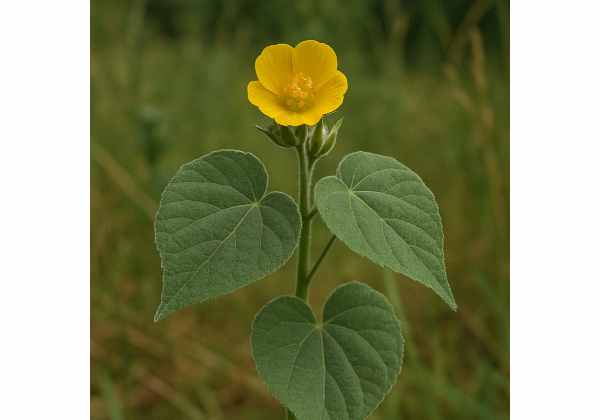
Velvet leaf, also called velvetleaf, China jute, or Abutilon theophrasti, is an annual herb in the Malvaceae family. It is easy to recognize once you know what to look for: broad heart-shaped leaves, a soft velvety surface, small yellow flowers, and seed capsules that look almost like little cups or crowns. While it is often classified as an agricultural weed in many countries, that label hides an older and more complex story. In parts of Asia, the plant has long been cultivated or gathered not only for fiber and seed uses, but also for medicinal purposes.
Traditional herb systems have used different parts of velvet leaf for different purposes. The leaves have often been associated with soothing and softening effects, especially where irritation or inflammation is involved. The seeds have been described in older materia medica sources as moistening, gentle, and supportive for bowel or urinary complaints. Roots and stems also appear in traditional records, especially where digestive discomfort, painful swelling, or inflammatory conditions are concerned.
This pattern makes sense when you place velvet leaf next to other mallow-family herbs. Many members of this family are valued for a demulcent character, meaning they contain compounds that can coat and soothe irritated tissues. That does not make all mallows interchangeable, but it does offer a useful clue about why velvet leaf has been used for the gut, the skin, and other irritated surfaces.
In practical terms, velvet leaf matters for three main reasons:
- It has a real traditional record of use rather than being only a modern wellness invention.
- It contains a notable mix of phenolic compounds and flavonoids that researchers can measure and study.
- It seems to sit in the middle ground between a food-like folk herb and a pharmacologically interesting medicinal plant.
That middle ground is important. Velvet leaf is not as clinically established as some better-known herbs, and it should not be treated as a replacement for evidence-based care in serious illness. At the same time, it is more than folklore. Modern studies have identified a broad chemical profile and have found antioxidant, antibacterial, and anti-inflammatory activity in extracts, especially from the leaves.
For readers familiar with soothing mucilaginous plants, marshmallow’s classic demulcent profile offers a useful comparison. Velvet leaf does not have the same level of recognition, but the traditional logic behind its use is broadly similar: calm irritation, soften tissues, and support recovery rather than force a dramatic short-term effect.
Key Ingredients and Medicinal Properties of Velvet Leaf
The most important thing to understand about velvet leaf is that it is chemically diverse. Researchers have identified flavonoids, phenolic acids, coumarin-related compounds, fatty acids, organic acids, and other plant metabolites in different parts of the herb. That does not mean every part has the same value. The leaves, in particular, have attracted attention because they appear rich in flavonoids and related phenolic compounds.
Among the better-known constituents reported in Abutilon theophrasti are:
- Rutin
- Quercetin
- Kaempferol-related glycosides
- Caffeic acid
- Gallic acid
- Protocatechuic acid
- Vanillic acid
- Ferulic acid
- Syriacusin A
These compounds matter because they are frequently linked with antioxidant and anti-inflammatory effects in plant research. Flavonoids such as rutin and quercetin are especially relevant because they can influence oxidative stress pathways, inflammatory signaling, and capillary and tissue responses. Phenolic acids may also add antimicrobial and protective effects.
When writers describe the “medicinal properties” of velvet leaf, the most accurate summary is this:
Soothing and softening
Traditional use strongly points to a demulcent or tissue-soothing role. This is likely one reason velvet leaf appears in old uses for ulcers, swellings, or irritated tissues.
Antioxidant activity
Leaf and whole-plant extracts have shown antioxidant activity in laboratory models. That does not mean the herb is a powerful antioxidant supplement in everyday human use, but it does support the idea that the plant can help counter oxidative processes under experimental conditions.
Anti-inflammatory potential
Several studies have focused on inflammatory signaling markers, including cytokines and pathways such as NF-κB and MAPK. Extracts from velvet leaf leaves have shown meaningful anti-inflammatory effects in cell and animal models.
Antibacterial activity
Some extracts have inhibited growth of common bacteria in vitro. That makes velvet leaf interesting for future study, though not a stand-alone substitute for antimicrobial treatment.
Possible protective effects in tissues
Animal studies have explored velvet leaf extracts in settings such as acute lung injury and gastric ulcer models. These are intriguing findings, but they remain preclinical.
One helpful way to think about velvet leaf is as a herb with two layers of value. The first layer is the old herbal layer: soothing, coating, settling, and softening. The second is the modern phytochemical layer: measurable compounds with experimentally observed bioactivity. Those two layers reinforce each other, but they are not the same thing.
For a broader look at herbs used to calm irritated tissues, plantain’s soothing skin and mucosal uses provide a relevant parallel. Velvet leaf belongs in that same general conversation, though with less clinical confirmation and a narrower evidence base.
Potential Health Benefits of Velvet Leaf
The possible health benefits of velvet leaf are best understood as promising but not yet fully confirmed in humans. That matters because the plant is easy to oversell. A balanced article should separate traditional plausibility from proven clinical effect.
1. Support for irritated tissues
This is the most grounded benefit category. Traditional use, family resemblance to other soothing mallows, and the plant’s chemistry all support the idea that velvet leaf may help calm irritated tissues. In folk settings, this has included external use for minor skin problems and internal use for digestive upset or inflammatory discomfort.
2. Antioxidant support
The plant’s phenolic acids and flavonoids have shown antioxidant effects in experimental work. In practical terms, this suggests velvet leaf may help protect tissues from oxidative stress. It does not mean people should expect an immediate or dramatic change in symptoms from casual use.
3. Anti-inflammatory effects
This is one of the most interesting areas of research. Leaf flavonoid extracts have been studied for their ability to reduce inflammatory markers and modulate inflammatory pathways. Preclinical evidence suggests velvet leaf could have value as a supportive anti-inflammatory herb, especially where oxidative stress and inflammation overlap.
4. Gastroprotective interest
Recent animal research has examined standardized aqueous extracts of velvet leaf in ulcer models and found signs of benefit related to reduced oxidative stress and inflammatory response. This is not enough to justify self-treatment of ulcers, but it does support the traditional digestive-use history.
5. Possible antimicrobial action
Laboratory studies have shown antibacterial activity against some organisms. That may help explain historical interest in the herb for infected or inflamed tissue states, though the leap from petri dish results to human outcomes is large.
6. Respiratory and tissue-protective potential
Animal work on acute lung injury suggests certain velvet leaf flavonoid fractions may help protect tissues under inflammatory stress. Again, this is interesting but early.
The practical takeaway is that velvet leaf seems most plausible in these roles:
- as a mild soothing herb
- as a source of antioxidant and anti-inflammatory plant compounds
- as a traditional support herb rather than a primary treatment
- as a candidate for future research in digestive and inflammatory disorders
If you are looking for stronger evidence in digestive-soothing herbs, slippery elm’s traditional gut-soothing role has a more familiar profile for readers, even though it also faces evidence limitations of its own.
The strongest mistake people make with plants like velvet leaf is assuming that because several benefits are plausible, every traditional use must be proven. That is not the case. The most realistic view is that velvet leaf may be useful where gentle support is the goal, especially when inflammation and irritation are part of the picture.
What the Research Says and Where It Is Limited
The research on velvet leaf is meaningful, but it is not mature enough to support bold medical claims. Most of the evidence comes from phytochemical analysis, cell studies, laboratory assays, and animal models. That means the plant is scientifically interesting, but still short on direct human proof.
What research supports fairly well:
- Velvet leaf contains identifiable flavonoids and phenolic compounds.
- Leaf extracts show antioxidant activity in vitro.
- Certain extracts show antibacterial activity in vitro.
- Flavonoid-rich fractions can reduce inflammatory markers in experimental settings.
- Animal models suggest tissue-protective effects in inflammatory lung and gastric-ulcer conditions.
What research does not yet establish clearly:
- a standardized human therapeutic dose
- long-term safety in concentrated supplemental use
- effectiveness for diagnosed ulcers, inflammatory disease, or infections in people
- whether one plant part is consistently superior across all uses
- how preparation method changes effectiveness in real-world human use
This gap between preclinical promise and human certainty is common in herbal medicine. Velvet leaf is a good example of why careful language matters. A phrase like “shows anti-inflammatory activity in preclinical studies” is accurate. A phrase like “treats inflammation” goes too far.
Another important limitation is variability. Studies use different preparations:
- aqueous extracts
- ethanolic extracts
- flavonoid fractions
- whole-part analyses
- different plant parts such as leaves, roots, seeds, or exocarps
That means one study’s results may not apply neatly to a tea, a powder, or a homemade extract.
The 2025 gastric-ulcer study is a good example of how to interpret this evidence responsibly. It adds useful support for anti-inflammatory and antioxidant mechanisms in a controlled rat model. But it remains an animal study. It does not create a human dosing rule, nor does it prove that someone with ulcers should self-treat with velvet leaf.
The same is true of the lung-injury and macrophage studies. They strengthen the herb’s profile as a plant worth investigating. They do not make it a clinically established anti-inflammatory therapy.
For readers interested in herbs where inflammation and oxidation are often discussed together, boswellia’s research-backed anti-inflammatory profile shows what a more developed evidence base looks like. Velvet leaf has not reached that level.
In short, the science says velvet leaf is credible enough to study and cautious enough to respect. That combination should shape how it is used: not dismissed, not exaggerated, and not confused with a proven medical treatment.
Traditional and Practical Uses
Velvet leaf has been used in more than one way, and the herb makes the most sense when its applications are matched to its traditional character. It is not mainly a stimulating herb, nor a strongly bitter digestive, nor a dramatic sedative. It belongs more to the category of soothing, softening, and supporting.
Traditional internal uses
Traditional references have associated velvet leaf with complaints such as:
- digestive irritation
- dysentery-like bowel upset
- inflammatory discomfort
- painful swelling
- minor urinary irritation
- cough or thick mucus in some systems
These uses do not all have equal scientific backing, but they follow a consistent theme: irritated tissue, inflammation, and the need for gentle support.
Traditional external uses
The leaves have also been associated with topical soothing. Folk use has included softened leaves or poultice-style applications to areas of irritation, swelling, or minor ulcerated skin. These uses fit the plant’s soft, emollient reputation.
Modern practical uses
In a modern herbal context, velvet leaf would most reasonably be considered for:
- Short-term supportive use for mild irritation
- Traditional-style external applications for minor non-serious skin discomfort
- Exploratory use by trained practitioners familiar with regional materia medica
- Research interest rather than casual high-dose supplementation
Because the evidence is still developing, this is not a herb that needs aggressive mainstream wellness positioning. A better approach is selective, conservative use.
Which part is used
Different traditions mention different parts, but the parts most often discussed include:
- leaves
- seeds
- roots
- stems
Modern experimental work has paid especially close attention to the leaves because of their flavonoid content.
Best-fit use cases
If someone is asking whether velvet leaf is a sensible herb to explore, the best-fit cases are usually those where the goal is gentle support, not fast symptom suppression. That could mean a practitioner-formulated digestive tea, a carefully chosen external preparation, or a research-informed botanical blend.
For people seeking herbs with a stronger established place in mild digestive support, mallow’s gentle soothing tradition is often an easier first choice. Velvet leaf is more specialized and less standardized, which makes experience and caution more important.
One final point is worth keeping in mind: a plant can have a long traditional use and still require modern restraint. Velvet leaf deserves that restraint. It may be useful, but it works best when approached as a thoughtful traditional herb rather than a trendy cure-all.
Dosage, Forms, and How to Approach Use
Velvet leaf does not have a well-established standardized human medicinal dosage supported by modern clinical trials. That is the most important dosage fact to understand. Any article that presents a precise universal human dose without qualification would be overstating the evidence.
What we do have are three kinds of dosage information:
1. Traditional use patterns
Traditional records refer to the plant being used as a decoction, tea, softened leaf preparation, or medicinal component in compound formulas. These sources help explain how the herb was used, but they do not create a modern evidence-based dosage standard.
2. Experimental extract dosing
Some recent animal studies have used standardized extracts in measured ranges. For example, experimental oral extract dosing has been studied around 50 to 100 mg/kg in animal models. This is useful for research context, but it should not be translated directly into self-prescribed human dosing.
3. Preparation-specific variability
Leaves, seeds, and roots differ in composition, and a water extract differs from an alcohol extract or a concentrated flavonoid fraction. Because of that, two products labeled “velvet leaf” may not behave the same way.
If someone still wants a responsible framework for thinking about use, these principles are better than rigid numbers:
- choose the mildest appropriate form first
- prefer traditional-style preparations over concentrated extracts unless guided by a practitioner
- start with small amounts
- use for short periods, then reassess
- stop if irritation, allergy, or digestive discomfort appears
Form-by-form thinking
A practical hierarchy looks like this:
- Topical traditional use may be lower risk when the skin is intact and patch-tested.
- Mild water-based preparations are generally more conservative than concentrated extracts.
- Concentrated tinctures, flavonoid fractions, or supplements deserve the most caution because human data are limited.
Duration of use
Because human long-term safety data are limited, velvet leaf is better viewed as a short-term supportive herb rather than a daily indefinite supplement. If someone is using it for more than a brief trial, that should happen with professional guidance.
Common dosing mistakes
The most common problems are:
- assuming preclinical doses equal human doses
- using concentrated products without knowing the plant part
- combining several anti-inflammatory herbs without a reason
- using it for serious symptoms such as ulcers, bleeding, or infection instead of seeking medical care
A careful user asks not only “how much,” but also “in what form,” “for what purpose,” and “with what evidence.” With velvet leaf, those questions matter more than the number on the label.
Safety, Side Effects, and Who Should Avoid It
At sensible traditional levels, velvet leaf does not appear to be among the most dangerous medicinal herbs, but its safety profile is still incomplete in humans. The absence of strong evidence of harm is not the same as proof of safety, especially with concentrated extracts.
Possible side effects
Likely side effects, if they occur, would most reasonably include:
- stomach upset
- nausea
- loose stools
- allergic skin irritation with topical use
- headache or general intolerance with concentrated preparations
Because the herb contains multiple active compounds, reactions may differ by product and by plant part.
Allergy and sensitivity
Velvet leaf belongs to the mallow family, and people with a history of plant sensitivity should be cautious. Topical preparations should always be patch tested first. Internal use should begin with low amounts only, ideally under guidance if the product is concentrated.
Pregnancy and breastfeeding
There is not enough high-quality safety evidence to recommend medicinal use of velvet leaf during pregnancy or breastfeeding. Food-level accidental exposure is one thing; intentional medicinal use is another. Until better data exist, avoidance is the safer choice.
Children
Children are not the ideal group for experimental or weakly standardized herbal preparations. Unless a qualified clinician specifically recommends it, velvet leaf should not be used medicinally in children.
Serious medical conditions
People with the following should avoid self-treatment with velvet leaf:
- active ulcer disease
- severe digestive pain
- chronic inflammatory disease under medical care
- unexplained bleeding
- serious respiratory symptoms
- significant liver or kidney disease
The reason is not that velvet leaf is known to worsen all of these conditions. The reason is that these situations require accurate diagnosis and reliable treatment, not guesswork with an herb that still lacks human trial depth.
Drug interactions
No major interaction pattern has been firmly established, but caution is still appropriate with:
- anti-inflammatory medicines
- anticoagulants or antiplatelet therapy
- multiple concurrent herbal products
- drugs with narrow dosing windows
A realistic safety summary
Velvet leaf is best treated as a moderately promising but incompletely characterized herb. That means:
- normal respect
- low starting exposure
- limited duration
- no heroic dosing
- no replacement of needed medical care
For readers who want a plant with a better-known caution framework, dandelion’s safety and interaction profile shows how much more confidently a familiar herb can be discussed when evidence and practical experience are broader.
Velvet leaf may eventually earn a larger place in modern herbal practice, but today the safest stance is thoughtful conservatism. Use it, if at all, for gentle support, not for high-stakes self-treatment.
References
- Standardized aqueous extract of Abutilon theophrasti Medic. ameliorates oxidative stress and inflammatory responses against hydrochloric acid/ethanol-induced gastric ulcer in rats 2025
- Exploration on the Extraction of Phenolic Acid from Abutilon theophrasti and Antioxidant and Antibacterial Activities 2025
- Extraction Process, Component Analysis, and In Vitro Antioxidant, Antibacterial, and Anti-Inflammatory Activities of Total Flavonoid Extracts from Abutilon theophrasti Medic. Leaves 2018
- The protective effect of the flavonoid fraction of Abutilon theophrasti Medic. leaves on LPS-induced acute lung injury in mice via the NF-κB and MAPK signalling pathways 2019
- Phytochemical analysis and bioactivity of the aerial parts of Abutilon theophrasti (Malvaceae), a medicinal weed 2014
Disclaimer
This article is for educational purposes only and is not medical advice. Velvet leaf has a traditional use history and promising preclinical research, but human clinical evidence remains limited and no standardized therapeutic dose has been established. Do not use velvet leaf to self-treat ulcers, infections, severe inflammation, breathing problems, or other serious symptoms. Consult a qualified healthcare professional before using this herb if you are pregnant, breastfeeding, taking prescription medicines, managing a chronic condition, or considering concentrated extracts.
If you found this article helpful, please consider sharing it on Facebook, X, or your preferred platform.