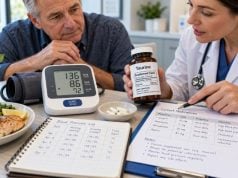
Vitamin K2 has a convincing biological role in calcium regulation, but claims that it “cleans arteries,” prevents heart attacks, or makes vitamin D safe are much stronger than the clinical evidence. Vitamin K is required to activate several proteins, including matrix Gla protein, that help regulate mineral deposition in blood-vessel walls. Supplements—especially menaquinone-7, or MK-7—can improve markers of vitamin K status, and some trials suggest possible benefits for vascular stiffness or calcification progression. Other randomized trials show little or no change on imaging, and there is still no strong evidence that taking K2 prevents cardiovascular events in otherwise well-treated adults. That makes K2 an interesting but unproven heart-health supplement, not a substitute for controlling LDL or ApoB, blood pressure, smoking, diabetes, diet, exercise, or sleep. People who take warfarin need particular caution because changing vitamin K intake can alter anticoagulation. The safest interpretation is that K2 may influence calcification biology, while its real-world cardiovascular benefit remains uncertain.
Table of Contents
- What Vitamin K2 Does in the Body
- Why K2 Is Marketed for Heart Health
- What Human Studies Show
- Vitamin K2 and Coronary Artery Calcium
- Dietary Sources and Supplements
- Safety, Warfarin, and Other Cautions
- Where K2 Fits in Heart Prevention
What Vitamin K2 Does in the Body
Vitamin K is a family of fat-soluble compounds. Vitamin K1, or phylloquinone, is abundant in leafy green vegetables. Vitamin K2 refers to several menaquinones, including MK-4, MK-7, MK-8, and MK-9. The different forms share a common vitamin K structure but differ in side-chain length, food sources, absorption, and how long they remain in the circulation.
Vitamin K’s central biochemical job is to act as a cofactor for an enzyme that carboxylates vitamin K–dependent proteins. That modification allows these proteins to bind calcium and perform their normal functions.
Two groups of vitamin K–dependent proteins are especially relevant:
- Clotting proteins, which are made mainly in the liver and help regulate coagulation.
- Extrahepatic proteins, including matrix Gla protein, or MGP, in blood vessels and osteocalcin in bone.
MGP is the main reason K2 has attracted cardiovascular interest. When adequately carboxylated, MGP can inhibit mineral deposition in vascular tissue. When vitamin K availability is low, more MGP remains undercarboxylated and inactive.
Researchers often measure dephosphorylated-uncarboxylated MGP, abbreviated dp-ucMGP, as a marker of vitamin K status outside the liver. MK-7 supplementation reliably lowers dp-ucMGP. That proves the vitamin is affecting a relevant pathway, but it does not by itself prove that arteries become less calcified or that cardiovascular events fall.
Why K2 Is Marketed for Heart Health
The marketing story is simple: calcium should go to bones, not arteries, and vitamin K2 helps activate proteins involved in that process. The biology is real, but the slogan compresses a complicated system into a promise that has not been fully demonstrated in humans.
Vascular calcification is not just passive calcium buildup. It is an actively regulated process influenced by aging, kidney function, phosphate balance, diabetes, inflammation, lipoproteins, smoking, and the transformation of vascular smooth-muscle cells into bone-like cells. Atherosclerotic plaque can also calcify as it matures.
This matters because a calcium deposit inside an artery cannot be understood simply as “too much calcium in the blood.” Most people with coronary calcification have normal blood calcium. Cutting dietary calcium or taking K2 without addressing atherosclerosis does not target the main drivers of cardiovascular risk.
K2 is also marketed alongside vitamin D. A common claim says vitamin D increases calcium absorption while K2 “directs” calcium to bone. That explanation is too literal. Vitamin D, vitamin K, parathyroid hormone, the kidneys, intestines, and skeleton all interact in calcium balance. There is no high-quality evidence that everyone taking vitamin D needs K2 to protect their arteries.
Another common claim is that K2 can reverse a high calcium score. Current evidence does not support that conclusion. If you are trying to understand a scan, start with what a coronary artery calcium score means, then focus on therapies known to lower event risk.
What Human Studies Show
Human evidence falls into three broad categories: observational studies, biomarker trials, and imaging trials.
Observational studies are interesting but cannot prove cause and effect
Some population studies have found that higher intake of menaquinones is associated with less vascular calcification or lower cardiovascular risk. These studies helped generate the hypothesis that vitamin K2 might be protective.
However, people who eat more K2-containing foods may differ in many other ways. Diet quality, socioeconomic factors, smoking, exercise, body weight, medication use, and other nutrients can confound the relationship. Observational associations therefore cannot establish that a supplement will reproduce the same outcome.
Biomarker trials show the clearest effect
MK-7 supplements consistently improve vitamin K–dependent biomarkers. In many studies, dp-ucMGP falls substantially after supplementation. That is a reproducible biochemical effect and one of the strongest pieces of evidence in the K2 field.
The problem is that surrogate markers are not the same as health outcomes. Blood pressure drugs, cholesterol drugs, and diabetes treatments ultimately earn strong recommendations because trials show meaningful clinical benefits or because surrogate changes are tightly linked to outcomes. For K2, the chain from biomarker improvement to fewer heart attacks or strokes has not been proven.
Imaging trials are mixed
A 2023 systematic review and meta-analysis of randomized trials found a modest favorable effect of vitamin K supplementation on progression of coronary artery calcification. Yet the included studies varied in vitamin K form, dose, population, and imaging method. Several individual trials were neutral.
In chronic kidney disease, where calcification risk is high and vitamin K status may be poor, another meta-analysis found improvement in vitamin K biomarkers but no convincing reduction in calcification on radiologic imaging. That is a useful reminder that a strong biochemical response does not guarantee structural change.
A more recent randomized trial tested two years of MK-7 in people with symptomatic coronary artery disease and pre-existing coronary calcium. Long-term randomized evidence like this is valuable because it directly tests the claim in a population that already has disease. Even so, the total evidence remains insufficient for routine K2 treatment in cardiovascular guidelines.
A useful way to separate claims from evidence
| Common claim | What the evidence supports |
|---|---|
| K2 activates anti-calcification proteins | Yes. Vitamin K is required for carboxylation of MGP, and MK-7 lowers inactive dp-ucMGP. |
| K2 lowers arterial calcium on CT | Uncertain. Trial and meta-analysis results are mixed. |
| K2 reverses plaque | Not established. |
| K2 prevents heart attacks and strokes | Not proven in large cardiovascular outcome trials. |
| Everyone taking vitamin D needs K2 | No. There is no universal guideline recommending this combination. |
This distinction helps prevent a common reasoning error: assuming that a true mechanism automatically proves a treatment benefit. Many nutrients affect pathways related to disease, but only randomized outcome data can show whether supplementing them actually changes important clinical events.
Is vitamin K deficiency common?
Severe vitamin K deficiency that causes abnormal bleeding is uncommon in healthy adults eating a varied diet. Lower extrahepatic vitamin K status may be more common, especially in people with poor intake, fat-malabsorption disorders, certain gastrointestinal diseases, or chronic kidney disease. Long-term antibiotic use can also alter vitamin K metabolism in some circumstances.
There is no routine screening program for “K2 deficiency” in otherwise healthy adults. Standard coagulation tests are designed to detect clinically important changes in clotting, not subtle extrahepatic vitamin K status. Research markers such as dp-ucMGP are not widely used to decide who should take a supplement.
That means a person should be cautious about direct-to-consumer tests that claim to identify a precise cardiovascular K2 requirement. A laboratory number may look scientific without having a validated treatment target tied to better outcomes.
Vitamin K2 and Coronary Artery Calcium
Coronary artery calcium, or CAC, is a marker of atherosclerotic plaque burden. A higher score generally indicates more coronary atherosclerosis and a higher future risk of cardiovascular events, although the meaning depends on age, sex, and the overall clinical picture.
It is tempting to assume that a successful therapy should make the calcium score go down. In practice, cardiovascular prevention is not that simple.
Statins illustrate why. They reduce heart attacks and strokes, but coronary plaque can become more densely calcified during effective statin treatment. Denser calcification may reflect stabilization of plaque rather than harm. Therefore, a change in CAC over a short interval is not a straightforward treatment target.
This is one reason clinicians do not generally use serial calcium scans to judge whether a supplement or medication is “working.” The more useful targets are risk factors that have direct treatment pathways:
- LDL cholesterol and non-HDL cholesterol.
- ApoB when needed for better particle-risk assessment.
- Blood pressure.
- Smoking and nicotine exposure.
- A1C and glucose control.
- Physical activity and cardiorespiratory fitness.
- Body weight and waist circumference when excess adiposity is present.
For people with calcification, ApoB targets may be more actionable than trying to change the calcium score itself.
Does K2 make arteries less stiff?
Some studies have reported improvements in measures such as pulse-wave velocity, a marker of arterial stiffness. This is another plausible area because calcification and vascular wall function are related.
Yet arterial stiffness is affected by age, blood pressure, exercise, glucose control, kidney disease, and vascular tone. Small changes in a surrogate measure cannot establish that K2 prevents clinical cardiovascular disease. Larger, longer trials are still needed.
Dietary Sources and Supplements
Vitamin K1 is easy to obtain from vegetables such as spinach, kale, collard greens, broccoli, and other leafy greens. Vitamin K2 occurs in smaller and more variable amounts in fermented and animal foods.
Examples include:
- Natto, which is exceptionally rich in MK-7.
- Some cheeses and fermented dairy products.
- Egg yolks.
- Poultry and certain meats.
- Fermented foods containing menaquinone-producing bacteria.
Food composition varies widely, and the exact menaquinone content can differ by manufacturing and fermentation method.
MK-7 is the most common heart-health supplement form
MK-7 stays in the circulation longer than MK-4 and is effective at lowering dp-ucMGP at microgram doses. Commercial products commonly provide around 90 to 200 mcg per serving, although clinical studies have used different amounts.
MK-4 behaves differently. It is present in tissues, can be formed from other vitamin K compounds, and has been used at much higher pharmacologic doses in some bone-health research. Comparing the milligram dose of MK-4 with the microgram dose of MK-7 does not tell you which is “better.”
For cardiovascular prevention, there is no universally accepted K2 dose, no validated target blood level, and no guideline-based recommendation that healthy adults should supplement.
More is not necessarily better
Vitamin K–dependent proteins have a finite carboxylation process. Once vitamin K status is adequate, larger doses may not create proportionally greater benefit. Supplement labels that advertise extremely high doses do not have strong cardiovascular outcome evidence behind them.
A food-first approach also has advantages. Leafy greens, legumes, nuts, seeds, fish, whole grains, and fermented foods provide many nutrients linked with cardiovascular health rather than one isolated compound. A Mediterranean-style diet has far stronger evidence for cardiovascular prevention than any K2 supplement.
Safety, Warfarin, and Other Cautions
Vitamin K2 supplements are generally well tolerated in studies, but the most important interaction is with vitamin K antagonists such as warfarin.
Warfarin works by interfering with vitamin K recycling. Increasing or decreasing vitamin K intake can change anticoagulant effect and the INR. The goal for many people on warfarin is consistent vitamin K intake, not complete avoidance.
Do not start or stop K2 on your own if you take warfarin. A clinician or anticoagulation service may need to monitor the INR and adjust medication. The same caution applies to large dietary changes involving vitamin K–rich foods.
Direct oral anticoagulants such as apixaban, rivaroxaban, dabigatran, and edoxaban do not rely on the same vitamin K pathway, but supplement use should still be reviewed with a clinician. See blood thinner types and safety considerations for broader context.
Other situations that deserve medical guidance include:
- Chronic kidney disease or dialysis.
- Significant liver disease.
- Pregnancy or breastfeeding.
- Known valve disease or established coronary disease.
- Multiple medications or complex supplement regimens.
It is also worth checking supplement quality. Vitamin K2 products are not all tested to the same standard, and label accuracy, storage stability, and isomer composition can vary.
Where K2 Fits in Heart Prevention
The strongest cardiovascular strategy is still built around risk factors with proven treatment pathways. K2 can be considered only after those basics are addressed.
A practical order of priorities is:
- Do not smoke or vape nicotine. Tobacco exposure is a major preventable cardiovascular risk.
- Know and treat your cholesterol burden. LDL, non-HDL cholesterol, and ApoB can identify atherogenic particle risk.
- Control blood pressure. Repeated home measurements are often more informative than one office value.
- Manage diabetes or prediabetes. Better glucose control reduces vascular damage.
- Exercise regularly. Aerobic and resistance exercise improve blood pressure, glucose handling, fitness, and body composition.
- Eat a heart-supportive diet. Favor vegetables, fruit, legumes, whole grains, nuts, seeds, fish, and unsaturated fats while limiting excess sodium, refined carbohydrates, and ultra-processed foods.
- Address sleep, weight, and sleep apnea. These factors strongly affect blood pressure and metabolic health.
If those areas are already well managed and you still want to take K2, discuss your medication list and goals with a healthcare professional. The most defensible reason to use it is not “to dissolve plaque,” but to supplement vitamin K intake with the understanding that cardiovascular benefit remains uncertain.
It is also reasonable to decide not to take K2. Not using the supplement does not mean you are missing a proven heart-protection therapy.
People most likely to benefit from a clinician discussion are those with established coronary disease, a high calcium score, chronic kidney disease, significant osteoporosis treatment needs, or anticoagulant use. In those situations, the question is not simply “Is K2 good?” but whether it adds anything meaningful to an already evidence-based plan and whether it creates medication or monitoring issues.
For healthy adults with no known deficiency and no cardiovascular disease, the expected absolute benefit is even less certain. Spending time and money on regular exercise, blood-pressure control, high-fiber foods, smoking avoidance, and adequate sleep is far more likely to improve cardiovascular risk than fine-tuning a K2 supplement dose.
How to judge claims about K2
When you see a cardiovascular supplement claim, ask four questions:
- Was the study randomized, or only observational?
- Did it measure a clinical outcome, imaging outcome, or just a blood marker?
- Was the population similar to you?
- Did the study show fewer heart attacks, strokes, or deaths, or only a change in dp-ucMGP?
That framework quickly separates biologically plausible ideas from proven treatments.
Vitamin K2 remains an active area of cardiovascular research. The mechanism involving MGP is credible, MK-7 clearly changes vitamin K–dependent biomarkers, and some studies hint at slower calcification progression in selected groups. But current evidence does not justify calling K2 an artery-cleaning supplement or a standard therapy for heart disease. Proven risk-factor treatment should come first. Future trials need to show not only changes in scans and biomarkers, but also whether supplementation produces fewer cardiovascular events without creating meaningful harms. Until then, certainty about mechanism should not be mistaken for certainty about benefit in everyday cardiovascular prevention decisions for most adults today worldwide.
References
- Two Years of Menaquinone-7 Supplementation and Coronary Artery Calcification: A Randomized Clinical Trial 2026 (RCT)
- Vitamin K supplementation and vascular calcification: a systematic review and meta-analysis of randomized controlled trials 2023 (Systematic Review)
- Effects of vitamin K supplementation on vascular calcification in chronic kidney disease: A systematic review and meta-analysis of randomized controlled trials 2023 (Systematic Review)
- Vitamin K2 in Health and Disease: A Clinical Perspective 2024 (Review)
- Vitamin K antagonists and cardiovascular calcification: A systematic review and meta-analysis 2022 (Systematic Review)
Disclaimer
This article is for general education and is not a substitute for individualized medical care. Do not change vitamin K intake or start K2 supplements without medical guidance if you take warfarin or another anticoagulant. Established cardiovascular disease and coronary calcification require evidence-based risk assessment and treatment.