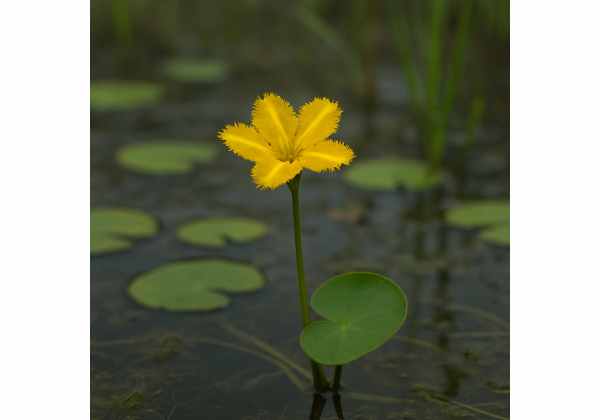
Water fringe, more widely known in botanical and ecological writing as or simply by its scientific name Nymphoides peltata, is an aquatic perennial with floating leaves and bright yellow fringed flowers. It has a longer history as a traditional remedy and food plant than most modern readers realize, especially in parts of Asia, where it has been used for urinary complaints, swelling, feverish states, and certain skin problems. In recent years, researchers have also begun studying its roots and whole-plant extracts for antioxidant, anti-inflammatory, wound-supporting, and skin-protective effects.
That said, water fringe is not a well-established modern herbal medicine. The most promising findings come from laboratory and animal studies, not strong human clinical trials. This matters because it changes how the herb should be understood. It may offer useful traditional and experimental potential, but it does not yet have the same evidence base as better-known medicinal plants. A practical article on water fringe therefore needs to balance curiosity with caution, especially around preparation, dosing, wild harvesting, and safety.
Key Facts
- Water fringe shows promising anti-inflammatory and antioxidant activity in early research, especially in skin models.
- Traditional use centers on urinary support, swelling, and fever-related complaints rather than daily wellness use.
- No validated human oral dose exists; published studies mainly use laboratory extract concentrations rather than a standard self-care range.
- People who are pregnant, breastfeeding, taking regular medicines, or harvesting from polluted water should avoid unsupervised use.
Table of Contents
- What Water Fringe Is and Why It Has Traditional Value
- Key Compounds in Water Fringe and Why They Matter
- Traditional Uses and What They Mean in Modern Herbal Context
- Potential Health Benefits and What Research Actually Suggests
- Practical Uses and Preparation Approaches
- Dosage, Standardization, and Common Self-Treatment Mistakes
- Safety, Side Effects, and Who Should Avoid It
What Water Fringe Is and Why It Has Traditional Value
Water fringe, Nymphoides peltata, is a floating-leaved aquatic plant in the Menyanthaceae family. It is often recognized by its rounded leaves, long stalks, and yellow flowers with distinctly fringed petal edges. In English-language ecology writing, it is also commonly called yellow floating heart. It grows in ponds, slow rivers, canals, and shallow lake margins, where it can spread across the water surface in broad mats. That ecological habit matters for herbal use because aquatic plants do not behave like garden herbs. They interact constantly with sediment, dissolved minerals, and pollutants in the surrounding water.
Traditional medicine records give the plant a more medicinal role than its ornamental appearance suggests. Historical use in Chinese and South Asian traditions describes it as a plant used for heat-related urinary discomfort, polyuria, swelling, fever, and related inflammatory complaints. Older practical uses also include external applications, such as fresh leaf preparations, and folk treatment for skin problems, ulcers, and painful swelling. In some regional traditions, the fresh leaves or the whole plant were prepared into pastes or decoctions, while the root was more often associated with concentrated medicinal activity.
This traditional profile helps explain the search intent around water fringe today. People who encounter the plant often want to know whether it is merely decorative, whether it is edible, whether it has medicinal properties, and whether early research supports its old uses. The answer is yes, but with important limits. Water fringe appears to be a genuine medicinal species with a documented history of traditional use, yet it remains far from a standardized mainstream herbal product. Unlike common retail herbs, it is not widely sold as a validated capsule, tincture, or tea with well-established clinical dosing.
Another useful point is that medicinal value does not automatically make a plant appropriate for self-treatment. Water fringe is an aquatic species that may be collected from environments with agricultural runoff, heavy metals, or industrial contamination. That means the identity of the plant is only one part of the safety question. The place where it grows matters almost as much as the plant itself.
In practical herbal terms, water fringe is best viewed as a plant with legitimate ethnomedicinal roots and growing scientific interest, especially for skin and inflammation-related applications. It is less helpful to think of it as a proven household herb. Readers interested in gentle urinary-supporting botanicals may find better-known options such as corn silk for urinary support easier to source and use safely, but water fringe remains a noteworthy plant because its traditional role and early pharmacology line up more than one might expect.
Key Compounds in Water Fringe and Why They Matter
The strongest scientific case for water fringe comes from its chemistry. Researchers studying the roots and extracts of Nymphoides peltata have identified a varied profile of phenolic acids, flavonoids, coumarin glycosides, iridoid glycosides, and other plant metabolites. This matters because medicinal claims become more believable when a plant contains compounds already associated with antioxidant, anti-inflammatory, or tissue-supporting activity.
Among the most discussed compounds are chlorogenic acid and dicaffeoylquinic acids. These are polyphenol-rich constituents that often appear in plants studied for antioxidant defense and inflammatory modulation. In water fringe root extracts, they help explain why the plant repeatedly shows oxidative stress-lowering activity in skin-focused laboratory models. Researchers have also identified caffeoylquinic acid derivatives, including 3,4,5-tri-O-caffeoylquinic acid, which has attracted attention for possible anti-wrinkle and skin-protective effects in cell work.
Flavonoids are another important part of the profile. A newer study isolated a previously undescribed flavonoid glycoside from the roots and linked this line of chemistry with wound-healing interest. Flavonoids are often valued because they can influence inflammatory pathways, stabilize oxidative stress responses, and support tissue repair. In water fringe, they do not prove clinical benefit by themselves, but they do make the plant chemically credible.
Two other families of compounds deserve mention. First are iridoid glycosides, which often appear in medicinal plants with bitter, anti-inflammatory, or protective roles. Second are coumarin glycoside derivatives such as scopolin-related constituents. These compounds broaden the plant’s pharmacological story and may help explain why different extracts appear active in wound and skin research.
A simple way to understand the chemistry is to group the plant’s key constituents by likely function:
- phenolic acids for antioxidant and inflammatory signaling effects
- flavonoids for tissue protection and possible wound-supporting activity
- iridoid glycosides for broader bioactive potential
- coumarin glycosides for additional skin and repair-related interest
- saponin and triterpene-related compounds reported across the genus
This does not mean every water fringe tea or homemade paste delivers all of these effects reliably. Extraction method, plant part, growing conditions, and freshness all change what ends up in a preparation. Root-focused methanolic or ethanolic extracts used in research are much more concentrated and chemically specific than a casual home infusion made from unidentified wild material.
That difference is worth stressing because readers often jump from “active compounds were found” to “the herb definitely works.” Chemistry shows possibility, not certainty. Still, water fringe has a far richer phytochemical profile than a purely ornamental pond plant. It belongs in the same broad scientific conversation as other botanicals studied for topical repair and antioxidant activity, though much more evidence is still needed. In that sense, its compound profile makes it scientifically interesting even when clinical claims must remain modest.
Traditional Uses and What They Mean in Modern Herbal Context
Traditional use is one of the most important clues for understanding water fringe, but it needs interpretation. Historical accounts describe Nymphoides peltata as a plant used for heat strangury, polyuria, swelling, fever, and related complaints. In modern plain language, that points toward a traditional role in urinary discomfort, excess urination, inflammatory swelling, and feverish or irritated states. Some records also mention use for ulcers, skin disorders, snakebite-related folk practice, biliary pain, rheumatism, and headache preparations made from fresh leaves.
The difficulty is that traditional categories do not map neatly onto modern diagnoses. “Heat strangury,” for example, is not the same thing as a confirmed urinary tract infection. It may refer to painful or frequent urination associated with heat, irritation, or inflammation. Likewise, “swelling” could mean anything from mild fluid retention to inflamed tissue after injury. A careful article should not turn those old uses into overly precise modern treatment claims.
What traditional use does show is pattern. Water fringe was not mainly known as a stimulant, sedative, or nutritive tonic. It was used more like a problem-focused remedy for acute discomforts, especially those involving irritation, heat, fluid imbalance, or inflamed tissue. That pattern fits reasonably well with what modern research has begun to explore: anti-inflammatory activity, oxidative stress modulation, wound-related activity, and tissue-protective effects.
Traditional external use is especially plausible. Fresh leaf pastes and local applications make sense for a plant now being studied in skin and wound models. Modern readers can understand this as a bridge between folk observation and experimental pharmacology. It does not prove the old applications worked every time, but it does show that the historical uses were not random.
There is also an important modern caution hidden inside the traditional record. Many older systems used plants freshly collected from local wetlands, where water quality and local ecological knowledge were better understood by the community than they may be today. Modern harvesters often do not know whether a pond or canal is carrying metals, pesticide residues, sewage runoff, or other contaminants. For an aquatic species, this is a major limitation.
So what do the traditional uses mean today?
- they support the idea that water fringe has real ethnomedicinal relevance
- they justify modern research into urinary, skin, and inflammatory applications
- they do not establish proof for any modern disease treatment
- they should push users toward caution, short-term thinking, and clean sourcing
In practice, the best modern reading of tradition is selective rather than literal. Water fringe may be reasonably discussed as a traditional plant for urinary irritation, swelling, and skin-focused use, but not as a validated therapy for infection, chronic inflammatory disease, or serious systemic illness. Readers interested in topical herbs with a stronger current safety culture may also want to compare it conceptually with calendula for topical skin support, which is far better developed in modern herbal use.
Potential Health Benefits and What Research Actually Suggests
The phrase “health benefits” needs discipline with water fringe. This is not a plant supported by robust human trials, so the most accurate language is potential benefits supported by traditional use, phytochemistry, and preclinical research. When framed that way, several areas stand out.
The first is skin inflammation. A 2023 study on water fringe root extract found encouraging anti-atopic activity in experimental models, with improvements tied to reduced inflammatory signaling, antioxidant effects, and better skin-barrier related outcomes. This is one of the strongest modern lines of evidence for the plant. It does not prove that a home preparation will treat eczema in people, but it does make skin-focused use one of the most scientifically plausible areas for future development.
The second is wound-healing support. More recent root research isolated iridoid and coumarin glycosides, and some of these compounds promoted keratinocyte migration in an in vitro scratch model. That is meaningful because wound repair depends on coordinated cell movement and tissue rebuilding. Again, the result is promising, but it remains laboratory evidence rather than clinical proof.
The third is antioxidant and anti-photoaging potential. Root constituents including caffeoylquinic acid derivatives have shown activity in UVB-irradiated skin-cell models, influencing signaling pathways related to oxidative stress and wrinkle formation. This suggests future cosmetic or dermatologic potential, especially in standardized topical extracts.
A fourth, more tentative area is intestinal barrier support. A 2025 cell study found that water fringe extract helped counter patulin-related stress, inflammation, and tight-junction disruption in intestinal epithelial cells. This is interesting, but it is very early-stage and not a basis for self-treatment of gut disease.
Traditional urinary and swelling-related benefits are still important, but paradoxically they are less well explored in modern experimental work than the newer skin-focused applications. So while urinary support is part of the plant’s traditional identity, the strongest current research conversation around water fringe is actually dermatologic and cellular.
A balanced benefit profile looks like this:
- most plausible: skin inflammation and topical barrier support
- promising but early: wound-healing support
- plausible in lab settings: antioxidant and anti-photoaging effects
- exploratory: epithelial and gut-barrier protection
- traditional but under-studied today: urinary and swelling support
This balance matters because it helps readers avoid two mistakes. One mistake is dismissing the plant entirely because it is unfamiliar. The other is overstating it as a proven remedy. Water fringe sits in the middle: more interesting than a casual ornamental, but far less established than a clinically used herbal medicine.
For readers used to astringent or skin-supportive botanicals, water fringe can be understood as part of a wider group of plants investigated for tissue comfort and repair. The difference is that its strongest modern evidence comes from relatively new laboratory work rather than long-standing clinical use. That makes it worthy of attention, but not yet of confident therapeutic claims.
Practical Uses and Preparation Approaches
Practical use is the section where caution becomes especially important. Because water fringe is not a standardized retail herb with established monographs for common self-care use, there is a big difference between discussing possible preparations and recommending them. The plant has been used traditionally as a paste, decoction, or crude whole-plant remedy, but modern readers should treat those forms as ethnobotanical information rather than ready-made instructions.
External use is the most understandable starting point. Traditional leaf preparations and current skin-focused research make topical interest more sensible than casual oral use. In theory, a cleaned and carefully prepared extract or infusion could be explored in cosmetic research or controlled herbal practice for irritated skin. In reality, wild aquatic material is difficult to standardize, and contamination risk is real. That means homemade topical use should be limited to very cautious experimentation, ideally with expertly identified plant material from clean water and a strict patch test first.
Internal use is harder to recommend. Traditional medicine records describe decoctions and whole-plant use, especially for urinary and heat-related complaints, but current evidence does not provide a validated home-preparation method or reliable oral self-care protocol. Modern extracts studied in research are usually ethanol or methanol based and prepared under controlled conditions. Those are not equivalent to a casual kitchen decoction.
If a practitioner were evaluating water fringe in a modern herbal framework, the likely practical categories would be:
- External experimental use for minor skin comfort
- Research-oriented extract development
- Traditional documentation rather than broad self-care use
The most reasonable real-world guidance is to avoid improvising complex oral preparations. Aquatic plants bring special sourcing issues:
- they may accumulate heavy metals
- they may be exposed to farm runoff or urban contamination
- they may be misidentified or mixed with similar species
- different plant parts may have very different chemical profiles
That is why water fringe is better approached as a plant of medicinal interest than a casual daily tea herb. People often assume a floating herb from clean-looking water is automatically safe. It is not. Water clarity says little about sediment contamination.
A useful comparison can be made with witch hazel in topical care. Witch hazel is also discussed for skin comfort and tissue support, but it is widely standardized, commercially prepared, and better understood in practical use. Water fringe may eventually develop in that direction for topical formulations, yet it is not there now.
So the practical takeaway is simple. Water fringe may have meaningful future use in carefully prepared extracts, especially for topical applications. At present, it is not a plant most people should harvest and use on their own without training, clean sourcing, and a clear reason for doing so.
Dosage, Standardization, and Common Self-Treatment Mistakes
Dosage is the weakest area of the water fringe literature from a self-care perspective. There is no validated human oral dose for Nymphoides peltata, no broadly accepted monograph for routine supplementation, and no standard consumer extract that defines how much of the plant should be taken internally. That is not a small gap. It is the main reason the plant should be approached cautiously.
Most of the useful numbers in the literature come from laboratory work, not from human herbal practice. Researchers have used extract concentrations and isolated compounds in cell-based systems to study inflammation, wound healing, or oxidative stress. Those figures are helpful for science, but they are not oral dosing instructions. A laboratory concentration measured in micrograms per milliliter or micromolar units does not translate into “take this many capsules” or “drink this much tea.”
This creates a common mistake: people see precise numbers in a study and assume they can scale them into home use. They cannot, at least not safely or responsibly. Cell models do not account for digestion, metabolism, absorption, drug interactions, or contaminant burden in wild material.
The second dosing problem is lack of standardization by plant part. Root extracts appear especially active in current research, while traditional use sometimes involves the whole plant or fresh leaves. These are not interchangeable. A root-rich extract may contain a different concentration of phenolic acids, glycosides, and other metabolites than a whole-plant decoction. Without standardization, dose is not just “how much” but “how much of what.”
A careful dosage discussion for water fringe therefore looks like this:
- there is no established human oral dose
- there is no standardized supplement form in common clinical use
- research concentrations should not be copied into self-treatment
- plant part, extraction method, and growing environment can all change potency
If someone still insists on exploring the herb under professional guidance, the smartest dosing principles are qualitative rather than numerical:
- Use standardized material if it exists rather than wild-harvested material
- Prefer external exploratory use over internal self-dosing
- Start with the lowest possible exposure
- Stop quickly if irritation, nausea, rash, or urinary symptoms worsen
- Never use it in place of treatment for infection, eczema flare, or significant swelling
Another major mistake is assuming that “traditional use” supplies dosing clarity. In many herbs it does not. Traditional records often describe the indication and plant part but not the kind of reproducible modern dose a reader expects. With water fringe, that gap remains large.
For practical readers, this section leads to one honest conclusion: water fringe is not a do-it-yourself dosing herb. It is a plant with promising pharmacology that still lacks the human dosing framework needed for broad self-care use. That may change in the future if topical standardized extracts are developed, but it has not happened yet.
Safety, Side Effects, and Who Should Avoid It
Safety is where the difference between an interesting medicinal plant and a sensible home remedy becomes clearest. Water fringe has no strong human safety database, which means uncertainty itself is part of the risk profile. When a plant lacks established clinical use, the correct safety posture is conservative.
The first concern is contamination. Because Nymphoides peltata is aquatic, it can accumulate metals and other contaminants from water and sediment. Even when it is not the strongest accumulator among aquatic plants, measurable burdens have been reported. This makes wild harvesting from unknown ponds, canals, or drainage systems a poor idea. For many herbs, sourcing matters. For aquatic herbs, it can determine whether the material is suitable at all.
The second concern is irritation or unpredictable tolerance. Since most research focuses on extracts rather than everyday culinary use, we do not have a clear picture of routine oral tolerability in the way we do for common herbal teas. Possible adverse effects could include stomach upset, nausea, loose stools, or skin irritation, especially with concentrated preparations or poorly processed plant material.
The third concern is self-treatment delay. Traditional urinary use should never encourage someone to ignore warning signs such as fever, blood in the urine, worsening pain, or persistent urinary frequency. Likewise, promising skin studies do not make water fringe a substitute for eczema care, infection management, or wound treatment when symptoms are severe.
People who should avoid unsupervised use include:
- pregnant or breastfeeding individuals
- children
- people with kidney, liver, or urinary disease
- anyone taking prescription medicines
- people with known plant allergies or highly reactive skin
- anyone planning to harvest the plant from public or polluted water
Drug interaction data are not well established, but caution is still appropriate. Plants with active polyphenols and glycosides may affect absorption, local irritation, or inflammatory signaling in ways that are not fully mapped out. That does not mean dangerous interactions are proven. It means the evidence is too limited to assume safety.
Topical use also deserves a patch test. Even when a plant shows wound-supporting promise in lab work, real skin can respond with redness, itching, or delayed irritation, particularly in people with eczema or sensitive skin. A 24-hour test on a very small area is a minimum precaution.
In short, water fringe safety is defined by three words: limited evidence, variable material, and environmental exposure. Those three factors explain why this plant is better suited to research and professionally guided interest than casual wellness use. Curiosity is justified. Confidence should remain measured.
References
- Nymphoides peltata Root Extracts Improve Atopic Dermatitis by Regulating Skin Inflammatory and Anti-Oxidative Enzymes in 2,4-Dinitrochlorobenzene (DNCB)-Induced SKH-1 Hairless Mice 2023
- Iridoid Glycosides and Coumarin Glycoside Derivatives from the Roots of Nymphoides peltata and Their In Vitro Wound Healing Properties 2024
- 3‴-O-Foliamenthoyl-Rutin, a New Flavonoid Glycoside from the Roots of Nymphoides peltata 2023
- Anti-Wrinkling Effect of 3,4,5-tri- O-caffeoylquinic Acid from the Roots of Nymphoides peltata through MAPK/AP-1, NF-κB, and Nrf2 Signaling in UVB-Irradiated HaCaT Cells 2023
- Heavy Metal Accumulation in Common Aquatic Plants in Rivers and Lakes in the Taihu Basin 2018
Disclaimer
This article is for educational purposes only and is not medical advice. Water fringe is an understudied medicinal plant with promising laboratory findings, but there is not enough human evidence to support routine self-treatment or standardized oral dosing. Do not use it to replace medical care for urinary symptoms, skin disease, infected wounds, swelling, or any persistent condition. Speak with a qualified healthcare professional before using this plant if you are pregnant, breastfeeding, taking medication, managing a chronic illness, or considering any internal use.
If this article was useful, please share it on Facebook, X, or another platform you prefer.