Water Purslane, or Ludwigia palustris, is a wetland herb that sits in an unusual place between folk medicine, aquatic botany, and early phytochemical research. It is not the same plant as common purslane, and it should not be approached as if it were a familiar culinary herb. Interest in Water Purslane usually revolves around a small set of questions: what beneficial compounds it contains, whether its reported antioxidant and antibacterial effects are meaningful, how it has been used traditionally, and whether it is safe enough for internal use. The most balanced answer is that this plant is promising but still underexplored. Modern studies suggest it contains phenolic compounds, flavonoids, tannins, and other bioactive molecules, while newer work has isolated compounds such as rutin, quercetin, ethyl gallate, and oleanolic acid. These findings help explain why the herb is discussed for oxidative stress support, traditional respiratory complaints, and mild diuretic use. Still, nearly all of the evidence remains preclinical, and its aquatic habitat raises important sourcing and safety concerns.
Essential Insights
- Water Purslane shows preliminary antioxidant potential and mild antibacterial activity in laboratory studies.
- Traditional use points mainly toward respiratory complaints and mild diuretic support, not proven modern therapy.
- If used as a weak infusion, keep it conservative at about 1 to 2 g dried herb in 200 to 250 mL water for short-term use only.
- Pregnant or breastfeeding people, children, and anyone harvesting from polluted waterways should avoid self-prescribed internal use.
Table of Contents
- What is Water Purslane and what does it contain?
- Potential health benefits of Water Purslane
- Traditional uses and where it may practically fit
- How to use Water Purslane carefully
- Dosage, preparation, and timing
- Safety, side effects, and who should avoid it
- What the research actually shows
What is Water Purslane and what does it contain?
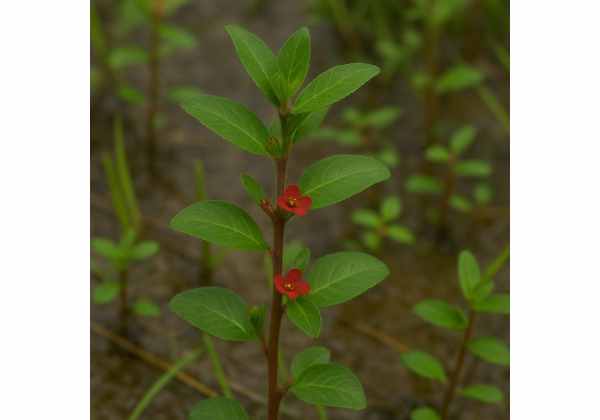
Water Purslane is a small amphibious herb in the evening primrose family, Onagraceae. It grows in marshes, shallow water, ditch margins, and other wet places, often forming low mats or rooting at the nodes where stems touch moist ground. That wetland habit matters because it shapes both the plant’s chemistry and its practical use. Aquatic and semi-aquatic herbs often produce dense arrays of protective secondary metabolites to cope with light stress, microbes, shifting oxygen levels, and fluctuating water quality. In Water Purslane, those compounds are exactly what make the plant medicinally interesting.
The first useful distinction is taxonomic and practical: Water Purslane is not the same as culinary purslane. The common name creates confusion, but Ludwigia palustris is unrelated to the fleshy salad herb many people know from food traditions. That means assumptions about edibility, safety, and dosage should not carry over automatically.
Modern phytochemical work has begun to sketch out a more credible profile for the plant. The newer literature points to several relevant groups of compounds:
- phenolic compounds
- flavonoids
- tannins
- triterpenoid-related constituents
- simple carbohydrates and trace mineral content
More recent isolation work has sharpened that picture by identifying specific molecules such as rutin, quercetin, ethyl gallate, and oleanolic acid. This is important because it moves the plant from vague herbal language into something more concrete. Quercetin and rutin are well-known flavonoids often associated with antioxidant action. Ethyl gallate belongs to a phenolic family commonly tied to radical-scavenging potential. Oleanolic acid is a triterpenoid that appears in many medicinal plants and often draws attention for its broad biological activity in early-stage research.
That said, chemistry alone does not make a plant clinically useful. Many herbs contain attractive compounds but never translate into reliable human outcomes. The real value of this profile is that it helps explain why Water Purslane has shown preliminary antioxidant and antibacterial activity in extracts. It also helps place the plant within the wider Ludwigia genus, which is increasingly recognized for polyphenol-rich species with interesting but uneven medicinal potential. If you want a more familiar point of comparison, green tea’s better-known antioxidant profile shows what a much more established polyphenol-rich plant looks like in practice.
So, the key ingredients in Water Purslane are best understood as a cluster rather than a single hero compound. The plant appears to owe its potential medicinal value to a combination of flavonoids, phenolics, tannins, and at least one identified triterpenoid. That is enough to make it worth studying, but not enough to treat it as a fully developed medicinal herb.
Potential health benefits of Water Purslane
When people search for Water Purslane health benefits, they are usually asking a practical question: what could this herb realistically help with? The best answer is that it may offer useful biological effects, but the evidence remains preliminary and is still mostly limited to plant chemistry, extract testing, and laboratory models.
The strongest potential benefit is antioxidant support. The most recent species-specific work found high phenolic richness and meaningful free-radical scavenging activity in certain extracts. Later compound-isolation work makes that result easier to understand by showing that Water Purslane contains molecules such as quercetin, rutin, and ethyl gallate, all of which are chemically compatible with antioxidant behavior. This does not mean drinking the herb will dramatically lower oxidative stress in a clinical sense. It does mean the plant has a plausible biochemical basis for the antioxidant claims often attached to it.
The second likely benefit is mild antibacterial potential. Extract studies suggest that different solvent extracts act differently, with some showing broader antibacterial action than others. That matters because it tells us the herb is not simply “antibacterial” in a blanket sense. Its activity depends on how it is prepared and which compounds are concentrated. In everyday language, Water Purslane may contain constituents that slow bacterial growth in laboratory conditions, but that does not make it a substitute for infection treatment. Many plants show this kind of early promise. Far fewer become clinically dependable. If someone is mainly interested in herbs with a stronger traditional antimicrobial reputation, oregano’s better-known antimicrobial profile sits on firmer practical ground.
A third possible benefit is mild respiratory support, but this belongs more to tradition than to modern proof. Some sources linked to the medicinal history of the plant describe it as a pectoral herb and mention use for coughs, asthma-like complaints, or chest irritation. That does not give it a proven role in respiratory care, but it does suggest the plant was not valued only for laboratory activity. It had a place in symptom-based folk use.
A fourth possible benefit is gentle diuretic support. Again, this is mostly traditional. The newer laboratory literature focuses much more on phytochemicals, antioxidant activity, and antibacterial testing than on validated diuretic action in humans. Still, if a plant repeatedly appears in older descriptions as a mild urinary or fluid-moving herb, that history is worth acknowledging.
The realistic benefit profile, then, looks like this:
- preliminary antioxidant support
- possible mild antibacterial activity
- traditional use for respiratory complaints
- traditional mild diuretic use
That is a modest but meaningful list. The important limit is that Water Purslane has not earned strong disease-treatment claims. Its benefits make the most sense when framed as early-stage potential and traditional fit, not as established clinical results.
Traditional uses and where it may practically fit
Traditional use often reveals how people actually understood an herb before laboratory methods narrowed the conversation to isolated compounds. With Water Purslane, the historical picture is not as rich or standardized as it is for famous medicinal herbs, but several recurring themes do appear. The plant has been described as a folk remedy for respiratory complaints, especially chronic cough-like conditions, and it has also been mentioned as a mild diuretic. In some scattered accounts, it appears in broader herbal practice as a supportive rather than heroic plant.
That pattern is worth noticing because it tells you what kind of herb Water Purslane probably is not. It is not a forceful stimulant. It is not a strongly aromatic digestive herb. It is not a dramatic topical resin or a bitter tonic with a thick monograph tradition. Instead, it seems to have been used as a lighter supportive herb for symptoms that linger rather than explode: chest irritation, chronic cough, mild fluid retention, and general low-grade imbalance.
This practical fit matters more than it may seem. If an herb’s history is mainly pectoral and mild diuretic, then using it for unrelated modern trends such as detox cleanses, aggressive antimicrobial protocols, or long-term daily tonics makes little sense. Water Purslane seems better suited to careful, narrow, short-term use than to broad routine supplementation.
There is also a cultural and ecological dimension to this plant. Because it grows in waterlogged and marshy habitats, it may have been more available to local communities living near wetlands than to those relying on dryland herb traditions. That kind of availability often shapes herbal reputation. A plant becomes useful because it is near, recognizable, and repeatedly observed in a specific setting. That does not weaken its value, but it does remind us that traditional use emerges from lived geography, not from abstract herb charts.
In practical modern use, Water Purslane seems to fit three limited categories.
First, it fits as a niche respiratory-support herb. Someone exploring old pectoral herbs may find it interesting, though it is clearly less established than mullein for respiratory support.
Second, it fits as a mild traditional urinary or fluid-moving herb, though the evidence here is thinner than many readers might want.
Third, it fits as a research-forward botanical. Some people are interested in herbs not because they are everyday staples, but because they represent underexplored plant chemistry that may later prove important. Water Purslane belongs in that category.
The best way to summarize its traditional place is simple: Water Purslane was likely valued for modest support rather than dramatic intervention. That still matters. Some herbs are useful precisely because they occupy the middle ground between food and medicine, between symptom comfort and deeper treatment. Water Purslane appears to be one of those herbs, but only when approached with restraint and realistic expectations.
How to use Water Purslane carefully
If someone decides to use Water Purslane, the most responsible approach is to stay close to the gentlest forms of traditional use and avoid strong or improvised preparations. This is an underexplored aquatic herb, not a plant with a polished supplement industry behind it. That alone argues for conservative handling.
The most sensible form is a weak infusion. Traditional references to the herb usually imply simple water-based use rather than concentrated extraction. A light infusion fits the plant’s historical role and keeps exposure modest. This matters because different extracts of Water Purslane behave differently in research. Laboratory studies that show interesting antioxidant or antibacterial effects often use solvents and concentrations that do not resemble an ordinary household tea. A casual reader can easily mistake extract activity for tea activity, but they are not the same thing.
A second option is limited topical experimentation, though this makes sense only if the source plant is clean and correctly identified. A cooled, strained infusion could theoretically be used in a very simple external way, such as a light rinse or cloth application, but this is a secondary use rather than a central one. Because the plant often grows in water-rich environments, external use raises the same sourcing question as internal use: do you trust where the plant came from?
Fresh wild-harvested material is the least attractive option unless the collection site is exceptionally clean and well understood. Aquatic and semi-aquatic plants can absorb and interact with metals and pollutants from their surroundings. That means a pretty marsh herb from a roadside ditch or urban stream may carry more risk than a dryland plant from a clean meadow. For this reason alone, many people are better off not wild-harvesting Water Purslane for medicine.
Concentrated extracts deserve even more caution. The recent phytochemical literature is fascinating, but it should not tempt people into strong tinctures, alcohol extracts, or kitchen-lab concentration methods. Once you concentrate an herb, you concentrate both its possible benefits and its uncertainties. With Water Purslane, those uncertainties still outweigh the confidence available from the evidence.
A practical hierarchy of use looks like this:
- correctly identified, clean, dried herb if available
- weak infusion before any other internal form
- short-term use rather than routine use
- external use only if the source is trustworthy
- avoid homemade concentrated extracts
This is also why many readers ultimately choose better-known soothing herbs instead. If your main goal is comfort for throat or upper digestive irritation, marshmallow root for soothing support is far easier to justify in a home routine.
Water Purslane is best used like a specialist herb: thoughtfully, minimally, and with a clear reason. The plant becomes more sensible the less aggressively it is used.
Dosage, preparation, and timing
The first and most important dosage fact is that Water Purslane has no validated human therapeutic dose. There is no broadly accepted monograph that gives a standardized range for Ludwigia palustris the way more established herbs are dosed. Any practical dosage discussion therefore has to be framed honestly as a cautious traditional-style estimate rather than a clinically proven recommendation.
For internal use, the most conservative approach is a weak infusion using about 1 to 2 g of dried aerial parts in 200 to 250 mL of hot water. Steep it gently rather than boiling it aggressively, and keep any first trial to a single serving. If tolerance is good and there is a clear reason to continue, short-term once-daily use makes more sense than multiple cups per day. This is not a plant for high-volume tea drinking.
That range is deliberately modest for three reasons. First, Water Purslane is still under-researched. Second, the plant’s laboratory effects depend heavily on extraction method. Third, its aquatic habitat means that source quality may vary more than many readers expect. A small amount from a reliable source is more rational than a large amount from unknown material.
Timing is simple. If someone is using the herb in a traditional pectoral or mild diuretic context, daytime use is preferable. Daytime use makes it easier to notice tolerance, digestive response, or any unwanted urinary effect. It also avoids turning an experimental herbal trial into a night-time inconvenience.
Preparation details matter:
- use dried or well-cleaned material rather than muddy fresh cuttings
- strain carefully
- avoid combining it with multiple unfamiliar herbs during a first trial
- stop after a short course rather than turning it into a habit
A short trial may mean a few days rather than weeks. If nothing useful happens, that itself is valuable information. Water Purslane is not the sort of herb that should be escalated simply because the first cup feels mild. With under-studied plants, pushing the dose often increases uncertainty more than benefit.
People often do better with more standardized alternatives when their goals are general wellness, mild diuretic support, or everyday plant-based support. For example, dandelion as a more established everyday herb offers a clearer traditional and practical framework than Water Purslane does.
So the real dosage lesson is less about numbers and more about discipline. Yes, a weak infusion range can be suggested for cautious use. But the stronger rule is this: do not confuse “natural” with “needs more.” Water Purslane is one of those herbs where the safest dose is often the lowest one that allows observation, or no internal dose at all when better-studied options already exist.
Safety, side effects, and who should avoid it
Safety is where Water Purslane deserves more attention than casual herb writing usually gives it. The available studies are encouraging in some ways, but they do not provide the kind of human safety data needed for confident routine use. That does not automatically mean the plant is dangerous. It does mean that caution is part of responsible use.
The first safety issue is simply limited evidence. Water Purslane has interesting phytochemistry and promising extract activity, but it has not been through the kind of toxicology and clinical testing that would justify broad recommendations. Researchers themselves note the need for further in vivo work and toxicity analysis. When an herb is still in that stage, the right stance is humility rather than enthusiasm.
The second safety issue is habitat. Because Ludwigia palustris is an aquatic or semi-aquatic plant, its growing environment matters profoundly. Research on aquatic plants has shown that this species can participate in the accumulation and removal of heavy metals from contaminated water. That is useful in phytoremediation, but it is not something you want in a medicinal tea. A plant taken from a drainage channel, polluted pond, wastewater edge, or roadside wetland may look healthy while carrying an invisible contaminant burden.
The third issue is self-medicating the wrong condition. Some of the plant’s historical uses concern coughs and chest complaints, while newer research points to antibacterial activity in extracts. Those facts can tempt people to treat persistent respiratory symptoms or suspected infections too casually. That would be a mistake. If a cough is prolonged, worsening, accompanied by fever, breathing difficulty, or chest pain, this is not the herb to experiment with at home.
Possible side effects are not well mapped, but reasonable concerns include:
- digestive upset from internal use
- poor tolerance to concentrated preparations
- irritation from impure or poorly sourced plant material
- contamination-related exposure from wild aquatic harvesting
Who should avoid internal self-use?
- pregnant people
- breastfeeding people
- children and teenagers
- anyone with kidney or liver disease
- people on diuretics or multiple medications
- anyone harvesting from uncertain aquatic environments
Topical use also deserves some care. Even gentle herbs can irritate reactive skin, and an aquatic plant of uncertain cleanliness is not ideal for broken or inflamed skin. If someone wants a more established topical alternative, plantain’s gentler external uses are easier to justify.
The safest overall summary is this: Water Purslane may be promising, but it is not a casual daily herb. Limited human safety data and the real possibility of environmental contamination both argue for short-term, low-intensity, carefully sourced use only.
What the research actually shows
The most helpful way to understand Water Purslane is to separate what the research clearly shows from what it merely suggests. This prevents the two most common errors: dismissing the plant as irrelevant, or promoting it as though it were already proven.
What the research does show is that Ludwigia palustris contains meaningful phytochemicals. The 2025 work on physicochemical characterization and biological screening found phenolics, flavonoids, and tannins, alongside promising antioxidant and antibacterial activity in selected extracts. That is a serious step beyond folklore, because it gives the plant a documented phytochemical basis and shows that its extracts are not biologically inert.
The 2026 constituent-isolation paper strengthens that foundation considerably. Instead of stopping at general screening, it isolated and identified specific compounds: rutin, quercetin, ethyl gallate, and oleanolic acid. That matters because it helps explain why earlier extract studies found activity in the first place. It also places Water Purslane more clearly within the Ludwigia genus, where flavonoids, phenolics, and triterpenoid-related chemistry appear repeatedly.
The broader 2023 review of Ludwigia species adds important context. It shows that the genus as a whole has attracted interest for antioxidant, antimicrobial, anti-inflammatory, cytotoxic, and other biological activities. But it also makes clear that this field is uneven. Only a minority of Ludwigia species have been explored in real depth, and most claims remain preclinical. That context is crucial. It tells us that Water Purslane is part of a promising genus, but not yet a clinically mature herb.
The research also supports a major safety insight: the plant’s aquatic nature is not just a botanical detail. Separate work on aquatic phytoremediation shows that Ludwigia palustris can participate in heavy metal accumulation and removal from contaminated water. In practical terms, this means wild-harvest quality is not a trivial matter. For some plants, place of growth is a secondary concern. For Water Purslane, it is central.
So what is fair to conclude?
- the plant has real phytochemical interest
- antioxidant and antibacterial findings are plausible and species-specific
- specific compounds now give those findings a more concrete basis
- human clinical evidence is still missing
- source cleanliness is a real part of safety, not an afterthought
This is a respectable research profile, but it is still an early one. Water Purslane is best described as a scientifically interesting traditional herb rather than an established therapeutic staple. That is not a weakness. It is simply the truth of where the evidence stands now.
References
- A Comprehensive Study on Ludwigia palustris (L.) Elliott: Physicochemical Characterization, Phytochemical Screening, and Evaluation of Antioxidant and Antibacterial Activities 2025 (Research article)
- Spectroscopic Characterisation of Bioactive Constituents Isolated from Ludwigia Palustris (L.) Elliott 2026 (Research article)
- Phytochemical and biological diversity of genus Ludwigia: A comprehensive review 2023 (Review)
- Phytoaccumulation of heavy metals by aquatic plants 2004 (Research article)
Disclaimer
This article is for educational purposes only and is not medical advice. Water Purslane is an under-researched wetland herb with limited human evidence, so it should not replace diagnosis, prescribed treatment, or urgent care. Speak with a qualified healthcare professional before using it internally, especially if you are pregnant, breastfeeding, take regular medicines, have kidney or liver disease, or plan to use wild-harvested material.
If this article was useful, please share it on Facebook, X, or any platform where careful herbal information can help more readers.