White ash, botanically known as Fraxinus americana, is best known as a strong North American tree prized for timber, but its bark, leaves, and seeds also hold a quieter place in traditional herbal practice. Older North American and eclectic herbal records describe white ash as a bitter tonic, mild laxative, topical wash, and folk remedy for swelling, itching, fever, joint discomfort, and women’s health complaints. Modern interest in the plant is more restrained. Researchers now focus less on sweeping cure claims and more on its chemistry, especially phenolic compounds, coumarins, flavonoid-related constituents, and seed polyphenols that may help explain antioxidant and anti-inflammatory potential. Still, the leap from interesting chemistry to proven clinical benefit is large, and white ash has not been studied in people as thoroughly as many better-known medicinal herbs. That makes it a plant worth understanding rather than casually self-prescribing. The most helpful way to approach white ash today is as a traditional remedy with plausible biological activity, limited modern dosing guidance, and a safety profile that calls for moderation, careful sourcing, and realistic expectations.
Essential Insights
- White ash has a traditional reputation for joint discomfort, mild swelling, and topical soothing, but modern human evidence is limited.
- Its bark, leaves, and seeds contain phenolic compounds and related plant chemicals that may support antioxidant activity.
- Safe unsupervised medicinal oral dose: 0 g dried bark and 0 mL extract, because no evidence-based modern self-care dose is established.
- Pregnant or breastfeeding people, children, and anyone using prescription medicines without professional guidance should avoid medicinal use.
Table of Contents
- What white ash is and why the herbal story is complicated
- Key ingredients and what they suggest about medicinal properties
- White ash health benefits and where the evidence is strongest
- Traditional uses, plant parts, and practical modern applications
- White ash dosage, forms, and why modern guidance is limited
- Side effects, interactions, and common mistakes
- Who should avoid white ash and the final takeaway
What white ash is and why the herbal story is complicated
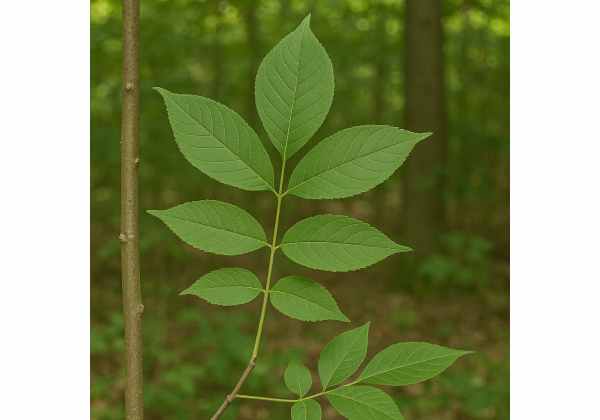
White ash is a tall deciduous tree native to eastern North America. Most people recognize it from its strong, shock-resistant wood, opposite branching pattern, compound leaves, and gray bark marked by interlacing diamond-shaped ridges. In botanical terms, it belongs to the olive family, Oleaceae, and is closely related to other ash species that have also been used in traditional medicine in Europe and Asia. That relationship is part of what makes the herbal story complicated. When people search for “ash bark benefits,” they are often encountering a blend of information drawn from several Fraxinus species rather than clean, species-specific evidence for Fraxinus americana alone.
That distinction matters. White ash does have a documented traditional medicinal history in North America. Historical records describe leaf decoctions, bark teas, seed use, and topical applications for itching, bites, swelling, scalp problems, fever, women’s postpartum recovery, and other folk concerns. Yet many modern claims online go beyond that record and treat white ash as if it were a clinically established anti-inflammatory or detox herb. It is not. The strongest modern evidence sits at the level of plant chemistry and laboratory investigation, not large human trials.
A second reason the story is complicated is that different parts of the tree have been used for different purposes. The bark carries the deepest traditional medicinal reputation. The leaves appear in folk use for topical relief and laxative or tonic purposes. The seeds have been studied for catechins and proanthocyanidins, which adds an interesting phytochemical angle but does not automatically create a practical supplement protocol. In other words, “white ash” is not a single standardized herbal ingredient. It is a tree with multiple plant parts, each carrying a different balance of tradition, chemistry, and uncertainty.
It is also worth keeping the ecological context in view. White ash populations have been heavily damaged by emerald ash borer and other stressors, so the question of harvesting wild bark or leaves is no longer just medicinal. It is also ethical and ecological. A plant can be herbal, but that does not mean it should be stripped from declining native trees.
So before asking what white ash can do, it helps to frame the real answer. White ash is a legitimate traditional North American medicinal tree with a documented folk record and interesting chemistry, but it is not a thoroughly standardized modern remedy. Any useful article about it needs to hold both parts of that truth at once.
Key ingredients and what they suggest about medicinal properties
The chemistry of white ash is one of the most interesting parts of the story, but it is also where overstatement becomes easy. White ash and the broader Fraxinus genus contain several classes of compounds that help explain why traditional healers found the tree worth using. Reviews and species-level studies point to phenolic compounds, coumarins, flavonoid-related compounds, lignans, secoiridoid-type metabolites, and seed polyphenols such as catechins and proanthocyanidins. These are chemically meaningful groups, yet they do not all occur at the same levels in every ash species, plant part, or extract.
Phenolic compounds are a sensible place to start. In herbal medicine, phenolics often matter because they help explain antioxidant potential. They can also contribute to mild tissue-protective and anti-inflammatory effects. White ash leaf and bark chemistry has been discussed in relation to phenolic richness, and research on ash foliage more broadly shows that these trees produce a complex defensive chemistry rather than a single famous active compound.
Coumarins are another important part of the picture. Ash species are well known for coumarin-type constituents, and these compounds are often associated with bitter taste, antioxidant properties, and plant defense. When readers see white ash described as a bitter or tonic herb, coumarin-related chemistry is part of the explanation. At the same time, coumarins are a reminder that “natural” does not mean chemically simple. Herbs rich in this class deserve thoughtful use, especially if someone is already taking medicines or combining multiple botanicals.
The seeds add a separate angle. White ash seeds have yielded catechins and proanthocyanidins, which are polyphenols better known from tea, cocoa, grape seeds, and other antioxidant-rich plants. This does not mean white ash seeds are a replacement for those foods or supplements. It does suggest, however, that the plant’s traditional value may rest partly on a real chemical basis rather than on folklore alone.
A practical way to think about white ash’s key ingredients is this:
- phenolic compounds may support antioxidant effects
- coumarin-related compounds may help explain bitterness and some traditional uses
- flavonoid-related constituents may contribute to anti-inflammatory interest
- seed catechins and proanthocyanidins suggest additional polyphenol value
Still, medicinal properties should be described with care. White ash is not defined by one trademark compound the way peppermint is tied to menthol or turmeric to curcuminoids. It is better understood as a phytochemically mixed tree medicine whose actions likely come from the combined effect of several plant chemicals.
That mixed profile helps explain why traditional white ash was used for more than one purpose, but it also helps explain why modern standardization is hard. Compared with a more focused anti-inflammatory herb such as white willow bark, white ash has a more diffuse and less clinically settled phytochemical identity.
White ash health benefits and where the evidence is strongest
When people search for white ash health benefits, they usually want a clear list. The problem is that white ash does not fit neatly into the modern supplement model. Its benefits are easiest to describe in three layers: traditional benefits, plausible chemistry-based benefits, and clinically proven benefits. Those layers overlap, but they are not the same.
The traditional layer is the strongest historically. White ash leaves, bark, and seeds were used in Native American and later North American folk practice for a wide range of complaints. Records describe bark tea for scalp problems, lice, sores, and snakebite-related folk use, leaf preparations for swelling and itching, seed use as a diuretic and appetite stimulant, and leaf decoctions as laxatives or tonic preparations. Later herbal practice also leaned on white ash bark for joint discomfort, gouty pain, mild fluid retention, and uterine tone complaints.
The chemistry-based layer is plausible but more modest. Because white ash contains phenolic compounds, coumarin-related compounds, and seed polyphenols, it makes sense that the plant may show antioxidant and anti-inflammatory effects in laboratory settings. That is important, because it gives some scientific shape to the older uses for swelling, irritation, and joint discomfort. The difficulty is that plausible activity does not automatically translate into predictable human outcomes.
That leads to the clinical layer, which is where white ash becomes much thinner. There is very little high-quality modern human evidence showing that Fraxinus americana reliably improves arthritis pain, edema, fever, digestion, or skin irritation when used in a specific dose for a specific period. Most modern reviews discuss Fraxinus as a chemically promising genus, not white ash as a firmly proven clinical herb. That distinction should shape expectations.
So what benefits can be stated honestly?
- Possible mild anti-inflammatory support
This is the most believable modern interpretation of its traditional use for joint discomfort and swelling. - Possible antioxidant support
This follows logically from the plant’s phenolic and polyphenol profile. - Traditional topical soothing use
Folk use for bites, itching, scalp issues, and sores suggests mild external value, though not modern clinical proof. - Traditional bitter tonic and laxative action
Historical use supports this more than modern trials do.
The evidence is therefore strongest at the level of tradition plus plausible phytochemistry. It is weakest at the level of standardized clinical outcomes. For someone specifically seeking a better-supported herb for digestive or bitter-tonic use, gentian is usually clearer. For topical soothing, other herbs are easier to justify. White ash remains interesting, but it works best when expectations stay moderate and evidence is described honestly.
Traditional uses, plant parts, and practical modern applications
White ash has one of those herbal profiles that makes the most sense when read historically rather than commercially. It was not originally a branded capsule or standardized tincture. It was a useful native tree whose bark, leaves, and seeds were applied in different ways according to local practice and need. Once that context is lost, the plant starts to look more certain than it really is.
The bark appears most often in traditional medicinal use. Historical records describe bark teas or decoctions for scalp problems, itching, sores, and other external complaints. Later North American herbalism also treated the bark as a bitter, mildly astringent, tonic remedy used for joint discomfort, sluggish elimination, and women’s health support. The leaves had their own place. A leaf decoction was used as a laxative and postpartum tonic in some traditions, while fresh juice or crushed leaf material was applied to bites and swollen irritated skin. The seeds were associated with diuretic, appetite-stimulating, and fever-related folk uses.
These uses can be grouped into a few practical categories.
- Topical folk use
Leaves or bark were used in washes or applications for bites, itching, scalp irritation, and minor sores. - Digestive and eliminative use
Bitter bark preparations and leaf decoctions were used in ways that suggest tonic, laxative, or mild diuretic intentions. - Joint and swelling use
Later herbal traditions often placed white ash among remedies for rheumatic discomfort and stiffness. - Women’s traditional use
Some historical sources link white ash with postpartum tonic use or uterine tone, though modern evidence is especially weak here.
A modern reader should not assume that every traditional use deserves direct revival. Traditional use tells us what people attempted, valued, or observed. It does not automatically provide a modern proof of safety or effectiveness. In the case of white ash, the best practical modern applications are probably the gentlest ones: careful external use under professional guidance, historical interest, or inclusion in research-minded herbal study.
There is also the issue of sourcing. White ash trees in many regions are under ecological pressure. Stripping bark from a living tree is not a harmless act. Even harvesting leaves from stressed populations can be questionable. Sustainable herbal practice matters here more than it does with widely cultivated garden herbs.
That is one reason many people exploring traditional topical herbs may be better served by plants that are easier to source and better studied, such as witch hazel. White ash still has value as a medicinal tree in the historical record, but practical modern use should stay respectful, limited, and aware of both ecological and evidentiary limits.
White ash dosage, forms, and why modern guidance is limited
Dosage is usually the part of an herb article that readers expect to be simple. With white ash, it is not. Traditional records describe teas, decoctions, and washes made from bark or leaves, but modern evidence does not provide a well-established self-care dose in grams, capsules, or milliliters that can be recommended with confidence.
That means the safest practical answer is also the least glamorous one: there is no evidence-based modern self-care medicinal oral dose for white ash bark, leaf, or seed. Because of that, the safest unsupervised medicinal amount is:
- 0 g dried bark by mouth
- 0 mL concentrated extract by mouth
- 0 capsules or tincture servings unless directed by a qualified professional
This does not mean the plant was never dosed historically. It means historical dosing does not translate cleanly into modern consumer guidance. Old preparations varied in plant part, strength, freshness, duration of boiling, and the experience of the person preparing them. A bark tea made by a knowledgeable herbalist in a traditional context is not the same thing as an internet recipe, a commercial tincture, or a powdered supplement.
The form also matters. White ash has appeared in several kinds of preparations:
- bark tea or decoction
- leaf decoction
- topical wash
- folk tincture or extract
- homeopathic preparation, which is a different system and should not be confused with whole-herb dosing
The problem is that these forms do not share a validated modern equivalence. One teaspoon of bark in water, for example, does not automatically correspond to a safe extract dose or a clinically studied therapeutic level. Once a plant lacks good modern dosing studies, precision becomes largely illusory.
Timing is unclear as well. There is no strong evidence telling us whether white ash should be taken before meals, after meals, short term, or over weeks. That uncertainty matters because bitter herbs, laxative-leaning herbs, and topical botanicals all have different patterns of use, and white ash has been described in all three ways.
For readers who want a mild herb with clearer oral dosing patterns, dandelion usually offers a better starting point for gentle bitter or fluid-balance traditions. White ash may still interest experienced herbalists and researchers, but its dosage story is too poorly standardized to support casual public guidance. In an herb like this, admitting uncertainty is more useful than inventing precision.
Side effects, interactions, and common mistakes
White ash does not have the same kind of widely publicized toxicity profile seen with some stronger medicinal plants, but that should not be mistaken for proof of broad safety. The real issue is limited modern data. When a plant has traditional use but thin clinical evaluation, the most honest safety posture is moderate caution.
Possible side effects depend on the form and the person using it. Because white ash has been described as bitter, mildly laxative, diuretic-leaning, and topical, unwanted effects could reasonably include stomach upset, loose stools, abdominal cramping, or irritation from strong preparations. A very bitter tea can be unpleasant on its own, even when not toxic. Topical use can also irritate already sensitive or damaged skin.
Interactions are not well defined in clinical literature, which means they are uncertain rather than impossible. A cautious reader should be especially careful if using medicines that affect fluid balance, digestion, bleeding risk, or skin sensitivity. This is not because white ash has been conclusively proven to interfere with all such drugs, but because its chemistry is mixed and its research base is incomplete. When evidence is limited, the safest assumption is not “there are no interactions.” It is “we do not know enough to be casual.”
Several common mistakes make white ash less safe or less sensible:
- Confusing white ash with other ash species
Herbal claims often drift from one Fraxinus species to another. - Using the wrong plant part
Bark, leaf, and seed do not have identical traditional roles. - Assuming a folk use equals a daily wellness routine
A plant used occasionally for a specific complaint is not automatically meant for regular supplementation. - Harvesting from stressed or contaminated trees
Urban roadsides, pesticide-treated landscapes, and diseased trees are poor sources for medicine. - Treating old uterine or postpartum claims as modern self-care advice
That is one of the least supported and most sensitive parts of the traditional record.
For readers whose actual goal is mild skin comfort or surface irritation support, a better-known herb such as calendula is often much easier to justify. White ash can still be respected as a medicinal tree, but respect includes recognizing when tradition is stronger than modern safety clarity.
Who should avoid white ash and the final takeaway
Because white ash lacks a strong modern dosing and safety framework, the avoidance list should be broader than it would be for a better-studied herb. This does not mean white ash is uniquely dangerous. It means uncertainty lowers the threshold for caution.
People who should avoid medicinal self-use of white ash include:
- pregnant people
- breastfeeding people
- children
- people taking prescription medicines unless a qualified clinician approves
- people with chronic digestive disorders who react easily to bitter or laxative herbs
- anyone with sensitive or broken skin considering homemade topical preparations
- foragers or gardeners who are not fully certain of identification and source quality
There is also a strong ethical reason for restraint. White ash trees have been devastated across much of their range by emerald ash borer. That makes white ash different from abundant cultivated medicinal herbs. Harvesting bark from a living white ash is not simply a private wellness choice. It can damage a tree that is already under ecological pressure. Even leaf or seed collection should be thoughtful and modest.
The more useful modern question is often not “How do I take white ash?” but “What effect am I actually looking for?” If the goal is joint support, other herbs have clearer traditions and stronger modern discussion. If the goal is topical soothing, simpler herbs exist. If the goal is mild bitter support, alternatives are easier to dose. White ash remains valuable, but often more as a medicinal history lesson than as a first-line household remedy.
That does not reduce its importance. White ash shows how native trees once served as part of a local pharmacy, with bark, leaves, and seeds carrying different practical meanings. It also reminds us that herbal value is not always the same as supplement convenience. Some plants deserve attention not because they are easy to use, but because they help us think more carefully about evidence, ecology, and traditional knowledge.
The final takeaway is straightforward. White ash has real traditional uses and a chemically interesting profile, especially around phenolics, coumarins, and seed polyphenols. It may offer mild antioxidant, topical, and traditional tonic value. But modern clinical proof is limited, dosage is not standardized, and routine self-treatment is hard to justify. Learn from it, respect it, and approach it with a lighter hand than many popular herb lists suggest.
References
- Phytochemical Constituents and Pharmacological Properties of Fraxinus spp.: A Review 2025 (Review)
- A Metabolomic and HPLC-MS/MS Analysis of the Foliar Phenolics, Flavonoids and Coumarins of the Fraxinus Species Resistant and Susceptible to Emerald Ash Borer 2018 (Research Article)
- Comparative phloem chemistry of Manchurian (Fraxinus mandshurica) and two North American ash species (Fraxinus americana and Fraxinus pennsylvanica) 2007 (Research Article)
- WHITE ASH 2002 (USDA Plant Guide)
- Fraxinus americana (American Ash, White Ash) | North Carolina Extension Gardener Plant Toolbox 2025 (Extension Reference)
Disclaimer
This article is for educational purposes only and is not medical advice, diagnosis, or treatment. White ash is a traditional medicinal tree with limited modern clinical evidence, and no evidence-based self-care oral dose has been established for routine use. Do not use white ash to treat pregnancy-related concerns, chronic pain, edema, skin disease, or digestive problems without professional guidance. Always confirm plant identity, avoid harvesting from declining or contaminated trees, and seek medical advice before combining herbal preparations with prescription medicines.
If you found this article useful, please consider sharing it on Facebook, X, or your preferred platform.