White mustard is one of those old botanical remedies that sits between food, spice, and traditional medicine. Best known for its pale yellow seeds and sharp, warming flavor, Sinapis alba has been used in condiments, digestive preparations, and external poultices for generations. Its appeal comes from a mix of pungent chemistry and practical use. The seeds contain glucosinolates, especially sinalbin, along with fixed oils, proteins, mucilage, phenolic compounds, and small amounts of minerals that help explain both its traditional uses and its risks.
What makes white mustard especially interesting is that its benefits are real enough to deserve attention, but not strong enough to justify careless claims. It may support digestion, stimulate saliva and circulation, and offer mild antimicrobial and anti-inflammatory activity. At the same time, it is a seed with a serious allergy potential, a real skin-irritation risk when used topically, and no well-standardized medicinal oral dose. That means white mustard is best understood as a potent traditional herb and culinary seed that can be useful in the right context, but only when its warming nature and safety limits are respected.
Key Takeaways
- White mustard may gently stimulate digestion and saliva flow because of its pungent seed chemistry.
- Topical white mustard has traditional warming and counterirritant uses, but it can also blister the skin if overused.
- Food-level use usually stays around 1 to 3 g ground seed per serving, roughly 1/2 to 1 teaspoon.
- People with mustard allergy, sensitive stomach lining, or broken skin should avoid medicinal-style use.
Table of Contents
- What white mustard is and how it differs from other mustards
- Key ingredients and how the seed works
- White mustard health benefits and medicinal properties
- Traditional uses and modern practical applications
- Dosage preparation and best ways to use it
- Safety side effects and who should avoid it
- What the research actually supports
What white mustard is and how it differs from other mustards
White mustard, also called yellow mustard, is the seed of Sinapis alba, a member of the Brassicaceae family. That botanical family includes cabbage, broccoli, radish, and many other pungent plants known for sulfur-rich compounds and sharp flavors. White mustard is used widely in food, especially in mild prepared mustard, pickling blends, spice mixtures, and seed-based condiments. It also has a long history in household medicine, especially in warming external preparations and in digestive traditions.
One useful starting point is to understand that white mustard is not the same as black mustard or brown mustard. All three belong to the mustard tradition, but they do not behave exactly the same. White mustard is generally milder, more rounded in taste, and less aggressively hot than black mustard. That difference matters because it reflects a different balance of glucosinolates and their breakdown products. White mustard is the kind most often associated with mild table mustard and many Western culinary uses.
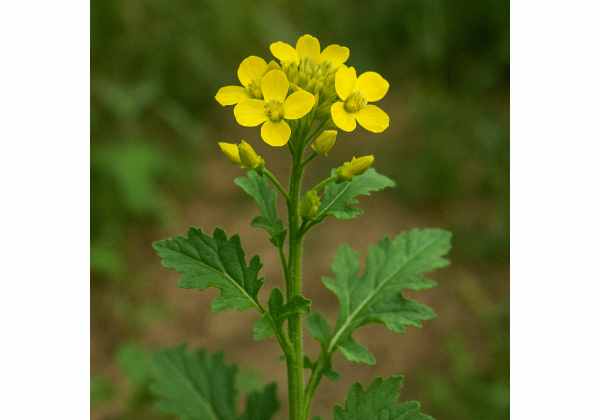
The plant itself is an annual herb with yellow flowers and small round seeds. The leaves can be eaten while young, but in health writing the main focus is almost always the seed. The seed is where most of the concentrated pungent chemistry, storage proteins, and oil fraction sit. That is also why the seed is both more useful and more potentially irritating than the fresh plant.
White mustard stands out in three ways. First, it has a clear culinary identity, which gives it an everyday role that many medicinal herbs lack. Second, it has a traditional reputation as a warming stimulant, especially for digestion and external circulation. Third, it has real safety issues that are easy to underestimate. Because it is common in food, people sometimes assume it is automatically mild in all forms. That is not true. A culinary seed can still be allergenic, irritating, or too strong when concentrated or misused.
It is also easy to confuse white mustard with nearby peppery herbs, especially when reading older texts. A sharp brassica-style seed is not automatically interchangeable with garden cress or with more familiar leafy cruciferous plants. White mustard is specifically a seed herb with a pungent, warming profile. That makes it more stimulating than soothing and more likely to be used in small, purposeful amounts than in large medicinal doses.
That basic identity shapes the rest of the article. White mustard is not a gentle demulcent or a modern standardized supplement. It is a warming, sulfur-rich seed with traditional uses, interesting phytochemistry, and very clear safety boundaries.
Key ingredients and how the seed works
White mustard’s effects come from a layered chemistry rather than a single “magic” compound. The best-known constituent is sinalbin, the chief glucosinolate in Sinapis alba. Glucosinolates are sulfur-containing plant compounds common in the mustard family. When the seed is crushed, moistened, or chewed, plant enzymes help break these compounds down into more reactive substances. In white mustard, that process contributes to its characteristic pungency and much of its biological activity.
Sinalbin is especially important because it helps explain why white mustard behaves differently from hotter mustard species. Its breakdown products are pungent and active, but typically less aggressively sharp than those of black mustard. That helps make white mustard more suitable for food use, yet still strong enough to stimulate taste, salivation, and local circulation.
The seed also contains sinapine and sinapic acid, compounds linked with antioxidant and antimicrobial interest. These are not unique to white mustard, but they add to the broader picture of a seed that is chemically active beyond flavor alone. White mustard also contains fixed oils, including fatty acids, plus tocopherols, phenolic compounds, mucilage, and a substantial protein fraction.
That protein fraction matters for two reasons. Nutritionally, it contributes to the seed’s dense composition. Clinically, it matters because some of these seed storage proteins are allergens. White mustard contains recognized allergenic proteins such as Sin a 1 and Sin a 2. This is one reason mustard allergy can be serious and why processing does not always solve the problem.
A practical way to understand white mustard is to divide its constituents by function:
- Glucosinolates and their breakdown products support pungency, local stimulation, and much of the seed’s traditional digestive and topical activity.
- Phenolic compounds and tocopherols help explain antioxidant and antimicrobial interest.
- Mucilage adds a softer physical property to the seed, although it does not override the seed’s warming nature.
- Proteins and oil make the seed nutritionally dense, but also introduce allergy and tolerance issues.
One underappreciated point is that preparation changes the chemistry. Whole seeds act differently from ground seeds. Dry mustard powder acts differently from a prepared paste. A seed swallowed whole may pass with relatively mild local action, while a crushed, wetted seed can become much more active. This is why traditional mustard plasters and poultices can work strongly on the skin and also why they can go too far.
Readers who know the broader Brassica family will recognize similar themes in sulfur-rich seed chemistry seen in broccoli seed compounds, though the exact balance of glucosinolates and practical uses differs. White mustard is less famous than some of its relatives, but chemically it belongs to the same family of pungent, defense-oriented plants whose activity becomes stronger when the tissue is broken.
In everyday terms, white mustard works by being sharp, stimulating, and reactive. That is the source of both its medicinal promise and its risks.
White mustard health benefits and medicinal properties
The most realistic way to talk about white mustard benefits is to separate traditional plausibility from strong clinical proof. White mustard does have meaningful medicinal properties, but they are not equally supported. Some are long-standing and sensible. Others are interesting but still early. The strongest claims should remain modest.
Its most established traditional benefit is digestive stimulation. The seed’s pungent nature encourages salivation, livens up taste perception, and may gently stimulate gastric and digestive secretions in some people. That is why mustard has often been used with heavy foods and why small amounts can make a bland meal feel easier to digest. This effect is similar in spirit, though not in chemistry, to the warming digestive role seen in ginger-based digestive support.
A second major property is counterirritant and warming action. Applied externally in diluted preparations, white mustard has been used to bring blood flow toward the skin surface, warm a cold area, and create a sensation of relief in muscular or congestive complaints. Historically, this is where mustard plasters became famous. The same effect that makes them feel active is also what makes them capable of causing redness and burns if left on too long.
A third likely property is mild antimicrobial activity. Laboratory studies support antimicrobial effects from mustard-derived compounds against selected bacteria and fungi. This helps explain why mustard has long had a reputation for preserving food and why modern interest has extended into oral care and topical applications. Still, antimicrobial activity in the lab does not mean white mustard should replace standard treatment for infection.
There is also anti-inflammatory and antioxidant potential. Reviews of mustard chemistry suggest that glucosinolate-derived metabolites, flavonoids, and tocopherols may help modulate oxidative stress and inflammatory pathways. This is scientifically interesting, but for white mustard it is still better described as supportive potential than as a proven therapeutic effect.
One of the more unusual emerging areas is oral and dental use. Recent research has explored white-mustard-derived products in toothpaste and oral formulations. That is not the same as chewing seeds at home, but it does suggest that some constituents may have practical value in reducing plaque-related or microbial activity when carefully formulated.
The best benefit summary looks like this:
- It can act as a warming digestive stimulant in small amounts.
- It has traditional external uses for circulation, chest congestion, and muscular discomfort.
- Its seed chemistry shows antimicrobial, antioxidant, and anti-inflammatory promise.
- It has emerging niche applications in oral care and phytotherapeutic products.
The least defensible claims are the ones that oversell it. White mustard is not a proven cure for arthritis, infection, asthma, or metabolic disease. It is also not a reason to use harsh home plasters without guidance. The seed is active, but activity is not the same thing as proof. In herbal writing, that distinction is what keeps a useful article honest.
Traditional uses and modern practical applications
White mustard has been used in practical ways for a very long time, which is part of why it remains interesting. It belongs to the class of herbs that people actually kept in kitchens and household cupboards, not just in specialized medical texts. Its traditional uses cluster around digestion, chest and muscle applications, and strong food seasoning.
Internally, white mustard has been used as a culinary stimulant and digestive aid. This usually meant using the seeds or powder in food rather than treating the herb as a concentrated medicine. The value was simple: it sharpened appetite, increased salivation, and helped cut through greasy or dense meals. That kind of use still makes sense today. A small amount in dressings, sauces, pickles, or warming dishes is the most natural way to benefit from white mustard.
Externally, the classic traditional form is the mustard plaster or poultice. These preparations were used on the chest, back, or limbs to create warmth, loosen a feeling of congestion, and stimulate surface circulation. In older domestic medicine, mustard preparations were often used for colds, chest tightness, joint discomfort, or sore muscles. In principle, this makes sense because pungent mustard compounds activate warming sensory pathways in the skin. In practice, however, traditional effectiveness came with a narrow safety margin.
Modern use tends to separate into three lanes:
- Culinary use, where white mustard is a seed spice and condiment ingredient.
- Topical tradition, where diluted mustard preparations are used very cautiously, if at all.
- Specialized phytotherapy research, where extracts are explored for antimicrobial, oral, and anti-inflammatory applications.
One of the most sensible modern uses is still food. White mustard fits well into homemade mustards, vinaigrettes, vegetable dishes, legumes, and pickles. It can also be used as a small functional spice in robust meals. That food role is far easier to justify than self-prescribed medicinal dosing.
Topical use is more controversial. Traditional warming applications have logic behind them, and the mechanism has parallels with other pungent rubefacients. But the risks are real. Anyone drawn to these effects should remember that gentler warming options such as warming pepper preparations are often easier to dose and easier to discontinue safely.
A modern herbal reader should also note the difference between folk use and evidence-based translation. Just because mustard was once placed on the chest does not mean every modern chest symptom should be treated with a mustard plaster. The same applies to joint pain and digestive complaints. Traditional use can guide interest, but it does not replace diagnosis, especially when the herb involved is as strong and irritating as mustard.
The most durable lesson from white mustard’s traditional applications is that the seed works best in small, deliberate roles. As a condiment, it is practical. As a research subject, it is promising. As a forceful home remedy, it requires much more caution than many people expect.
Dosage preparation and best ways to use it
Dosage is one of the most important parts of the white mustard conversation because it is where tradition and safety have to meet. The first thing to say clearly is that there is no modern, well-standardized medicinal oral dose for white mustard seed. Research is too mixed, products are too variable, and the seed’s safety profile is too dependent on preparation and individual tolerance for a simple universal number.
That said, food-level use is much easier to discuss. For culinary purposes, a modest amount of about 1 to 3 g of ground seed per serving, roughly 1/2 to 1 teaspoon, is a sensible range for most adults who tolerate mustard well. Whole seeds may be used similarly in pickling, dressings, or cooking, though they are often less immediately active than crushed or moistened seed.
Preparation changes strength:
- Whole seeds are the mildest and most food-like.
- Freshly crushed or ground seeds are more active because the chemistry is released more readily.
- Prepared mustard paste is easier to dose in food but varies widely by recipe.
- Topical mixtures are the most caution-heavy form because contact time and dilution matter so much.
For people interested in internal use, the best starting point is food, not medicine. A small amount with meals is more defensible than taking spoonfuls of powder on an empty stomach. Food use also lowers the risk of gastrointestinal irritation and makes it easier to gauge tolerance. If the seed feels too hot, bitter, or irritating, that is useful feedback rather than something to push through.
Topical use requires even more restraint. Traditional mustard plasters were often kept brief, sometimes just several minutes, and removed at the first sign of intense burning. The goal was warmth and mild redness, not pain or blistering. Modern readers should not treat older household instructions as casual dosing guides, because sensitivity varies dramatically.
The best preparation guidance is practical:
- use white mustard primarily as a food or spice,
- start low and increase only if it feels comfortable,
- avoid concentrated self-treatment for serious symptoms,
- and do not improvise strong topical preparations on delicate skin.
There is also an important difference between seed use and oil use. Mustard oil products can have different fatty-acid profiles and different regulatory concerns than ground culinary seed. They should not be treated as interchangeable.
For gentler digestive support, many people find herbs such as fennel seed easier to tolerate. White mustard is better seen as a strong warming seed used in small amounts, not as a herb that invites escalation. In other words, success with white mustard usually comes from respect for its strength rather than enthusiasm for bigger doses.
Safety side effects and who should avoid it
White mustard is safe for many people in ordinary culinary amounts, but medicinal-style use has more important risks than the spice-rack familiarity suggests. The two biggest concerns are allergy and irritation. After that come issues of tolerance, excessive exposure, and unsuitable topical use.
Mustard allergy can be serious. White mustard contains recognized allergenic proteins, and reactions can range from mild oral symptoms to severe systemic reactions. Another problem is that mustard may appear as a hidden ingredient in sauces, condiments, seasonings, processed foods, and spice blends. For allergic individuals, even small exposures can matter. Heating and processing do not reliably remove that risk.
The second major issue is local irritation. Internally, too much white mustard can irritate the mouth, throat, stomach, or upper digestive tract. People with gastritis, reflux, active ulcers, or a very sensitive stomach may find it uncomfortable even when others tolerate it well. Externally, the risk is more obvious. Mustard poultices and pastes can cause redness, pain, blistering, and even burn-like skin injury if they are too concentrated or left on too long.
There are also a few broader cautions. Mustard-family glucosinolate metabolites can interact with iodine handling and thyroid physiology when exposure is excessive, especially in settings of poor iodine status. This is not a reason for most adults to fear normal culinary use, but it is one more reason to avoid extreme dosing. Mustard-derived oils may also contribute erucic acid exposure, which is a separate regulatory and toxicological concern from ordinary small culinary seed use.
People who should be especially cautious include:
- Anyone with known mustard allergy
- People with asthma or multiple food allergies considering concentrated preparations
- People with reflux, gastritis, ulcers, or marked digestive sensitivity
- Children, especially for topical use
- Anyone with broken, inflamed, or very sensitive skin
- People trying to self-treat chest symptoms or pain with strong home plasters
Pregnancy and breastfeeding deserve a careful middle position. Normal food use is one thing. Concentrated medicinal or topical use is another. Because there is no strong dosing framework and because irritation can be significant, medicinal-style use is harder to justify.
The most common side effects are:
- burning or throat irritation,
- stomach upset,
- skin redness and discomfort,
- and allergic symptoms in susceptible people.
For respiratory or chest discomfort, gentler options such as peppermint-based respiratory support are often easier to use safely than traditional mustard plasters.
The core safety lesson is simple. White mustard is a potent seed, not a harmless household trick. In food it can be useful and enjoyable. In concentrated internal or topical forms, it deserves much more respect.
What the research actually supports
The research on white mustard is interesting, but it supports a narrower conclusion than many health articles imply. White mustard clearly contains active compounds, shows relevant antimicrobial and anti-inflammatory behavior in laboratory and preclinical work, and has some emerging applied research in areas such as oral care. What it does not yet have is a broad, standardized clinical evidence base for routine self-medication.
The strongest evidence supports white mustard as a biochemically active seed rather than as a proven stand-alone treatment. Its glucosinolates, phenolics, tocopherols, proteins, and oils make it scientifically credible. Its traditional uses as a warming stimulant, digestive spice, and topical counterirritant are also plausible when viewed through that chemistry.
Where the evidence becomes thinner is clinical translation. Human studies remain limited, and the preparation methods vary widely. One formulation may involve raw seed, another a powder, another a specialized extract, and another a dental product. Those are not interchangeable. This lack of standardization is one of the main reasons strong dosage claims are not justified.
A particularly useful insight from the research is that white mustard may have niche value rather than universal value. In other words, it may be especially relevant in highly specific settings such as oral microbial control, external warming applications, or culinary stimulation, rather than as a broad internal remedy for many unrelated complaints. That is a more mature and helpful conclusion than calling it a miracle anti-inflammatory herb.
The research also adds an important corrective: white mustard’s risks are part of the evidence, not a footnote to it. Allergy, skin blistering, variable extract strength, and toxicological questions around some mustard-derived products all limit how casually this seed should be used. A strong herb is not automatically a better herb.
So what is the balanced conclusion?
- White mustard has real traditional value.
- Its chemistry supports digestive, warming, antimicrobial, and anti-inflammatory interest.
- Modern research is promising but uneven.
- The safest and most evidence-aligned use remains modest culinary use.
- Concentrated internal or topical use should be approached cautiously, not romantically.
That is actually a useful outcome. Not every herb needs to become a supplement to matter. White mustard earns respect as a purposeful seed with culinary strength, traditional medicinal logic, and enough modern science to justify careful interest. It simply has not yet earned the kind of certainty that would support aggressive dosing or broad therapeutic claims. For most readers, that honest middle ground is the most practical place to stand.
References
- Phytochemistry and Application of White Mustard (Sinapis alba) in Medicine and Dentistry-A Narrative Review 2026 (Review)
- Brassicaceae Mustards: Phytochemical Constituents, Pharmacological Effects, and Mechanisms of Action against Human Disease 2024 (Review)
- Glucosinolates and Omega-3 Fatty Acids from Mustard Seeds: Phytochemistry and Pharmacology 2022 (Review)
- Biologically Active Compounds in Mustard Seeds: A Toxicological Perspective 2021 (Review)
- Mustard – A priority food allergen 2024 (Government Safety Resource)
Disclaimer
This article is for educational purposes only and is not medical advice. White mustard can act as a strong culinary and traditional herbal seed, but it is not a substitute for diagnosis, individualized treatment, or emergency care. Seek professional guidance before using white mustard medicinally if you have food allergies, digestive disease, sensitive skin, asthma, thyroid concerns, or persistent chest or pain symptoms. Stop use immediately if irritation or allergic symptoms occur.
If this article helped you, please share it on Facebook, X, or another platform you prefer.