Willowherb, usually identified botanically as Epilobium angustifolium and also known as fireweed or rosebay willowherb, is a striking pink-flowered herb with a long history as a tea plant, folk remedy, and modern botanical ingredient. It grows widely across temperate regions and is especially valued for its tannins, flavonoids, phenolic acids, and the ellagitannin oenothein B, a compound often treated as one of its key bioactive markers.
Its reputation today rests on three main themes. First, willowherb has a rich phytochemical profile with clear antioxidant and anti-inflammatory potential in laboratory studies. Second, it has been used traditionally for skin irritation, digestive complaints, and urinary discomfort. Third, modern commercial interest has focused strongly on male urinary symptoms and prostate support, although the human evidence remains much thinner than the marketing sometimes suggests.
That makes willowherb a genuinely interesting herb, but not a simple one. A useful guide has to separate traditional use from modern clinical proof, explain what its main compounds actually do, and show where willowherb may fit into a thoughtful routine and where caution is still warranted.
Essential Insights
- Willowherb is rich in ellagitannins, flavonoids, and phenolic acids that help explain its antioxidant and anti-inflammatory profile.
- The strongest modern interest is in urinary comfort and benign prostatic hyperplasia support, but human evidence is still limited.
- A traditional tea dose is about 1.5 to 2 g of herb in 250 mL of boiling water, taken twice daily.
- People who are pregnant, breastfeeding, under 18, or managing persistent urinary symptoms without medical evaluation should avoid self-treatment.
Table of Contents
- What Willowherb Is and Why It Draws Medicinal Interest
- Key Ingredients and Medicinal Properties
- Willowherb Health Benefits and What Research Actually Shows
- Traditional Uses Tea Forms and Practical Applications
- Dosage Timing and Duration
- Willowherb Safety Side Effects and Interactions
- When Willowherb Makes Sense and When Other Options May Fit Better
What Willowherb Is and Why It Draws Medicinal Interest
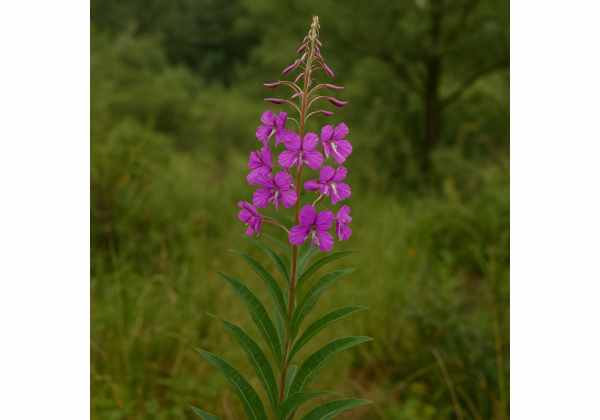
Willowherb is a tall perennial herb in the evening primrose family, Onagraceae. It is best known under several names: willowherb, fireweed, rosebay willowherb, and, in some taxonomic systems, Chamerion angustifolium. Its upright stems, narrow leaves, and vivid pink-purple flower spikes make it easy to recognize in summer. It is especially common in disturbed ground, forest clearings, roadsides, and areas recovering from fire, which explains the name “fireweed.”
The plant’s popularity as a medicinal herb comes from a mix of old and new influences. In Northern and Eastern Europe it has long been consumed as a tea plant and used in various household remedies. In modern herbal commerce, it is often discussed for urinary comfort, prostate support, skin irritation, and antioxidant value. That broad appeal has helped turn willowherb from a traditional country plant into a modern ingredient in supplements, teas, and skincare products.
Still, its story is more complicated than many supplement labels imply. Willowherb is widely sold for benign prostatic hyperplasia support and related urinary symptoms, yet historians of herbal medicine have pointed out that the strongest prostate-focused reputation may be more recent and less historically consistent than people assume. The older ethnobotanical record appears firmer for wounds, skin disorders, abdominal complaints, pain, and everyday tea use than for a long, clear, ancient tradition centered specifically on prostate enlargement.
That does not make the modern urinary focus false. It simply means the plant’s current popularity blends traditional use, modern reinterpretation, and newer pharmacological research. The European herbal framework has also recognized willowherb preparations as traditional herbal medicines for the relief of lower urinary tract symptoms related to benign prostatic hyperplasia after serious conditions have been excluded by a doctor. That status is important, but it is still “traditional use,” not the same as strong, modern clinical consensus.
In practical terms, willowherb is most useful to think of as a polyphenol-rich tea herb with a real history, promising pharmacology, and a small but meaningful clinical footprint. That puts it somewhere between a folk remedy and a research-backed nutraceutical. It is more defined than many obscure herbs, but less proven than a major clinical botanical.
For readers familiar with herbs chosen for urinary support, willowherb often gets mentioned beside options such as saw palmetto for prostate-focused support. That comparison is helpful because it highlights willowherb’s modern position: it is relevant, but it still depends more on traditional use and early clinical evidence than on large, decisive trials.
Key Ingredients and Medicinal Properties
Willowherb’s medicinal reputation rests largely on its polyphenol chemistry. The herb is especially rich in ellagitannins, flavonoids, and phenolic acids, and this combination explains why it repeatedly shows antioxidant, anti-inflammatory, antimicrobial, and antiproliferative effects in laboratory studies. More than 250 secondary metabolites have been reported from Epilobium angustifolium, which is impressive for a single tea herb and helps explain why it appears in both medicinal and cosmetic research.
The best-known compound is oenothein B, a macrocyclic ellagitannin that is often treated as a marker constituent for willowherb extracts. In many discussions, oenothein B functions almost like willowherb’s signature compound. That is useful, but it should not make readers forget that the plant works as a complex mixture. Oenothein B is important, yet willowherb’s activity almost certainly reflects the combined influence of tannins, flavonoids, phenolic acids, and related compounds rather than one isolated molecule alone.
Among the other relevant constituents are quercetin derivatives, kaempferol derivatives, gallic acid, ellagic acid, chlorogenic-type acids, and various phenolic compounds that contribute to radical-scavenging and enzyme-modulating activity. This chemistry supports several plausible medicinal properties:
- Antioxidant activity
- Anti-inflammatory action
- Antimicrobial potential
- Mild astringency
- Possible antiandrogen-related and prostate-relevant effects
- Topical soothing potential for irritated skin
These properties are not all equally proven in people, but they are chemically credible. The tannin-rich profile helps explain the plant’s traditional use in teas and topical preparations. Astringent herbs often end up in folk medicine for irritated tissues, mild diarrhea, skin discomfort, and “tightening” or calming effects. Willowherb fits that pattern well.
Its prostate-related reputation is especially tied to anti-inflammatory mechanisms and to research suggesting that willowherb extracts and oenothein B may influence pathways relevant to prostate-cell behavior, enzyme activity, and irritation-related symptoms. That does not mean the herb is a prostate cure. It means the chemistry gives a plausible reason for why the urinary and prostate discussion exists at all.
Another area of growing interest is topical use. Willowherb’s polyphenols, including tannins and phenolic acids, make it attractive for skincare, especially where soothing, anti-inflammatory, and antioxidant support are desired. This has helped the plant move into cosmetic formulations rather than remaining only a tea herb.
A useful comparison here is green tea. Both plants are polyphenol-rich, antioxidant-focused, and often marketed in wellness and skincare settings. The difference is that green tea has a much broader human evidence base, while willowherb remains more specialized and more dependent on traditional use plus targeted studies. That distinction helps keep expectations realistic.
So the key medicinal message is this: willowherb is a tannin-rich, oenothein B–focused herb whose chemistry clearly supports interest. Its ingredients are substantial enough to justify research and traditional use, but they do not automatically turn every popular claim into a proven therapeutic fact.
Willowherb Health Benefits and What Research Actually Shows
Willowherb is often advertised as if its main uses are already settled. In reality, the evidence is mixed by category. Some benefits are well supported at the laboratory level, some have moderate traditional support, and only a few have meaningful human data.
The strongest modern clinical interest is urinary support, especially lower urinary tract symptoms related to benign prostatic hyperplasia. A randomized, double-blind, placebo-controlled trial used a 500 mg daily willowherb extract with a high content of oenothein B for six months in men with benign prostatic hyperplasia. The results suggested improvement in post-void residual volume, nocturia, and symptom-related quality of life. That is not trivial. It gives willowherb more human evidence than many herbs discussed in the same category. At the same time, it is still one clinical trial, not a large body of replicated evidence.
The next strong area is anti-inflammatory and antioxidant potential. Here the laboratory and review literature are quite consistent. Willowherb extracts repeatedly show free-radical scavenging activity, enzyme-related anti-inflammatory effects, and polyphenol-rich profiles likely to support tissue protection. This is the kind of evidence that makes the herb attractive in skincare and supportive wellness products.
Antimicrobial activity is another promising area. Recent reviews and in vitro work indicate that Epilobium angustifolium extracts can inhibit a range of bacteria and some fungi, with gram-positive organisms often appearing more susceptible than gram-negative ones. A newer study on prostatic pathogens also found notable activity from willowherb extracts and oenothein B against bacteria relevant to prostatitis. These findings are scientifically meaningful, but they still belong to the “promising experimental evidence” category rather than the “go self-treat an infection” category.
Topical and skin-related potential also deserves attention. Traditional use plus modern review literature suggest that willowherb may be suitable for irritated skin, minor inflammatory complaints, and cosmetic use aimed at calming and protection. This is one of the areas where the older record and newer product development align fairly well.
The weaker point is the difference between possibility and proof. Many plant articles blur this line. Willowherb may indeed be useful for urinary symptoms, skin care, and antioxidant support, but the best-supported statements are still modest:
- It may help relieve lower urinary tract symptoms in selected adults.
- It has plausible anti-inflammatory and antioxidant value.
- It has notable in vitro antimicrobial activity.
- It may be useful in topical products aimed at irritated skin.
It is not yet fair to claim that willowherb definitively treats prostatitis, prevents prostate disease, cures skin disorders, or works as a broad-spectrum natural antibiotic.
This is where a comparison with calendula for topical soothing is useful. Calendula has a simpler public role: external skin support. Willowherb is more chemically versatile, but its practical uses are less straightforward because the most exciting claims outpace the evidence more easily. The safest reading is that willowherb is promising, partly proven, and not a miracle herb.
Traditional Uses Tea Forms and Practical Applications
Willowherb has been used in several practical forms, and understanding these helps keep the herb grounded. The classic preparation is tea made from the aerial parts. In many regions, dried willowherb has been brewed as a pleasant herbal drink, sometimes fermented to resemble darker teas. This tradition likely contributed as much to its survival in daily life as its medicinal reputation did. A plant that is easy to drink tends to remain visible in herbal culture.
Traditional use has not been completely uniform. Historical and ethnobotanical records describe application for wounds, skin disorders, burns, abdominal complaints, pain, and general soothing purposes. Some sources also mention stomach and urinary issues. That patchwork matters because it shows willowherb as a broad household herb rather than a narrowly specialized one. The modern emphasis on male urinary symptoms may be real and useful, but it is not the only way the plant has been valued.
Today, practical use generally falls into four groups:
- Herbal tea for urinary or digestive comfort
- Standardized extract supplements for prostate-related symptom support
- Topical or cosmetic products for skin calming
- Fermented tea-style products used more as functional beverages than as medicine
Tea remains the most natural entry point. It fits the herb’s traditional profile, keeps the dose moderate, and makes sense for people seeking gentle support rather than a concentrated extract. The taste is herbaceous and slightly astringent, with a softer feel than many intensely bitter herbs.
Extracts are more targeted and usually appeal to people looking for urinary or prostate support. These products often emphasize oenothein B content, which can be useful when trying to compare formulations. Still, extracts differ widely, and a product with a standardized marker is easier to evaluate than one sold under vague “fireweed complex” language.
Topical use is increasingly modern. Willowherb is now included in skincare ingredients intended for redness-prone, irritated, or inflamed skin. This is a sensible evolution because the plant’s anti-inflammatory and antioxidant profile fits cosmetic goals well, even when human dermatology data are still limited.
A practical limitation is that people sometimes reach for willowherb when a simpler herb might do. For example, someone wanting a calming tea for stomach upset might do just as well with chamomile, which has a much clearer home-use tradition. Willowherb becomes more attractive when the interest is specifically in urinary support, polyphenol-rich teas, or topical antioxidant use.
The most realistic modern application is this: willowherb is best suited to gentle, sustained use in tea or well-characterized extract form, especially when the goal is mild urinary comfort or skin-focused support. It is less convincing as a dramatic quick-fix herb, and it should not replace evaluation of persistent urinary symptoms, bleeding, or pain.
Dosage Timing and Duration
Willowherb dosage depends strongly on the form. Tea and standardized extract are the two most useful ways to think about it, because those are also the forms with the clearest guidance.
For tea, the most concrete dosing reference comes from the European herbal monograph. It describes a traditional adult dose of 1.5 to 2.0 g of the comminuted herb in 250 mL of boiling water, taken as an infusion twice daily. This is a helpful anchor because it gives a realistic, non-exaggerated adult range. It also reflects how the plant has actually been used: as an herbal tea rather than as a mega-dose supplement.
For standardized extracts, the best known clinical figure comes from the benign prostatic hyperplasia trial, which used 500 mg daily of a chemically characterized Epilobium angustifolium extract rich in oenothein B for six months. That number is useful, but it should not be generalized to every product. Extracts can vary a lot in concentration, marker compounds, and manufacturing quality.
A practical way to think about willowherb dosage is:
- Tea use fits mild, traditional support.
- Standardized extract fits more targeted urinary or prostate-oriented use.
- Homemade use should stay moderate unless guided by a qualified practitioner.
- More is not automatically better, especially with tannin-rich herbs.
Timing is mostly about comfort and routine. Tea can be taken between meals or after meals. People with sensitive stomachs may prefer it after food, since tannin-rich herbs can feel drying or slightly irritating on an empty stomach. If using the herb for urinary comfort, dividing intake across the day makes more sense than taking a large single amount late at night.
Duration also matters. The monograph notes that long-term use is possible, but that statement belongs inside a medical framework where persistent symptoms are properly assessed. In plain terms, willowherb is not something to use casually for months while ignoring blood in the urine, painful urination, fever, spasms, or urinary retention. Those symptoms need medical evaluation.
This is also where people make common mistakes. Some start with strong extract doses because the herb is “natural.” Others assume that because tea is gentle, any symptom can be managed at home. Both approaches miss the point. Willowherb is likely best when used steadily and moderately, not aggressively.
For readers who mainly want a more established long-term botanical for urinary or prostate support, saw palmetto is often a more familiar evidence discussion. That does not mean willowherb is weak. It means its dosing is clearer in tea and one extract trial than across the supplement market as a whole.
So the dosing summary is straightforward: 1.5 to 2 g as tea twice daily is the clearest traditional adult range, while 500 mg daily of a standardized extract has been studied clinically, but only in a specific formulation and setting.
Willowherb Safety Side Effects and Interactions
Willowherb is generally viewed as a low-to-moderate risk herb when used appropriately, especially as tea. That said, safety should not be reduced to “none known, therefore universally safe.” The herb’s tannin-rich chemistry, its urinary-use context, and the limited nature of human trials all call for a more thoughtful view.
The European traditional monograph lists hypersensitivity as a contraindication and notes that no specific interactions are reported. It also states that no relevant use in children and adolescents under 18 years has been established, and that pregnancy and lactation use is not applicable to the recognized indication. These points are more cautious than dramatic, but they matter because they set the baseline for responsible self-use.
The most likely side effects are mild and non-specific. They may include:
- Stomach discomfort
- Nausea in sensitive users
- Dry or puckering mouthfeel from tannins
- Mild digestive slowing or irritation in people sensitive to astringent herbs
These are not universal, but they are believable for a tannin-rich infusion or extract. People with very sensitive stomachs often do better starting with tea rather than jumping straight to concentrated capsules.
The more important safety issue is symptom masking. Willowherb is often used for lower urinary tract symptoms, but frequent urination, weak flow, pain, blood in the urine, fever, or urinary retention are not problems to self-manage indefinitely. Those symptoms may reflect infection, prostate enlargement, stones, or more serious disease. This is why the traditional regulatory position explicitly says that serious conditions should be excluded by a doctor before using it for benign prostatic hyperplasia-related discomfort.
Interaction data are limited, so caution is sensible with:
- Multiple urinary or prostate supplements used together
- Drugs where dehydration or urinary retention would complicate care
- Complex medication schedules in older adults
- Long-term unsupervised use alongside chronic urinary symptoms
Another safety point is that “none reported” is not the same as “none possible.” It often means the herb has not been studied deeply enough to map out a full interaction profile. That is especially true with botanicals sold in mixed formulations.
Topical use is generally likely to be gentler than oral use, but even there, people with sensitive skin can react to any plant extract. Patch testing is still wise for new topical products.
If the user’s goal is purely topical soothing, a simpler product such as witch hazel may be easier to use predictably. Willowherb’s strength is not extreme potency. It is its mix of polyphenol richness, tolerable tea use, and targeted modern relevance. That same subtlety means it works best under realistic expectations, not as a substitute for medical evaluation or broad drug-like confidence.
When Willowherb Makes Sense and When Other Options May Fit Better
Willowherb makes the most sense in three situations. First, when someone wants a tannin-rich herbal tea with a traditional profile for mild urinary or general soothing support. Second, when a person has already had lower urinary tract symptoms medically assessed and wants to discuss a traditional or adjunctive herb with a clinician. Third, when the goal is topical antioxidant and anti-inflammatory support in a skin-focused product.
That is a respectable range. It gives willowherb a real place in modern herbal practice, especially because it is not simply a folk herb with no research at all. Its chemistry is strong, its clinical signal for benign prostatic hyperplasia is real, and its traditional use is broad enough to be plausible.
At the same time, it is not the best fit for every goal. If the main need is simple digestive comfort or a gentle bedtime tea, willowherb may be more specialized than necessary. If the goal is a strongly evidence-backed urinary herb, the reader may want to compare it with more familiar options. If the hope is to self-treat persistent urinary symptoms without medical evaluation, willowherb is not appropriate at all.
It also may not be the best choice for people who dislike astringent herbs. Its tannin-rich character can feel drying or slightly rough compared with softer teas. That alone can influence adherence more than many people expect.
For topical skin use, willowherb makes sense when the interest is in plant-based anti-inflammatory support and cosmetic elegance. It makes less sense when the issue is a significant skin infection, persistent rash, or wound that needs real medical assessment.
The bigger point is that willowherb works best when chosen for the right reasons. Good reasons include:
- Interest in polyphenol-rich herbal tea
- Mild urinary comfort after evaluation
- Adjunctive prostate-support discussions
- Topical support for redness-prone or irritated skin
- Preference for herbs with both tradition and emerging science
Less good reasons include:
- Hoping it will replace medical care
- Assuming all prostate claims are firmly proven
- Treating one promising trial as final evidence
- Using it because it sounds more obscure and therefore more powerful
For readers seeking broad anti-inflammatory botanical support without the urinary focus, something like green tea may actually fit daily life more smoothly. For soothing skin use, calendula may be simpler. For prostate-specific supplement routines, saw palmetto is often the more familiar discussion. Willowherb sits in the middle: more interesting than a plain tea, less definitive than the most established targeted herbs.
That is ultimately its strength. Willowherb is not a miracle, but it is also not empty folklore. It is a serious traditional herb with credible chemistry, selective modern evidence, and a useful place for people who value nuance over hype.
References
- European Union herbal monograph on Epilobium angustifolium L. and/or Epilobium parviflorum Schreb., herba 2015. (Monograph)
- Exploring the Phytochemical Profile and Biological Insights of Epilobium angustifolium L. Herb 2025.
- Efficacy of Willow Herb (Epilobium angustifolium L. and E. parviflorum Schreb.) Crude and Purified Extracts and Oenothein B Against Prostatic Pathogens 2025.
- Epilobium angustifolium L. extract with high content in oenothein B on benign prostatic hyperplasia: A monocentric, randomized, double-blind, placebo-controlled clinical trial 2021. (Randomized Controlled Trial)
- Inventing a herbal tradition: The complex roots of the current popularity of Epilobium angustifolium in Eastern Europe 2020.
Disclaimer
This article is for educational purposes only and does not replace medical advice, diagnosis, or treatment. Willowherb may be useful as a traditional herbal tea or adjunctive botanical, but it is not a substitute for proper evaluation of urinary symptoms, prostate enlargement, infection, or skin disease. Seek medical advice promptly if you have blood in the urine, painful urination, fever, urinary retention, or persistent pelvic symptoms. If you are pregnant, breastfeeding, under 18, or take prescription medicines, speak with a qualified healthcare professional before using willowherb regularly.
If this article helped you, please share it on Facebook, X, or another platform you prefer so more readers can approach willowherb with better context, better evidence, and safer expectations.