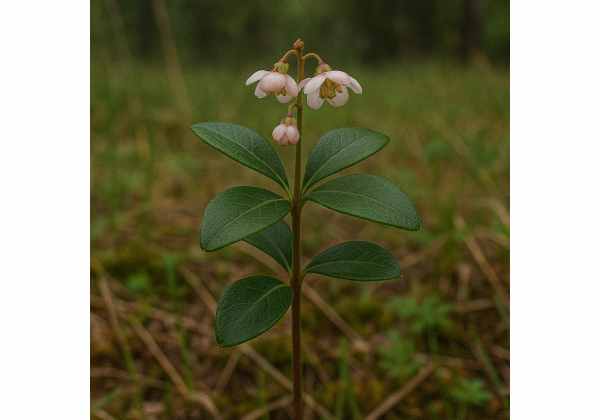
Wintergreen, Chimaphila umbellata, is a small evergreen woodland herb better known in traditional North American herbalism as pipsissewa or prince’s pine. Although the common name “wintergreen” can be confusing, this plant is not the same as true wintergreen used for strongly aromatic oil. Instead, Chimaphila umbellata has its own long history as a urinary herb, a topical plant for irritated skin, and a traditional remedy for lingering inflammatory complaints, especially those involving the bladder, kidneys, and joints.
Its appeal comes from a combination of tradition and chemistry. The leaves contain distinctive compounds such as chimaphilin, methyl salicylate, isohomoarbutin, quercetin, and ursolic acid, along with a wider mix of phenolics, sterols, and triterpenoids. These help explain why the herb has attracted interest for antimicrobial, antioxidant, and anti-inflammatory activity in laboratory studies. At the same time, modern human evidence remains limited, and the herb is best approached with more caution than enthusiasm. This guide explains what wintergreen is, what it may help with, how it has been used, and why quality, dosage, and safety deserve careful attention.
Top Highlights
- Wintergreen is best known as a traditional herb for mild urinary complaints and old-fashioned bladder support.
- Its strongest modern evidence is preclinical, especially for antioxidant, antimicrobial, and anti-inflammatory activity.
- Historical infusions were often taken in about 30 to 120 mL per dose, but no standardized modern self-use dose exists.
- Avoid wintergreen during pregnancy, breastfeeding, and in children, and do not confuse it with true wintergreen oil products.
Table of Contents
- What Wintergreen Is and Why the Name Can Be Misleading
- Wintergreen Key Ingredients and Medicinal Properties
- Wintergreen Health Benefits and What the Evidence Really Suggests
- Traditional Uses and Practical Ways to Prepare It
- Wintergreen Dosage Timing and Duration
- Safety Side Effects and Who Should Avoid It
- Interactions Product Quality and When Medical Care Matters
What Wintergreen Is and Why the Name Can Be Misleading
Chimaphila umbellata is a low, evergreen woodland herb in the Ericaceae family. It grows close to the forest floor, with leathery dark green leaves arranged in whorls and nodding flowers that open in small umbels. It is found across cool temperate parts of North America, Europe, and Asia, especially in dry to moderately moist coniferous or mixed forests. It spreads slowly, depends on fungal relationships in the soil, and is not a carefree garden herb that can be harvested casually.
The first thing most readers need to know is that this plant is often called wintergreen, but it is not the same as true wintergreen, the plant usually associated with strong wintergreen flavoring and concentrated methyl salicylate oil. Chimaphila umbellata is more often called pipsissewa, prince’s pine, or umbellate wintergreen in the herbal literature. That distinction matters because the uses, safety profile, and preparation style are not identical. Confusing the two can lead to unrealistic expectations or unsafe assumptions.
Historically, pipsissewa earned a strong reputation in North American and European herbalism. It was used for chronic bladder irritation, gravelly urine, fluid retention, swollen lymph nodes, rheumatic pain, and certain skin sores. Older physicians also wrote about it for “white swelling,” glandular enlargement, and slow inflammatory states. Much of that language belongs to the nineteenth century, but the underlying pattern is still recognizable: Chimaphila umbellata was viewed as a urinary, alterative, and tissue-supportive herb rather than as a simple household tea.
That history remains relevant because many current descriptions of the plant still echo those older uses. Yet modern evidence is narrower. Laboratory studies suggest meaningful antimicrobial, antioxidant, and anti-inflammatory activity, and recent reviews show growing interest in its phytochemistry and biotechnology. Still, it is not a well-proven modern clinical herb in the way peppermint, senna, or cranberry are better characterized.
Another reason the plant deserves caution is its ecology. It grows slowly, forms relationships with fungi, and is considered a conservation concern in some places. Wild populations do not always recover well from careless harvesting. For that reason, responsible sourcing matters. A niche woodland herb should not be treated like a common mint that can be gathered freely without consequence.
A good way to frame Chimaphila umbellata is this:
- it is a traditional urinary and tissue-support herb
- it is chemically more complex than it first appears
- it is not the same as true wintergreen
- it is not a first-line self-treatment for serious urinary or inflammatory disease
- it is best approached with restraint, clear identification, and reliable sourcing
That combination of old reputation, modern phytochemical interest, and ecological sensitivity is exactly why wintergreen still attracts attention. It is an herb with genuine character, but one that asks to be used thoughtfully rather than casually.
Wintergreen Key Ingredients and Medicinal Properties
The chemistry of Chimaphila umbellata is one of the main reasons it continues to attract scientific interest. A recent review describes the plant as especially rich in phenolics, sterols, and triterpenoids, while also highlighting isohomoarbutin, methyl salicylate, and the plant’s hallmark compound, chimaphilin. Figures and phytochemical summaries from the same review also point to quercetin, kaempferol, daucosterol, beta-sitosterol, ursolic acid, and 5-hydroxymethylfurfural among its better-known constituents. This is a much broader profile than people expect from a low evergreen forest herb.
Chimaphilin deserves special mention because it is the characteristic compound most closely associated with the plant. It is a naphthoquinone and appears to account for much of the herb’s laboratory antifungal and antioxidant activity. It is also relevant to safety, because quinone-type compounds can be biologically active in ways that are beneficial at one level and irritating or sensitizing at another.
Methyl salicylate is another key constituent. It helps explain the plant’s wintergreen-like scent and some of its traditional link to external pain and inflammation remedies. Still, Chimaphila umbellata is not simply a woodland source of salicylate. The herb’s actions seem to come from a broader network of compounds rather than one dominant ingredient alone.
The plant’s medicinal properties can be understood in five main areas.
First, wintergreen appears to have antimicrobial and antifungal potential. The best-known evidence comes from studies identifying chimaphilin as a principal antifungal component and showing activity against selected fungal strains. This aligns with the herb’s older use on skin sores and chronic irritated tissues, though it should not be mistaken for a substitute for modern anti-infective care.
Second, it has antioxidant activity. Extracts show radical-scavenging behavior, and the plant’s phenolic compounds likely contribute significantly here. Antioxidant findings are not proof of broad clinical benefit, but they make the traditional tissue-support story more plausible.
Third, the herb may have anti-inflammatory value. Wintergreen has long been used in traditions related to urinary irritation, joint complaints, and swollen tissues. Its flavonoids, triterpenoids, and salicylate-related compounds give that history a reasonable biochemical backdrop.
Fourth, some traditions treat it as a mild urinary tonic or diuretic. Modern direct clinical evidence is weak, but the pattern is consistent across older sources and newer experimental interest.
Fifth, there is evidence of more specialized activity, such as inhibition of osteoclast-related signaling from a newly identified naphthalene glycoside. That does not make the herb a bone remedy in ordinary practice, but it shows the chemistry has more depth than simple folk reputation suggests.
Taken together, the medicinal profile of Chimaphila umbellata looks like this:
- antimicrobial and antifungal potential
- antioxidant activity
- possible anti-inflammatory support
- traditional urinary tract affinity
- some tissue-support and topical relevance
If a reader mainly wants a clearer, more standardized urinary herb, uva ursi for urinary tract support usually has a more familiar place in herbal practice. Wintergreen is better understood as a more specialized forest herb whose chemistry is promising, but whose clinical use remains narrower and less certain.
Wintergreen Health Benefits and What the Evidence Really Suggests
The most commonly claimed health benefits of Chimaphila umbellata revolve around the urinary tract, inflammatory discomfort, and topical skin support. Those uses are deeply rooted in traditional practice, but the modern evidence is mixed. The strongest support comes from phytochemistry and laboratory studies, not from robust human trials. That means the fairest way to talk about benefits is with clear categories.
The first and most established traditional benefit area is urinary support. Pipsissewa was widely used for chronic bladder irritation, mucus in the urine, difficulty urinating, and lingering urinary discomfort. In older North American practice it was also associated with prostate complaints and “gravel,” a historical term that often referred to sediment or stone-like irritation. This does not mean wintergreen dissolves stones or treats urinary infections on its own. It means the herb has a long-standing reputation for urinary tract affinity. For people seeking a milder and more food-like herb in that space, corn silk for gentle urinary comfort is often easier to justify in self-care.
The second benefit area is anti-inflammatory support. Traditional use for rheumatism, glandular swelling, and slow inflammatory states fits with the herb’s phenolics, triterpenoids, salicylate content, and broader antioxidant activity. Some users may notice this more as a sense of tissue support than as dramatic pain relief.
The third possible benefit is antimicrobial and antifungal action. Laboratory work shows real promise here, especially from chimaphilin-rich extracts. This may help explain why the plant was sometimes used on chronic skin sores, blisters, or irritated tissues. Still, lab antimicrobial activity is not the same as a safe household antibiotic.
The fourth benefit area is topical support. Historical topical use of the leaves included skin complaints, sores, and blistered areas. That makes sense in the context of the plant’s chemistry, but it also comes with a major caution: the same compounds that make the plant active can also make it irritating in some people.
A fifth area is broader metabolic or specialized cellular activity. Recent studies and reviews mention antiproliferative and signaling-related effects in experimental systems. These findings are scientifically interesting, but they are not a practical reason for self-treatment. They belong to the research conversation, not to everyday home herbalism.
So what does the evidence really allow us to say?
- wintergreen has a credible traditional role in urinary tract support
- its extracts show meaningful antimicrobial, antioxidant, and anti-inflammatory activity in lab studies
- topical use has historical precedent, but not simple risk-free modern validation
- strong human clinical evidence remains limited
- it is better suited to careful, short-term support than to bold therapeutic claims
That final point matters. Chimaphila umbellata is not a fake herb, but it is also not a fully modernized one. It can still be useful in informed herbal practice, especially when the goal is cautious urinary or tissue support. What it does not support is casual use for persistent pelvic pain, blood in the urine, fever, kidney symptoms, or self-diagnosed chronic infection. Those situations need medical evaluation, not a niche woodland herb.
Traditional Uses and Practical Ways to Prepare It
Traditional preparation of Chimaphila umbellata centered mainly on the leaves, sometimes the whole above-ground herb, and less commonly the root or stem in more specialized systems. In North American herbal history, infusion, decoction, fluid extract, and syrup-style preparations all appear. In more recent commerce, it also shows up in tinctures, capsules, and highly diluted homeopathic products. Those are not equivalent forms, and it is important not to treat them as if they were interchangeable.
The simplest traditional preparation was infusion of the dried leaves. This made sense for urinary and alterative use because the herb is aromatic, resinous, and somewhat bitter, but not so woody that it always required long boiling. Stronger decoctions also appeared when practitioners wanted a more forceful effect. Older American herbal texts sometimes recommended infusion servings in the range of roughly 1 to 4 fluid ounces, which translates to about 30 to 120 mL per dose. Those figures belong to historical practice, not to validated modern self-care guidelines.
Topical uses also mattered. The leaves were applied externally in folk practice for sores, blisters, and skin irritation. In theory this fits the plant’s antimicrobial and antioxidant profile, but it is much less simple in real life because chimaphilin can also sensitize the skin.
Modern users are most likely to encounter wintergreen in these forms:
- Leaf infusion or tea
The most traditional and approachable option. Best suited to cautious internal use. - Tincture or liquid extract
More concentrated and more variable. This format is harder to standardize without skilled guidance. - Capsules or powder
Less traditional and sometimes harder to judge for quality. - Topical wash or diluted preparation
Historically plausible, but not automatically gentle. - Homeopathic mother tincture or pellets
These are common in some markets, yet they should not be confused with the crude herb itself.
A practical rule is to match the preparation to the goal. If someone is interested in old urinary uses, the leaf tea is the most coherent place to start conceptually. If someone is interested in the plant’s skin history, that does not mean a strong topical application is wise without caution. For minor skin-soothing goals, calendula for topical skin support is usually the more straightforward choice.
Another important issue is sourcing. Pipsissewa grows slowly, depends on woodland fungal relationships, and is not a plant that tolerates careless wild harvesting well. For most readers, ethically sourced dried leaf from a reputable herb supplier is more responsible than foraging.
The biggest mistake people make with Chimaphila umbellata is assuming that because it has a long history, any preparation method is acceptable. That is not true. Its history is real, but its best modern use still depends on form, quality, purpose, and restraint.
Wintergreen Dosage Timing and Duration
Dosage is the point where honesty matters most, because Chimaphila umbellata does not have a standardized modern clinical dose for self-treatment. What exists instead is a mixture of historical herbal practice, contemporary practitioner-style dosing, and commercial variability. That means any dosage advice should stay conservative and clearly framed.
The safest overall statement is this: there is no validated modern self-use dose that carries the same confidence as a formal monograph on a widely studied herb. Historical sources do offer some guidance. Traditional infusions were often taken in servings of about 30 to 120 mL per dose, sometimes up to three times daily. Contemporary herbal practice also sometimes uses leaf infusions prepared at around 5 g dried leaf in 250 mL water. These numbers are useful as context, but they are not the same as a clinically established dose.
A practical and cautious way to translate that into modern use is:
- start with a mild leaf infusion rather than a strong decoction or concentrated tincture
- use one small serving rather than multiple large servings on the first day
- keep the trial brief
- stop early if irritation, stomach upset, or unusual symptoms appear
Timing should depend on the goal. For urinary discomfort or old-fashioned alterative use, people historically used the herb through the day rather than right before bed. That makes sense because a plant with mild urinary affinity can be inconvenient late in the evening. For topical use, timing matters less than dilution and skin tolerance.
Duration should also be short. Since wintergreen has only limited modern clinical support and contains biologically active compounds with some irritant potential, it is better treated as a short-course herb than as a daily tonic. A reasonable rule is to reassess after 3 to 7 days, and to avoid stretching self-directed internal use into an open-ended routine.
Two additional cautions matter here. First, homeopathic products labeled Chimaphila umbellata are not the same as the crude plant. Their dosing systems are separate and usually highly diluted. Second, concentrated tinctures and extracts can feel deceptively convenient, but they add uncertainty if the plant part, extraction ratio, and sourcing are unclear.
This is one reason a gentler herb may be preferable in many cases. If someone mainly wants a mild fluid-moving or urinary-supportive tea, dandelion for gentle fluid support is usually easier to dose and understand.
So although users often ask, “How much wintergreen should I take?”, the better question is, “Should I self-dose this herb at all?” In many situations the answer is only cautiously yes, and only in low-strength, short-term, leaf-based forms. More is not better here. Better is lower, shorter, and clearer.
Safety Side Effects and Who Should Avoid It
Wintergreen is not among the most dangerous herbs, but it is also not as simple or benign as its evergreen appearance suggests. The plant contains active quinones, salicylate-related compounds, and other constituents that can irritate or sensitize some users. That makes safety a real part of the conversation, not a routine disclaimer.
The clearest documented risk is contact sensitivity related to chimaphilin. A published dermatology study found that chimaphilin is a moderate contact sensitizer, which matters because folk medicine has often recommended Chimaphila leaves for topical use. In plain terms, a plant can have antimicrobial and skin-directed traditional uses while still being capable of causing dermatitis in some people. That paradox is not rare in herbal medicine.
Possible side effects from internal use include stomach upset, nausea, or general intolerance, especially when the herb is taken in strong or prolonged amounts. A recent review also notes traditional concerns around excessive or long-term use, mentioning symptoms such as ringing in the ears, confusion, vomiting, and seizures in secondary sources. Those reports are not the same as formal toxicology data, but they reinforce the need for caution rather than casual daily use.
The groups who should avoid wintergreen or use it only with qualified guidance include:
- pregnant people
- breastfeeding people
- children
- people with salicylate sensitivity
- people with chronic kidney disease or unexplained urinary symptoms
- people with recurrent bladder pain, fever, or blood in the urine
- people prone to contact dermatitis or plant allergies
Another key safety issue is confusion with true wintergreen products. Someone who sees “wintergreen” on a label may assume it behaves like flavoring herbs or topical sports rubs. Chimaphila umbellata is a different plant and should not be used with those assumptions in mind.
Topical safety deserves its own warning. Because the herb can sensitize the skin, it should not be casually applied to broken skin, eczema, ulcers, or large irritated areas without a careful patch test and strong reason. For people who mainly want a simple external astringent or soothing plant, witch hazel for topical astringent support is usually a more predictable place to begin.
The safest practical summary is this:
- leaf tea is the least complicated form
- strong extracts and long-term use deserve more caution
- topical use is not automatically safer than internal use
- unusual urinary or inflammatory symptoms should not be managed with this herb alone
Used conservatively and knowledgeably, wintergreen may still have a place in herbal tradition. Used carelessly, it can create confusion or irritation rather than benefit.
Interactions Product Quality and When Medical Care Matters
Formal interaction data for Chimaphila umbellata are limited, but that does not mean interaction risk is absent. It means the best approach is to think in terms of plausible overlap rather than a complete checklist.
The first concern is salicylate-like overlap. Because the plant contains methyl salicylate and related active chemistry, caution makes sense when it is combined with other strong topical rubefacients, salicylate-sensitive contexts, or products aimed at inflammation and pain. The second concern is the urinary system. A herb traditionally used for bladder irritation, fluid retention, and urinary complaints should not be layered casually onto prescription diuretics or used while serious urinary symptoms remain unexplained.
The third concern is multi-herb stacking. Wintergreen often appears in eclectic, naturopathic, or homeopathic traditions alongside other urinary and alterative herbs. That can make it hard to tell what is helping and what is irritating. If someone combines pipsissewa with multiple tinctures or tablets, the problem may become less about one herb’s action and more about too many overlapping unknowns.
Product quality is at least as important as interactions. Good-quality wintergreen products should clearly state:
- the Latin name Chimaphila umbellata
- the plant part used
- whether the product is crude herb, tincture, extract, or homeopathic preparation
- the extraction ratio or serving information when relevant
This is especially important because the herb’s common names are confusing. “Wintergreen” may refer to several plants in casual commerce, and homeopathic Chimaphila umbellata products are not equivalent to leaf tea or tincture made from the herb itself.
Another quality issue is sustainability. Pipsissewa is a slow-growing woodland species with a reputation for difficult cultivation and conservation concern in some areas. Poorly sourced product is not just a consumer problem. It can also be an ecological problem.
Medical care matters more than herbal experimentation when symptoms point beyond mild self-care. Seek prompt evaluation instead of reaching for wintergreen if you have:
- fever with urinary symptoms
- flank pain
- blood in the urine
- severe pelvic pain
- unexplained urinary retention
- worsening rash or blistering after topical use
- persistent joint swelling
- symptoms that do not improve within a short trial
This is where the herb’s historical prestige can mislead modern users. Pipsissewa was once respected for chronic and stubborn conditions, but modern evaluation is better than nineteenth-century guesswork. If the core issue is urinary irritation, inflammatory pain, or a skin flare, safer and better-studied options are often available first.
Wintergreen is best reserved for informed, limited use. It becomes least trustworthy when the product is vague, the symptoms are serious, or the user is trying to force a niche herb into a job that belongs to proper medical care.
References
- Chimaphila umbellata; a biotechnological perspective on the coming-of-age prince’s pine 2023 (Review)
- Study of phenolic compounds of umbellate wintergreen herb and their influence on biochemical indicators of blood and urine in the rat model of chronic kidney disease 2024
- Chimaphila umbellata extract exerts anti-proliferative effect on human breast cancer cells via RIP1K/RIP3K-mediated necroptosis 2022
- Antifungal and antioxidant activities of the phytomedicine pipsissewa, Chimaphila umbellata 2008
- The sensitizing capacity of chimaphilin, a naturally-occurring quinone 1988
Disclaimer
This article is for educational purposes only and is not medical advice. Wintergreen, or Chimaphila umbellata, is a traditional herbal plant with limited modern human clinical evidence. It should not be used to diagnose, treat, or delay care for urinary infections, kidney pain, prostate symptoms, chronic inflammatory disease, or serious skin conditions. Speak with a qualified healthcare professional before using this herb if you are pregnant, breastfeeding, taking prescription medicines, managing a chronic illness, or considering it for a child.
If this article was helpful, please share it on Facebook, X, or another platform your audience prefers.