Zone 2 cardio is one of the most practical tools for weight loss because it is hard enough to improve fitness and burn calories, but easy enough to recover from and repeat consistently. That combination matters more than hype. If a workout style leaves you exhausted, sore, or constantly skipping sessions, it is not a great long-term fat-loss strategy.
For most people, Zone 2 means steady exercise at a controlled, conversational pace. It is often done with brisk walking, cycling, incline treadmill work, rowing, or the elliptical. The big value is not that it is a magic “fat-burning zone.” The value is that it helps you accumulate useful cardio volume without beating yourself up.
Table of Contents
- What Zone 2 Cardio Actually Means
- Zone 2 Heart Rate and How to Find It
- Why Zone 2 Helps With Weight Loss
- Best Zone 2 Workouts and Machines
- How Much Zone 2 to Do Per Week
- Common Zone 2 Mistakes
- Sample Zone 2 Workouts and Weekly Plans
What Zone 2 Cardio Actually Means
Zone 2 cardio usually refers to steady aerobic exercise performed at a moderate, sustainable intensity. In plain English, it is the kind of pace you can maintain for a while without feeling like you are fighting the workout. Your breathing is deeper than normal, but still controlled. You can usually speak in full sentences, even if you would not want to give a speech.
This is where confusion starts: not every coach, watch brand, lab, or five-zone system defines Zone 2 in exactly the same way. Some systems base it on maximum heart rate. Others use heart rate reserve, lactate thresholds, or ventilatory markers measured in a lab. That is why two people can wear different devices and see slightly different Zone 2 targets.
What matters most for everyday fat loss is not finding one perfect number. It is finding the right effort level. Zone 2 should feel clearly easier than a hard run, circuit, or interval session. It should also feel more purposeful than a slow wander around the house.
A good mental picture is this:
- Zone 1 feels very easy and more like recovery.
- Zone 2 feels steady, rhythmic, and sustainable.
- Zone 3 starts to feel “kind of hard” and less conversational.
- Higher zones feel difficult enough that you would not want to stay there long.
For weight loss, Zone 2 sits in a sweet spot. It lets you train long enough to build a decent calorie burn, improve aerobic fitness, and support daily energy expenditure without needing long recovery afterward. That makes it easier to repeat four or five days later instead of needing several days to feel normal again.
Another reason Zone 2 gets so much attention is that it is associated with strong aerobic adaptations. Over time, it can improve your ability to do more work at a lower effort, which is useful whether your main activity is walking, jogging, cycling, hiking, or general fitness. That improved efficiency does not make fat loss automatic, but it can make activity easier to sustain.
A helpful way to think about it is this: Zone 2 is not a shortcut around a calorie deficit. It is a highly repeatable way to support one.
Zone 2 Heart Rate and How to Find It
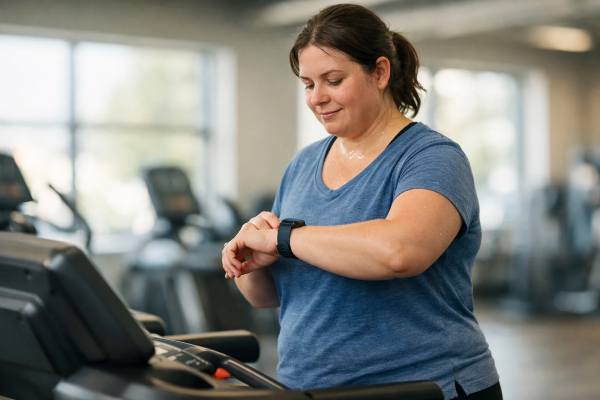
The best way to find Zone 2 is to use more than one cue. Heart rate helps, but so do breathing, pace, and effort. If your watch says you are in Zone 2 but you can barely talk, you are probably too high. If your heart rate is a little outside the target but the effort feels comfortably steady, you may still be in the right neighborhood.
For most people using a standard five-zone system, Zone 2 often lands around:
- roughly 70 to 80 percent of estimated maximum heart rate, or
- roughly 60 to 70 percent of heart rate reserve
Those are useful estimates, not exact truths.
A simple starting method is:
- Estimate your maximum heart rate with a rough formula, such as 220 minus age.
- Use 70 to 80 percent of that number as a first-pass range.
- Cross-check with the talk test and effort level.
- Adjust slightly if the pace feels too easy or too hard.
Here is a simple reference table.
| Method | What to look for | Why it helps | Watch out for |
|---|---|---|---|
| Talk test | You can speak in full sentences, but breathing is clearly elevated | Easy to use anywhere | If talking feels choppy, you are likely drifting too hard |
| RPE | About 3 to 4 out of 10 | Useful when heart rate is unreliable | Beginners often start too fast and misjudge effort |
| Heart rate | Usually around 70 to 80 percent of max heart rate in common five-zone systems | Gives a clear target range | Watch data, heat, stress, caffeine, and poor sleep can shift readings |
| Breathing pattern | Steady breathing you can control for a long time | Helps confirm the feel of the effort | Nasal breathing can be a cue, but it is not a rule |
A quick example: if you are 40, a rough estimated max heart rate is 180. A practical Zone 2 starting range might be around 126 to 144 beats per minute. But if 144 feels like a grind and you cannot speak comfortably, drop the pace. If 126 feels like almost nothing and you are strolling without much effort, increase it slightly.
This is one reason the idea of a perfect fat-burning heart rate zone gets oversold. Real people do not train in lab conditions. Hydration, temperature, medications, fitness level, and device settings all affect what you see.
If you take beta blockers, have a heart condition, are returning after a long break, or feel symptoms like chest pain, unusual shortness of breath, dizziness, or palpitations, heart-rate-based training should be discussed with a clinician before you rely on formulas.
The most useful goal is not perfect precision. It is finding an intensity you can hold for 30 to 60 minutes without turning a steady session into a disguised interval workout.
Why Zone 2 Helps With Weight Loss
Zone 2 helps with weight loss for practical reasons more than flashy ones.
First, it burns calories. The exact number depends on body size, fitness, pace, terrain, and duration, but steady moderate exercise can add meaningful weekly energy expenditure when done consistently. One session will not change much. Four or five sessions every week for months can.
Second, it is recoverable. That matters more than most people think. A training style that leaves you exhausted may look impressive on paper, but if it increases soreness, disrupts strength work, or makes you move less the rest of the day, it can backfire. Zone 2 usually lets you finish feeling worked but functional. That makes it easier to stay active outside the workout too.
Third, it is easy to progress. You can extend time, add a small incline, cover more distance at the same heart rate, or do one extra session per week. This gives you several ways to improve without forcing every workout to become harder and harder.
Fourth, it supports aerobic fitness. Better aerobic conditioning often means you can walk faster, climb stairs more easily, recover better between sets in the gym, and tolerate more weekly activity. That may not sound dramatic, but it is the kind of change that supports steady fat loss.
There is also a misunderstanding worth clearing up. People often hear that lower-intensity cardio uses a higher percentage of fat for fuel and assume that means it must be best for fat loss. That is too simplistic. Your body uses a mix of fuels across intensities, and body fat loss still depends mainly on your overall energy balance across the day and week. Zone 2 is useful not because it unlocks a secret metabolic trick, but because it is sustainable enough to do often.
This is also why the comparison with HIIT vs steady-state cardio is not as dramatic as social media makes it seem. High-intensity training can be effective, but it is not automatically superior for fat loss. For many people, Zone 2 is easier to stick with, easier on the joints, and easier to combine with strength training.
A final point: Zone 2 tends to be friendlier to beginners, people with higher body weight, and those rebuilding fitness after time off. It is often safer and more sustainable than jumping straight into repeated all-out efforts. If you want long-term results, that matters.
If your main goal is to make the scale move while still feeling human, the real advantage of Zone 2 is simple: it gives you a form of cardio you can keep showing up for. That often beats a theoretically “better” plan that you dread.
You can also improve the return on each session by choosing modalities that suit your body and preferences. Brisk walking and incline treadmill work are often excellent because they are accessible, scalable, and easy to recover from. If you are curious how activity types compare, calories burned by common exercises can help set realistic expectations.
Best Zone 2 Workouts and Machines
The best Zone 2 workout is the one you can do consistently with good form and low friction. You do not need a fancy machine, and you definitely do not need to run if running pushes you out of the target effort too quickly.
For many people, the top choices are:
- brisk outdoor walking
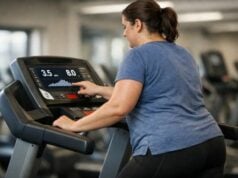
- incline treadmill walking
- stationary cycling
- elliptical sessions
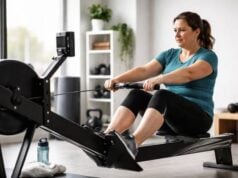
- rowing at a controlled pace
- hiking on moderate terrain
- easy jogging, if fitness and joints allow it
Walking is often underrated. It is accessible, joint-friendlier than running, and surprisingly effective when you control pace and duration. Slight inclines make it easier to reach Zone 2 without needing to jog, which is why treadmill walking is such a useful option for weight loss.
Cycling is another strong choice because it is low impact and easy to hold at a steady effort. If walking pace changes too much with traffic, hills, or weather, a bike gives tighter control over resistance and cadence. A structured exercise bike plan can make Zone 2 especially easy to follow indoors.
Here is how different options tend to fit different people:
Walking and incline treadmill
This is often best for beginners, people with higher body weight, and anyone who wants low complexity. The main mistake is keeping the pace so casual that the effort never really leaves recovery territory. Add speed or incline until your breathing is clearly elevated but sustainable.
Cycling
Great for people who prefer low-impact cardio and want easy control over resistance. The main mistake is pedaling too lightly and assuming the bike counts just because it is moving.
Elliptical
Useful if you want something smooth and joint-friendly. It can be easier than walking for some knees and hips. The main mistake is leaning too much on the handles and reducing the real workload.
Jogging
This works if you already have a base and can truly keep it easy. For many beginners, jogging quickly drifts into Zone 3 or higher. If that happens, alternate easy jogs with short walking breaks instead of forcing a pace that is too hard.
Rowing
Effective, but more technical. It can be an excellent Zone 2 option if you know how to row well. If technique breaks down, it becomes less efficient and more fatiguing than intended.
The simplest rule is this: choose a mode that lets you stay steady. Zone 2 is not the time to chase speed, compete with yesterday’s split, or turn every session into a test. It is controlled, repeatable work.
If you are not sure which option fits you, start with walking or cycling. They are usually the easiest to learn, the easiest to scale, and the least likely to make a beginner quit.
How Much Zone 2 to Do Per Week
How much Zone 2 you need depends on your fitness level, recovery, schedule, and total weight-loss plan. There is no universal magic number, but there are useful starting points.
A practical beginner target is 90 to 150 minutes per week, split across three to five sessions. That could mean:
- 30 minutes three times per week
- 25 minutes four times per week
- 45 to 50 minutes twice per week plus one shorter session
Once that feels manageable, many people do well with 150 to 240 minutes per week. That is enough volume to support fitness, calorie burn, and routine without turning cardio into a second job.
If fat loss is your main goal and recovery is good, some people gradually build toward 200 to 300 minutes per week. That does not mean you must do it all at once. In fact, shorter, repeatable sessions usually work better than occasional heroic ones.
A few guidelines help:
Start with what you can repeat
Three steady 30-minute sessions done every week beat one 90-minute session followed by four skipped days.
Increase one variable at a time
Add 5 to 10 minutes to one or two sessions before you add extra days. Or add a day before you lengthen every session. Small steps are easier to hold.
Keep your long session easy
One slightly longer Zone 2 session each week can be useful, but only if it still feels controlled. Long does not mean hard.
Pair cardio with lifting and daily movement
Zone 2 works best as part of a broader plan. It does not replace resistance training, nutrition, sleep, or daily steps. If you want a bigger picture for how much cardio per week makes sense, think of Zone 2 as your steady foundation rather than your whole strategy.
For many people, a smart weekly setup looks like:
- 3 to 4 Zone 2 sessions
- 2 to 3 strength sessions
- daily walking or step goals
- 1 to 2 lower-stress days as needed
This is where walking for weight loss becomes especially useful. Walking can function as formal Zone 2 cardio, easy extra movement, or active recovery depending on pace and terrain. That flexibility makes it easier to accumulate volume without feeling trapped by a rigid gym-only plan.
One more practical truth: more cardio is not always better. If you start feeling flat, overly hungry, unmotivated, or too fatigued to lift well, the answer may not be another session. It may be better programming, more food quality, or slightly less total training stress.
The right amount of Zone 2 is the amount that helps your weekly calorie deficit and fitness without making the rest of your plan harder to sustain.
Common Zone 2 Mistakes
Zone 2 sounds simple, which is exactly why people mess it up.
The most common mistake is going too hard. Many people start at a comfortable pace, feel good after 10 minutes, then gradually speed up until the session becomes upper Zone 3 or a threshold workout. It still feels productive, but it stops being the easy, repeatable effort that makes Zone 2 so useful.
The second mistake is going too easy. Some people treat any movement as Zone 2, even when the pace is barely above daily life. Gentle movement is still valuable, but if the goal is Zone 2 cardio, the workout should create a clear and sustained aerobic demand.
The third mistake is ignoring recovery cost. A treadmill incline that trashes your calves, a bike resistance that leaves your quads shot, or a jog that irritates your knees is not a great fit just because the heart rate looked right.
The fourth mistake is relying only on heart-rate formulas. Formulas are useful estimates, but they are not your physiology. Heat, caffeine, anxiety, dehydration, and poor sleep can all raise heart rate. Some medications can lower it. Always cross-check with breathing and perceived effort.
The fifth mistake is expecting Zone 2 alone to drive major fat loss without diet support. This is a big one. Zone 2 helps, but nutrition still does most of the heavy lifting in a weight-loss phase. If you are doing hours of cardio but eating enough to erase the deficit, progress will be slow or nonexistent.
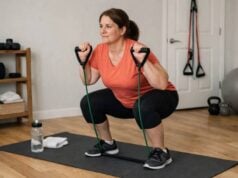
The sixth mistake is using Zone 2 to avoid strength training. Cardio helps burn calories and improve fitness, but strength training helps you preserve lean mass during fat loss. A balanced plan usually works better than endless steady cardio. If you are trying to fit both in, the question of cardio before or after weights matters less than staying consistent with both over time.
The seventh mistake is adding too much too quickly. Going from zero cardio to six days per week often creates fatigue, boredom, or joint irritation. Build gradually.
A simple checklist helps keep sessions honest:
- Warm up for 5 to 10 minutes.
- Settle into a steady pace, not a chase pace.
- Use heart rate as a guide, not a dictator.
- Stay conversational.
- Finish feeling worked, not wrecked.
- Leave enough energy for your next lift, walk, or day of life.
If your current routine is mostly cardio and very little resistance work, adding even a simple 3-day strength plan can make your overall fat-loss setup more balanced.
Zone 2 works best when you respect what it is. It is not a race, not a punishment, and not an excuse to coast. It is controlled aerobic work done at a level you can recover from and repeat.
Sample Zone 2 Workouts and Weekly Plans
You do not need complicated programming to make Zone 2 effective. The best setup is usually boring in the best possible way: steady, manageable, and easy to repeat.
Here are a few sample workouts.
Beginner walking session
- Warm up for 5 minutes at an easy pace.
- Walk briskly for 20 to 30 minutes at a conversational effort.
- Cool down for 5 minutes.
Incline treadmill session
- Warm up for 5 to 8 minutes flat.
- Raise incline gradually until your heart rate and breathing reach Zone 2.
- Hold for 25 to 40 minutes.
- Cool down for 5 minutes.
Stationary bike session
- Spin easily for 5 minutes.
- Increase resistance to a smooth, steady Zone 2 effort.
- Ride for 30 to 50 minutes.
- Finish with 5 easy minutes.
Jog-walk session for beginners
- Walk 5 minutes to warm up.
- Alternate 3 minutes of easy jogging with 2 minutes of brisk walking for 25 to 35 minutes total.
- Cool down with 5 minutes of walking.
And here are simple weekly templates.
| Level | Weekly setup | Total Zone 2 time | Notes |
|---|---|---|---|
| Starter | 3 sessions: 30, 30, 40 minutes | 100 minutes | Good for beginners or people returning after a layoff |
| Steady progress | 4 sessions: 35, 40, 40, 50 minutes | 165 minutes | Balanced option for active fat loss |
| Higher volume | 5 sessions: 30, 40, 45, 45, 60 minutes | 220 minutes | Best for people who recover well and also manage food intake |
A realistic combined week might look like this:
- Monday: strength training
- Tuesday: 35 minutes Zone 2
- Wednesday: strength training
- Thursday: 40 minutes Zone 2
- Friday: rest or easy walk
- Saturday: strength training
- Sunday: 50 to 60 minutes Zone 2
That structure works because it spreads stress across the week. It also leaves room for steps, work, family, and recovery.
If your schedule is tight, use shorter sessions instead of quitting the idea altogether. Three 25-minute sessions still add up. If your joints are cranky, choose cycling or elliptical work. If you get bored indoors, use outdoor walking routes, podcasts, or a measured hill route.
The long-term goal is simple: become the person who can do moderate cardio regularly without drama. That is where Zone 2 shines. It is accessible enough for beginners, flexible enough for busy people, and effective enough to support steady weight loss when paired with sensible eating and strength training.
References
- WHO guidelines on physical activity and sedentary behaviour 2020 (Guideline)
- Physical activity in the management of obesity in adults: A position statement from Exercise and Sport Science Australia 2021 (Position Statement)
- Aerobic Exercise and Weight Loss in Adults: A Systematic Review and Dose-Response Meta-Analysis 2024 (Systematic Review)
- Effect of high-intensity interval training compared to moderate-intensity continuous training on body composition and insulin sensitivity in overweight and obese adults: A systematic review and meta-analysis 2023 (Systematic Review)
- Contextualising Maximal Fat Oxidation During Exercise: Determinants and Normative Values 2018 (Review)
Disclaimer
This article is for general educational purposes only and is not a substitute for personal medical advice, diagnosis, or treatment. If you have heart disease, take heart-rate-affecting medication, are pregnant, or have symptoms such as chest pain, dizziness, or unusual shortness of breath during exercise, get individualized guidance before using heart-rate-based training.
If this article helped you, please share it on Facebook, X, or any platform you use with friends who want a simpler, more sustainable way to approach cardio for weight loss.