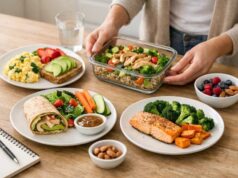
A 14-day weight loss meal plan works best when it does two things at once: creates a calorie deficit and makes your daily eating easier to repeat. Two weeks is long enough to build rhythm, reduce decision fatigue, and see how your hunger, energy, and consistency respond to a structured menu. It is also short enough to feel manageable if you are just getting started.
This guide lays out a realistic two-week plan built around high-protein meals, fiber-rich foods, practical meal prep, and flexible portions. You will find a full 14-day menu, a simple grocery strategy, and clear ways to adapt the plan without turning it into a crash diet or an all-or-nothing project.
Table of Contents
- Why a 14-day plan works
- How to set up the right deficit
- The meal planning formula for two weeks
- 14-day weight loss meal plan menu
- Grocery list and prep strategy
- How to adjust the plan for real life
- Common reasons two-week plans fail
- Who should personalize this plan
Why a 14-day plan works
A two-week meal plan sits in a useful middle ground. A single day of “eating healthy” proves very little, and a month-long plan can feel overwhelming before you even start. Fourteen days is often the sweet spot for building momentum without overcomplicating the process.
The biggest advantage is structure. When your meals are already mapped out, you make fewer tired, impulsive decisions. That matters because weight loss rarely gets derailed by one large mistake. More often, it slips through dozens of small choices: skipped breakfasts, oversized restaurant lunches, random snacking while cooking, or the nightly “I deserve this” takeout order. A short, repeatable plan removes much of that friction.
A 14-day plan also helps you notice patterns quickly. Within two weeks, most people can tell:
- whether protein intake is high enough to control hunger
- whether meal timing feels steady or chaotic
- whether certain meals keep them full longer than others
- whether the calorie target feels realistic
- whether weekends or evenings are the main challenge
That is useful feedback. A good meal plan is not just a menu. It is a diagnostic tool.
Another reason two weeks works well is that it encourages repetition without boredom. You can repeat staples such as Greek yogurt, eggs, chicken, rice, potatoes, fruit, and vegetables while changing flavors, sauces, or meal formats. That keeps shopping simpler and costs more predictable, but still gives enough variety to avoid burnout.
It also fits well with the broader reality of fat loss. Healthy weight loss is usually the result of consistent weeks, not dramatic days. If you can follow a sensible two-week plan, you can usually repeat it with small seasonal or personal changes. That is much more valuable than searching for a perfect plan you follow once and never revisit.
For people who are new to this, it often helps to understand the basics of a calorie deficit that reduces hunger and the difference between a sustainable approach and crash diets versus healthy weight loss. A 14-day plan should feel organized and intentional, not punishing.
How to set up the right deficit
The best 14-day weight loss meal plan is not built around a random calorie number. It is built around a realistic deficit. That means eating less than you burn, but not so little that your hunger, mood, training, or concentration collapse by day four.
For many adults, a moderate deficit is the most sustainable choice. In practical terms, that often means losing weight at a steady pace rather than trying to force fast results. A target that is too aggressive usually creates the exact problems people blame on “lack of willpower”: cravings, rebound eating, irritability, low energy, and poor adherence.
A simple setup for a two-week plan looks like this:
| Priority | What to aim for | Why it matters |
|---|---|---|
| Calorie target | Moderate deficit, not the lowest number you can tolerate | Improves adherence and reduces rebound eating |
| Protein | High enough to support fullness and lean mass | Helps hunger control during weight loss |
| Fiber | Vegetables, fruit, beans, oats, whole grains most days | Supports fullness and meal volume |
| Meal rhythm | Regular eating pattern you can repeat for 14 days | Reduces impulsive eating and decision fatigue |
| Food quality | Mostly minimally processed foods with some flexibility | Makes the plan sustainable in real life |
For the sample menu below, think in terms of a moderate calorie range rather than a rigid number. Many people will do well with meals that average roughly 1,400 to 1,800 calories per day depending on body size, activity, and goals. The exact target should match your own maintenance intake, not somebody else’s.
A strong macronutrient pattern for a weight-loss meal plan usually includes:
- a clear protein source at each meal
- enough carbohydrates to support energy and workouts
- enough fat to make meals satisfying
- enough fiber to keep portions feeling generous
That is why this article emphasizes food structure instead of strict perfection. If your meals are built around lean protein, produce, and measured portions of higher-calorie foods, you do not need a highly restrictive setup to make progress.
If you are unsure where to start, it helps to review how many calories to eat for weight loss and the general idea of protein, carb, and fat ratios for weight loss. The goal is to create a plan you can follow for more than a few motivated days.
The meal planning formula for two weeks
A two-week plan becomes much easier when you stop thinking in terms of 42 unique meals and start thinking in terms of a repeatable formula. The most practical setup uses a small group of reliable breakfasts, lunches, dinners, and snacks that can rotate without feeling repetitive.
A good formula for most people looks like this:
- Pick 2 to 3 breakfasts you genuinely enjoy.
- Pick 3 to 4 lunches that are fast or prep-friendly.
- Pick 4 to 5 dinners you can repeat across the two weeks.
- Keep 3 to 5 snack options ready for hunger between meals.
- Build each meal around protein first, then add produce, then carbs or fats in measured portions.
That approach does two important things. First, it makes grocery shopping easier because many ingredients repeat. Second, it lowers the mental load of trying to invent healthy meals every day.
Here is the structure this article follows:
- Breakfasts: high-protein and fairly simple, such as Greek yogurt bowls, eggs, overnight oats, smoothies, or cottage cheese bowls
- Lunches: packable or easy leftovers, such as chicken grain bowls, wraps, soups, tuna salads, or lentil-based meals
- Dinners: protein plus vegetables plus a controlled starch, with a few comfort-food style meals that still fit a deficit
- Snacks: mostly protein, fiber, fruit, or a combination of those
This matters because weight-loss meal plans often go wrong in predictable ways. Breakfast is too small, lunch is too carb-heavy, dinner carries all the calories, and snacks are built from foods that disappear quickly without helping fullness. A better formula fixes the architecture of the day.
It also helps to know what your meals are trying to do. Breakfast should limit the urge to graze by midmorning. Lunch should keep you from arriving at dinner starving. Dinner should feel satisfying enough that the night does not unravel. Snacks should bridge hunger, not become second desserts.
If you want to strengthen the structure even more, a guide on building a high-protein plate for weight loss is useful, and many readers also benefit from a more flexible framework like a macro-based meal plan for weight loss. The best two-week plan is not the most creative one. It is the one that quietly makes good choices easier to repeat.
14-day weight loss meal plan menu
This 14-day menu is built for simplicity, fullness, and repeatability. Daily calories will vary slightly, which is normal and often helpful. The point is a strong weekly pattern, not identical numbers every day.
Days 1 to 7
Day 1
Breakfast: Greek yogurt, oats, berries, chia seeds, and cinnamon.
Lunch: Chicken quinoa salad with greens, cucumber, tomatoes, and light vinaigrette.
Dinner: Baked salmon, roasted potatoes, and green beans.
Snack: Apple with string cheese.
Day 2
Breakfast: Two eggs, spinach, whole-grain toast, and cottage cheese.
Lunch: Turkey wrap with lettuce, tomato, mustard, and grapes.
Dinner: Turkey taco bowl with black beans, rice, salsa, lettuce, and avocado.
Snack: Greek yogurt with a few walnuts.
Day 3
Breakfast: Protein smoothie with berries, spinach, Greek yogurt or protein powder, and flax.
Lunch: Tuna and white bean salad with chopped vegetables and crackers.
Dinner: Chicken stir-fry with broccoli, peppers, snap peas, and rice.
Snack: Carrots with hummus.
Day 4
Breakfast: Overnight oats with yogurt, blueberries, and chia seeds.
Lunch: Leftover chicken stir-fry bowl.
Dinner: Turkey meatballs with marinara, zucchini, and a moderate serving of whole-wheat pasta.
Snack: Pear with cottage cheese.
Day 5
Breakfast: Veggie egg scramble with potatoes and salsa.
Lunch: Lentil soup with side salad and grilled chicken.
Dinner: Shrimp fajitas with peppers, onions, beans, and one tortilla.
Snack: Orange and a small handful of almonds.
Day 6
Breakfast: Cottage cheese bowl with apple, cinnamon, pumpkin seeds, and a little granola.
Lunch: Chicken salad pita with lettuce and tomato.
Dinner: Lean burger on a thin bun, side salad, and oven fries.
Snack: Berries with yogurt.
Day 7
Breakfast: Oatmeal pancakes or protein pancakes with berries.
Lunch: Mediterranean chicken bowl with chickpeas, chopped vegetables, and a small scoop of grain.
Dinner: Sheet-pan chicken with Brussels sprouts, carrots, and sweet potato.
Snack: Dark chocolate square and tea.
Days 8 to 14
Week two should not be completely different. Repetition is part of what makes the plan easier. The smartest approach is to reuse the winning meals from week one and swap a few proteins, flavors, and side dishes.
Day 8
Breakfast: Greek yogurt bowl again, but with banana slices and pumpkin seeds instead of berries and chia.
Lunch: Leftover sheet-pan chicken bowl with rice and roasted vegetables.
Dinner: Baked cod or salmon with couscous and asparagus.
Snack: Kiwi and cottage cheese.
Day 9
Breakfast: Eggs, sautéed mushrooms, toast, and fruit.
Lunch: Turkey chili with beans and a chopped salad.
Dinner: Chicken fajita rice bowl with peppers, onions, and salsa.
Snack: Popcorn and Greek yogurt.
Day 10
Breakfast: Smoothie with frozen berries, spinach, protein, and unsweetened milk.
Lunch: High-protein pasta salad with chicken, cherry tomatoes, cucumber, and light dressing.
Dinner: Stir-fried tofu or chicken with edamame, broccoli, and brown rice.
Snack: Apple with peanut butter.
Day 11
Breakfast: Overnight oats with grated apple and cinnamon.
Lunch: Tuna wrap with salad vegetables and fruit on the side.
Dinner: Turkey meatballs or lean meat sauce with roasted zucchini and a moderate pasta serving.
Snack: Cottage cheese and pineapple.
Day 12
Breakfast: Cottage cheese bowl with berries and chopped nuts.
Lunch: Lentil and vegetable soup with extra chicken or tofu.
Dinner: Air-fryer chicken thighs or breast with potatoes and broccoli.
Snack: Bell pepper strips with hummus.
Day 13
Breakfast: Egg and veggie breakfast wrap.
Lunch: Chicken grain bowl with greens, quinoa, cucumbers, tomatoes, and feta.
Dinner: Shrimp or salmon rice bowl with edamame and roasted vegetables.
Snack: Yogurt with cinnamon.
Day 14
Breakfast: Protein oatmeal with berries.
Lunch: Leftover grain bowl or soup and salad combo.
Dinner: Flexible “social meal” using the same plate principles: lean protein, vegetables, measured starch, and one intentional treat if desired.
Snack: Fruit and a cheese stick.
This kind of menu works because it balances predictability with just enough variety. It uses repeat ingredients, keeps protein visible in every meal, and makes space for familiar foods instead of forcing a hyper-clean style of eating. If you want more ideas for rotating meals between weeks, resources on high-protein, low-calorie meals and make-ahead healthy lunches fit naturally into this type of plan.
Grocery list and prep strategy
A strong two-week menu becomes much easier when your kitchen supports it. That means buying foods that can be reused across multiple meals instead of shopping for a different recipe every night.
A practical grocery setup includes:
- Proteins: chicken breast or thighs, eggs, Greek yogurt, cottage cheese, turkey, tuna, salmon or cod, tofu, shrimp, beans, lentils
- Carbs: oats, rice, quinoa, potatoes, sweet potatoes, whole-grain bread, wraps, whole-wheat pasta, high-fiber cereal or crackers
- Produce: berries, apples, bananas, citrus, greens, cucumbers, tomatoes, onions, peppers, broccoli, zucchini, Brussels sprouts, green beans, carrots
- Fats and flavor add-ons: olive oil, avocado, nuts, seeds, hummus, salsa, light dressings, marinara, herbs, spices
- Backup convenience items: frozen vegetables, frozen berries, canned beans, bagged salad, canned tuna, pre-cooked grains
For a 14-day plan, meal prep should focus on components, not perfection. You do not need 14 labeled containers lined up in the fridge. You need a few reliable basics that make assembly fast.
A simple prep routine might be:
- Cook two proteins at the start of the week.
- Make one pot of grains or roasted potatoes.
- Chop several vegetables.
- Prep two breakfast options and portion two easy snacks.
- Repeat the process once more at the start of week two.
That is enough to make lunches and dinners feel almost automatic.
It is also smart to build in one or two “rescue foods” for days when life gets messy. Frozen stir-fry vegetables, rotisserie chicken, canned soup with added protein, microwave rice, and pre-washed salad can keep the plan intact when you are too tired to cook. A simple backup system often matters more than having a perfect recipe collection.
If budget is a concern, start with staples that stretch across several meals. Eggs, oats, Greek yogurt, potatoes, rice, beans, frozen vegetables, and chicken usually give a strong return for the cost. A more detailed beginner grocery list for weight loss can help if you are stocking your kitchen from scratch, and a budget meal-planning approach works especially well for two-week rotations.
How to adjust the plan for real life
A meal plan only works if it survives real life. That means school schedules, office lunches, family dinners, cravings, travel, low-energy days, and weekends that do not look like Tuesday.
The first adjustment rule is simple: swap within categories. If the plan calls for salmon and you have chicken, use chicken. If it calls for quinoa and you have potatoes, use potatoes. If you do not want cottage cheese, use Greek yogurt. Most meal plans fail because people think one missing ingredient means the day is ruined.
The second rule is to protect the structure even when the exact menu changes. Try to keep:
- a protein source in each meal
- produce at least two or three times a day
- snacks intentional rather than random
- restaurant meals portion-aware instead of totally unplanned
If you need faster options, build around shortcuts. A few 15-minute meals for weight loss can save the week when you are overloaded, and having a short list of low-calorie snack options helps prevent “healthy” grazing from quietly doubling your intake.
Weekends deserve special attention. Many people do well Monday through Friday and then erase the deficit with oversized dinners, alcohol, dessert, and untracked snacking. A better plan is to stay structured earlier in the day, enjoy one more flexible meal, and avoid turning one meal into a whole weekend drift.
It also helps to think in weekly averages, not perfection. One meal above target does not break the plan. What matters is getting back to your normal structure at the next meal instead of saying, “I already messed up, so I’ll restart Monday.”
The same principle applies to social meals. Build your plate around lean protein and vegetables first. Add a moderate portion of a starch you actually want. Choose one extra intentionally, whether that is dessert, a drink, or bread. Most people do not need more rules. They need clearer priorities.
Common reasons two-week plans fail
A 14-day weight loss meal plan usually fails for a handful of recurring reasons, and most of them are fixable.
The first is overshooting ambition. People choose meals that look ideal on paper but do not match their real schedule, cooking skills, or household habits. If your plan depends on elaborate breakfasts and weekday dinners from scratch, it is probably too fragile.
The second is under-eating early and overeating later. A tiny breakfast and light lunch often set up a rough evening. By the time dinner arrives, the body is asking for quick calories, not disciplined choices. That is why a better two-week plan spreads food more evenly across the day.
The third problem is hidden calories. These add up faster than most people expect:
- oil poured freely into pans
- peanut butter eaten off the spoon
- coffee drinks and creamers
- dressings and sauces
- bites while cooking
- restaurant portions assumed to be “healthy”
The fourth issue is boredom disguised as discipline. Repeating meals helps, but eating the same exact foods every day can make adherence worse. The answer is not a brand-new menu every meal. It is using the same building blocks in slightly different ways.
Another big reason plans fail is all-or-nothing thinking. A work lunch runs long, you grab takeout, and suddenly the whole day feels blown. That mindset creates far more damage than the takeout meal itself. Many readers find it helpful to work on this pattern directly through guidance on all-or-nothing thinking and overeating and broader diet mistakes that stall progress.
Finally, some plans fail because they are too low in protein and too low in fiber. A menu built mostly from crackers, wraps, smoothies, and snack bars may still fit the calorie target, but it usually loses the battle on fullness. A stronger plan uses foods that take up space on the plate and keep you satisfied longer.
Who should personalize this plan
This 14-day meal plan is a general template for adults, not a medical prescription. Some people should use it only as a starting point and adjust calories, food choices, or meal timing based on their own needs.
You should personalize the plan more carefully if you are:
- pregnant or breastfeeding
- under 18
- very active or training hard
- older and focused on protecting muscle
- managing diabetes or blood-sugar-lowering medication
- using GLP-1 or other weight-loss medications
- vegetarian, vegan, or gluten-free
- recovering from disordered eating or chronic dieting
You may also need a different approach if your main struggle is not food planning but weight-loss resistance related to a health condition, medication, or major hormonal issue. In that case, the right move is not automatically eating less.
For many people, a structured plan works well because it improves consistency. But if the calorie target is too low for your body size or activity, or if the food choices do not fit your life, the plan should be modified rather than forced. A meal plan is meant to support progress, not become another source of guilt.
If you need a more specific setup, it can help to compare this approach with a 7-day 1,600-calorie meal plan or a more targeted 7-day high-protein meal plan. The best version is the one you can repeat safely, comfortably, and consistently.
References
- Obesity Management in Adults: A Review 2023 (Review)
- Enhanced protein intake on maintaining muscle mass, strength, and physical function in adults with overweight/obesity: A systematic review and meta-analysis 2024 (Systematic Review)
- 8. Obesity and Weight Management for the Prevention and Treatment of Diabetes: Standards of Care in Diabetes–2026 2026 (Guideline)
- European Association for the Study of Obesity Position Statement on Medical Nutrition Therapy for the Management of Overweight and Obesity in Adults Developed in Collaboration With the European Federation of the Associations of Dietitians 2023 (Position Statement)
- Healthy diet 2026 (Fact Sheet)
Disclaimer
This 14-day weight loss meal plan is for general educational purposes only and is not a substitute for personal medical advice, diagnosis, or treatment. If you have a medical condition, take prescription medication, are pregnant or breastfeeding, or have a history of disordered eating, speak with your doctor or a registered dietitian before making major changes to your diet.
If you found this article useful, share it on Facebook, X, or your preferred platform so someone else can use the plan too.