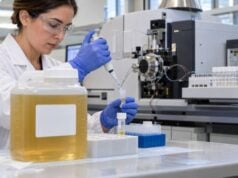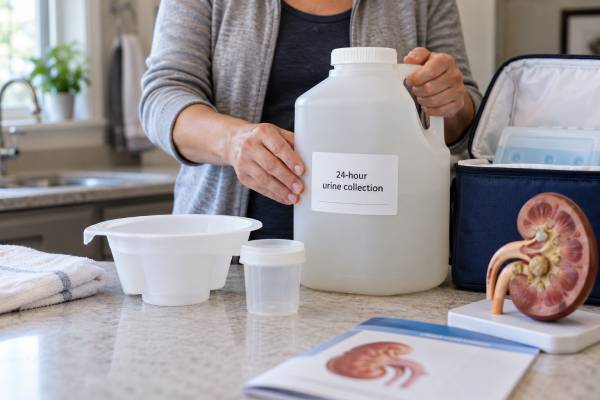
A 24-hour urine oxalate test measures how much oxalate is excreted in urine during one complete day. It is most often used to evaluate calcium oxalate kidney stone risk and to investigate hyperoxaluria, a condition in which urinary oxalate is higher than expected. Oxalate comes from both the body’s own metabolism and food absorbed through the intestine. Even modest increases can raise calcium oxalate supersaturation, especially when urine volume is low or urine calcium is high. A high result may reflect diet, excess vitamin C, increased intestinal absorption from fat malabsorption, or, rarely, an inherited primary hyperoxaluria that causes the liver to overproduce oxalate. The result should be interpreted with urine volume, calcium, citrate, sodium, pH, kidney function, diet, and stone composition. One abnormal collection does not always establish a chronic disorder because oxalate excretion varies from day to day. Repeated testing or additional evaluation may be needed when values are markedly elevated or the clinical pattern is unusual.
- One current laboratory lists a 24-hour urine oxalate reference interval of 9.7–40.5 mg/day (0.11–0.46 mmol/day), but laboratory-specific ranges should be used.
- High urine oxalate increases calcium oxalate stone risk, especially when urine volume is low, calcium is high, or citrate is low.
- Common causes include high oxalate intake, excess vitamin C, low calcium intake with meals, and enteric hyperoxaluria from fat malabsorption or some bariatric procedures.
- Markedly high or persistent oxalate, recurrent stones at a young age, nephrocalcinosis, or unexplained kidney failure can raise concern for primary hyperoxaluria.
- Treatment targets the cause and the whole stone-risk profile; simply avoiding every oxalate-containing food is usually not the goal.
Table of Contents
- What a 24-Hour Urine Oxalate Test Measures
- Normal Range and What Counts as High Oxalate
- Common Causes of High Urine Oxalate
- Primary and Enteric Hyperoxaluria
- How Oxalate Affects Kidney Stone Risk
- How to Collect the Sample and Avoid Errors
- What to Do After a High Oxalate Result
What a 24-Hour Urine Oxalate Test Measures
Oxalate is a small organic acid. Humans do not need it for a known essential function, and the body gets rid of much of it through the kidneys. Some oxalate is produced internally from normal metabolism, while some comes from food and is absorbed in the intestine.
In urine, oxalate readily binds calcium. When the concentrations of calcium and oxalate become high enough, calcium oxalate crystals can form. Those crystals can grow into stones or, in severe hyperoxaluria, deposit in kidney tissue as nephrocalcinosis or oxalate nephropathy.
A 24-hour urine collection measures total oxalate excretion over the day rather than the concentration in one urine sample. This matters because a concentrated spot sample can contain a high oxalate concentration simply because little water was present. A timed total better represents how much oxalate the kidneys excreted during that period.
The test is commonly included in a 24-hour urine stone risk profile. Other measurements may include urine volume, calcium, citrate, sodium, uric acid, magnesium, phosphorus, pH, and creatinine. These values allow clinicians to estimate the chemical conditions that favor or discourage crystal formation.
Urine oxalate may also be ordered when a person has recurrent calcium oxalate stones, nephrocalcinosis, bowel disease or surgery associated with fat malabsorption, a family history of a rare stone disorder, or kidney dysfunction that is unexplained.
The test does not identify the source of oxalate by itself. A high result could reflect food, intestinal absorption, endogenous overproduction, supplements, or a combination. The history and the rest of the laboratory profile determine which explanation fits best.
Normal Range and What Counts as High Oxalate
Reference ranges vary by laboratory and method. One current Mayo Clinic Laboratories assay lists 0.11–0.46 mmol/24 hours, equivalent to 9.7–40.5 mg/24 hours, for a complete 24-hour collection in the population for which its adult reference values are established.
European urolithiasis guidance uses a slightly different clinical framing. It describes adult hyperoxaluria above about 0.40 mmol/day, with values around 0.40–0.50 mmol/day often seen in mild or idiopathic hyperoxaluria, values above 0.50 mmol/day raising concern for secondary or enteric causes, and values that are repeatedly around or above 1.0 mmol/day increasing concern for primary hyperoxaluria. These are useful guideposts, not universal diagnostic boundaries.
Unit conversion is important. Because different reports may use mmol/day or mg/day, comparing raw numbers without checking units can create a major error. Roughly, 0.46 mmol of oxalate is about 40.5 mg.
A single mildly high result should be interpreted cautiously. Urine oxalate can vary with:
- what was eaten during the collection day;
- calcium intake and whether calcium was consumed with meals;
- vitamin C supplement use;
- fluid intake and urine volume;
- diarrhea or fat malabsorption;
- completeness of the urine collection; and
- kidney function.
When the result is unexpectedly high, clinicians may repeat a properly collected 24-hour urine under usual, stable conditions before labeling the pattern persistent. Some stone guidelines recommend two consecutive 24-hour collections for a detailed metabolic evaluation because day-to-day variability can be clinically meaningful.
A value within the reference range also does not guarantee low stone risk. Calcium oxalate supersaturation depends on the interaction between oxalate, calcium, water, citrate, ionic strength, and other urine chemistry. A person can form calcium oxalate stones without severe hyperoxaluria.
Creatinine in the same 24-hour collection can provide a rough check on whether the sample appears complete, although creatinine excretion itself varies with muscle mass, age, sex, and diet. If both oxalate and creatinine are unexpectedly low, a missed portion of the collection becomes one possibility. If oxalate is high on two well-collected days, the finding is more convincing than one isolated result after an unusual meal.
Common Causes of High Urine Oxalate
Most elevated urine oxalate is not caused by a rare genetic disease. Common causes involve diet, intestinal absorption, or both.
High dietary oxalate can contribute, especially when intake is consistently large. Foods that can contain substantial oxalate include spinach, rhubarb, beets, nuts and nut butters, some bran products, and certain other plant foods. Oxalate content varies with food type, preparation, serving size, and testing method, so rigid food lists can be misleading.
Low calcium intake with meals can paradoxically increase oxalate absorption. Calcium in the intestine binds oxalate and forms a compound that is poorly absorbed. When dietary calcium is severely restricted, more free oxalate may remain available for absorption and later appear in urine. This is why people with calcium oxalate stones are usually not advised to eliminate normal dietary calcium unless there is a specific reason.
High-dose vitamin C can raise urine oxalate because ascorbic acid can be metabolized to oxalate. The effect is particularly relevant in people with calcium oxalate stone disease or impaired kidney function. The exact risk depends on dose and individual susceptibility, but excessive supplementation is generally avoided when hyperoxaluria is present.
Dehydration does not directly create more oxalate excretion, but it raises oxalate concentration and calcium oxalate supersaturation by reducing urine volume. That can make the same daily oxalate amount more likely to crystallize. A urine volume measurement for kidney stones is therefore central to interpretation.
Some people have idiopathic hyperoxaluria, meaning oxalate excretion is elevated without a single clear genetic or malabsorptive cause. Diet, intestinal transport, microbiome factors, and endogenous metabolism may all contribute.
Acute ethylene glycol poisoning can ultimately produce oxalate and calcium oxalate crystals, but a routine 24-hour urine oxalate test is not the correct way to evaluate a suspected poisoning. That situation requires emergency assessment with toxicology-focused blood testing and treatment.
Primary and Enteric Hyperoxaluria
Two important causes deserve special attention because they can produce substantial kidney injury: primary hyperoxaluria and enteric hyperoxaluria.
Primary hyperoxalurias are rare inherited disorders of glyoxylate metabolism. The liver produces too much oxalate, which the kidneys must excrete. Repeated calcium oxalate stones and nephrocalcinosis may begin in childhood, but some people are not diagnosed until adulthood. Severe disease can progressively damage kidney function. When kidney clearance falls, oxalate can accumulate in blood and deposit outside the kidneys, a complication known as systemic oxalosis.
Clues that may prompt evaluation for primary hyperoxaluria include:
- recurrent calcium oxalate stones beginning unusually young;
- nephrocalcinosis, especially with declining kidney function;
- very high or repeatedly high urine oxalate without a clear secondary cause;
- family history or consanguinity;
- kidney failure with an unexplained history of stones; or
- recurrence of oxalate deposition after kidney transplantation.
Modern diagnosis can include repeat urine oxalate, plasma oxalate when kidney function is substantially reduced, urine metabolite testing, and genetic testing. A markedly high urine value raises suspicion but does not by itself determine which primary hyperoxaluria type is present.
Enteric hyperoxaluria is different. The liver is not necessarily overproducing oxalate. Instead, the intestine absorbs too much. It most often occurs when fat malabsorption changes the chemistry of the gut. Unabsorbed fatty acids bind calcium, leaving less calcium available to bind oxalate. More free oxalate can then reach the colon and be absorbed into the bloodstream before being excreted by the kidneys.
Conditions associated with enteric hyperoxaluria include some inflammatory bowel diseases, extensive small-bowel disease or resection, pancreatic insufficiency, short bowel syndromes, and malabsorptive bariatric procedures such as Roux-en-Y gastric bypass. Chronic diarrhea can compound the problem by lowering urine volume and citrate.
A person with enteric hyperoxaluria may therefore have several stone-promoting abnormalities at the same time: high oxalate, low urine volume, low citrate, and altered magnesium or calcium balance.
How Oxalate Affects Kidney Stone Risk
Calcium oxalate is the most common major component of kidney stones. Stone formation becomes more likely when urine is supersaturated with calcium oxalate—that is, when the chemical concentration is high enough for crystals to form and grow.
Oxalate has a strong effect on that supersaturation. A relatively small rise can matter because calcium and oxalate multiply each other’s influence on crystal formation. Still, oxalate never acts alone.
A comprehensive interpretation asks:
- How much urine is produced? More water dilutes calcium and oxalate.
- Is urine calcium high? Higher calcium raises calcium oxalate supersaturation.
- Is citrate low? Citrate binds calcium and inhibits crystal growth.
- Is sodium intake high? Higher sodium intake can increase urine calcium in susceptible people.
- What is the stone made of? A kidney stone analysis can confirm whether calcium oxalate is actually the dominant material.
- What does supersaturation show? Some panels calculate calcium oxalate supersaturation directly from multiple urine measurements.
This explains why a “normal” oxalate result does not end a stone evaluation. A person with normal oxalate but high urine calcium and low volume can still have substantial calcium oxalate risk. Conversely, a moderately elevated oxalate may be less dangerous when urine volume is high and citrate is favorable, though persistent hyperoxaluria still deserves attention.
Dietary counseling should also avoid an overly restrictive approach. Many nutritious plant foods contain some oxalate, and total avoidance can make a diet unnecessarily limited. A more practical plan is to identify the largest oxalate sources, keep normal calcium-containing foods with meals when appropriate, spread fluid intake through the day, and avoid excessive vitamin C supplements. The exact advice changes when enteric hyperoxaluria, chronic diarrhea, or kidney disease is present.
For people with enteric hyperoxaluria, treatment may include addressing the underlying malabsorptive condition, reducing excessive dietary oxalate, keeping dietary fat appropriate for the condition, taking calcium with meals when advised, correcting low citrate, and maintaining enough fluid to compensate for gastrointestinal water loss. The exact plan should be individualized because severe malabsorption, kidney disease, and nutritional needs can make generic diets unsafe.
How to Collect the Sample and Avoid Errors
A 24-hour oxalate result depends on collecting the full day accurately. Laboratories may have specific instructions about preservatives, refrigeration, and foods or supplements. Follow those instructions exactly because oxalate assays and multi-analyte stone panels are not all handled the same way.
A typical collection follows this pattern:
- In the morning, empty your bladder into the toilet and record the start time. Do not save that first urine.
- Collect every urine sample after that for the next 24 hours, including overnight urine.
- Store the container as the laboratory instructs.
- At the same time the next morning, collect one final urine sample and add it to the container.
- Return the specimen with the collection duration and total volume information requested by the laboratory.
Unless your clinician deliberately wants to test the effect of a diet change, the collection is usually most informative when you follow your usual diet and fluid intake. Changing everything the day before the test may produce a number that does not represent your normal stone risk.
Tell the clinician about vitamin C, calcium, magnesium, and other supplements. Also mention diarrhea, recent bowel surgery, an unusually heavy intake of high-oxalate foods, or an acute illness during the collection.
Missing urine can falsely lower total oxalate excretion. Collecting for longer than 24 hours can falsely raise it. If the collection is incomplete, a repeat test is usually better than trying to estimate the missing amount.
What to Do After a High Oxalate Result
The next step depends on how high the result is, whether it is persistent, and what the rest of the stone-risk profile shows.
For a mild elevation, clinicians commonly review diet, vitamin C intake, calcium intake with meals, urine volume, and collection quality. A repeat 24-hour urine after targeted changes can show whether the pattern improves. A urine calcium measurement and urine citrate test help identify other modifiable risks.
For suspected enteric hyperoxaluria, the focus expands to gastrointestinal disease, bariatric history, chronic diarrhea, pancreatic function, dietary fat, and nutrition. Calcium taken with meals may be used to bind oxalate in the gut in selected patients, but the dose and formulation should be planned with a clinician, especially when kidney function is reduced.
For marked or unexplained hyperoxaluria, early specialist assessment matters. Primary hyperoxaluria now has disease-specific therapies for some forms, so recognizing it is more important than in the past. Genetic testing can confirm the diagnosis and guide management.
Kidney function changes interpretation as well. When advanced kidney failure reduces oxalate clearance, urinary oxalate may no longer fully represent total oxalate burden; plasma oxalate can become more informative. This is especially relevant when systemic oxalosis is a concern.
General stone prevention usually includes enough fluid to produce a high daily urine volume, normal dietary calcium rather than indiscriminate calcium restriction, sodium moderation, and treatment of low citrate or high calcium when present. The goal is not to drive urinary oxalate to zero. It is to reduce excessive oxalate exposure while preserving good nutrition and lowering total calcium oxalate supersaturation.
Seek prompt medical care for severe flank pain with fever, inability to urinate, persistent vomiting, or symptoms of acute kidney injury. Those problems require assessment beyond a planned 24-hour urine test.
References
- Hyperoxaluria: Diagnosis and Treatment. 2025 (Review)
- Pathophysiology and management of enteric hyperoxaluria. 2024 (Review)
- Diagnosis and management of primary hyperoxalurias: best practices. 2024 (Review)
- Metabolic Evaluation and Recurrence Prevention – EAU Guidelines on Urolithiasis 2025 (Guideline)
- OXU – Overview: Oxalate, 24 Hour, Urine 2026
Disclaimer
This article is for general education and does not replace medical advice for kidney stones, hyperoxaluria, bowel disease, or kidney dysfunction. Urine oxalate ranges vary by laboratory, and results should be interpreted with urine volume, calcium, citrate, diet, medications, and kidney function. Markedly elevated or persistent oxalate may require specialist evaluation rather than diet changes alone.