A 20-minute HIIT workout can be one of the most practical tools for weight loss, especially when your schedule is crowded and long gym sessions are hard to sustain. The appeal is simple: short bursts of hard work, brief recovery periods, and a session that feels purposeful from start to finish. But good HIIT is not just about going all-out and hoping for the best. The details matter, including exercise choice, interval length, weekly frequency, and how well the workout fits your joints, fitness level, and recovery.
This guide breaks down what 20-minute HIIT workouts actually do for fat loss, how hard they should feel, and how to build effective sessions at home or in the gym. You will also see realistic weekly scheduling advice, common mistakes that slow progress, and smart ways to judge whether your plan is working beyond the bathroom scale.
Table of Contents
- Why 20-minute HIIT works
- How hard should HIIT feel
- 20-minute home HIIT workout
- 20-minute gym HIIT workout
- Weekly plan for weight loss
- Mistakes, safety and progress
Why 20-minute HIIT works
HIIT can help with weight loss, but not because it is magic. It works because it makes demanding exercise easier to fit into real life. A short session that actually gets done three times a week beats a perfect 60-minute plan that never leaves your notes app.
For fat loss, the main job of exercise is to support a sustainable calorie deficit, protect fitness, and help you keep more lean tissue while losing body fat. HIIT contributes by packing vigorous effort into a shorter window than many traditional cardio sessions. That can raise your heart rate quickly, improve work capacity, and make it easier to accumulate meaningful training even on busy days.
There are also a few reasons 20-minute HIIT sessions often work well in practice:
- They reduce the “I do not have time” barrier.
- They can improve cardiorespiratory fitness fast enough that walking, lifting, and daily movement start to feel easier.
- They often feel mentally easier than long, steady sessions because the work is broken into chunks.
- They can be done with bodyweight, machines, or simple tools like dumbbells, a bike, or a rower.
That said, the marketing around HIIT often goes too far. A 20-minute interval session does not cancel out a weekend of overeating, poor sleep, or very low daily movement. It also does not automatically beat steady-state cardio for fat loss. For many people, the advantage is time efficiency, not a dramatically higher calorie burn.
Another useful reality check: in a 20-minute HIIT session, only part of the workout is truly hard. A good session includes a warm-up, recovery intervals, and a cool-down. In many cases, the highest-effort work adds up to just 6 to 12 minutes. That is normal. Effective HIIT is controlled and repeatable, not 20 straight minutes of chaos.
The best way to think about it is this: HIIT is one strong piece of a weight-loss plan. It works best when paired with enough protein, consistent sleep, reasonable food intake, and plenty of low-intensity movement during the rest of the day. Used that way, it can make a noticeable difference without taking over your week.
How hard should HIIT feel
The most common HIIT mistake is confusing intensity with recklessness. A good interval should feel hard enough to challenge you, but not so hard that your form collapses in round two.
A practical way to judge effort is the 1 to 10 rate of perceived exertion scale:
- Easy recovery pace: 2 to 4 out of 10
- Moderate work: 5 to 6 out of 10
- True HIIT work interval: 7.5 to 9 out of 10
- All-out sprint effort: 10 out of 10
Most people trying to lose weight do better when their hard intervals sit around 8 out of 10, not 10. That means you are breathing hard, speaking only a few words at a time, and feeling very challenged, but you are still moving well. If every round becomes a survival test, the session is too aggressive.
The talk test is simple and useful:
- During recovery, you should be able to speak in full sentences within a short time.
- During the hard interval, a few words at a time is about right.
- If you feel dizzy, sharp pain, chest pressure, or panic-level breathlessness, stop the session.
If you track heart rate, hard intervals often drift into the upper end of your vigorous range by the end of the work period. But heart rate can lag, especially in short intervals, so do not let the monitor override what your body is telling you.
Exercise choice matters just as much as effort. Good HIIT movements let you push intensity without losing position. That usually means:
- Fast cycling
- Rowing
- Incline treadmill efforts
- Brisk uphill walking
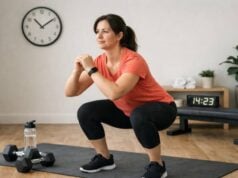
- Bodyweight squats to a controlled depth
- Step-ups
- Low-impact shadow boxing
- Dumbbell thrusters with a manageable load
For many beginners, bigger bodies, or anyone with knee or ankle irritation, machine-based intervals are often better than repeated jumping. That is one reason warm-up and recovery work matters so much. A rushed start makes the workout feel harder for the wrong reasons. If impact bothers you, choose low-impact cardio options and keep the session joint-friendly.
A useful rule is “finish strong, not destroyed.” Your last interval should look similar to your first. If it is dramatically slower, sloppier, or more painful, the work period is too long, the rest is too short, or the movement is a poor fit.
That is what separates productive HIIT from random punishment. The goal is repeatable intensity you can recover from and progress over time.
20-minute home HIIT workout
A strong home HIIT workout should be simple, repeatable, and adjustable. You do not need a dozen exercises. You need a few movements you can perform safely while breathing hard.
This version works well in a living room, garage, or small outdoor space. It uses no equipment, but you can hold light dumbbells for some moves if you are ready for more resistance. If you want a broader training base beyond intervals, a dedicated bodyweight workout or a full-body dumbbell workout can fit nicely on non-HIIT days.
20-minute home HIIT template
Minutes 0:00 to 4:00: Warm-up
Move continuously without rushing:
- March in place with arm swings for 60 seconds
- Bodyweight good mornings for 30 seconds
- Squat to reach for 30 seconds
- Alternating reverse lunges for 30 seconds
- Fast hands or light shadow boxing for 30 seconds
- Repeat the sequence once
Minutes 4:00 to 16:00: Main interval block
Do 12 rounds of:
- 30 seconds hard
- 30 seconds easy
Cycle through these four moves three times:
- Squat to calf raise or squat jump
- Mountain climbers or elevated mountain climbers on a bench
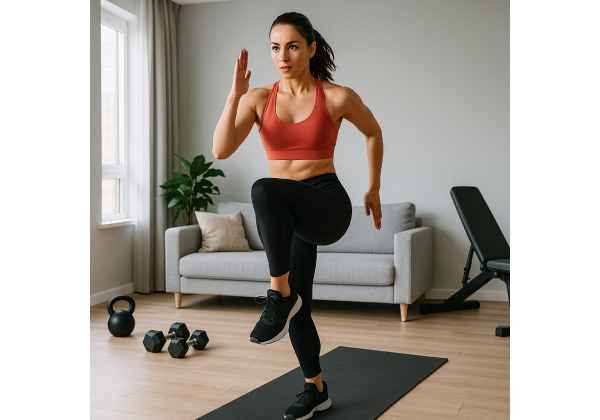
- Alternating reverse lunge to knee drive
- Fast step jacks, skater steps, or high-knee march
Use the 30-second easy period to walk, shake out your arms, and reset.
Minutes 16:00 to 20:00: Cool-down
- Easy walking in place for 90 seconds
- Hip flexor stretch for 30 seconds each side
- Chest-opening stretch for 30 seconds
- Slow nasal breathing for 60 seconds
How to make it easier
Start with lower-impact versions if needed:
- Use step jacks instead of jumping jacks
- Swap mountain climbers for incline hands-on-couch climbers
- Reduce squat depth
- Keep lunges smaller and slower
- Work at 20 seconds hard and 40 seconds easy for the first two weeks
How to make it harder
Progress only when form stays clean:
- Move from 30:30 to 35:25 intervals
- Add a fourth round of the four-move circuit
- Hold light dumbbells for squats or lunges
- Replace one move with burpees or squat thrusts if your joints tolerate them
A smart home HIIT workout feels athletic, not frantic. Pick movements you can repeat without tripping over furniture, slamming your knees into the floor, or losing your breathing rhythm. The best home plan is not the fanciest one. It is the one you can perform well on a Tuesday evening when motivation is average and your time is limited.
20-minute gym HIIT workout
In the gym, the easiest way to do effective HIIT is usually on a machine. Bikes, rowers, ski ergs, air bikes, and treadmills let you push hard without worrying as much about balance or impact. That makes them ideal when the goal is weight loss, not showing off complicated conditioning drills.
If you are newer to vigorous cardio, choose one machine and stick with it for a few weeks. Consistency makes progress easier to measure. If you already lift regularly, pair your intervals with a structured 3-day strength plan rather than trying to turn every training day into a maximal conditioning test.
20-minute gym HIIT template
Minutes 0:00 to 5:00: Warm-up
Use your machine at an easy-to-moderate pace. Increase effort gradually over the final 90 seconds so the first work interval is not a shock.
Minutes 5:00 to 17:00: Main interval block
Do 8 rounds of:
- 30 seconds hard
- 60 seconds easy
This format is beginner-friendly because the recovery is long enough to keep quality high. Your hard interval should feel like an 8 to 9 out of 10 by the final 10 seconds. The easy minute should feel very manageable.
Best machine choices:
- Air bike for full-body effort
- Stationary bike for low joint stress
- Rower if technique is solid
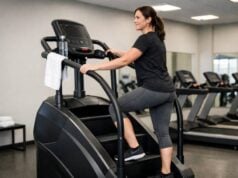
- Treadmill with incline if you prefer running or fast uphill walking
Minutes 17:00 to 20:00: Cool-down
Stay on the same machine and bring your breathing down gradually. Do not jump off right after the final interval.
Good gym variations
If 30:60 feels too easy after a few weeks, try one of these:
- 10 rounds of 20 seconds hard and 40 seconds easy
- 6 rounds of 40 seconds hard and 80 seconds easy
- 8 rounds of 15 seconds very hard and 45 seconds easy on an air bike
You can also use incline walking as a lower-impact entry point. For some people, structured treadmill walking intervals are more sustainable than repeated sprints, especially during heavier body-weight phases or when the calves and knees are not ready for running.
The trap to avoid is turning the gym session into random circuit fatigue. If you spend half the workout collecting equipment, your heart rate will be inconsistent and your progression will be hard to track. One machine, one clear interval structure, and a written record of speed, watts, distance, or incline will usually beat a flashy but messy plan.
Weekly plan for weight loss
HIIT works best when it supports your week instead of dominating it. For most people, the sweet spot is two or three HIIT sessions per week. That is enough to build fitness and burn meaningful energy without crushing recovery.
A useful starting point is to treat HIIT as your vigorous cardio layer, then build around it with strength work, walking, and at least one lower-stress day. This matters because weight loss is not only about what happens during workouts. It is also about how much you move outside the gym, how hungry training makes you, and whether your body can recover well enough to stay consistent.
Beginner weekly example
- Monday: Strength training or brisk walk
- Tuesday: 20-minute HIIT
- Wednesday: Easy walk or mobility
- Thursday: Strength training
- Friday: Easy cardio or off
- Saturday: 20-minute HIIT
- Sunday: Long walk
Intermediate weekly example
- Monday: Strength training
- Tuesday: 20-minute HIIT
- Wednesday: Zone 2 or brisk walking
- Thursday: Strength training
- Friday: 20-minute HIIT
- Saturday: Long walk, bike ride, or recreational activity
- Sunday: Full rest
A few practical rules keep this balanced:
- Beginners usually do best with 2 HIIT sessions weekly.
- Most intermediates can handle 3 if sleep and nutrition are solid.
- Do not place hard intervals on top of severe leg soreness.
- Keep at least 24 hours, and often closer to 48 hours, between very hard lower-body sessions.
- Schedule rest days on purpose instead of waiting until exhaustion forces them.
For weight loss, it also helps to stop thinking only in workouts and start thinking in total movement. Two HIIT sessions per week will not fully compensate for 10 sedentary hours per day. Keeping daily movement outside workouts high with walking breaks, errands on foot, stairs, and short movement snacks often makes the whole plan more effective.
One more useful perspective: a 20-minute HIIT session can count toward your vigorous weekly activity target, but it should not be the only form of exercise you do. A good weight-loss plan includes hard work, easier work, and enough recovery to repeat the process next week. That mix is what makes progress durable instead of dramatic for two weeks and unsustainable after that.
Mistakes, safety and progress
The fastest way to stall on HIIT is to do too much, too soon. Weight loss plans often fail not because the workout is ineffective, but because the setup is too aggressive to repeat.
Common mistakes
- Going all-out every session. Most intervals should be very hard, not maximal.
- Choosing high-impact moves too early. Jumping lunges and burpees are not mandatory.
- Skipping the warm-up. This makes the first round feel worse and can make form sloppy.
- Doing HIIT every day. Hard training loses value when recovery disappears.
- Ignoring hunger and fatigue. A plan that leaves you ravenous and drained can backfire.
- Relying on HIIT alone. Nutrition, steps, strength work, and sleep still matter.
A smart nutrition base helps. During weight loss, adequate protein intake can make recovery easier, support fullness, and help preserve lean mass while body weight drops. You do not need a bodybuilding diet, but you do need meals that support training instead of leaving you underfueled and then overeating later.
Who should be more cautious with HIIT
Start more gradually, or get individualized guidance first, if you have:
- Known cardiovascular disease
- Uncontrolled high blood pressure
- Recent surgery or injury
- Recurrent dizziness with exertion
- Chest pain, unusual shortness of breath, or fainting with exercise
- Pregnancy-related restrictions or a recent complicated postpartum period
For many people in larger bodies, the safest starting version of HIIT is machine-based and low impact. Hard cycling, rowing, incline walking, and elliptical intervals are often more sustainable than repeated jumping on a hard floor.
How to know it is working
The scale matters, but it should not be your only marker. Track multiple signals:
- Waist measurement every two to four weeks
- Average weekly body weight rather than one random weigh-in
- Resting heart rate trends
- Recovery between intervals
- How many rounds you can complete at the same output
- Energy, sleep, and soreness
It is also worth tracking progress without the scale. Better stamina, faster walking pace, lower perceived effort on stairs, and improved workout quality often show up before dramatic weight changes.
The best HIIT plan for weight loss is not the one that leaves you flat on the floor. It is the one you can execute well, recover from, and keep repeating for months while your body composition, conditioning, and daily habits gradually move in the right direction.
References
- World Health Organization 2020 guidelines on physical activity and sedentary behaviour 2020 (Guideline)
- What exercise prescription is optimal to improve body composition and cardiorespiratory fitness in adults living with obesity? A network meta-analysis 2021 (Network Meta-Analysis)
- Effect of High-Intensity Interval Training vs. Moderate-Intensity Continuous Training on Fat Loss and Cardiorespiratory Fitness in the Young and Middle-Aged a Systematic Review and Meta-Analysis 2023 (Systematic Review and Meta-Analysis)
- Aerobic Exercise and Weight Loss in Adults: A Systematic Review and Dose-Response Meta-Analysis 2024 (Systematic Review)
- The Effectiveness of High-Intensity Interval Training vs. Cardio Training for Weight Loss in Patients with Obesity: A Systematic Review 2025 (Systematic Review)
Disclaimer
This article explains general exercise strategies for healthy adults and is not a substitute for personal medical advice, diagnosis, or treatment. If you have heart disease, uncontrolled blood pressure, significant joint pain, recent surgery, or symptoms such as chest pain, fainting, or unusual shortness of breath during exercise, get medical guidance before starting HIIT.
If this article helped, please share it on Facebook, X, or any platform your friends, clients, or training partners use most.