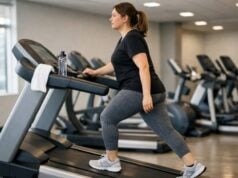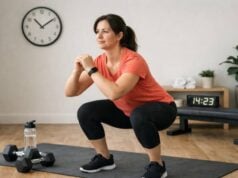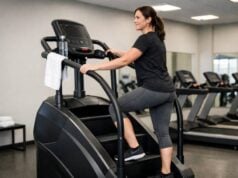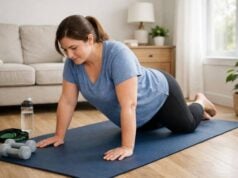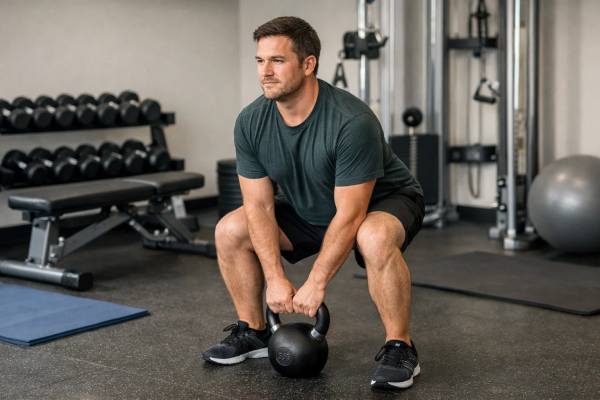
A full-body gym workout for weight loss is one of the simplest ways to train when your goal is to burn calories, keep muscle, and build a routine you can actually follow. Instead of splitting your week into chest day, leg day, and arm day, full-body training works your major muscle groups in each session. That usually means better efficiency, more frequent practice of the basics, and less risk of feeling like a missed workout ruins the week.
The best plan is not the one with the most exercises. It is the one that gives you enough strength work, enough movement, and enough recovery to stay consistent. Below, you will find the best exercises to prioritize, how to structure each workout, and weekly plans for three, four, and five gym days.
Table of Contents
- Why Full-Body Training Works Well for Fat Loss
- Best Exercises for a Full-Body Gym Workout
- How to Structure Each Full-Body Session
- Weekly Plan Options for Different Schedules
- Sample Full-Body Gym Workouts
- How to Progress Without Burning Out
- Common Mistakes, Recovery and Safety
- How to Support Weight Loss Outside the Gym
Why Full-Body Training Works Well for Fat Loss
A full-body gym workout works well for weight loss because it gives you a lot of return for the time you spend training. Each session can include lower-body work, upper-body pushing, upper-body pulling, and a little conditioning or loaded movement. That means you are training a large amount of muscle in one visit instead of spreading your effort across isolated body-part days.
For most people trying to lose weight, that matters more than having a highly specialized split. Full-body sessions make it easier to build a week around real life. If you can train only three days, you still cover your major movement patterns. If you miss one day, the whole week does not feel ruined. That practicality is one of the biggest advantages.
This style also fits how many people actually recover during a calorie deficit. When calories are lower, sleep is imperfect, and stress is normal, training everything across the week often feels more manageable than hammering one area with huge volumes in a single session. You still get strong training stimuli, but fatigue is spread out in a more sustainable way.
Another reason full-body plans work is exercise selection. They usually rely on large, efficient movements such as squats, hip hinges, rows, presses, lunges, pulldowns, and carries. Those are often the same compound exercises for weight loss that make gym training more productive. You are not chasing tiny muscle groups early in the workout. You are leading with movements that train more of the body and usually let you use more total load.
It also helps that full-body training pairs well with cardio. You can add short finishers, separate easy cardio days, or a short post-lift walk or bike session without overcomplicating the week. If you are deciding how to balance lifting with the rest of your activity, a broader look at full-body and split workouts for fat loss can help clarify why full-body plans are often easier to stick with during a fat-loss phase.
That said, full-body training is not magic. It does not override a poor diet, and it does not guarantee faster scale loss than every other setup. Its real advantage is that it makes good training easier to repeat. That is a much bigger deal than most people realize.
A strong weight-loss program usually needs three things:
- enough training stimulus to preserve or build muscle
- enough overall activity to support calorie expenditure
- enough simplicity that you can keep going for months, not days
Full-body gym workouts check all three boxes when programmed well.
Best Exercises for a Full-Body Gym Workout
The best full-body gym workout for weight loss is built around a few high-value exercise categories. You do not need every machine in the gym. You need a balanced mix of movements that train the whole body efficiently.
| Exercise category | Main goal | Good options | Beginner-friendly choice |
|---|---|---|---|
| Squat pattern | Train quads, glutes and core | Back squat, goblet squat, leg press | Goblet squat or leg press |
| Hip hinge | Train glutes, hamstrings and back side | Romanian deadlift, trap-bar deadlift, cable pull-through | Dumbbell Romanian deadlift |
| Single-leg work | Improve balance and leg strength | Split squat, reverse lunge, step-up | Assisted split squat |
| Horizontal push | Train chest, shoulders and triceps | Bench press, machine chest press, push-up | Machine press or incline push-up |
| Horizontal pull | Train upper back and arms | Seated row, chest-supported row, cable row | Seated cable row |
| Vertical push or pull | Add shoulder and lat work | Overhead press, lat pulldown | Seated dumbbell press or pulldown |
| Carry or finisher | Improve grip, trunk and work capacity | Farmer carry, sled push, light intervals | Farmer carry |
A strong session usually includes one exercise from four or five of those categories. That is enough to train the full body without turning the workout into a marathon.
If you want the shortest explanation of exercise priority, it looks like this:
- Pick one lower-body push or squat.
- Pick one hip hinge or posterior-chain exercise.
- Pick one upper-body push.
- Pick one upper-body pull.
- Add one small accessory or conditioning piece if time allows.
The best exercises are often the ones you can perform safely, load progressively, and repeat consistently. That means a leg press can absolutely belong in a good weight-loss workout. So can a machine chest press, cable row, or dumbbell Romanian deadlift. You do not need to force the most technical barbell lifts if simpler tools let you train harder with better control.
Beginners often do especially well with machine and dumbbell combinations. Those options are easier to learn, less intimidating, and still effective. If you want a more machine-centered version, a dedicated gym machine workout for beginners can help you stay in familiar territory while building confidence.
At the same time, do not let the search for “best” exercises distract you from quality effort. A basic plan built on squats, rows, presses, pulldowns, hinges, and lunges will outperform a fancy plan filled with random novelty. Good full-body training is less about surprise and more about repeatable movement patterns that cover the major muscle groups.
How to Structure Each Full-Body Session
The structure of the workout matters almost as much as the exercise list. A good full-body gym workout for weight loss should feel focused, not chaotic. Most people do best when sessions last about 45 to 70 minutes, depending on experience, rest times, and whether cardio is included.
A simple structure looks like this:
- warm-up
- primary lower-body lift
- primary upper-body push or pull
- second lower-body movement
- second upper-body movement
- optional finisher or easy cardio
That order works because it puts the most demanding exercises earlier, while you are fresh. Big lower-body lifts and main compound movements usually deserve the best energy and concentration.
Here is a practical template:
- Warm-up: 5 to 10 minutes of easy cardio and mobility
- Main lift 1: squat, leg press, or hinge variation
- Main lift 2: press or row
- Secondary lift 1: single-leg lower-body movement
- Secondary lift 2: pull or press not yet trained
- Optional finisher: carries, sled pushes, incline walk, or bike
For sets and reps, most people trying to lose weight do well with moderate ranges:
- 3 to 4 sets for major exercises
- 6 to 10 reps for heavier compound lifts
- 8 to 12 reps for many dumbbell and machine exercises
- 10 to 15 reps for smaller or less technical accessories
You do not need to take every set to failure. In fact, many people recover better when they stop with one to three good reps still in reserve. That gives you enough effort to progress without making every session feel crushing.
Rest periods matter too. Many people cut rest too aggressively because they want the workout to feel more “fat burning.” In reality, if you rush compound sets too much, performance drops, technique slips, and the session becomes sloppier rather than more effective. A good rule is to rest long enough that the next set still looks strong. For many exercises, that means 60 to 120 seconds.
Workout density does matter, but only after the basics are solid. If you want a more conditioning-style approach later, you can use circuits or supersets. Early on, though, clean structure beats random speed.
If you are also doing cardio, think about timing. Some people prefer a short cooldown walk after lifting. Others use separate cardio days. Both can work. The bigger question is how to combine both without draining your strength sessions, which is why the issue of cardio before or after weights matters more than most beginners expect.
A full-body plan should leave you worked, not wrecked. That is how you build a week you can repeat.
Weekly Plan Options for Different Schedules
The best weekly plan depends on how many days you can train consistently. For weight loss, the best choice is usually the one that fits your life without forcing constant missed sessions.
| Schedule | Who it suits | Strength days | Cardio and movement |
|---|---|---|---|
| 3-day plan | Most beginners and busy adults | Mon, Wed, Fri | 1 to 3 easy cardio or walking days |
| 4-day plan | People who recover well and want more structure | Mon, Tue, Thu, Sat | 1 to 2 shorter cardio sessions |
| 5-day plan | Experienced exercisers with good recovery | 3 full-body days plus 2 lighter gym or cardio days | More total activity, but fatigue must stay controlled |
For most people, the 3-day version is the best place to start. It is enough frequency to make progress, enough time to keep sessions complete, and enough recovery to avoid the “all gas, no brakes” problem.
A good 3-day setup might look like this:
- Monday: Full-body workout A
- Tuesday: Easy walk or light cardio
- Wednesday: Full-body workout B
- Thursday: Rest or light movement
- Friday: Full-body workout C
- Saturday: Optional moderate cardio
- Sunday: Rest
A 4-day setup can work well when you want slightly shorter lifting sessions or more practice with the basics:
- Monday: Full-body A
- Tuesday: Full-body B
- Wednesday: Rest or easy cardio
- Thursday: Full-body C
- Friday: Rest
- Saturday: Full-body D or cardio
- Sunday: Rest
A 5-day plan is often misunderstood. It does not mean five brutal lifting days. More often, it means three main full-body workouts plus two lighter days for machines, cardio, mobility, or shorter conditioning work. That kind of structure fits well if you already know you like frequent gym visits, but it is rarely necessary for beginners.
If you want a broader overview of how to lay out the week, a weekly workout schedule for weight loss can help you decide whether three, four, or five days is realistic. If your current question is mostly about lifting frequency, the bigger principle is simply how often to strength train for weight loss without turning recovery into the weak link.
The weekly plan should feel sustainable on a normal week, not just on your most motivated week. That is the standard that matters.
Sample Full-Body Gym Workouts
Below is a practical 3-day full-body gym workout plan for weight loss. It uses common gym equipment, keeps exercise selection balanced, and gives you enough volume to make progress without dragging the session on too long.
Workout A
- Goblet squat or leg press — 3 sets of 8 to 10
- Dumbbell bench press or machine chest press — 3 sets of 8 to 10
- Seated cable row — 3 sets of 10 to 12
- Dumbbell Romanian deadlift — 3 sets of 8 to 10
- Walking lunge or split squat — 2 sets of 8 each side
- Incline treadmill walk or bike — 8 to 12 minutes easy to moderate
Workout B
- Trap-bar deadlift or cable pull-through — 3 sets of 6 to 8
- Lat pulldown — 3 sets of 8 to 12
- Seated dumbbell shoulder press — 3 sets of 8 to 10
- Leg press or step-up — 3 sets of 10
- Chest-supported row — 2 to 3 sets of 10 to 12
- Farmer carry — 3 rounds of 20 to 40 meters
Workout C
- Squat variation — 3 sets of 8
- Incline dumbbell press or push-up — 3 sets of 8 to 12
- Cable row or machine row — 3 sets of 10
- Romanian deadlift or back extension — 3 sets of 10
- Reverse lunge — 2 sets of 8 each side
- Bike, rower, or elliptical — 10 minutes moderate
This plan works because it repeats the core movement patterns without becoming repetitive. You get practice with lower-body pushes, hinges, upper-body pushing, upper-body pulling, and unilateral leg work across the week.
You can also adjust the plan to match your comfort level:
- replace goblet squats with leg press if balance is the limiter
- replace push-ups with machine presses if upper-body strength is low
- replace lunges with split squats if coordination is a challenge
- replace deadlifts with dumbbell hinges if barbell setup feels intimidating
If you prefer a more stripped-down version, a beginner gym workout plan may feel more approachable. If you train at home some days and in the gym on others, you can also borrow from a full-body dumbbell workout at home to keep your week consistent even when life gets messy.
One important point: these workouts do not need to leave you exhausted on the floor. Your last good rep should look like a rep you would be willing to repeat next week. That is how full-body training becomes something you can build on, not recover from forever.
How to Progress Without Burning Out
Progress is where many weight-loss gym plans fall apart. People either never make the workouts harder, so results stall, or they push too hard too quickly and end up sore, discouraged, or inconsistent.
The simplest way to progress is to change one variable at a time:
- add a rep
- add a small amount of weight
- improve range of motion
- improve control and technique
- add one more set only when needed
A practical example looks like this: if you do 3 sets of 8 on goblet squats this week, you might aim for 3 sets of 9 next week with the same weight. Once you reach the top of your target range with solid form, then you increase the load slightly and repeat the process.
This matters even more during a calorie deficit. You may not be setting strength records every week, and that is fine. During fat loss, progress often means holding performance steady, adding small improvements, or keeping strength much better than you would with random cardio-only training. That is still progress.
The best mindset is gradual improvement, not constant personal bests. That is the whole point of progressive overload while losing weight. You are asking your body to keep adapting while also managing less available energy, so the process needs patience.
A few rules help:
- do not add weight if the current reps are sloppy
- keep at least one rest day in the week
- repeat a week before increasing difficulty if recovery feels poor
- pull back during unusually stressful weeks instead of forcing intensity
- use the same key lifts for several weeks so you can track them honestly
Sometimes the best progression is not more weight. It is better depth, more stable reps, less rest between controlled sets, or the ability to finish the workout feeling strong instead of destroyed.
Watch for fatigue signals too:
- motivation dropping sharply
- persistent joint irritation
- strength falling across several sessions
- soreness that lingers too long
- cardio feeling unusually hard at the same pace
Those signs do not always mean you need a totally different plan. Often they mean the plan is good, but your recovery or progression pace is off.
Most people lose more weight and keep more muscle with boring, steady progress than with dramatic swings between overtraining and skipping weeks.
Common Mistakes, Recovery and Safety
The biggest mistake in a full-body gym workout for weight loss is trying to make every session do everything. People want heavy lifting, high-intensity intervals, core circuits, supersets for every exercise, and a long treadmill finish all in one visit. The result is often a messy workout that is hard to recover from and harder to repeat.
Another common mistake is training like bodybuilders while eating like dieters and sleeping like students during finals. Fat loss programs have to respect recovery. That means not every day should feel maximal.
A few mistakes show up again and again:
- skipping the warm-up and jumping straight into hard sets
- using too many exercises in one session
- resting too little on compound lifts
- changing the workout every week so nothing can be tracked
- treating sweat as proof of workout quality
- doing extra cardio to “make up” for poor eating
Recovery is not passive. It is part of the plan. A well-built full-body routine includes rest days, easier days, and sensible volume. Most people benefit from at least one or two easier days per week, especially if they are also walking more or doing separate cardio.
Warm-ups are especially underused. You do not need a 25-minute pre-lift ritual, but you do need enough time to raise body temperature, loosen up stiff areas, and practice the first movement pattern before loading it. A short routine based on warm-up, mobility, and recovery basics can make your lifting feel better immediately.
Safety matters too. Good form does not mean perfect textbook form on every rep, but it does mean controlled movement, stable positions, and load choices that match your current skill. If a movement consistently causes sharp pain, instability, or discomfort that lingers, that is a sign to adjust the variation, range of motion, or setup.
People with a larger body size, knee pain, low back irritation, or long periods of inactivity may need more supported choices at first. That can mean using machines, boxes, benches, higher handles, or shorter ranges of motion. Those are smart modifications, not lesser versions of training.
The gym plan should challenge you, but it should also leave enough energy for the rest of your life. If workouts are so punishing that you stop walking, sleep worse, and dread the next session, the plan is costing too much.
How to Support Weight Loss Outside the Gym
Even the best gym workout will not do all the work for you. Weight loss depends mostly on sustained energy balance, which is why your training needs support from your eating, recovery, and daily movement.
The first support pillar is nutrition. A full-body gym workout helps you keep muscle and improve body composition, but fat loss still requires a reasonable calorie deficit. That does not mean eating as little as possible. It means eating in a way that lets you recover, perform, and still create enough deficit over time.
Protein matters a lot here. When you are lifting and trying to lose weight, protein helps with fullness and supports muscle retention. That is why many successful gym-based fat-loss plans emphasize protein intake for weight loss rather than focusing only on cutting calories lower and lower.
The second pillar is daily movement outside the gym. One hard workout does not erase ten sedentary hours. Walking more, taking stairs, standing up during the day, and staying generally active can make a meaningful difference. Many people underestimate how much their non-gym movement supports fat loss compared with adding yet another hard training session.
The third pillar is recovery habits:
- sleep enough to support training quality and hunger control
- stay hydrated
- avoid using workouts as permission to overeat
- keep weekends from becoming a total reset in the wrong direction
- track more than body weight alone
That last point matters. Full-body training can improve body composition even when the scale moves more slowly than expected. Better strength, better energy, smaller waist measurements, improved work capacity, and how clothes fit all tell you whether the plan is working.
Realistic expectations help too. A good gym plan does not produce instant transformation. It produces better weeks. Better weeks become better months. That is the real value of a full-body gym workout for weight loss: it gives you a structure that is efficient enough to drive results and practical enough to keep using after the first wave of motivation wears off.
References
- WHO guidelines on physical activity and sedentary behaviour 2020 (Guideline)
- Resistance training effectiveness on body composition and body weight outcomes in individuals with overweight and obesity across the lifespan: a systematic review and meta-analysis 2022 (Systematic Review)
- Obesity Management in Adults: A Review 2023 (Review)
- Physical activity and exercise for weight loss and maintenance in people living with obesity 2023 (Review)
- Effect of resistance exercise on body composition, muscle strength and cardiometabolic health during dietary weight loss in people living with overweight or obesity: a systematic review and meta-analysis 2025 (Systematic Review)
Disclaimer
This article is for general educational purposes only and is not a substitute for medical advice, diagnosis, or treatment. If you have heart, joint, back, or metabolic conditions, are pregnant, or are unsure whether a gym-based strength plan is appropriate for you, speak with a qualified clinician or exercise professional before starting.
If this article was helpful, please share it on Facebook, X, or your preferred platform so more people can build a practical full-body workout routine for weight loss.