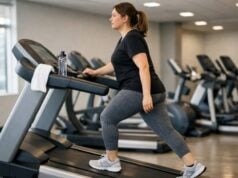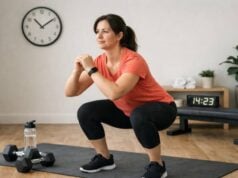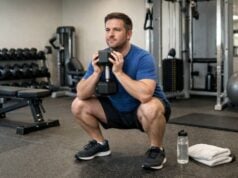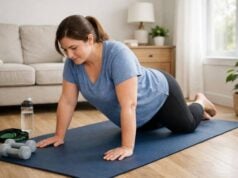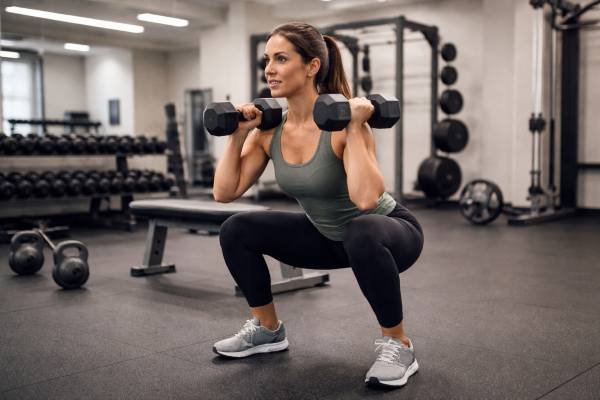
Compound exercises are some of the best strength moves for weight loss because they train multiple joints and large muscle groups at once. That usually means you can lift more total load, do more useful work in less time, and build workouts that challenge your whole body instead of one small muscle at a time. They do not “melt fat” on their own, but they can make your training more efficient and help you keep or build lean mass while losing weight.
This article explains which compound exercises matter most, how they compare with isolation moves, how to build fat-loss workouts around them, and how to use them safely whether you train at home or in a gym.
Table of Contents
- Why Compound Exercises Help With Weight Loss
- Best Compound Exercises to Prioritize
- How to Choose the Right Variations
- How to Program Compound Lifts for Fat Loss
- Beginner Weekly Schedule With Compound Exercises
- Mistakes That Reduce Results and Raise Injury Risk
- Nutrition, Recovery and Realistic Expectations
Why Compound Exercises Help With Weight Loss
Compound exercises are movements that involve more than one joint and more than one major muscle group at the same time. A squat uses your hips, knees, glutes, quads, and trunk. A row uses your upper back, lats, arms, and core. A deadlift pattern ties together your hips, legs, back, and grip. Because so much muscle is working at once, compound lifts usually feel more demanding than isolation exercises such as leg extensions, biceps curls, or triceps pushdowns.
That is the first reason they help with weight loss: they make workouts efficient. If you only have 30 to 45 minutes, a few well-chosen compound movements can train nearly your entire body. That usually gives you more training stimulus per minute than a long list of single-joint exercises.
The second reason is training volume. Compound lifts let most people handle more total load and create more total mechanical work across a session. That can increase session energy expenditure compared with a workout built mostly around smaller movements. The difference is not magical, and it is easy to exaggerate it, but over weeks and months it adds up.
The third reason is body composition. Weight loss is not only about what the scale says. During a calorie deficit, you want to lose as much fat as possible while holding onto muscle. Strength training helps with that, and compound exercises are usually the backbone of effective strength training. That matters because better muscle retention often supports better long-term results, better performance, and a more capable body.
They also create practical benefits outside the gym. Big movement patterns improve how you stand up, carry things, climb stairs, sit down with control, and tolerate longer walks or cardio sessions. In other words, compound lifts support the broader activity base that helps with fat loss. They fit naturally into a bigger plan built around the best exercises for weight loss, where strength, cardio, and daily movement all have a role.
One important reality check: compound exercises burn more calories than smaller lifts, but not enough to outwork a poor diet on their own. The biggest value is not that one squat session “torches” fat. It is that compound training improves workout efficiency, protects lean mass, and can raise the overall quality of your program. If you want a fuller picture of activity energy cost, it also helps to understand how many calories common exercises burn in the real world rather than in idealized fitness claims.
Isolation lifts still have value. They can help with weak points, joint-friendly variety, and extra muscle work. But for most people trying to lose weight, compound exercises should do most of the heavy lifting in the program.
Best Compound Exercises to Prioritize
The best compound exercises for weight loss are not necessarily the most advanced ones. They are the moves that train a lot of muscle, can be progressed over time, and fit your skill level and equipment.
| Movement | Main pattern | Why it is useful | Beginner-friendly version |
|---|---|---|---|
| Squat | Knee-dominant lower body | Trains quads, glutes, and core together | Goblet squat or box squat |
| Romanian deadlift | Hip hinge | Builds glutes, hamstrings, and posterior chain | Dumbbell Romanian deadlift |
| Split squat | Single-leg lower body | Challenges legs, glutes, balance, and control | Assisted split squat |
| Push-up or bench press | Horizontal push | Trains chest, shoulders, triceps, and trunk | Incline push-up or dumbbell press |
| Row | Horizontal pull | Builds upper back, lats, arms, and posture | Chest-supported row or cable row |
| Overhead press | Vertical push | Trains shoulders, triceps, and core stability | Seated dumbbell press |
| Carry | Loaded carry | Adds grip, trunk, and full-body work | Farmer carry with light dumbbells |
If you are choosing only a few, start with these five priorities:
- A squat pattern
This is one of the best ways to train your lower body efficiently. Goblet squats are especially useful for beginners because they teach bracing, depth, and coordination without requiring a barbell. - A hip hinge pattern
Many people need more posterior-chain work, not less. A dumbbell Romanian deadlift is often easier to learn than a barbell deadlift and gives you plenty of return. - A unilateral lower-body move
Split squats, reverse lunges, and step-ups improve balance, challenge each leg separately, and expose side-to-side differences. They also keep workouts demanding without needing extremely heavy loads. If lower-body training is your main focus, a dedicated guide to glute and leg workouts for weight loss can help you expand this part of the program. - A push
Push-ups, machine chest press, dumbbell bench press, and overhead pressing all work. The best choice depends on your shoulders, wrists, and skill level. - A pull
Rows and pulldown variations are often underused in beginner fat-loss programs. They support upper-body development, posture, and better training balance.
Carries deserve more attention than they usually get. A farmer carry or suitcase carry is simple, safe for many people, and surprisingly effective for grip, trunk control, and conditioning.
You do not need to cram all of these into every workout. The goal is to cover the main patterns over the week. You also do not need endless ab work if your program already includes squats, carries, rows, and presses. Those movements train the trunk in a more integrated way, which is why they pair well with a smarter approach to core training while losing weight.
How to Choose the Right Variations
One reason people struggle with compound exercises is that they pick versions that look impressive instead of versions they can perform well. The “best” move is not always the most technical one. It is the one you can train hard enough, safely enough, and consistently enough to progress.
Choose your variations based on five things:
- your current skill
- your joint comfort
- your equipment
- your body size and proportions
- your confidence level
For example, a barbell back squat is not automatically better than a goblet squat. A trap-bar deadlift is not automatically better than a dumbbell hinge. A full push-up is not automatically better than an incline push-up. The more important question is whether the exercise lets you produce stable, repeatable reps with enough challenge to improve.
Here is a simple way to choose.
Pick stable before flashy
If your setup feels shaky, your breathing gets chaotic, or your technique changes from rep to rep, you probably need a simpler version. Machines, benches, boxes, and supported positions are not “cheating.” They are tools that can keep the target muscles working while reducing unnecessary complexity.
Use a range of motion you can own
You do not have to force the deepest possible squat or the lowest possible lunge on day one. Controlled range of motion that stays pain-free is usually the better starting point. Depth can improve over time.
Match the variation to the training goal
If the goal is full-body work with low skill demand, a goblet squat may be better than a barbell front squat. If the goal is upper-back work without lower-back fatigue, a chest-supported row may beat a bent-over row.
Keep at least one progression option in reserve
A good variation should let you add reps, load, or control over time. That is what keeps the exercise useful for months, not just one week. This is where progressive overload while losing weight matters. You do not need dramatic jumps, but you do need a clear way to make the movement a little more demanding over time.
Good beginner substitutions look like this:
- back squat → goblet squat → box squat
- barbell deadlift → kettlebell deadlift → dumbbell Romanian deadlift
- floor push-up → incline push-up → machine press
- pull-up → assisted pull-up → lat pulldown
- walking lunge → reverse lunge → split squat holding support
Do not confuse challenge with quality. The right variation should feel hard in the target areas, not risky in your joints or chaotic in your balance. When a movement feels “off,” it often means the variation is wrong, the load is too high, or fatigue has outrun technique.
The best compound exercise plan is not built around textbook perfection. It is built around repeatable movement patterns you can train with confidence.
How to Program Compound Lifts for Fat Loss
Programming compound exercises for weight loss is about balance. You want enough work to stimulate muscle and improve fitness, but not so much fatigue that your recovery, appetite, and consistency fall apart.
For most people, full-body training two to four times per week works well. Compound lifts fit especially well in full-body sessions because each movement covers a lot of ground. If you only lift three days a week, you can still train your main patterns often enough to progress. That is one reason many people do better with full-body work than with body-part splits during fat loss. If you are deciding between structures, full-body and split workouts for fat loss each have a place, but full-body plans are often easier to sustain when calories are lower.
A simple session often includes:
- one lower-body compound lift
- one upper-body push
- one upper-body pull
- one secondary lower-body or single-leg movement
- one carry, sled, or short conditioning finisher if recovery allows
For sets and reps, most people do well in moderate ranges:
- 3 to 4 sets for primary lifts
- 6 to 12 reps for many exercises
- occasionally 12 to 15 reps for lighter dumbbell or machine variations
- 1 to 3 reps in reserve on most working sets
That last point matters. You do not need to fail every set. Training close to failure can work, but doing it on every compound lift often creates more fatigue than benefit, especially in a calorie deficit.
Rest periods matter too. If you rush compound lifts with almost no rest, technique often gets worse before calorie burn gets meaningfully better. Rest long enough to do the next set well. For many people that means about 60 to 120 seconds, sometimes longer on harder lower-body lifts.
Weekly structure matters more than one heroic session. Most people trying to lose weight should prioritize consistency over annihilation. In practical terms, that means following a sensible answer to how often to strength train for weight loss rather than assuming more is always better. Two well-designed sessions beat five sloppy ones.
A final programming point: compound lifts are strength work, not cardio replacement. They raise your heart rate, but that does not mean they cover everything. Some people do well adding short finishers, circuits, or separate cardio sessions. Others feel better keeping lifting and cardio more distinct. The best setup is the one that lets you recover and keep performing.
Beginner Weekly Schedule With Compound Exercises
A beginner-friendly weekly plan should be simple enough to follow without constant second-guessing. Three lifting days is a strong middle ground: enough frequency to improve, enough recovery to keep quality high.
| Day | Focus | Main Exercises | Optional Add-On |
|---|---|---|---|
| Monday | Full-body workout A | Goblet squat, dumbbell press, seated row, Romanian deadlift | 5 to 10 minutes easy cardio |
| Tuesday | Light activity | Walks, mobility, normal steps | None |
| Wednesday | Full-body workout B | Split squat, incline push-up, lat pulldown, farmer carry | Short bike or incline walk |
| Thursday | Rest or easy movement | Walking or stretching | None |
| Friday | Full-body workout C | Leg press or squat, overhead press, chest-supported row, hip hinge | Light conditioning finisher |
| Saturday | Cardio or long walk | Easy to moderate steady activity | Keep effort controlled |
| Sunday | Rest | Recovery | None |
A sample full-body session could look like this:
Workout A
- Goblet squat — 3 sets of 8 to 10
- Dumbbell bench press — 3 sets of 8 to 10
- Seated cable row — 3 sets of 10 to 12
- Dumbbell Romanian deadlift — 3 sets of 8 to 10
- Farmer carry — 3 rounds of 20 to 40 meters
Workout B
- Split squat — 3 sets of 8 each side
- Incline push-up — 3 sets of 8 to 12
- Lat pulldown — 3 sets of 8 to 12
- Step-up or hip hinge variation — 2 to 3 sets
- Carry or easy bike finisher — 5 to 8 minutes
Keep the workouts compact. If you already know you train better with a clearer template, a more detailed 3-day beginner strength plan is often the best next step. If you want to combine lifting and cardio efficiently, you can also use a broader weekly workout schedule for weight loss to organize the rest of your week.
The key is not finding the most complicated split. It is repeating a few solid sessions, getting stronger slowly, and keeping your weekly activity high enough that fat loss can happen.
Mistakes That Reduce Results and Raise Injury Risk
Compound exercises are powerful, but they can also go wrong when people chase intensity before skill.
The biggest mistake is doing too much, too soon. Compound lifts create a lot of fatigue because they involve so much muscle. That is part of why they work. It is also why beginners can get overwhelmed if they stack heavy squats, lunges, deadlifts, and hard cardio into the same week without enough recovery.
Another common mistake is choosing exercises that are too advanced for the current level. Barbell deadlifts from the floor, deep walking lunges, and strict push-ups are not mandatory badges of honor. If the form is inconsistent, the breathing is panicked, or the last half of every set becomes a survival exercise, the variation needs to change.
Poor workout order is another issue. Putting hard cardio before big lifts often reduces strength performance, especially on lower-body work. Some people can combine both well, but many do better when they decide intentionally whether cardio belongs before or after lifting. That is the real question behind cardio before or after weights for fat loss.
A few more traps to avoid:
- turning every workout into a circuit when technique is still developing
- resting too little between demanding sets
- adding load before the movement looks stable
- skipping warm-ups and first working-set practice reps
- chasing soreness as proof that the workout worked
Pain is another issue people handle badly. Normal effort feels hard. Sharp pain, unstable joints, and repeated irritation are different. If a movement consistently aggravates knees, hips, shoulders, or back, adjust the variation, range of motion, or loading method. If discomfort persists, get qualified help.
Body size matters too. People with obesity, deconditioning, or joint pain often do better with more supported choices early on: box squats, machine presses, cable rows, step-ups to low platforms, and dumbbell hinges. That is smart programming, not a lesser version of training. If mobility and comfort are current barriers, a guide to warm-up, mobility, and recovery can help sessions feel more manageable.
The best compound exercise plan is one you can keep using next month. That usually means leaving a little in the tank, progressing gradually, and respecting technique more than ego.
Nutrition, Recovery and Realistic Expectations
Compound exercises can make your workouts much better, but they work best inside a full fat-loss strategy. Weight loss still depends mainly on energy balance. That means you need training, yes, but also eating habits that support a consistent calorie deficit.
The goal is not to eat as little as possible. The goal is to create a sustainable deficit while training hard enough to keep muscle and performance from sliding too quickly. That is one reason protein matters so much during fat loss. Resistance training and adequate protein intake for weight loss work especially well together because they support muscle retention when calories are lower.
Recovery habits matter just as much as macros on paper.
Sleep
Poor sleep makes training feel harder and often increases hunger. Compound sessions are much harder to recover from when sleep is short or inconsistent.
Daily movement
Do not let strength training become an excuse to be sedentary the rest of the day. Walking, standing, errands, stairs, and other non-gym movement still matter. Many people lose more effectively when they keep their everyday activity up instead of assuming the workout handled everything.
Patience
Compound lifts improve strength, coordination, and body composition over time. They are not instant-fat-loss tools. In the first month, your wins may look like better form, slightly heavier dumbbells, more reps, easier stair climbing, or less fatigue during workouts. Those count.
A realistic expectation is that compound training helps you:
- spend your gym time more efficiently
- maintain or build lean mass better than cardio-only plans
- improve strength while dieting
- create a program that is easier to stick with
The scale may still move slowly, especially if you are new to lifting and retaining a bit more water from hard sessions. That does not mean the program is failing. Fat loss and body recomposition do not always show up in the same way or at the same speed.
If you remember one thing, make it this: compound exercises are not best because they are trendy or brutally hard. They are best because they let you train lots of useful muscle in a limited amount of time, which makes them one of the smartest foundations for a weight-loss workout plan.
References
- WHO guidelines on physical activity and sedentary behaviour 2020 (Guideline)
- Resistance training effectiveness on body composition and body weight outcomes in individuals with overweight and obesity across the lifespan: A systematic review and meta-analysis 2022 (Systematic Review)
- Obesity Management in Adults: A Review 2023 (Review)
- Aerobic Exercise and Weight Loss in Adults: A Systematic Review and Dose-Response Meta-Analysis 2024 (Systematic Review)
- Effect of exercise training on weight loss, body composition changes, and weight maintenance in adults with overweight or obesity: An overview of 12 systematic reviews and 149 studies 2021 (Review)
Disclaimer
This article is for general educational purposes only and is not a substitute for medical advice, diagnosis, or treatment. If you have joint pain, a back injury, heart or metabolic conditions, are pregnant, or are unsure whether heavy resistance training is appropriate for you, speak with a qualified clinician or exercise professional before starting.
If you found this article useful, please share it on Facebook, X, or your preferred platform to help more people build a smarter weight-loss workout plan.