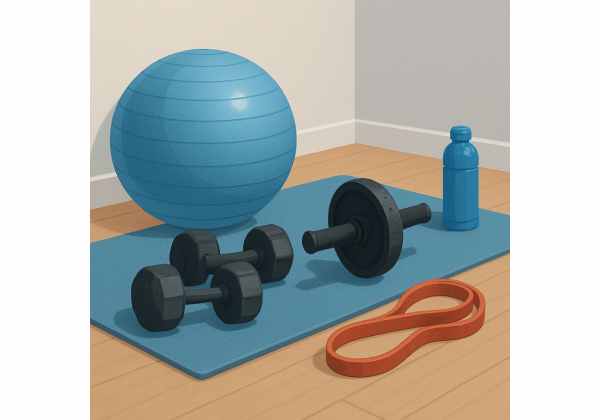
People often turn to core workouts when they want a leaner waist, flatter stomach, or more visible abs. That makes sense on the surface: if the midsection is the area you want to change, training it feels logical. But this is where many weight-loss plans go off course. Core training can be extremely useful while losing weight, just not for the reason most people think. It will not selectively melt fat off your stomach, and hundreds of crunches will not override a calorie surplus, poor recovery, or a weak full-body training plan. What core work can do is strengthen the trunk, improve lifting and movement quality, help preserve muscle during a diet, and build the muscle definition that becomes visible as overall body fat comes down. This article explains what the core actually includes, why spot reduction is the wrong goal, which exercises make sense while dieting, how often to train them, and what kind of results are realistic.
Table of Contents
- What Core Training Really Means
- Why Core Work Does Not Burn Belly Fat
- Why Core Training Matters During Weight Loss
- Best Core Exercises While Losing Weight
- How to Program Core Work Each Week
- Mistakes and Realistic Expectations
What Core Training Really Means
A lot of people use “core” as a synonym for abs, but the core is broader than the front of your stomach. It includes the muscles that help stabilize and move the trunk and pelvis: the rectus abdominis, internal and external obliques, transversus abdominis, spinal erectors, multifidus, diaphragm, pelvic floor, and the muscles around the hips that help control position and force transfer. In practical terms, your core is the system that helps you brace, twist, resist twisting, control posture, and transmit force between your upper and lower body.
That matters during weight loss because nearly every useful form of exercise depends on those functions. A squat, row, push-up, deadlift, carry, sprint, and even brisk walking all ask your trunk to do something. When people say they want “strong abs,” what they often really need is better trunk control and more balanced strength through the front, sides, and back of the torso.
This is also why the best core training is not always the flashiest. It is not limited to sit-ups and long planks. Good core work can include:
- Resisting extension, as in dead bugs and ab wheel rollouts
- Resisting rotation, as in Pallof presses
- Resisting side bending, as in side planks and suitcase carries
- Producing controlled flexion, as in reverse crunches or cable crunches
- Coordinating breathing and bracing under load
Seen that way, core training is less about chasing a burn and more about building a stronger platform. That platform helps you train harder and more safely everywhere else.
This broader definition also explains why people can do endless ab circuits and still feel weak in compound lifts or everyday tasks. If all your “core work” is high-rep crunching, you may be missing the qualities that matter most when you pick up groceries, control your trunk in a split squat, or hold posture at a desk for hours.
Core training should sit inside a bigger plan, not replace it. If your overall routine is thin, start with the basics first: a sound mix of strength, cardio, and daily movement and a simple structure you can repeat. Then add core training where it improves that plan, not where it distracts from it. For many people, that means adding a few focused core movements to a beginner strength routine rather than treating abs as a separate fat-loss program.
Once you understand that the core is about strength, stiffness, control, and force transfer, the rest of the topic gets clearer. You stop asking whether ab exercises burn belly fat and start asking whether your training is making you stronger, more stable, and better able to move well while you lose weight.
Why Core Work Does Not Burn Belly Fat
The most important truth in this topic is simple: training a body part does not reliably force your body to lose fat from that exact area. That idea is called spot reduction, and it remains popular because it sounds intuitive. If your stomach is the problem area, working the stomach seems like the direct fix. But body fat loss is regulated at the whole-body level, not muscle by muscle.
When you lose fat, your body draws on energy stores according to hormones, genetics, sex, age, stress, sleep, and overall energy balance. You can choose which muscles you train. You cannot fully choose where fat comes off first. That is why one person leans out in the face and arms early, while another notices changes in the waist much later.
For most people, visible abdominal definition requires two things at once:
- Lower overall body fat
- Enough abdominal muscle to show once fat is lower
Core training helps with the second point. Nutrition and full-body energy balance largely drive the first. If you are not in a calorie deficit, or if the deficit is small and inconsistent, ab workouts will strengthen the muscles underneath without removing much of the layer on top.
This is the point many people miss when they say, “I train abs all the time, but my stomach looks the same.” The training may be working. The fat-loss side of the plan may not be.
A few newer studies have complicated the old all-or-nothing message by suggesting that local exercise can influence local fat use or produce small regional changes under certain conditions. But that does not turn ab circuits into a practical belly-fat solution. In real-world programming, the advice stays the same: use core work to build strength and muscle, and use overall fat-loss habits to reduce waist size. If your real question is how to change your midsection safely, the more useful target is overall belly-fat loss through sustainable habits, not endless localized training.
That usually means focusing on the factors that actually move body fat over time:
- A consistent calorie deficit
- Enough daily protein and fiber to control hunger
- Regular full-body resistance training
- Cardio and daily movement that raise total energy expenditure
- Sleep and recovery that support appetite control
For some people, the waist also lags because water retention masks progress. Sodium swings, menstrual cycle changes, stress, harder training blocks, constipation, and poor sleep can all make the stomach look and feel softer or puffier even when fat loss is happening. That is why waist measurements, progress photos, and monthly trends often tell the story better than your mirror on a random Tuesday.
So the honest message is not that core training is useless. It is that core training has been sold for the wrong promise. It strengthens the muscles of the trunk. It helps shape your physique once fat comes down. It does not give you a shortcut around the physiology of fat loss or the need for a real calorie deficit that you can sustain.
Why Core Training Matters During Weight Loss
Once you stop expecting core work to spot-reduce fat, its real value becomes easier to appreciate. Core training matters during weight loss because dieting alone can make people smaller without making them stronger, more capable, or better proportioned. A good training plan aims for higher-quality weight loss: more fat lost, more muscle preserved, and better function at the end of the process.
Your core contributes to that in several ways.
First, it improves exercise quality. If your trunk collapses in a squat, overextends in an overhead press, or rotates excessively in single-leg work, your technique and output suffer. Stronger bracing and trunk control often make other lifts feel smoother and safer. That matters because the big calorie-burning, muscle-preserving work in a fat-loss phase usually comes from full-body strength training, not from isolated ab work alone.
Second, core training can help preserve visible shape while dieting. When calories are reduced, people often lose some lean mass unless training and nutrition are set up well. Building or maintaining trunk musculature gives your waist and torso more structure, especially when paired with a strong overall lifting plan and adequate protein intake during weight loss. You may not become dramatically more muscular from a few planks, but targeted, progressive core work can improve abdominal thickness, trunk endurance, and the look of the midsection once body fat drops.
Third, it supports daily comfort and posture. Weight loss plans often include more walking, more lifting, and more time on your feet. A stronger trunk can make that increase in activity easier to tolerate. It can also improve body awareness, breathing, and the ability to hold position under fatigue. That benefit becomes especially noticeable if you sit for long periods, return to exercise after a long break, or feel unstable during loaded movements.
Fourth, it can improve training confidence. Many beginners avoid resistance training because they feel uncoordinated or “weak in the middle.” A few months of well-chosen core work often changes that. Dead bugs become easier. Side planks stop shaking. Carries feel controlled. That kind of progress is not just cosmetic. It creates buy-in for the rest of the program.
There is also a body-composition reason not to skip core work. If you diet aggressively and do mostly cardio, you may lose weight without looking or performing the way you hoped. The scale drops, but strength, firmness, and shape do not improve much. This is one reason body recomposition thinking is often more useful than scale obsession. If your goal is to look leaner, not just weigh less, it helps to understand the difference between recomposition and scale loss.
In other words, core training is not the star of fat loss, but it is an important supporting player. It helps you hold better position, preserve useful muscle, train more effectively, and look more athletic as the diet works. That is a much better reason to do it than trying to punish belly fat away with sit-ups.
Best Core Exercises While Losing Weight
The best core exercises while losing weight are the ones that deliver enough training stimulus without wrecking recovery or stealing time from the rest of your plan. That usually means choosing movements that are stable, easy to progress, and useful for the kind of training you already do.
A smart approach is to cover a few different core functions rather than repeating the same exercise pattern. Here are the categories that matter most.
Anti-extension exercises help you resist arching through the lower back:
- Dead bug
- Stability ball rollout
- Ab wheel rollout
- Body saw plank
Anti-rotation exercises help you resist twisting:
- Pallof press
- Tall-kneeling band press-out
- Bird dog with controlled reach
- Single-arm cable hold
Anti-lateral flexion exercises help you resist side bending:
- Side plank
- Suitcase carry
- Offset farmer carry
- Copenhagen side plank regressions
Controlled flexion exercises train the abs through motion:
- Reverse crunch
- Hanging knee raise
- Cable crunch
- Decline crunch, if tolerated well
Integrated loaded options train the core while the rest of the body works:
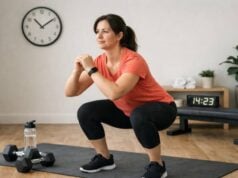
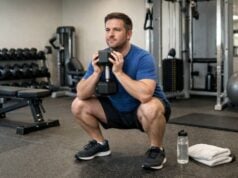
- Front squat and goblet squat
- Romanian deadlift with strong bracing
- Split squat
- Loaded carry variations
Most people do not need every category in every workout. Two or three well-chosen movements are enough. A good rule is to include at least one stability-focused drill and one movement-focused drill over the course of the week.
Exercise choice should also match your level.
If you are a beginner, start with:
- Dead bugs
- Side planks
- Pallof presses
- Glute bridge marches
- Light carries
If you have more experience, progress to:
- Ab wheel rollouts
- Hanging knee or leg raises
- Heavier carries
- Longer-lever side plank variations
- Cable crunches with progressive load
One common mistake is picking exercises that look hard but are hard for the wrong reason. Very unstable drills are not automatically better. If you cannot feel the target area, cannot control your breathing, or compensate through the hips and lower back, the exercise may be too advanced for now. In many cases, a clean dead bug or cable crunch does more for your midsection than a circus-style plank variation.
You also do not need a full gym to train the core well. A strong bodyweight training plan or a simple resistance band setup can cover most of what you need. Bands are especially good for Pallof presses and anti-rotation work. Bodyweight options are excellent for dead bugs, side planks, reverse crunches, and hollow holds.
The best exercise is the one you can execute with control, progress over time, and recover from without compromising your larger fat-loss routine. That means fewer novelty drills, more quality reps, and a clearer link between your core work and the rest of your training.
How to Program Core Work Each Week
Core training does not need to dominate your week to be effective. In fact, most people get better results by doing a modest amount consistently than by crushing one massive ab workout and skipping the rest. While losing weight, the goal is enough volume to build or maintain trunk strength and endurance without interfering with recovery from bigger lifts, cardio, steps, and life.
For most adults, this weekly framework works well:
- Train the core 2 to 4 times per week
- Use 2 to 4 exercises per session
- Do 2 to 4 sets per exercise
- Keep most sets 20 to 45 seconds, 6 to 15 reps, or 8 to 12 controlled breaths depending on the movement
- Progress by adding load, range, time, or control, not just more sloppy reps
A simple split can look like this:
- After lower-body day
Dead bug: 3 sets of 8 to 10 per side
Side plank: 3 sets of 20 to 40 seconds per side
Cable crunch: 3 sets of 10 to 15 - After upper-body day
Pallof press: 3 sets of 10 to 12 per side
Reverse crunch: 3 sets of 10 to 15
Suitcase carry: 3 trips per side - Optional short third session
Ab wheel rollout or stability ball rollout: 2 to 3 sets of 6 to 10
Bird dog: 2 to 3 sets of 6 to 8 per side
That is enough for many people. You do not need daily ab training unless you enjoy it and recover well. The quality of the work matters more than the frequency.
A few programming rules help:
- Put technically demanding core work earlier, and fatigue work later
- Pair anti-rotation or anti-extension drills with big lifts
- Keep 1 to 3 reps in reserve on most sets instead of chasing failure every time
- Use full exhalation and controlled bracing rather than rushing
- Treat progression seriously, just as you would for squats or rows
If you are dieting hard, recovery matters even more. Very high-volume core circuits can make your trunk constantly sore, which can reduce performance on compound lifts and make your walking, running, or daily movement less comfortable. Moderate volume usually beats punishment.
It also helps to think in training phases. In a beginner phase, focus on control and positioning. In an intermediate phase, load the movements more deliberately. In a busier or lower-energy phase, maintain with shorter sessions rather than dropping the work entirely. If the rest of your training is already full, core sessions can be 8 to 12 minutes at the end of a workout and still be effective.
Finally, do not ignore setup. Good bracing depends on how you breathe, how you stack the ribs over the pelvis, and whether you can control spinal position. A rushed warm-up often makes core work worse. A better sequence is to prepare the trunk and hips, then train. If you routinely feel stiff or unstable before exercise, a basic warm-up and recovery routine can make your core work more effective and your main lifts feel better.
Core training works best when it behaves like part of a real program, not like a last-minute punishment for eating dessert.
Mistakes and Realistic Expectations
The biggest mistake in core training during weight loss is expecting the wrong outcome. If you judge your ab program only by whether lower belly fat disappears in two weeks, you will probably conclude it failed even when it made you stronger. A better standard is whether your trunk strength, control, and physique are improving over months while the broader fat-loss plan does its job.
Several mistakes tend to slow progress.
The first is doing too much isolated ab work and too little full-body training. Core exercises matter, but the most powerful body-composition changes usually come from a bigger foundation of resistance training, walking, cardio, and diet consistency.
The second is using poor exercise selection. Endless sit-ups and random social media circuits often train fatigue more than function. If every session is a race to feel a burn, technique usually slips and the lower back or hip flexors take over.
The third is ignoring load and progression. Many people train abs with the same 20 bodyweight reps for years and wonder why nothing changes. The core responds to overload too. That may mean harder variations, slower tempo, longer levers, heavier carries, or added resistance.
The fourth is dieting so aggressively that training quality collapses. If you are exhausted, under-recovered, and losing strength everywhere, the answer is not more crunches. It may be a smarter calorie target, more protein, better sleep, or more realistic expectations about the pace of fat loss.
The fifth is tracking only the mirror. Core training progress often shows up first as:
- Better control during lifts
- Longer plank or carry times with cleaner form
- Less trunk fatigue in workouts
- Improved waist measurement over time
- More definition once body fat drops
That last point matters. Visible abs are influenced by body-fat level, abdominal muscle size, where you store fat, sex differences, age, and how much water you are carrying. Two people can train equally well and have very different timelines for abdominal definition. That is why it helps to judge progress with more than one metric. Alongside photos and waist measurements, you may benefit from non-scale progress markers or a simple trend system such as daily weigh-ins interpreted over time.
What should you realistically expect if you train the core well while losing weight?
- Better trunk control within a few weeks
- Noticeably improved endurance and exercise quality in 4 to 8 weeks
- Stronger, thicker abdominal muscles over several months
- A leaner-looking waist only as overall body fat comes down
That is the honest answer behind the headline. Core training while losing weight is worth doing, but it is not a shortcut. It is a support strategy that improves how you move, how you lift, and how your physique looks when the fat-loss side of the plan is working. Use it to build strength, not to chase a myth about melting fat from one stubborn area.
References
- A proposed model to test the hypothesis of exercise-induced localized fat reduction (spot reduction), including a systematic review with meta-analysis 2022 (Systematic Review and Meta-Analysis)
- Aerobic Exercise and Weight Loss in Adults: A Systematic Review and Dose-Response Meta-Analysis 2024 (Systematic Review and Dose-Response Meta-Analysis)
- Exercise training in the management of overweight and obesity in adults: Synthesis of the evidence and recommendations from the European Association for the Study of Obesity Physical Activity Working Group 2021 (Review and Recommendations)
- A Critical Review of Trunk and Hip Exercise Prescription: Applying Evidence for a Modern Approach 2025 (Review)
- Effect of resistance exercise on body composition, muscle strength and functional capacity in adults with overweight or obesity during weight loss interventions: a systematic review 2025 (Systematic Review)
Disclaimer
This article is for general educational purposes only and is not a substitute for medical advice, diagnosis, or treatment. If you have persistent back pain, pelvic floor symptoms, a recent injury, or a medical condition that affects exercise tolerance, get personalized advice from a qualified clinician before changing your training.
If this article helped you, please share it on Facebook, X, or another platform you use so more people can understand the difference between stronger abs and actual fat loss.