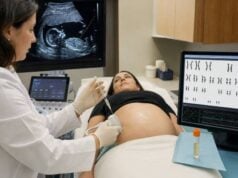
A CFTR genetic test can help explain male infertility caused by congenital absence of the vas deferens, the tubes that normally carry sperm from the epididymis toward the urethra. When both vas deferens are absent, semen usually contains no sperm even though the testes may still produce sperm and testosterone normally. This pattern is called congenital bilateral absence of the vas deferens, or CBAVD, and it is strongly associated with variants in the CFTR gene. Some men have two CFTR variants, some have one recognized variant plus a mild allele such as 5T, and others have no detectable CFTR cause. The result affects more than the infertility diagnosis. It may reveal a CFTR-related disorder, identify health issues worth evaluating, and define the chance of cystic fibrosis or another CFTR-related condition in future children. Testing the reproductive partner is therefore an essential part of counseling before sperm retrieval, IVF, or intracytoplasmic sperm injection.
- CFTR testing is recommended for men with absent vas deferens or unexplained obstructive azoospermia, including assessment of the 5T allele.
- Up to about 80% of men with bilateral vasal absence have at least one CFTR variant, but detection varies by ancestry and test method.
- A positive result does not automatically mean classic cystic fibrosis; some variants mainly cause reproductive-tract disease.
- The reproductive partner should receive CFTR carrier evaluation before embryos are created or transferred.
- A negative limited panel does not exclude a CFTR-related cause, especially in people from ancestries poorly covered by targeted panels.
- Sperm production is often preserved, allowing surgical sperm retrieval and IVF with ICSI when desired.
Table of Contents
- CFTR and the male reproductive tract
- When CFTR testing is recommended
- How the test is performed
- Understanding CFTR results
- Partner testing and risk to children
- Fertility treatment options
- Health evaluation beyond fertility
- Planning the next steps
CFTR and the male reproductive tract
CFTR stands for cystic fibrosis transmembrane conductance regulator. The gene provides instructions for an ion channel that helps control chloride, bicarbonate, salt, and water movement across epithelial surfaces. Severe loss of CFTR function causes cystic fibrosis, which can affect the lungs, pancreas, sinuses, intestines, sweat glands, and reproductive tract.
The vas deferens and related ducts are especially sensitive to reduced CFTR function during development. In many affected males, the vas deferens, distal epididymis, and seminal vesicles do not form normally or become obstructed early. The testes may still make sperm, but sperm cannot enter the ejaculate.
CBAVD means both vas deferens are absent. Congenital unilateral absence of the vas deferens, or CUAVD, affects one side and may occur with a kidney anomaly or a CFTR-related cause. Some men have both vas deferens present but have idiopathic epididymal obstruction. CFTR variants are most frequent in CBAVD, less frequent in unilateral absence, and present in a smaller proportion of unexplained obstructive azoospermia.
Typical semen findings in CBAVD include:
- Azoospermia, meaning no sperm seen in the ejaculate
- Low semen volume, often below about 1.5 mL
- Acidic semen pH, commonly below 7.2
- Low or absent fructose because the seminal vesicles are absent or underdeveloped
- Normal or near-normal follicle-stimulating hormone when sperm production is intact
These findings suggest obstruction but do not prove CFTR involvement. Physical examination by a reproductive urologist is important because the vas deferens can be difficult to assess, especially with prior scrotal surgery, obesity, or anatomic variation.
Most men with classic cystic fibrosis have CBAVD. The reverse is not true: many men with CBAVD do not have classic lung or pancreatic disease. They may have a mild CFTR-related disorder in which infertility is the main or only recognized feature.
When CFTR testing is recommended
Current male infertility guidance recommends CFTR variant testing for men with vasal agenesis or idiopathic obstructive azoospermia. Testing should include the intron 9 poly-T tract, particularly the 5T allele, because this mild allele is strongly associated with reduced normal CFTR messenger RNA and CBAVD in certain genetic combinations.
Testing is especially appropriate when examination or imaging shows:
- Bilateral absence of the vas deferens
- Unilateral vasal absence with infertility
- Absent or small seminal vesicles
- Epididymal abnormalities consistent with congenital obstruction
- Low-volume, acidic azoospermic semen without evidence of retrograde ejaculation
- A personal or family history of cystic fibrosis, pancreatitis, bronchiectasis, chronic sinus disease, or known CFTR variants
The initial infertility evaluation should still confirm azoospermia with at least two properly collected semen analyses when possible. Hormone tests, physical examination, and sometimes ultrasound help distinguish obstructive from nonobstructive azoospermia. CFTR testing does not replace this workup.
Renal ultrasound is often considered when a vas deferens is absent on one side because unilateral vasal absence can accompany absence of the kidney on the same side. In classic bilateral CFTR-related absence, kidney anomalies are less characteristic, but clinical context matters.
Men with nonobstructive azoospermia usually need other genetic studies, such as a karyotype test for infertility and Y-chromosome microdeletion testing. Ordering CFTR testing solely because semen contains no sperm can miss the distinction between an absent duct and impaired sperm production.
Testing before sperm retrieval is preferable. It gives the couple time to test the partner, understand embryo or pregnancy risks, and decide whether preimplantation or prenatal testing is relevant before treatment begins.
Distinguishing obstruction from impaired sperm production prevents the wrong genetic pathway. In obstructive azoospermia, the testes often have normal volume, follicle-stimulating hormone may be in the reference range, and epididymal fullness or absent ducts may be found on examination. In nonobstructive azoospermia, testicular volume may be reduced and follicle-stimulating hormone may be elevated, although exceptions occur. A reproductive urologist may use semen volume, pH, fructose, hormones, examination, and ultrasound together rather than relying on one value.
The timing of the diagnosis can also reveal information about a family. A man may learn he has CBAVD only after months of infertility treatment, while a brother or male cousin may have unexplained low-volume azoospermia. Relatives should not be assumed to have the same anatomy, but sharing the confirmed CFTR result can help them pursue appropriate carrier or diagnostic testing. Female relatives may be carriers without symptoms and may want testing before pregnancy.
Testing is not limited to couples already pursuing IVF. Men who are not currently planning children may still benefit from knowing whether they have a CFTR-related disorder, because the finding can affect their own health care and future reproductive choices. Consent should cover this broader implication before the sample is collected.
How the test is performed
CFTR analysis usually uses blood, saliva, or a cheek-swab sample. No fasting is required, and medications do not alter the inherited DNA result. The main issue is not specimen collection but selecting a test with enough coverage for the clinical situation.
A targeted carrier panel checks a defined list of common disease-causing variants. It is efficient for routine population screening but may be inadequate for a man who already has CBAVD. Variant frequencies differ across ancestry groups, and rare or ancestry-specific changes may be missed.
A diagnostic CFTR workup may include:
- Sequencing of the coding regions and nearby splice sites
- Deletion and duplication analysis for missing or extra exons
- Testing of the poly-T and adjacent TG repeat tracts
- Targeted analysis of a known family variant
- In selected unresolved cases, broader analysis of deep intronic or regulatory regions
The 5T allele requires careful reporting. Its effect depends partly on the number of adjacent TG repeats. A 5T allele paired with TG12 or TG13 generally reduces normal splicing more than 5T paired with TG11. The laboratory should report both the poly-T and TG tract when relevant.
Turnaround commonly ranges from one to three weeks. The report should list each variant, its classification, phase when known, and the assay’s limitations. “Phase” describes whether two variants are on different copies of CFTR, called in trans, or on the same copy, called in cis. Two disease-relevant variants in trans are usually necessary for an autosomal recessive CFTR-related condition.
A limited cystic fibrosis carrier test may return “negative” even when comprehensive sequencing would identify a cause. Ask whether the ordered test was designed for carrier screening or for diagnostic evaluation of CBAVD.
Understanding CFTR results
CFTR results may identify two variants, one variant, a mild allele combination, an uncertain variant, or no reportable variant. The interpretation must combine genotype, physical findings, semen results, and any respiratory, digestive, or pancreatic history.
Two pathogenic or clinically relevant variants
Two CFTR variants found in trans can establish a CFTR-related disorder. The expected phenotype depends on how much function each variant retains. Two severe variants may raise concern for classic or nonclassic cystic fibrosis, even if the person has not previously been diagnosed. A severe variant paired with a residual-function variant may cause CBAVD with few other symptoms.
The word “pathogenic” does not predict identical disease in every person. CFTR variants differ in effect, and modifiers outside CFTR contribute to clinical variation. A sweat chloride test and clinical assessment may be needed to determine whether diagnostic criteria for cystic fibrosis are met.
One pathogenic variant
One recognized disease-causing variant is common in men with CBAVD. A second change may be a mild 5T/TG allele, a rare variant missed by the assay, or a change not yet understood. The result supports CFTR involvement but may not fully explain the phenotype.
The next step may be deletion/duplication analysis, comprehensive sequencing, review of poly-T/TG status, or referral to a specialist laboratory. It is important not to label the person merely as a carrier without considering the congenital reproductive finding.
5T and TG repeat result
The 5T allele reduces inclusion of a CFTR exon during RNA processing. Its clinical effect is variable. When 5T is in trans with a disease-causing CFTR variant, particularly with TG12 or TG13, it can contribute to CBAVD. A 5T allele by itself does not establish cystic fibrosis and can be present in people without symptoms.
Reports may use notation such as TG12-5T. Genetic counseling should clarify whether the other CFTR variant is on the opposite chromosome and what phenotype has been associated with the combination.
Variant of uncertain significance
A VUS has insufficient evidence for a benign or disease-causing classification. It should not be treated as proof of cystic fibrosis or used alone for embryo testing. Family studies, functional evidence, and later laboratory reclassification may help. The laboratory should be contacted periodically or the result reviewed before future reproductive treatment.
No variant detected
A negative result lowers the likelihood of a detectable CFTR cause but does not eliminate it. The assay may not cover deep intronic variants, complex structural changes, or rare regulatory regions. Other genes, including ADGRG2 in some men, can cause congenital obstructive azoospermia. Developmental kidney-vasal syndromes and nongenetic causes also need consideration.
Partner testing and risk to children
Partner testing is central because assisted reproduction can bypass the obstruction and allow a man with a CFTR-related genotype to conceive a genetically related child. The reproductive risk depends on both partners’ results and on the specific variants.
Cystic fibrosis and most CFTR-related disorders follow autosomal recessive inheritance. A child generally needs to inherit a disease-relevant CFTR allele from each genetic parent to be affected. If the male partner has two CFTR variants, every child will inherit one of them. If the reproductive partner also carries a pathogenic CFTR variant, each pregnancy may have a substantial chance of cystic fibrosis or another CFTR-related condition.
A simplified risk framework is:
| Male result | Partner result | General implication |
|---|---|---|
| Two CFTR variants | No variant detected on an appropriate test | Children will inherit one paternal variant; affected-child risk is reduced but not zero because partner testing has residual risk |
| Two CFTR variants | One pathogenic variant | Each pregnancy may have a 50% chance of inheriting two variants, with severity depending on the combination |
| One CFTR variant | One pathogenic variant | Up to a 25% chance of inheriting both known variants if the man has only one transmissible identified variant |
| No variant detected | Carrier | Risk is lower but depends on whether the male test was comprehensive and whether CFTR still explains the vasal absence |
These figures are general and can change with 5T/TG alleles, phase, complex alleles, and uncertain variants. A genetics professional should calculate the couple-specific risk.
The partner’s test should be appropriate for ancestry and family history. A small targeted panel can leave a larger residual risk than comprehensive sequencing. If both partners have relevant variants, options may include IVF with PGT-M, prenatal diagnosis with CVS or amniocentesis, use of donor sperm or donor eggs, embryo donation, adoption, or conception without genetic testing.
Prenatal or embryo testing requires the exact laboratory reports, not a verbal statement that someone “carries CF.” Laboratories often need parental samples and time to design and validate a family-specific assay.
Fertility treatment options
CBAVD causes a transport problem rather than automatically causing failure of sperm production. Sperm can often be collected from the epididymis or testis and used with IVF and intracytoplasmic sperm injection, in which one sperm is injected into an egg.
Retrieval approaches include percutaneous epididymal sperm aspiration, microsurgical epididymal sperm aspiration, testicular sperm aspiration, or testicular sperm extraction. The choice depends on local expertise, anatomy, prior procedures, and whether fresh or frozen sperm is planned.
Before retrieval, the reproductive urologist may assess testicular size, hormones, and the female partner’s fertility plan. Although spermatogenesis is often preserved, some men with cystic fibrosis or CFTR-related disease may have reduced sperm production, chronic illness, medication effects, or endocrine issues that influence yield.
Sperm is frequently frozen so a repeat surgical procedure is not needed for each IVF cycle. The clinic should discuss the expected number of samples, storage, what happens if no usable sperm is found, and whether retrieval should occur before or on the day of egg collection.
ICSI overcomes the missing duct but does not reduce genetic transmission. That is why partner testing and counseling should occur before treatment rather than after pregnancy is established. PGT-M can test embryos for a known familial CFTR combination, but it does not guarantee pregnancy and usually does not assess every unrelated genetic condition unless additional testing is ordered.
Some couples choose sperm donation to avoid passing on a high-risk CFTR combination. Others accept the risk and plan prenatal or newborn testing. Decisions may reflect prognosis of the specific variants, access to care, financial cost, beliefs about embryo testing, and prior fertility treatment burden.
Health evaluation beyond fertility
A CFTR finding in a man with vasal absence may have personal health implications even when infertility is the first concern. A genetics or cystic fibrosis specialist may review symptoms and decide whether further evaluation is indicated.
Possible assessments include:
- Sweat chloride testing at an accredited center
- Respiratory history, examination, and pulmonary testing when symptoms suggest lung disease
- Review of chronic sinusitis, nasal polyps, or repeated bronchitis
- Pancreatic and digestive history, including pancreatitis, poor weight gain, or greasy stools
- Liver, glucose, or nutritional evaluation when clinically appropriate
- Family testing for relatives who may be carriers or affected
Many men with isolated CBAVD remain healthy outside reproduction. Testing should not create an assumption that severe lung disease will develop. At the same time, mild respiratory or pancreatic symptoms may have been normalized or treated separately for years. A focused review can connect these findings and identify care that would otherwise be missed.
Men with classic cystic fibrosis increasingly pursue parenthood because modern treatment has improved health and life expectancy. Coordination among the cystic fibrosis team, reproductive urologist, fertility clinic, genetics service, and the partner’s obstetric clinician helps manage infection control, anesthesia, medication, nutrition, and genetic risk.
A negative sweat test does not erase a genetically supported CFTR-related disorder. Sweat chloride can be intermediate or normal with residual-function variants, particularly when the phenotype is limited to the reproductive tract. Nasal potential difference or other specialized functional testing is rarely needed, but a cystic fibrosis center may consider it when genotype, symptoms, and sweat chloride do not agree.
Planning the next steps
Start by obtaining a precise anatomic and semen diagnosis. “Blocked tubes” is not enough; the record should state whether the vas deferens are absent bilaterally, absent unilaterally, or present with another obstruction. Keep copies of semen analyses, ultrasound reports, and the complete CFTR report.
Before fertility treatment, ask:
- Did my test include sequencing, deletion/duplication analysis, and the 5T/TG tract?
- Were two variants found, and are they known to be in trans?
- Do I need sweat chloride or a cystic fibrosis specialist evaluation?
- What CFTR test should my reproductive partner receive?
- What is the residual risk after a negative partner result?
- Which sperm retrieval method fits my anatomy and treatment plan?
- Is PGT-M technically possible for our exact variants, and how long will test development take?
- Would prenatal diagnosis still be recommended after PGT-M?
A result from years ago may need reinterpretation. Variant databases, classification rules, and recommended carrier panels change. Before another IVF cycle or future pregnancy, ask the original laboratory or a genetics service to review any VUS, older “mutation” terminology, or a negative limited panel.
The infertility diagnosis can be emotionally difficult even when sperm retrieval is likely to succeed. Counseling should address both the medical plan and the implications of discovering an inherited condition. A clear sequence—confirm anatomy, complete male testing, test the partner, calculate risk, then select a reproductive path—reduces rushed decisions and avoids creating embryos before the couple knows whether family-specific testing is desired.
References
- Diagnosis and Treatment of Infertility in Men: AUA/ASRM Guideline 2024 (Guideline)
- Updates to Male Infertility: AUA/ASRM Guideline (2024) 2024 (Guideline)
- CFTR variant testing: a technical standard of the American College of Medical Genetics and Genomics (ACMG) 2020 (Technical Standard)
- Updated recommendations for CFTR carrier screening: A position statement of the American College of Medical Genetics and Genomics (ACMG) 2023 (Position Statement)
- Congenital Bilateral Absence of the Vas Deferens 2022 (Review)
- Testicular function and fertility outcomes in males with CF 2025 (Review)
Disclaimer
This article is educational and does not replace evaluation by a reproductive urologist, genetic counselor, cystic fibrosis specialist, or fertility team. CFTR result interpretation and reproductive risk depend on the exact variants, test coverage, partner results, and clinical findings. Do not begin embryo testing or make reproductive decisions from a partial report or uncertain variant without specialist review.