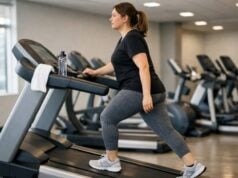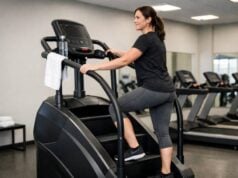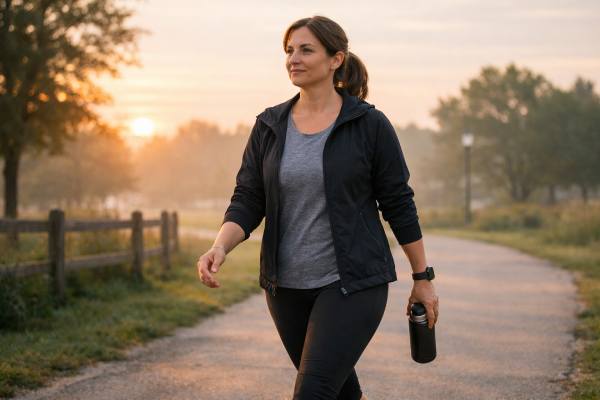
Fasted walking usually means doing a walk first thing in the morning before breakfast, after an overnight fast. It is popular because it feels simple, low-pressure, and often easier to stick with than harder cardio. The idea is also appealing: if you have not eaten yet, maybe your body will burn more fat and speed up weight loss.
There is some truth in that, but not in the way many people assume. Fasted walking can increase fat use during the walk itself, especially at an easy to moderate pace. What it does not clearly do is guarantee greater long-term fat loss than walking after eating. The difference that matters most is still your total calorie balance, your weekly activity, your recovery, and whether you can repeat the habit consistently without feeling drained or overly hungry later.
Table of Contents
- What fasted walking really means
- Does it actually burn more body fat?
- When fasted walking can be useful
- Drawbacks, risks and who should be careful
- How to do fasted walking safely
- How to fit it into a fat-loss plan
- Fasted walking vs fed walking: which is better?
What fasted walking really means
Fasted walking is not a special exercise category. It is still just walking. The only difference is when you do it relative to your first meal.
In most cases, “fasted” means:
- You slept overnight without eating
- You wake up and walk before breakfast
- You have not had calories yet, though water and black coffee are common
For some people, that might mean a 10-hour fast. For others, it could be 12 hours or more. The exact number matters less than the practical setup: you are doing your walk before your first substantial calorie intake of the day.
That timing changes your body’s immediate fuel use. After an overnight fast, insulin levels are lower than after a meal, and the body is generally more likely to use stored fuel during lower-intensity activity. Because walking is not especially intense, it fits well into that environment. That is why fasted walking often gets grouped with broader conversations about zone 2 cardio and easy aerobic training.
Still, the “fasted” part is easy to exaggerate. It does not turn a casual walk into a metabolic shortcut. The main driver of calorie burn is still the walk itself: your pace, your body size, the terrain, the duration, and how often you do it each week. If you are comparing methods, the biggest base habit is often just walking for weight loss consistently enough to matter.
Why people like it
Fasted walking appeals to people for a few practical reasons:
- It is easy to do before work or family responsibilities
- It feels lighter and less intimidating than a hard workout
- Some people feel less sluggish walking before breakfast
- It can create structure early in the day
- It pairs naturally with a morning routine
There is also a psychological benefit that often gets overlooked. Starting the day with a walk can make people feel more on track, which can spill over into better food choices and more movement later on. That effect is not unique to fasted walking, but it can be one of the reasons the habit “works” in real life.
What fasted walking is not
It is not:
- A guarantee of faster fat loss
- Automatically better than fed walking
- A replacement for a calorie deficit
- A good fit for everyone
- A reason to push too hard on an empty stomach
The simplest way to think about fasted walking is this: it is a timing strategy, not a magic exercise type. For some people it is a convenient, sustainable way to add walking. For others, it feels flat, hungry, or unnecessary.
Does it actually burn more body fat?
This is the key question, and it helps to separate two ideas that often get blurred together:
- Fat oxidation during the workout
- Actual body fat loss over time
Those are related, but they are not the same thing.
During the walk, fasted walking often uses more fat
At low to moderate intensities, fasted exercise can shift your body toward using a greater proportion of fat for fuel during that session. That is one reason it became popular. On paper, it sounds like a direct path to fat loss.
But the body does not judge progress based on one 30- or 45-minute window. It responds to what happens across the whole day and over many weeks: how much you eat, how active you are, how hungry you feel later, and whether the routine helps or hurts your consistency.
Over time, the fat-loss advantage is much less impressive
This is where many headlines overpromise. A higher percentage of fat burned during one walk does not automatically mean greater body-fat loss over the long term.
Why not? Because several things can offset the short-term boost:
- You may eat more later without realizing it
- You may move less later in the day
- You may walk at a lower intensity or shorter duration because you feel underfueled
- Total calorie balance may end up the same either way
That is why fasted walking should be viewed as a potentially useful tool, not as proof that breakfast ruins fat loss. In practice, long-term fat loss still depends much more on your weekly calorie balance. A straightforward framework like calorie deficit basics matters far more than whether you walked before or after breakfast.
Why the “fat-burning” idea can mislead people
People hear “your body burns more fat while fasted” and turn that into “fasted walking burns more body fat overall.” Those are not interchangeable claims.
A more accurate summary looks like this:
| Question | Fasted walking | Fed walking |
|---|---|---|
| May use a greater proportion of fat during the walk | Often yes | Usually less |
| Automatically causes more total fat loss | No clear guarantee | No clear disadvantage if calories are matched |
| May feel easier for some people first thing in the morning | Yes | Sometimes not |
| May support better performance on longer or harder sessions | Usually not | Often yes |
| Best choice for everyone | No | No |
If your main goal is fat loss, the bigger questions are:
- Can you do the walking often enough?
- Does it help you stay in a reasonable deficit?
- Does it avoid rebound hunger and energy crashes?
- Can you recover and keep moving the rest of the day?
That is also why chasing a perfect “fat-burning zone” can distract from the basics. The most effective walking routine is usually the one you recover from and repeat, not the one with the most dramatic metabolic label.
When fasted walking can be useful
Fasted walking is not necessary, but it can be a good fit in the right situation.
1. It can make morning exercise more practical
One of its biggest advantages is convenience. If you can wake up, drink water, step outside, and walk for 20 to 45 minutes before your day gets busy, that may be more valuable than any small physiology debate. Convenience drives adherence, and adherence drives results.
For many people, the real benefit is that it removes friction:
- No meal prep first
- No waiting for food to settle
- No overthinking
- No need for a gym
- No long setup
This is part of why early walks often stick better than more complicated cardio plans. The question of morning walks vs evening walks is often less about which burns more fat and more about which fits your real schedule.
2. It works well with low-intensity cardio
Walking is one of the better fasted exercise options because it is low impact and usually submaximal. Hard intervals, fast runs, or long endurance sessions are more likely to suffer when done unfed. Walking is much more forgiving.
A good fasted-walking session is often:
- 20 to 45 minutes
- Easy to moderate pace
- Flat or gently inclined
- Comfortable enough to speak in short sentences
That makes it less risky than trying to do fasted HIIT or a demanding strength workout on an empty stomach.
3. Some people simply feel better walking before food
Not everyone likes moving after a meal. Some feel heavy, bloated, or sluggish. Others genuinely enjoy being outdoors early with coffee and no food beforehand. If fasted walking feels good and does not lead to a hunger blowback later, that alone can make it a useful strategy.
4. It may help with appetite control for some people
This is highly individual. Some people finish a fasted walk feeling calm and not especially hungry. Others come home ravenous. If you are in the first group, fasted walking can be easier to build into a fat-loss routine. If you are in the second group, it may backfire.
Walking also has non-scale benefits that can indirectly support weight loss. A short walk can reduce stress, improve mood, and interrupt impulsive eating patterns. In that sense, it overlaps with walking for stress relief and appetite control, which may matter more for some people than fuel selection during the walk itself.
5. It can be a gentle starting point for beginners
For people who dislike formal workouts, fasted walking can feel much less threatening than “starting cardio.” It is ordinary movement with a little more intention. That simplicity is useful.
The catch is that “gentle” only applies when the walking itself stays gentle. Fasted walking is most helpful when it remains a sustainable habit, not when it becomes a harsh morning ritual you secretly dread.
Drawbacks, risks and who should be careful
Fasted walking is low risk for many healthy adults, but it is still not universally smart.
Hunger rebound is the biggest practical downside
A walk that seems virtuous can become unhelpful if it makes you dramatically hungrier later and you end up eating far more than you otherwise would have. This does not happen to everyone, but it is common enough to watch for.
Signs it may be backfiring:
- You feel shaky or irritable after the walk
- You overeat at breakfast or later in the day
- Your energy crashes by mid-morning
- You become preoccupied with food after the session
- You feel unusually tired and move less afterward
This matters because exercise does not happen in isolation. Appetite compensation is one reason people sometimes feel they are “doing everything right” and still not losing. Related patterns show up in discussions of why exercise can increase hunger, especially when training is harder than recovery supports.
It may reduce workout quality if you push too hard
Walking is usually okay in a fasted state, but there is a point where the session stops being easy cardio and starts behaving more like a hard workout. Long steep hikes, heavy weighted walks, or fast treadmill incline sessions can feel much worse without fuel.
If the fasted setup makes you shorten the walk, slow it excessively, or skip sessions entirely, the theoretical metabolic benefit is not helping you.
Some people should be more cautious
Fasted walking may not be a good idea, or may require medical guidance, if you have:
- Diabetes or use glucose-lowering medication
- A history of dizziness, fainting, or reactive hypoglycemia
- Pregnancy
- A history of disordered eating or an unhealthy fixation on “earning” food
- Very high training volume or poor recovery
- A medical condition that makes fasting or exercise timing more complicated
If you fall into one of those groups, “walking before breakfast” is not automatically dangerous, but it is not something to treat casually either.
Low energy can quietly reduce total daily movement
Another overlooked problem is that a fasted walk can leave some people subtly flatter for the rest of the day. They sit more, fidget less, and move less overall. That drop in daily non-exercise movement can shrink the benefit you thought you earned from the walk.
This is why a single habit should be judged by its full-day effect, not by how disciplined it looks at 7:00 a.m.
How to do fasted walking safely
If you want to try fasted walking, the safest approach is to keep it simple and conservative at first.
Start easier than you think you need to
A smart starting point is:
- 15 to 30 minutes
- Comfortable pace
- Mostly flat route
- Water before or during if needed
You do not need to prove anything. The goal is to learn how your body responds, not to show toughness.
Use a simple intensity check
Fasted walking is usually best when it stays in the easy to moderate range. You should be able to breathe through your nose at times, speak in short sentences, and finish feeling awake rather than depleted.
If you cannot control the effort, the session is probably too hard for a fasted setup.
Pay attention to warning signs
Stop and eat if you notice:
- Dizziness
- Nausea
- Shaking
- Blurred vision
- Sudden weakness
- A “hollow” or panicky feeling that keeps building
Those are not signs of elite fat burning. They are signs the session is not going well for you that day.
Hydration still matters
Even if you skip food before the walk, do not skip fluids. Many people wake up mildly dehydrated. A glass of water before leaving is a low-effort way to make the session feel better.
Coffee is optional. Some people enjoy black coffee before a fasted walk because it increases alertness and perceived energy. Others feel jittery or get stomach discomfort. Test it honestly rather than assuming it helps.
Know when not to stay fasted
A small pre-walk snack is often smarter when:
- The walk will be longer than about 45 to 60 minutes
- You plan to include hills or a brisk pace
- You felt weak on previous fasted sessions
- You are combining the walk with later training
- You have a physically demanding morning
In those cases, using a light option from a guide to pre-workout meals for weight loss may help more than insisting on an empty stomach.
If your joints are the limiting factor rather than energy, focus on comfort first. A flatter route, softer surfaces, or more joint-friendly alternatives may matter more than meal timing. For some people, low-impact cardio for bad knees is the better starting point.
How to fit it into a fat-loss plan
The best use of fasted walking is as one piece of a broader plan, not as the centerpiece of your entire strategy.
Think weekly, not just daily
A single fasted walk does not do much. Four or five walks per week, combined with sensible food intake and normal daily movement, can add up.
A practical rhythm might be:
- 3 to 5 morning walks per week
- 20 to 45 minutes each
- Mostly easy pace
- Strength training on separate days or later in the day
- Regular meal structure that prevents overeating later
Keep food quality and protein high
If you walk fasted and then eat a low-protein breakfast that leaves you hungry an hour later, the setup may not help much. Morning recovery meals should support satiety and muscle retention, especially if you are losing weight.
That is where basics like protein intake for weight loss matter. Even if the walk itself is not intense, your overall diet still needs to support fullness, recovery, and lean mass.
Likewise, what you eat across the day still matters more than whether you skipped breakfast for 30 minutes. Building meals around foods that work well in a calorie deficit usually has a larger effect on fat loss than fasted cardio timing ever will.
Do not let it replace strength training
Walking is excellent for health and helpful for energy expenditure, but it is not enough by itself if you want the best chance of keeping muscle while losing fat. Fasted walking should complement, not replace, resistance training.
A very common mistake is to lean harder and harder on cardio because it feels like the “fat-loss” part, while neglecting the muscle-preserving part of training. That trade-off tends to matter more than breakfast timing.
Track the right outcomes
Judge fasted walking by what actually happens over a few weeks:
- Are you more consistent?
- Is your step count or walking volume higher?
- Is your appetite manageable?
- Are you sleeping and recovering well?
- Is your waist, body weight, or trend line moving in the right direction?
Those answers are more useful than trying to guess whether you burned an extra bit of fat during one walk.
Fasted walking vs fed walking: which is better?
The better option is the one that helps you walk consistently, recover well, and keep your food intake under control.
For many people, that will be fasted walking. For many others, it will not.
| Usually a good fit | Usually not the best fit |
|---|---|
| Short morning walks at an easy pace | Long or aggressive cardio sessions |
| People who dislike eating before exercise | People who get shaky, dizzy, or ravenous |
| People who want a low-friction morning habit | People with medical reasons to avoid fasting |
| Those who feel normal or good without breakfast first | Those whose later overeating cancels out the walk |
| Those using walking as gentle cardio, not punishment | Those trying to force fat loss through discomfort |
The most honest answer
If fasted walking helps you get your walk done, does not create rebound hunger, and feels physically fine, it can absolutely be a useful fat-loss habit.
If fed walking lets you go longer, feel stronger, and stay more in control around food later, that is the better option for you.
The biggest mistake is assuming that the more uncomfortable option must be more effective. In fat loss, the routine that is repeatable and stable usually beats the routine that sounds harder on paper.
The practical verdict
Fasted walking can help with fat loss, but mostly because it helps some people walk more consistently, not because it unlocks a special fat-loss effect that fed walking cannot match. It is a useful option, not a requirement.
A good working rule is this:
- Try fasted walking only if easy morning walks feel good to you.
- Keep the pace moderate and the duration reasonable.
- Watch how hungry and energetic you feel later.
- Compare it with fed walking based on results, not ideology.
- Keep the bigger picture in place: calorie balance, protein, recovery, strength training, and total movement.
That is usually enough to tell whether fasted walking is helping your fat-loss plan or just adding another rule you do not need.
References
- WHO guidelines on physical activity and sedentary behaviour 2020 (Guideline)
- Exercise training in the management of overweight and obesity in adults: Synthesis of the evidence and recommendations from the European Association for the Study of Obesity Physical Activity Working Group 2021 (Review)
- The acute effect of fasted exercise on energy intake, energy expenditure, subjective hunger and gastrointestinal hormone release compared to fed exercise in healthy individuals: a systematic review and network meta-analysis 2022 (Systematic Review)
- A free-living, walking-based, exercise programme, with exercise timed relative to breakfast, to improve metabolic health in people living with overweight and obesity: A feasibility study 2024 (RCT)
- The effects of acute bouts of exercise in fasted vs. fed states on glucose and lipid metabolism in healthy adults: A systematic review and meta-analysis of randomized clinical trials 2025 (Systematic Review)
Disclaimer
This article is for general educational purposes only and is not a substitute for medical advice, diagnosis, or treatment. If you have diabetes, take glucose-lowering medication, are pregnant, have a history of dizziness or disordered eating, or are unsure whether fasted exercise is appropriate for you, speak with a qualified healthcare professional before trying it.
If this article helped you, please share it on Facebook, X (formerly Twitter), or any other platform you prefer.