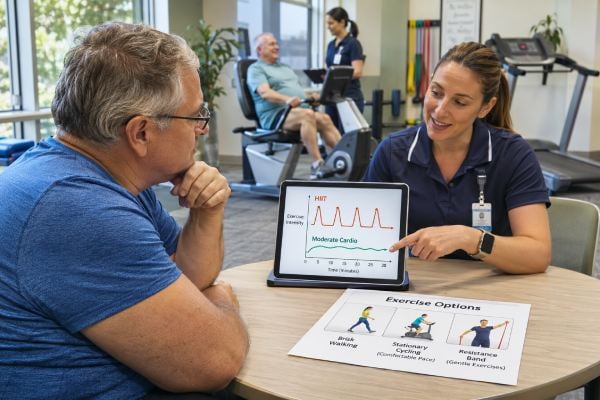
High-intensity interval training (HIIT) can improve cardiovascular fitness efficiently, but it is not the right starting point for everyone. HIIT alternates hard efforts with easier recovery periods, pushing the heart, lungs, and muscles much more than ordinary walking or moderate continuous exercise. In healthy adults who already exercise, it can be a practical way to improve VO2 max and fitness. In stable patients enrolled in supervised cardiac rehabilitation, research also suggests that carefully prescribed HIIT can be used safely and may improve exercise capacity. The key words are stable, screened, and appropriately prescribed. People with active heart symptoms, uncontrolled blood pressure, unstable cardiovascular disease, certain arrhythmias, recent cardiac events, or very low fitness may need evaluation or a gentler progression first. This article explains who should avoid unsupervised HIIT, what warning signs matter, how to make intervals safer, and which lower-intensity alternatives can still deliver strong heart-health benefits.
Table of Contents
- What HIIT Does to Your Heart
- Who Should Avoid Unsupervised HIIT?
- When HIIT Can Be Used in Heart Disease
- How to Start HIIT More Safely
- Safer Alternatives to HIIT
- Warning Signs During Exercise
- Choosing the Right Intensity for You
What HIIT Does to Your Heart
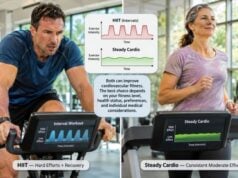
HIIT is not one fixed workout. It is a family of training methods that alternate periods of relatively hard exercise with recovery. A session might use 30 seconds hard and 60–90 seconds easy, or 4 minutes hard followed by 3 minutes easier, repeated several times. The exact intensity can be prescribed by heart rate, power, speed, or perceived effort.
During the hard intervals, heart rate and cardiac output rise quickly. Your muscles demand more oxygen, breathing becomes deeper and faster, and the cardiovascular system operates closer to its upper capacity. Over time, that repeated stimulus can improve cardiorespiratory fitness, often measured as VO2 peak or VO2 max.
For many adults, the hard phase feels like about 7–9 out of 10 on a perceived-effort scale. Talking becomes difficult; you may manage only a few words at a time. By contrast, moderate continuous exercise usually allows short sentences and feels more sustainable.
HIIT can be time-efficient, but it is not magic. Moderate exercise also improves blood pressure, endothelial function, insulin sensitivity, fitness, and cardiovascular risk. The comparison in HIIT versus steady cardio for heart health explains where one may have an advantage and where the differences are small.
Importantly, “hard” should be relative to your ability. For a trained cyclist, a hard interval may mean very high power on a bike. For a deconditioned beginner, brisk uphill walking may already be a high-intensity effort. Copying an athlete’s workout is not necessary to receive an interval-training effect.
Who Should Avoid Unsupervised HIIT?
The safest answer is not a long list of diagnoses that permanently ban HIIT. Many people with cardiovascular disease can eventually do higher-intensity exercise under appropriate supervision. The concern is unsupervised HIIT when the condition is unstable, untreated, or not yet evaluated.
You should generally avoid starting hard intervals on your own and seek medical guidance first if you have any of the following.
Active chest pain or suspected angina
Chest pressure, squeezing, heaviness, or pain brought on by exertion can signal reduced blood flow to the heart. High-intensity exercise increases oxygen demand and is not the time to “test” whether the symptom goes away. If chest symptoms are new, worsening, or occurring with breathlessness, sweating, nausea, or pain spreading to the arm, jaw, or back, urgent evaluation may be needed.
Recent heart attack, unstable coronary disease, or recent cardiac procedure
Exercise is a major part of recovery after a heart attack or procedure, but the timing and intensity should be individualized. Cardiac rehabilitation provides monitoring, risk assessment, and progressive training. Jumping straight from recovery into maximal or near-maximal intervals can add unnecessary risk.
Decompensated heart failure
People with stable heart failure may benefit from structured exercise, including interval training in selected cases. But worsening swelling, rapid weight gain from fluid, shortness of breath at rest, inability to lie flat, or a recent hospitalization may indicate decompensation. Hard exercise should wait until the condition is stabilized and a clinician gives guidance.
Uncontrolled or symptomatic arrhythmias
Some rhythm problems are benign during exercise; others can become dangerous when heart rate rises. Recurrent fainting, rapid irregular rhythm, sustained racing episodes, or palpitations with chest pain or marked breathlessness deserve evaluation before HIIT. If you are unsure what the sensation represents, see palpitations and warning signs.
Severely uncontrolled blood pressure
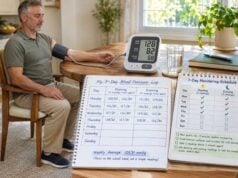
Blood pressure rises during hard exercise. People with very high resting blood pressure should not use all-out intervals as a self-treatment strategy. First confirm the reading, address severe hypertension, and get advice about safe exercise intensity. For lower-risk exercise options, safe exercises for high blood pressure provides practical starting points.
Severe symptomatic valve disease or other high-risk structural heart disease
Conditions such as severe symptomatic aortic stenosis, certain cardiomyopathies, or significant congenital heart disease can change what intensity is appropriate. Exercise recommendations may depend on imaging, symptoms, rhythm monitoring, and exercise-test results.
Acute myocarditis, pericarditis, fever, or significant infection
Inflammation of the heart muscle or lining is a clear reason to avoid vigorous exercise until medically cleared. Likewise, do not do HIIT with fever, significant systemic illness, or marked dehydration. Hard training while sick can worsen symptoms and obscures whether an abnormal heart rate is from exercise or illness.
Fainting with exercise or unexplained exertional symptoms
Exercise-related fainting, near-fainting, unusual chest discomfort, or disproportionate breathlessness should be evaluated before intense training. These symptoms can have benign causes, but they can also signal rhythm or structural problems.
People who are simply older, overweight, or new to exercise are not automatically prohibited from HIIT. They may just need a slower progression and a lower-impact format.
When HIIT Can Be Used in Heart Disease
Research in cardiac rehabilitation has changed the idea that everyone with cardiovascular disease must exercise only at low intensity. In stable, appropriately selected patients with coronary artery disease or heart failure, supervised HIIT has shown meaningful improvements in cardiorespiratory fitness, sometimes greater than moderate-intensity continuous training.
That does not make unsupervised HIIT universally safe. Clinical studies typically involve screening, stable medications, structured protocols, professional supervision, warm-ups, recovery periods, and defined stopping rules. Those safeguards matter.
A cardiac rehabilitation program may use information from an exercise test to set safe intensity. Clinicians can observe blood pressure response, symptoms, ECG changes, exercise capacity, and recovery. A person with stable coronary disease who completed rehabilitation is very different from someone with new unexplained chest pain doing sprint intervals at home.
The 2024 American Heart Association update on cardiac rehabilitation emphasizes individualized patient assessment, aerobic exercise training, strength training, risk-factor management, and program quality. HIIT can be one tool within that framework rather than the default for every patient.
If you have known heart disease and want to progress beyond moderate exercise, ask your clinician or cardiac rehabilitation team questions such as:
- Is my condition clinically stable enough for vigorous exercise?
- Do I need an exercise stress test first?
- Should I use heart rate, perceived exertion, or workload to guide intervals?
- Are there symptoms or heart-rate limits that should stop the session?
- Is a supervised program appropriate before I train independently?
This approach turns HIIT from a social-media challenge into a prescribed training method.
How to Start HIIT More Safely
If you have no concerning symptoms and are ready for higher-intensity exercise, start with the least dramatic version that produces a clear hard/easy contrast.
Build a moderate base first
A reasonable beginner goal is to become comfortable with 20–30 minutes of continuous moderate activity several days per week before adding hard intervals. Walking, cycling, swimming, and elliptical exercise all work. This builds coordination, connective-tissue tolerance, and basic aerobic capacity.
If ordinary brisk walking already drives your heart rate very high or leaves you unusually breathless, investigate that before pushing harder. The guide to heart-rate spikes during simple activities explains common causes.
Warm up for at least 5–10 minutes
A progressive warm-up gradually increases heart rate, blood flow, and muscle temperature. It also gives you a chance to notice whether you feel unusually tired, dizzy, tight in the chest, or short of breath before the hard work begins.
Use short, controlled intervals
A beginner-friendly session might be:
- Warm up easily for 8–10 minutes.
- Do 4–6 rounds of 30–60 seconds at a hard but controlled effort.
- Recover for 1–2 minutes at an easy pace after each hard effort.
- Cool down for 5–10 minutes.
“Hard” does not mean sprinting until you cannot continue. Finish each interval feeling that you could have done a little more. You can increase the number or length of intervals gradually over several weeks.
Choose low-impact modes when appropriate
Cycling, stationary biking, elliptical training, swimming, rowing, or incline walking can reduce joint impact compared with running sprints. If knees, hips, or feet limit exercise, low-impact cardio options can help you train the cardiovascular system without turning every session into a musculoskeletal test.
Do not make every workout HIIT
Most people do not need hard intervals every day. One or two HIIT sessions per week can be enough for a beginner, separated by easier days. More frequent high-intensity sessions increase recovery demands and may reduce consistency if they cause fatigue, soreness, or dread.
Sleep, heat, dehydration, illness, and accumulated training fatigue can all make the same workout harder. Adjust the plan to your condition that day rather than forcing a preset pace.
Safer Alternatives to HIIT
You can gain substantial cardiovascular benefit without high-intensity intervals. If HIIT is not appropriate now—or you simply dislike it—several alternatives are effective.
Moderate-intensity continuous training
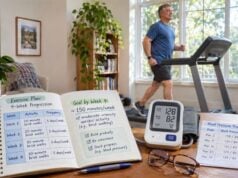
Brisk walking, easy cycling, swimming, or other steady aerobic exercise at a pace you can sustain is the strongest all-purpose alternative. A common weekly goal is at least 150 minutes of moderate-intensity activity. The session can be divided into manageable blocks.
Steady cardio is easier to dose, often produces fewer abrupt heart-rate and blood-pressure changes, and may be more comfortable for people who are deconditioned or recovering from illness. For many heart-health outcomes, consistency matters more than whether the workout is HIIT.
Gentle walk intervals
Intervals do not have to be high intensity. Try 2–3 minutes of brisk walking followed by 2–3 minutes of easy walking. This creates variation without near-maximal effort. Over time, you can lengthen the brisk segments before increasing speed.
Zone 2-style aerobic training
“Zone 2” usually refers to sustainable aerobic work below the intensity where breathing becomes very heavy. It can be useful for building endurance with relatively low fatigue. Because wearable zone calculations vary, use them as estimates rather than precise medical thresholds. The article on Zone 2 cardio for heart health explains the concept and limitations.
Strength training plus moderate cardio
Two or more days of resistance training combined with regular moderate aerobic activity is an excellent heart-health plan. Strength training improves muscular fitness, glucose handling, function, and body composition. It does not need to be circuit-style or breathless to be useful.
Stair or hill walking at a controlled pace
A hill can raise heart rate without sprinting. Start with a pace that lets you maintain control, then use the downhill or flat section for recovery. This is a practical bridge between steady walking and formal HIIT.
The safest alternative is the one you can perform regularly without provoking symptoms.
Warning Signs During Exercise
Stop exercising and seek urgent medical attention when appropriate if you develop chest pressure or pain, fainting, severe breathlessness, sudden weakness, new neurologic symptoms, or a sustained rapid or irregular heartbeat with significant symptoms.
Other signs that should end the session and prompt medical review include:
- unusual dizziness or near-fainting;
- chest tightness that repeatedly appears at a similar workload;
- breathlessness far out of proportion to the effort;
- palpitations with lightheadedness or chest discomfort;
- a new inability to complete workloads that were recently easy;
- an abnormal blood pressure response if you are monitoring under medical direction.
Muscle burning, heavy breathing, and a fast but regular pulse are expected during hard intervals. The challenge is distinguishing expected exertion from warning symptoms. When in doubt—especially with known heart disease—stop rather than trying to “push through.”
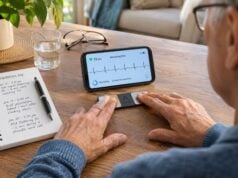
Do not rely solely on a smartwatch. Wearables can help track trends, but a normal-looking heart-rate number does not rule out ischemia, blood-pressure problems, or every arrhythmia.
Choosing the Right Intensity for You
The best exercise intensity is the highest level that is safe, sustainable, and matched to your goal—not the hardest workout you can survive.
For a healthy, active adult, HIIT can be a time-efficient tool for improving fitness. For a sedentary beginner, the best first step may be brisk walking. For someone in cardiac rehabilitation, the right “high intensity” may be prescribed from an exercise test and supervised initially. For a person with active symptoms or unstable disease, the correct exercise may be no vigorous training until the medical issue is addressed.
Heart-rate zones can be useful but are imperfect, particularly when medications such as beta-blockers change the heart-rate response. Perceived exertion and the talk test can be practical supplements. If you use heart rate to guide training, see target heart rate and exercise zones, while remembering that age-based formulas are estimates.
A moderate-first progression for people returning to exercise
If you have been inactive, jumping directly from little exercise to formal HIIT adds two challenges at once: high cardiovascular intensity and unfamiliar muscular load. A safer progression is to establish tolerance to regular moderate exercise first. Spend the first few weeks building toward 20–30 minutes of continuous walking, cycling, swimming, or another comfortable aerobic activity on several days each week. You should finish most sessions feeling that you could have continued.
Next, add short “pickups” rather than true hard intervals. For example, during a 30-minute walk, make three or four 30-second segments noticeably brisker, then return to an easy pace until breathing settles. If that causes no concerning symptoms and recovery is good, lengthen the faster segments to 60–90 seconds over subsequent weeks. Only then consider vigorous intervals.
This staged approach gives you time to learn how your body responds. It also separates ordinary deconditioning—heavy breathing and tired legs that improve with training—from symptoms that deserve medical review. People taking heart-rate-lowering medication should not assume a low watch number means the workout is easy; perceived exertion, breathing, and clinician-defined targets may be more useful.
Keep at least one easy day after a hard session when you are starting. If resting heart rate is unusually elevated, sleep is poor, you are ill, or normal workloads suddenly feel much harder, replace HIIT with easy movement or rest rather than forcing the planned intensity.
A sensible progression is:
- Become consistent with moderate activity.
- Add short controlled faster segments.
- Increase interval volume gradually.
- Keep easier sessions in the week.
- Reassess if symptoms, illness, or cardiovascular status changes.
HIIT is one option, not a requirement for a healthy heart. A well-designed moderate program that you can repeat for years is better than an aggressive plan that is unsafe, painful, or abandoned after two weeks.
References
- Effects of high-intensity interval training on cardiovascular health: An umbrella review of systematic reviews and meta-analyses 2026 (Systematic Review)
- High-intensity interval training in rehabilitation of patients after myocardial infarction: a rapid review of randomized trials 2025 (Systematic Review)
- Effects of high-intensity interval training on cardiorespiratory function in coronary artery disease: An overview of systematic reviews 2025 (Systematic Review)
- Core Components of Cardiac Rehabilitation Programs: 2024 Update: A Scientific Statement From the American Heart Association and the American Association of Cardiovascular and Pulmonary Rehabilitation 2024 (Position Statement)
- Effects of High-Intensity Interval vs. Moderate-Intensity Continuous Training on Cardiac Rehabilitation in Patients With Cardiovascular Disease: A Systematic Review and Meta-Analysis 2022 (Systematic Review)
Disclaimer
This article provides general exercise information and is not a substitute for medical clearance or a personalized cardiac rehabilitation plan. People with known heart disease, recent cardiac events, uncontrolled blood pressure, fainting, or concerning exercise symptoms should get individualized guidance before starting HIIT. Seek urgent care for chest pain, severe shortness of breath, fainting, or new neurologic symptoms during exercise.