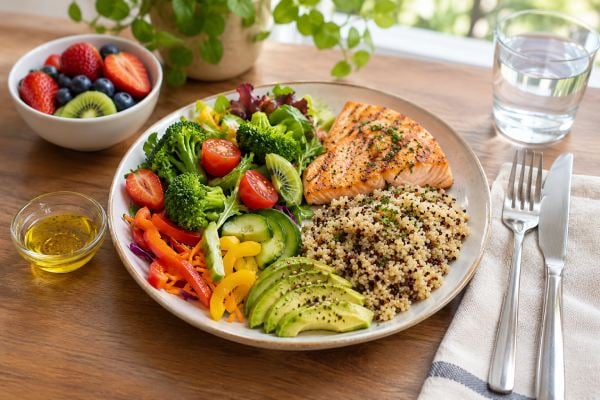
A heart-healthy plate does not need precise calorie counting or complicated meal rules. The easiest method is to build most meals around half vegetables and fruit, one quarter high-fiber carbohydrates, and one quarter protein, then add a small amount of unsaturated fat. This simple visual pattern naturally increases fiber, potassium, vitamins, minerals, and plant foods while making it easier to limit excess sodium, saturated fat, refined carbohydrates, and oversized portions.
The method is flexible enough for Mediterranean, DASH, vegetarian, and mixed diets. It can work with a dinner plate, a bowl, a packed lunch, or even a takeout meal. The point is not to make every plate look identical. It is to give you a repeatable default that supports blood pressure, cholesterol, blood sugar, body weight, and overall cardiovascular health.
Once you understand the pattern, you can adjust portions for hunger, activity level, medical needs, and cultural preferences without losing the basic structure.
Table of Contents
- The Simple Heart-Healthy Plate Method
- Fill Half the Plate With Vegetables and Fruit
- Use One Quarter for High-Fiber Carbohydrates
- Use One Quarter for Protein
- Add Heart-Healthy Fats and Flavor
- How to Use the Method With Real Meals
- Common Plate-Building Mistakes
The Simple Heart-Healthy Plate Method
The basic formula is easy to remember:
- Half the plate: non-starchy vegetables and, when appropriate, fruit.
- One quarter: whole grains, beans, lentils, potatoes, or another high-fiber carbohydrate.
- One quarter: fish, poultry, beans, lentils, tofu, eggs, yogurt, or another protein source.
- A small amount of unsaturated fat: olive oil, nuts, seeds, avocado, or similar foods.
- Water or another unsweetened drink most of the time.
This pattern works because it changes the proportions of the meal without requiring you to ban entire food groups. Vegetables and fruit occupy the largest space, which raises nutrient density and fiber. Whole grains and legumes provide slower-digesting carbohydrates. Protein supports fullness and muscle. Unsaturated fats improve flavor and can replace saturated fats such as butter, cream, and large amounts of fatty processed meat.
It also aligns well with eating patterns linked to better cardiovascular outcomes. Recent systematic reviews continue to support Mediterranean-style diets, while DASH remains a standard dietary pattern for blood pressure management. High-quality diets generally emphasize vegetables, fruit, whole grains, legumes, nuts, seeds, and minimally processed foods rather than focusing on one “superfood.”
If you prefer a broad food guide before using the plate method, see the best foods for overall heart health.
What counts as a portion?
The plate is a visual guide, not a laboratory measurement. A standard dinner plate of about 9 to 10 inches works well for many adults. If you use a much larger restaurant-style plate, the same fractions may create more food than you need.
The easiest way to adjust portions is to keep the proportions similar while changing the total amount. If you are very active, you may add more whole grains, beans, or protein. If your energy needs are lower, keep the vegetable half generous and reduce the calorie-dense sections slightly. Hunger should guide fine-tuning, but the default pattern keeps nutrient-dense foods in the majority.
For people who prefer hand-size estimates, one palm-sized portion of cooked protein, one cupped-hand portion of grains or starch, and two fist-sized portions of vegetables is a reasonable visual approximation. These estimates are deliberately imprecise. Their purpose is to make balanced meals easier when you do not have measuring cups or a scale.
Hunger and energy needs still matter. A tall, active person may need more carbohydrate and protein than a smaller sedentary person. Someone with diabetes, kidney disease, heart failure, or a medically prescribed diet may need different amounts of potassium, sodium, protein, or carbohydrate. The method is a starting structure, not a personalized prescription.
Fill Half the Plate With Vegetables and Fruit
The largest part of a heart-healthy plate should usually come from vegetables, with fruit included across the day. Vegetables add volume and fiber for relatively few calories, while supplying potassium, magnesium, folate, carotenoids, polyphenols, and other compounds associated with cardiovascular health.
Good choices include:
- Leafy greens such as spinach, kale, arugula, and romaine.
- Cruciferous vegetables such as broccoli, cauliflower, cabbage, and Brussels sprouts.
- Peppers, tomatoes, zucchini, eggplant, onions, carrots, and mushrooms.
- Green beans, asparagus, okra, peas, and mixed frozen vegetables.
- Fresh or frozen berries, apples, oranges, pears, kiwi, peaches, and other fruit.
You do not need to eat everything raw. Roasting, steaming, sautéing, grilling, and microwaving are all useful methods. Frozen vegetables are nutritious and often cheaper. Canned vegetables can also work if you choose no-salt-added or lower-sodium versions and drain or rinse them when appropriate.
A simple way to make the “half plate” rule realistic is to use two different vegetables at dinner. For example, fill one quarter with roasted broccoli and another quarter with a tomato-cucumber salad. This creates more variety without requiring an enormous serving of one food.
If vegetables have historically been a small part of your meals, build up gradually. Start by doubling the vegetable you already eat rather than buying five unfamiliar ingredients that may go unused. For more ideas, see vegetables that support heart health.
Does fruit belong on the plate?
Yes. Whole fruit is generally a heart-healthy choice and can replace desserts, pastries, or sugary snacks. It provides fiber that juice largely lacks. A small piece of fruit or a half cup of berries can sit beside the meal, or fruit can be eaten at breakfast or as a snack instead.
The plate method does not require half vegetables and half fruit at every meal. For savory meals, it often makes sense for most of the half-plate section to be vegetables, with fruit eaten elsewhere during the day.
Use One Quarter for High-Fiber Carbohydrates
Carbohydrates are not automatically bad for the heart. The important distinction is quality, fiber, portion, and what the carbohydrate replaces.
Strong choices for the carbohydrate quarter include:
- Oats, barley, brown rice, quinoa, bulgur, farro, and other intact grains.
- Whole-grain pasta, whole-grain bread, and corn tortillas.
- Beans, lentils, and chickpeas.
- Potatoes and sweet potatoes, especially when baked, boiled, or roasted rather than deep-fried.
- Corn, peas, and other starchy vegetables.
Whole grains and legumes supply fiber and minerals and tend to be more filling than refined grains. Higher-fiber dietary patterns are associated with better cholesterol, blood sugar, and overall cardiovascular risk profiles. You can learn how to choose them in whole grains for heart health.
A quarter-plate portion often translates to roughly ½ to 1 cup of cooked grains or starchy food, depending on plate size and energy needs. That is a practical range, not a strict rule.
Beans can count in two sections
Beans and lentils provide both carbohydrate and protein. If your meal is centered on beans, you do not need to add a full separate grain and a full separate protein portion. For example, a bowl with black beans, vegetables, salsa, avocado, and a modest serving of brown rice already contains both carbohydrate and protein.
This flexibility is one reason plate methods work better than rigid food-exchange rules for everyday meals.
What about white rice or white bread?
They can fit, especially in cuisines where they are staple foods. The goal is not perfection. You can improve the overall meal by keeping the portion moderate, adding vegetables and beans, and choosing whole-grain versions some of the time.
If refined starch occupies half the plate while vegetables are only a garnish, flipping those proportions is likely to matter more than arguing over whether one individual food is “allowed.”
Use One Quarter for Protein
Protein helps with fullness, muscle maintenance, and meal satisfaction. For heart health, the type of protein matters as much as the amount.
Useful options include:
- Fish and seafood.
- Beans, lentils, chickpeas, and peas.
- Tofu, tempeh, and other minimally processed soy foods.
- Skinless poultry.
- Eggs.
- Plain yogurt, cottage cheese, or other lower-saturated-fat dairy.
- Lean cuts of meat in moderate portions.
A quarter of a standard dinner plate is often similar to 3 to 5 ounces of cooked animal protein, though needs differ. Plant proteins may occupy a little more volume because they also provide carbohydrate and fiber.
Try to make fish, beans, lentils, tofu, and other plant-forward proteins regular choices rather than relying on processed meats. Bacon, sausage, hot dogs, salami, and similar meats tend to be high in sodium and often saturated fat. They are better treated as occasional foods than default protein sources.
The heart-health advantage comes partly from substitution. Replacing a fatty processed meat with salmon, lentils, or tofu changes not just protein intake but also sodium, saturated fat, fiber, and the types of fats in the meal.
Add Heart-Healthy Fats and Flavor
A heart-healthy plate should not be fat-free. Unsaturated fats can improve flavor and make vegetables and whole grains more satisfying.
Good options include:
- Extra-virgin olive oil.
- Avocado.
- Walnuts, almonds, pistachios, and other unsalted nuts.
- Pumpkin, sunflower, sesame, chia, and flax seeds.
- Nut and seed butters without large amounts of added sugar or salt.
Because fats are calorie-dense, the portion is smaller than the vegetable portion. One to two teaspoons of olive oil, a small handful of nuts, a spoonful of seeds, or a few slices of avocado can be enough to improve a meal.
Use these foods mainly to replace saturated fats rather than simply adding them on top of an already high-calorie meal. For example, olive oil instead of butter, nuts instead of chips, or avocado instead of a creamy processed sauce. A deeper explanation is available in heart-healthy fats to choose and limit.
Flavor without excessive sodium
A heart-healthy plate can still taste bold. Use garlic, onions, citrus, vinegar, herbs, spices, chili, ginger, toasted seeds, and salt-free seasoning blends. These can reduce reliance on highly salted sauces and packaged flavor packets.
Sodium often hides in bread, cheese, processed meat, canned soup, sauces, restaurant meals, and packaged snacks. Reading the label is more useful than guessing based on how salty a food tastes. See how to read a nutrition label for heart health if sodium, fiber, and saturated fat numbers are confusing.
How to Use the Method With Real Meals
The easiest way to use the plate method is to apply it to meals you already eat instead of inventing completely new recipes.
It also helps to stock a few “assembly foods” that make the pattern automatic. Keep two or three frozen vegetables, a whole grain such as oats or brown rice, canned no-salt-added beans, a quick protein such as eggs, tuna, tofu, or plain yogurt, and a heart-healthy fat such as olive oil or nuts. With those basics, you can build a balanced meal in minutes without relying on takeout.
Batch preparation can reduce friction further. Roast a tray of vegetables, cook a pot of whole grains, and prepare one protein on the weekend. During the week, combine them in different ways with sauces, herbs, fruit, or salad greens. The heart-health value comes from the repeated pattern, not from eating the same recipe every day.
Breakfast
Breakfast may not look like a divided dinner plate, but the same proportions can still work. For example:
- Oatmeal topped with berries, walnuts, and plain yogurt.
- Whole-grain toast with avocado and eggs, plus tomatoes and fruit.
- Plain Greek yogurt with oats, berries, and seeds.
- A vegetable omelet with whole-grain toast and fruit.
The key is to avoid a breakfast built almost entirely from refined flour and added sugar with little protein or fiber.
Sandwich lunch
A sandwich can fit the method if you build around it:
- Whole-grain bread.
- Tuna, grilled chicken, hummus, or another protein.
- Plenty of lettuce, tomato, cucumber, peppers, or shredded vegetables.
- Fruit or a side salad instead of chips most days.
The plate method does not require separating every food physically. Mixed dishes can still contain the same components.
Pasta night
Instead of filling the plate with pasta and adding a small side of vegetables, reverse the ratio. Use about one quarter of the plate for whole-grain or legume pasta, one quarter for a lean protein or beans, and half for roasted or sautéed vegetables. Add olive oil, herbs, garlic, and tomato-based sauce for flavor.
Tacos or burrito bowls
Make half the bowl lettuce, peppers, onions, tomatoes, salsa, cabbage, or grilled vegetables. Use beans plus a modest portion of brown rice or corn. Add chicken, fish, tofu, or extra beans as protein, then finish with avocado or a small amount of cheese.
Restaurant meals
Restaurant plates often reverse the heart-healthy proportions: oversized meat and starch with a small vegetable side. You can rebalance the meal by ordering extra vegetables, sharing fries or large starch portions, choosing grilled rather than fried protein, and asking for sauces or dressings on the side.
If one meal is heavy, the next meal does not need to be punitive. Simply return to the usual plate structure.
Common Plate-Building Mistakes
The plate method is simple, but a few common habits can quietly undermine it.
- Treating potatoes, corn, or peas as the entire vegetable half. These are nutritious foods, but they are starchier. Pair them with non-starchy vegetables.
- Using large amounts of cheese as the main protein. Cheese can fit, but large portions add significant sodium and saturated fat.
- Adding heart-healthy fat without reducing other calorie-dense foods. Nuts and olive oil are healthy, but portions still matter.
- Choosing “whole grain” products that are still highly processed and sugary. Check fiber and added sugar on the label.
- Ignoring sodium in sauces and restaurant food. A visually balanced plate can still contain a very high sodium load.
- Making the plate too small to be satisfying. If meals leave you hungry, add more vegetables, protein, or high-fiber carbohydrate rather than relying on constant snacks.
- Trying to make every meal perfect. Consistency across the week matters more than one unusual meal.
A heart-healthy plate is ultimately a decision tool. When you look at a meal, ask: Where are the plants? Where is the fiber? What is the protein source? What kind of fat am I using? Is the sodium reasonable? Those five questions catch most of the important issues without turning eating into a math exercise.
If you have high blood pressure, the same plate structure can be adapted toward a DASH-style eating pattern. If high cholesterol is the main concern, emphasize soluble fiber, legumes, whole grains, nuts, seeds, fish, and replacement of saturated fat with unsaturated fat.
You do not need a perfect plate at every meal. Use the method as your default, make the easiest high-impact swaps first, and let repetition do the work.
One useful weekly check is to look at your groceries rather than your calories. If the cart contains several vegetables, a few fruits, whole grains, beans or lentils, lean or plant-forward proteins, and unsalted nuts or seeds, you have already made balanced plates easier to create. If most of the cart is packaged snacks, processed meats, sugary drinks, and refined starches, the plate method will be harder no matter how motivated you are at mealtime.
Changing the food environment is often more effective than relying on willpower. Put ready-to-eat fruit where you can see it, wash vegetables soon after shopping, keep a lower-sodium protein option available, and freeze extra portions. Small preparation choices make the heart-healthy default faster than the less balanced alternative.
References
- The effectiveness of the Mediterranean Diet for primary and secondary prevention of cardiovascular disease: An umbrella review 2025 (Systematic Review)
- Dietary Approaches to Stop Hypertension (DASH) for the primary and secondary prevention of cardiovascular diseases 2025 (Systematic Review)
- Diet quality and cardiovascular outcomes: A systematic review and meta-analysis of cohort studies 2024 (Systematic Review)
- Effectiveness of High-Fiber, Plant-Based Diets in Reducing Cardiovascular Risk Factors Among Middle-Aged and Older Adults: A Systematic Review 2024 (Systematic Review)
- Comparing dietary strategies to manage cardiovascular risk in primary care: a narrative review of systematic reviews 2024 (Review)
Disclaimer
This article provides general nutrition education and is not a personalized diet prescription. People with kidney disease, heart failure, diabetes, food allergies, eating disorders, or medically prescribed sodium, potassium, fluid, or protein limits may need a modified plate pattern. A registered dietitian or healthcare professional can tailor portions and food choices to your needs.