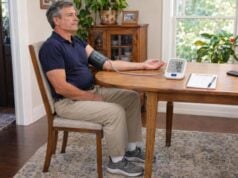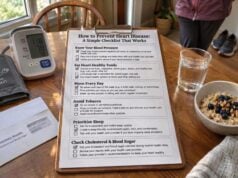
A lower resting heart rate often develops as your cardiovascular system becomes more efficient, but the goal is not to force your pulse as low as possible. For most adults, a resting heart rate of 60 to 100 beats per minute is considered normal, and well-trained people may naturally run lower. Your usual number can also shift with sleep, stress, illness, heat, hydration, caffeine, nicotine, and medications. The most useful approach is to improve the habits that influence heart rate and watch the trend over weeks rather than reacting to one reading. Regular aerobic exercise is usually the biggest lever, while strength training, adequate sleep, stress management, and recovery help support the same direction. If your resting pulse is persistently above 100, suddenly different from your baseline, unusually low with symptoms, or accompanied by chest pain, fainting, or shortness of breath, lifestyle changes are not a substitute for medical evaluation.
Table of Contents
- What Resting Heart Rate Means
- Measure Your Baseline Correctly
- Use Aerobic Training as the Main Lever
- Add Strength Without Overloading Recovery
- Improve Sleep and Stress Recovery
- Remove Common Heart-Rate Raisers
- Know What Timeline and Warning Signs to Expect
What Resting Heart Rate Means
Resting heart rate is simply how many times your heart beats in one minute while you are awake, calm, and not physically active. It is different from your exercise heart rate, and it is also different from blood pressure. Blood pressure describes the force of blood against your artery walls; heart rate describes how often your heart beats.
For most adults, 60 to 100 beats per minute is a broadly accepted normal resting range. That range is not a personal target. A healthy, active person may sit in the 50s, and a trained endurance athlete may be lower still. Another healthy adult may consistently sit in the 70s or 80s. What matters is the context, your symptoms, your medications, and how your number changes over time.
A lower resting pulse often reflects better cardiovascular efficiency. With aerobic training, the heart can pump more blood with each beat, so it may not need to beat as often at rest. Training can also influence the autonomic nervous system, including the balance between sympathetic activity, which tends to accelerate the heart, and parasympathetic activity, which supports a calmer resting state. If you want a fuller explanation of this relationship, see how resting heart rate relates to cardiovascular fitness.
But “lower is better” has limits. A pulse below 60 can be normal in a fit person or in someone taking a heart-rate-lowering medicine. It can also occur with conduction problems or other medical conditions. Likewise, a pulse in the 80s is not automatically unhealthy. Treat the number as one vital sign, not a score.
Your resting heart rate can be temporarily higher because of:
- Poor sleep or sleep loss
- Emotional stress, anxiety, or pain
- Fever, infection, or recent illness
- Dehydration or heat exposure
- Caffeine, nicotine, stimulants, or some medications
- Alcohol, especially after heavier intake
- A hard workout that you have not recovered from
- Pregnancy, anemia, thyroid problems, or other health conditions
That is why the most useful question is not “How do I get the lowest number?” It is “What is my normal baseline, and are my training and recovery habits moving it in a healthy direction?” A persistently elevated pulse deserves more attention than a single high reading after a stressful day.
Measure Your Baseline Correctly
You cannot judge progress well if you measure under different conditions every day. Build a baseline first. The easiest method is to check your pulse in the morning after a normal night of sleep, before coffee, exercise, work messages, or rushing around.
For a manual reading, sit or lie quietly. Place your index and middle fingers over the pulse on the thumb side of your wrist. Count for a full 60 seconds if the rhythm seems irregular; otherwise, counting 30 seconds and multiplying by two is reasonable. Wearables can be convenient, but compare trends rather than treating every single device reading as exact.
Use a simple seven-day baseline:
- Measure at roughly the same time each morning.
- Record the number before caffeine or exercise.
- Add a note if you slept poorly, drank alcohol, are sick, or did a very hard workout the day before.
- Average the seven readings.
- Repeat the same process every few weeks rather than checking obsessively throughout the day.
This gives you a cleaner signal. A shift from an average of 78 to 72 beats per minute over two or three months means more than seeing 68 one morning and 82 the next.
It can also help to separate waking resting heart rate from your overnight numbers. Heart rate often falls during sleep, and wearable devices may report a nighttime average that is lower than your seated daytime pulse. Those are related measures but not interchangeable. If you track sleep data, compare it with your own usual pattern and learn what can affect resting heart rate while sleeping.
Watch for trends that have an obvious explanation. A temporary rise of 5 to 10 beats per minute during illness, after several short nights, or during a stressful week may settle once the trigger resolves. If your number remains noticeably above your normal level without a clear reason, especially for days to weeks, contact a health professional rather than assuming you need harder exercise.
Heart rate also responds to medication. Beta blockers and some calcium channel blockers can lower it substantially. Decongestants, thyroid medicine, some asthma medicines, and stimulants may raise it. Do not change a dose to chase a resting heart-rate number. If you take a medication that affects pulse, ask what range and symptoms should prompt a call.
Use Aerobic Training as the Main Lever
For most people who want to lower resting heart rate through lifestyle, consistent aerobic exercise is the strongest place to start. Walking briskly, cycling, swimming, jogging, rowing, dancing, and similar activities repeatedly ask the heart to deliver more oxygen to working muscles. Over time, the cardiovascular system adapts, and resting heart rate may decline as fitness improves.
You do not need maximal workouts. A practical weekly target is about 150 minutes of moderate-intensity aerobic activity, or an equivalent mix that includes vigorous work, spread across the week. If you are currently inactive, begin below that level. Ten- to 20-minute sessions still count, and building gradually is safer and easier to sustain.
Start with mostly easy-to-moderate work
A simple plan for a beginner might look like this:
- Monday: 25-minute brisk walk
- Tuesday: Easy movement or rest
- Wednesday: 30-minute brisk walk or bike ride
- Thursday: Easy movement or rest
- Friday: 25-minute brisk walk
- Saturday: 35- to 45-minute comfortable walk, bike ride, or swim
- Sunday: Rest or light activity
The pace should feel purposeful but sustainable. You should be breathing faster yet still able to speak in short sentences. This kind of steady work overlaps with what many people call Zone 2 cardio, although exact heart-rate zones vary by person and formula.
Do not assume that a higher exercise heart rate will lower your resting heart rate faster. Training adaptations come from enough stimulus plus enough recovery. If every session becomes hard, fatigue can accumulate, sleep may worsen, and your morning pulse can temporarily rise.
Add intensity only after consistency
After several weeks of regular moderate exercise, some people can benefit from one short higher-intensity session each week. For example, after warming up, you might alternate one to two minutes of harder effort with two to three minutes of easy movement for four to six rounds. High-intensity interval training can improve cardiorespiratory fitness efficiently, but it is optional, not required.
If you have cardiovascular disease, unexplained symptoms, a history of fainting, significant rhythm problems, or you are returning to exercise after a long period of inactivity, ask a clinician what intensity is appropriate. Heart-rate targets based only on age can also be misleading when you take medications that slow the pulse.
The main training rule is consistency. Three to five aerobic sessions each week for months is more likely to change resting physiology than an occasional exhausting workout. Track pace, distance, or how an effort feels in addition to heart rate. A useful sign of progress is doing the same walk or bike route at a lower exercise heart rate or a faster pace at the same effort.
Add Strength Without Overloading Recovery
Strength training supports heart health even though aerobic training has the most direct connection with a lower resting pulse. Resistance exercise improves muscular strength, helps preserve lean mass, supports glucose control, and makes daily activity easier. The key is to combine it with aerobic work without turning every day into a high-stress training day.
Two nonconsecutive strength sessions per week is a practical starting point. A full-body session can include:
- Squat or sit-to-stand variation
- Hip hinge or deadlift variation
- Row or pulldown
- Push-up or chest press
- Overhead press, if comfortable
- Carry, core, or balance exercise
Use loads you can control with good technique. For general health, one to three sets of about 8 to 15 repetitions per exercise works well for many adults. Stop with a few good repetitions still available rather than repeatedly training to failure.
Holding your breath during a difficult repetition can create a large temporary rise in blood pressure. Exhale through the hardest part of the lift and avoid prolonged straining, especially if you have high blood pressure or cardiovascular disease.
Schedule matters too. If you do hard intervals Monday, heavy lower-body strength Tuesday, and another hard cardio session Wednesday, your resting pulse may stay elevated simply because you are under-recovered. A better week alternates stress and recovery. The principles in a combined cardio and strength schedule can help keep easy days easy and hard days purposeful.
Use your morning resting pulse as one clue, not the sole recovery metric. If it is several beats above baseline for multiple days and you also have heavy legs, poor sleep, irritability, declining performance, or unusual fatigue, reduce training load briefly. An easy walk, extra sleep, and a lighter strength session may do more for long-term progress than pushing through.
People sometimes expect resistance training alone to drive a dramatic drop in resting heart rate. That is not a reliable expectation. Strength work is valuable for cardiovascular health, but if lowering an elevated resting pulse through fitness is the main goal, make regular aerobic exercise the foundation.
Improve Sleep and Stress Recovery
A well-designed exercise plan works better when your nervous system gets regular recovery. Short sleep and ongoing psychological stress can both shift the body toward greater sympathetic activation, which can make resting heart rate run higher. You may notice this after a night of poor sleep: the same morning routine suddenly produces a pulse several beats above your usual number.
Most adults should aim for a consistent sleep opportunity that allows roughly seven to nine hours of sleep. The exact need varies, but regularity matters. Going to bed at 10:30 p.m. on weekdays and 1:30 a.m. on weekends can create a repeated timing shift even when total hours look acceptable.
Helpful sleep habits for heart health include keeping a steady wake time, getting daylight early in the day, limiting late-night alcohol, reducing heavy meals close to bedtime, and keeping the bedroom dark, quiet, and comfortable. Caffeine can linger for hours, so moving your last caffeinated drink earlier is worth testing if sleep is shallow or delayed.
Stress management does not mean eliminating every stressor. The useful goal is to give the body repeated chances to leave a high-alert state. Choose a method you can actually repeat:
- Five to 10 minutes of slow breathing
- A quiet walk without a phone
- Mindfulness or meditation
- Relaxing music
- Yoga or gentle mobility work
- Time outdoors
- Structured therapy or counseling when stress is persistent or overwhelming
Slow breathing can reduce heart rate in the moment, but do not treat it as a trick for producing the “right” number before you measure. The larger benefit comes from practicing recovery consistently. If chronic stress is a major part of your health picture, understanding the link between stress and heart disease risk can help put the habit change in context.
Heart rate variability, or HRV, is another metric some wearables report. It reflects beat-to-beat variation and is influenced by autonomic nervous system activity. Higher is not universally better, and values differ greatly between people and devices. Use HRV mainly as a personal trend, not as a competition or diagnosis. The same principle applies to resting heart rate: your multiweek direction matters more than one unusually good or bad morning.
Remove Common Heart-Rate Raisers
If your resting heart rate stays higher than you expect, look for reversible factors before adding more exercise. Many are easy to miss because they are not “fitness” problems.
Dehydration: When blood volume drops, heart rate may rise to help maintain circulation. Drink regularly, and replace extra fluid when you sweat heavily, exercise in heat, or have vomiting or diarrhea. You do not need to force excessive water; use thirst, urine color, conditions, and medical guidance if you have fluid restrictions.
Caffeine: Coffee and tea affect people differently. If your morning pulse is high, compare several days with your usual caffeine pattern against days when you measure before caffeine. Energy drinks can contain larger stimulant loads and may combine caffeine with other ingredients.
Nicotine: Cigarettes, vaping products, and other nicotine sources can increase heart rate and blood pressure. Reducing or quitting provides cardiovascular benefits that go far beyond any change on a wearable.
Alcohol: Alcohol may feel relaxing at first, but heavier intake can disturb sleep, dehydrate you, and raise nighttime or next-morning heart rate. If your wearable consistently shows a higher pulse after drinking, that is useful personal feedback.
Heat: Hot weather, fever, saunas, and intense heat exposure can elevate heart rate because the body is trying to dissipate heat. Compare readings under similar environmental conditions.
Illness: Viral infections and other illnesses often raise resting pulse. If you are sick, treat an elevated heart rate as a recovery signal, not a reason to train harder. Return to exercise gradually after symptoms improve.
Low energy intake or aggressive dieting: A large calorie deficit can increase fatigue and training stress. Some people also develop dehydration or electrolyte problems. Sustainable nutrition supports exercise adaptation better than extreme restriction.
Medications and medical conditions: Thyroid disorders, anemia, arrhythmias, lung disease, infection, pain, and several medications can alter heart rate. A lifestyle plan cannot correct every cause. If your pulse is persistently elevated despite reasonable fitness and recovery habits, evaluation can identify issues that training will not solve.
It is also useful to review your possible causes of a high resting heart rate rather than assuming deconditioning is the only explanation.
Know What Timeline and Warning Signs to Expect
Expect gradual change, not an overnight reset. Some people notice their average resting heart rate begin to drift down within four to eight weeks of consistent aerobic training. Clearer changes often take eight to 12 weeks or longer, especially if you start with low fitness, train only a few days per week, or have competing factors such as poor sleep, illness, or medication changes.
The size of the drop varies. A change of a few beats per minute can be meaningful when it is sustained and occurs alongside improved fitness. If you begin around 82 beats per minute, it is possible that regular training and better recovery move your average into the 70s. It is not reasonable to promise that everyone can or should reach the 50s.
Use a four-part progress check every two to four weeks:
- Morning average: Is your seven-day resting heart rate stable or trending down?
- Exercise efficiency: Can you walk, cycle, or climb at the same pace with less effort?
- Recovery: Does your heart rate settle more quickly after exercise, and do you feel ready for the next session?
- Symptoms: Are you free of dizziness, fainting, unusual breathlessness, chest discomfort, or palpitations?
Do not deliberately dehydrate yourself, overuse supplements, take someone else’s medication, or perform repeated breath-holding maneuvers to lower the displayed number. Those tactics do not build cardiovascular fitness and may be dangerous.
A resting heart rate above 100 beats per minute is called tachycardia when measured at rest. It can be temporary, but persistent readings above 100 should be discussed with a health professional, especially when they are new. A resting heart rate below 60 is called bradycardia, but it may be normal in trained people or those taking certain medications. A low pulse deserves evaluation when it is new, unexplained, or accompanied by weakness, dizziness, confusion, fainting, or exercise intolerance.
Seek urgent medical care if a suddenly very high or very low heart rate occurs with chest pain, severe shortness of breath, fainting, severe dizziness, new weakness, or other alarming symptoms. If you feel well but your resting heart rate has changed substantially from your usual baseline for several days, schedule a routine medical review rather than waiting for a lifestyle plan to fix it.
The best long-term strategy is straightforward: build aerobic fitness gradually, strength train without overwhelming recovery, protect sleep, reduce chronic stress, and remove obvious heart-rate raisers. Your resting pulse should be treated as a trend that reflects the whole system, not a number to chase.
References
- All About Heart Rate 2024
- High-Intensity Interval Training and Cardiometabolic Health in the General Population: A Systematic Review and Meta-Analysis of Randomised Controlled Trials 2023 (Systematic Review)
- Effect of Exercise Modality on Heart Rate Variability in Adults: A Systematic Review and Network Meta-Analysis 2024 (Systematic Review)
- Effects of sleep deprivation on heart rate variability: a systematic review and meta-analysis 2025 (Systematic Review)
- Effects of stress management interventions on heart rate variability in adults with cardiovascular disease: a systematic review and meta-analysis. 2024 (Systematic Review)
Disclaimer
This article provides general health information and is not a diagnosis or individualized exercise prescription. Resting heart rate can be affected by medical conditions and medications, so discuss persistent or unexplained changes with a qualified health professional. Seek urgent care for a very abnormal heart rate accompanied by chest pain, fainting, severe shortness of breath, or other serious symptoms.