A high resting heart rate is often a sign that your body is working harder than usual, but the number alone does not tell you why. In adults, a resting pulse between 60 and 100 beats per minute (bpm) is traditionally considered within the clinical reference range, while a persistent resting rate above 100 bpm is called tachycardia. Still, a rate in the 80s or 90s can be meaningful if it is new for you, steadily rising, or paired with symptoms. Fitness, sleep, hydration, fever, stress, medications, thyroid problems, anemia, and heart rhythm disorders can all change resting heart rate. The most useful approach is to confirm the measurement, look for a pattern, and address the cause rather than trying to force the pulse lower. This guide explains what counts as high, why it happens, when it may signal increased cardiovascular risk, and practical ways to bring your resting heart rate down safely.
Table of Contents
- What Counts as a High Resting Heart Rate?
- Common Causes of a High Resting Heart Rate
- Why a Higher Resting Heart Rate Can Matter
- How to Measure Your Resting Heart Rate Correctly
- How to Lower Resting Heart Rate Safely
- When a High Heart Rate Needs Medical Evaluation
- A Practical Plan for the Next Few Weeks
What Counts as a High Resting Heart Rate?
For most adults, the standard clinical resting range is 60–100 bpm. That range is useful for identifying clear bradycardia or tachycardia, but it is not a line separating “healthy” from “unhealthy.” Many healthy, physically active adults regularly rest in the 50s, while others naturally sit in the 70s or 80s. Age, fitness, medications, temperature, hydration, and nervous-system activity all influence the number.
A resting heart rate above 100 bpm deserves attention when it persists after you have been sitting quietly for several minutes. A single reading of 103 bpm after rushing upstairs, drinking coffee, feeling anxious, or recovering from an illness is different from repeated readings of 103 bpm every morning before you get out of bed.
The most important comparison is often your current trend versus your usual baseline. If your normal morning pulse is 58–64 bpm and it suddenly becomes 78–84 bpm for several days, that change may be more informative than whether the number falls inside a textbook range. For a broader explanation of normal values during rest and activity, see normal heart rate ranges for resting and exercise.
A few practical distinctions help:
- Resting heart rate: measured while awake, relaxed, and not exercising.
- Sleeping heart rate: often lower than daytime resting rate and affected by sleep quality, alcohol, illness, and recovery. Persistent changes are covered in sleeping resting heart rate patterns.
- Exercise heart rate: expected to rise with workload and should not be judged by resting standards.
- Sinus tachycardia: the heart’s normal pacemaker is firing quickly, often because the body has a reason to demand more blood flow.
- Arrhythmia: an abnormal rhythm, which may be fast, slow, regular, or irregular and cannot always be identified from pulse rate alone.
For most people, a number in isolation matters less than whether it is persistent, unexplained, changing, or associated with symptoms.
Common Causes of a High Resting Heart Rate
The heart speeds up when the body needs more oxygen delivery, when the sympathetic “fight-or-flight” system is activated, or when the heart’s rhythm itself changes. Many causes are temporary and reversible.
Everyday and temporary causes
A resting pulse can rise for hours or days because of:
- Dehydration: lower circulating blood volume can make the heart beat faster to maintain blood flow. If your pulse rises after heat exposure, sweating, diarrhea, or inadequate fluid intake, dehydration-related heart rate changes may be relevant.
- Fever or infection: body temperature and metabolic demand increase heart rate.
- Pain: acute pain activates stress hormones.
- Poor sleep: sleep deprivation can increase sympathetic activity and reduce recovery.
- Emotional stress or anxiety: adrenaline can raise heart rate even when you are physically still.
- Recent exercise: a hard workout can keep heart rate elevated during recovery, especially if you are under-recovered.
- Alcohol: it can increase heart rate, disrupt sleep, and contribute to dehydration.
- Caffeine and stimulants: sensitivity varies widely. Coffee may have little effect in one person and a noticeable effect in another; caffeine sensitivity and heart rate explains the pattern in more detail.
Medical causes worth checking
A persistent or unexplained high resting heart rate can occur with anemia, hyperthyroidism, low blood pressure, lung disease, blood clots in the lungs, heart failure, uncontrolled diabetes, significant blood loss, or other conditions that force the body to compensate. Certain prescription and over-the-counter drugs can also raise the pulse, including some decongestants, bronchodilators, thyroid medication, attention-deficit medications, and other sympathomimetic drugs.
Some people have inappropriate sinus tachycardia, in which the sinus node produces an excessive rate that is not fully explained by normal triggers. Others have postural orthostatic tachycardia syndrome (POTS), where heart rate rises abnormally after standing. These conditions require clinical assessment because the correct treatment is not simply “exercise harder” or “take something to slow the heart.”
A rapid pulse may also come from an arrhythmia such as atrial fibrillation, atrial flutter, or supraventricular tachycardia. A wearable heart-rate number cannot reliably distinguish these from ordinary sinus tachycardia. If you feel racing, fluttering, pounding, or skipped beats, reviewing heart palpitation warning signs can help you describe the episodes accurately to a clinician.
Why a Higher Resting Heart Rate Can Matter
A higher resting heart rate is associated with increased cardiovascular and overall mortality risk in many observational studies. Recent population research has also found that rising resting heart rate over time can track with worse long-term outcomes. This does not mean that a resting pulse of 82 bpm directly causes heart disease or that everyone should aim for the lowest possible number.
Resting heart rate reflects several underlying systems at once: fitness, autonomic balance, inflammation, illness, medication effects, metabolic health, and cardiovascular function. That makes it useful as a risk marker and trend signal, but not a standalone diagnosis.
For example, a sedentary adult with a resting pulse of 88 bpm, high blood pressure, smoking exposure, poor sleep, and low fitness has a different risk profile from a healthy person with a pulse of 88 bpm during a temporary respiratory infection. Likewise, a very low resting rate is not automatically better. Endurance-trained people may safely rest in the 40s or 50s, but a low rate with fainting, weakness, or medication effects deserves evaluation.
The practical goal is therefore not to chase a specific number. It is to improve the factors that influence both resting heart rate and cardiovascular health: aerobic fitness, sleep, smoking status, blood pressure, weight when appropriate, stress management, and treatment of medical conditions.
A useful clue is whether your heart rate is stable at your personal baseline. If it gradually falls as your fitness improves and you feel well, that is usually reassuring. If it rises by 10–20 bpm above baseline for days without an obvious reason, treat the change as information worth investigating.
How to Measure Your Resting Heart Rate Correctly
Bad measurement technique can make a normal heart rate look high. To get a useful trend, measure under similar conditions rather than checking randomly throughout the day.
A simple method is:
- Measure shortly after waking, before caffeine, nicotine, breakfast, or exercise.
- Sit or lie quietly for at least 5 minutes.
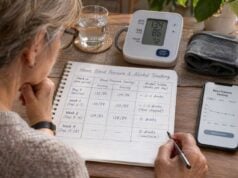
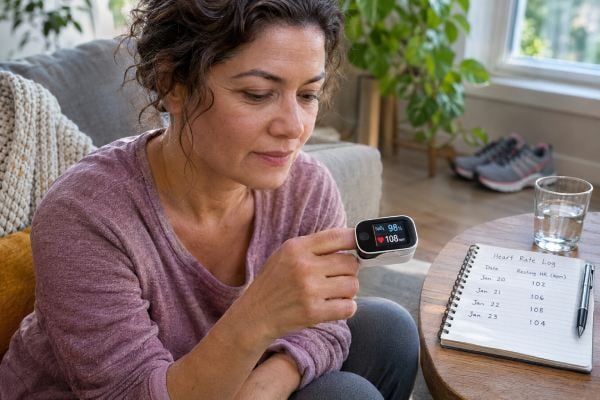
- Use the same method each time: a validated wearable, pulse oximeter, blood pressure monitor with pulse display, or manual pulse count.
- If counting manually, place two fingers over the radial artery at the wrist. Count for 60 seconds if the rhythm feels irregular; shorter counts multiplied upward can magnify errors.
- Record the value plus anything that may explain it, such as poor sleep, alcohol, illness, intense exercise, dehydration, or medication changes.
- Look at a 7–14 day pattern instead of reacting to one reading.
Wearables are convenient for trends, but they can be wrong during motion, with poor skin contact, or when an irregular rhythm is present. If a device repeatedly reports a surprisingly high pulse, confirm it manually or with another instrument.
Also distinguish resting measurements from heart-rate spikes during ordinary tasks. A brief increase when standing, walking upstairs, or carrying groceries may be normal, while a disproportionate jump with light activity can have several causes. The article on heart rate spikes during simple activities explains that situation separately.
If you are training, do not use a lower resting heart rate as your only sign of fitness. Exercise tolerance, recovery, blood pressure, symptoms, and overall function matter too. For workout intensity, use appropriate heart rate training zones rather than trying to keep your exercise pulse close to resting levels.
How to Lower Resting Heart Rate Safely
The safest way to lower a high resting heart rate is to correct the reason it is high. If fever, anemia, thyroid disease, dehydration, medication effects, or an arrhythmia is driving the rate, lifestyle changes alone may not solve it.
Build aerobic fitness gradually
Regular aerobic exercise is one of the most reliable non-drug ways to reduce resting heart rate over time. As the heart becomes more efficient, it can pump more blood per beat, so fewer beats may be needed at rest.
A practical target for many adults is at least 150 minutes per week of moderate-intensity aerobic activity, built gradually. Brisk walking, cycling, swimming, and easy jogging all count. Beginners can start with 10–20 minutes at a comfortable pace and add time before adding intensity. Large, sudden jumps in training load can temporarily raise resting heart rate because of fatigue and poor recovery.
If lowering your baseline is a specific goal, training, sleep, and stress habits for resting heart rate provides a more focused plan.
Improve sleep and recovery
Aim for a consistent sleep schedule and enough time in bed to wake reasonably refreshed. Repeated short sleep, late alcohol use, untreated sleep apnea, and heavy training without recovery can all push morning heart rate upward. A higher-than-usual pulse after several bad nights is often a sign to prioritize recovery rather than add another hard workout.
Hydrate to thirst and replace losses
If you are dehydrated, restoring fluid can reduce compensatory tachycardia. Water is usually sufficient for ordinary daily needs. After prolonged heat exposure, heavy sweating, vomiting, or diarrhea, electrolytes may also matter. People with heart failure, kidney disease, or prescribed fluid restrictions should follow their clinician’s plan rather than increasing fluid aggressively.
Reduce stimulants that clearly affect you
You do not necessarily need to stop coffee if it causes no symptoms or meaningful pulse increase. But if repeated measurements show a consistent jump after caffeine, energy drinks, nicotine, or stimulant-containing supplements, reducing the dose is a reasonable experiment. Avoid stacking multiple stimulant sources, especially before exercise.
Manage stress without trying to “control” every heartbeat
Slow breathing, walking, meditation, and other relaxation techniques can reduce sympathetic activation. The aim is not to force the pulse to a target in minutes. Frequent checking can itself increase anxiety and heart rate. Use scheduled measurements, then step away from the device.
Do not self-treat with heart-rate-lowering medication
Beta-blockers and some calcium-channel blockers can slow heart rate, but they are prescription drugs used for specific conditions. They can also cause low blood pressure, fatigue, dizziness, or an excessively slow pulse. Treatment should target the diagnosis, not merely the number on a watch.
When a High Heart Rate Needs Medical Evaluation
Seek urgent medical care for a fast heart rate accompanied by chest pressure or pain, severe shortness of breath, fainting or near-fainting, new confusion, signs of stroke, severe weakness, or a sustained very rapid or irregular rhythm—especially if symptoms are new. These combinations can signal a serious rhythm problem, heart attack, pulmonary embolism, significant blood loss, or another acute condition.
Arrange a non-emergency medical evaluation if:
- your resting heart rate is repeatedly above 100 bpm without an obvious temporary cause;
- your usual resting rate has risen substantially and stays elevated for several days or weeks;
- palpitations are recurrent, prolonged, or worsening;
- you have dizziness, exercise intolerance, unexplained fatigue, or breathlessness;
- the pulse feels irregular rather than simply fast;
- symptoms began after starting or changing a medication;
- you have known heart disease, thyroid disease, anemia, lung disease, or a history of arrhythmia.
A clinician may review your medications, examine you, obtain a 12-lead ECG, and order targeted blood tests such as a complete blood count, thyroid studies, or electrolytes. Intermittent symptoms may require longer rhythm monitoring because a normal office ECG cannot rule out an arrhythmia that is not happening at that moment.
Do not assume every high pulse is anxiety, and do not assume every wearable alert means dangerous heart disease. Both over-reassurance and overreaction can delay the right evaluation.
A Practical Plan for the Next Few Weeks
If you feel well and your resting heart rate is only mildly higher than expected, a short period of structured observation can clarify whether the change is temporary or persistent.
For the next 1–2 weeks:
- Check your resting heart rate once each morning under similar conditions.
- Record sleep quality, illness, alcohol, caffeine, hard exercise, and medication changes.
- Keep regular moderate activity instead of alternating between inactivity and very hard workouts.
- Drink enough fluid to avoid persistent thirst and very dark urine unless you have a prescribed fluid restriction.
- Reduce energy drinks, nicotine, and any stimulant that repeatedly raises your pulse.
- Prioritize consistent sleep and at least one easier recovery day after demanding exercise.
- Contact a clinician sooner if the rate is repeatedly above 100 bpm, keeps climbing, feels irregular, or produces symptoms.
What matters most is the direction of the trend. A pulse that returns toward baseline as an illness resolves or sleep improves is different from a steadily rising resting rate with no clear explanation. Use the number as a clue, not a verdict.
What improvement usually looks like
A healthier trend is often gradual rather than dramatic. If deconditioning is the main factor, several weeks of regular aerobic activity may lower your morning pulse as stroke volume and exercise efficiency improve. If poor sleep, alcohol, dehydration, or an acute illness is driving the increase, the rate may return toward baseline much faster once the trigger resolves. The time course itself can be a useful clue.
Avoid setting an arbitrary goal such as “I need to get below 60 bpm.” A person whose stable resting rate falls from the upper 80s to the mid-70s while fitness, sleep, and blood pressure improve may be making meaningful progress even if the pulse never becomes “athletic.” Conversely, a sudden drop caused by medication, conduction disease, or illness is not automatically a positive sign.
Pay attention to function as well as the number. Being able to walk farther at the same effort, recover more quickly after exercise, sleep better, and complete normal activities without racing or breathlessness are useful signs. If the resting pulse stays elevated even though obvious triggers have been corrected, or if exercise tolerance is worsening, that is a reason to look for a medical cause rather than simply adding more training.
A healthy resting heart rate is not a contest to see how low you can go. The better target is a stable rate that fits your fitness level, medications, and health status while you feel well and function normally. When the number changes, look first for the cause—and let symptoms and the overall pattern guide what you do next.
References
- Sinus Tachycardia: a Multidisciplinary Expert Focused Review 2022 (Review)
- Sex-specific and polygenic effects underlying resting heart rate and associated risk of cardiovascular disease 2024 (Meta-Analysis)
- Association of resting heart rate and physical activity with cardiovascular mortality: A population-based cohort study of Korean adults 2024
- Association between change in heart rate over years and life span in the Paris Prospective 1, the Whitehall 1, and Framingham studies 2024
- Effects of Exercise on the Resting Heart Rate: A Systematic Review and Meta-Analysis of Interventional Studies 2018 (Systematic Review)
Disclaimer
This article is for general education and does not diagnose the cause of a fast heart rate. Seek urgent care for a rapid heart rate with chest pain, severe shortness of breath, fainting, new neurologic symptoms, or severe weakness. Persistent or unexplained tachycardia should be evaluated by a qualified healthcare professional.