For most adults, a normal resting heart rate is 60 to 100 beats per minute (bpm). Well-trained athletes and some other healthy people can have resting rates in the 40s or 50s without a problem. During walking or exercise, there is no single “normal” heart rate because the expected number depends on age, fitness, pace, temperature, hydration, medications, and health conditions.
A useful exercise guide is to compare your heart rate with an age-predicted maximum. Moderate-intensity activity is often around 50% to 70% of maximum heart rate, while vigorous activity is roughly 70% to 85%. These percentages are estimates, not safety guarantees or performance tests. Beta blockers and other medications can make heart-rate formulas especially unreliable.
The most useful pattern is personal: your resting baseline, how appropriately your pulse rises with activity, whether it feels regular, and how quickly you recover. A new fast, slow, or irregular rate—especially with chest pain, fainting, severe shortness of breath, or dizziness—deserves medical attention.
Table of Contents
- Normal Resting Heart Rate
- Normal Heart Rate While Walking
- Exercise Heart Rate Zones by Age
- What Changes Your Heart Rate?
- How to Measure Heart Rate Accurately
- When a Heart Rate Is Too High or Too Low
- When to Seek Medical Care
Normal Resting Heart Rate
A resting heart rate of 60 to 100 bpm is considered normal for most adults. Resting means you are calm, awake, not exercising, and ideally have been sitting or lying quietly for several minutes.
That range is broad because heart rate reflects the balance between the sympathetic nervous system, which speeds the heart, and the parasympathetic nervous system, which slows it. Fitness, age, hormones, medications, body temperature, stress, sleep, hydration, and illness can all shift the number.
A lower resting rate is common in people who do regular endurance training. Their heart can pump more blood with each beat, so it does not need to beat as often at rest. A resting rate of 45 bpm in a symptom-free endurance athlete may be normal, while the same number in someone with dizziness or fainting needs evaluation.
A higher resting rate also has context. A pulse of 96 bpm is still inside the traditional 60–100 range, but if your usual rate is 62 and it suddenly stays in the 90s, the change may be more informative than the cutoff. Fever, dehydration, anemia, infection, hyperthyroidism, pain, anxiety, stimulant use, pregnancy, and medications can all raise resting heart rate.
| Resting heart rate | General meaning in adults |
|---|---|
| Below 60 bpm | Called bradycardia; can be normal in trained people or during sleep, but symptoms and medications matter |
| 60–100 bpm | Traditional normal resting range |
| Above 100 bpm | Called tachycardia when sustained at rest; look for the cause and symptoms |
Resting heart rate is not the same as rhythm. A pulse can be 72 bpm but irregular. Repeated skipped beats, an irregularly irregular pulse, or sudden episodes of racing may need an ECG or longer rhythm monitoring. If skipped beats are the main issue, premature ventricular contractions and skipped beats are a separate question from the resting-rate range.
Population studies consistently link higher resting heart rates with higher cardiovascular risk, but that does not mean lowering the number by itself is always the treatment goal. The underlying causes and total health picture matter more.
What is a “good” resting heart rate?
A “good” resting rate is not one exact number. In a healthy adult who feels well, a rate in the 50s or 60s may reflect good fitness, while another healthy person may naturally rest in the 70s or 80s. The most useful comparison is often your own stable baseline.
If your resting rate trends downward after months of consistent aerobic training and you feel well, that can be a normal training effect. If it falls suddenly after a medication change or comes with fatigue and dizziness, the same number has a different meaning. Similarly, a gradual rise over several weeks can be a clue to illness, poor sleep, overtraining, dehydration, or another stressor.
Age alone does not create a simple adult resting-heart-rate chart the way it affects estimated maximum heart rate. Healthy older adults can still have resting rates in the 60s, and younger adults can rest in the 80s. Children have faster normal resting rates, so adult cutoffs should not be applied to infants or young children.
Normal Heart Rate While Walking
There is no universal normal walking heart rate. Walking can range from a slow stroll to steep uphill exercise, so the expected pulse depends more on intensity than on the word “walking.”
For many adults, an easy walk may produce a heart rate somewhere around 80 to 120 bpm, while brisk or uphill walking may push it into the 100s or higher. Those are rough examples, not diagnostic ranges. A fit 25-year-old and a 75-year-old taking a beta blocker can have very different normal responses to the same walking speed.
A better way to judge walking intensity is to combine heart rate with effort:
- Light intensity: breathing is only slightly faster than rest and conversation is easy.
- Moderate intensity: breathing is faster, but you can still speak in full sentences.
- Vigorous intensity: conversation becomes difficult and only a few words at a time are comfortable.
If your goal is cardiovascular fitness, brisk walking that reaches a moderate-intensity effort is useful even if your heart rate does not match a generic online chart. A guide to walking for heart health can help with pace, duration, and progression.
Why your walking heart rate may seem high
A heart rate can rise more than expected during simple activity when the body is working harder to deliver oxygen. Common reasons include low fitness, heat, dehydration, anemia, fever, pregnancy, stimulant use, anxiety, thyroid disease, and recovery from illness. A higher body weight also raises the energy cost of walking.
The trend over time is useful. If the same 20-minute route used to average 105 bpm and now averages 125 bpm despite similar conditions, the change is worth noticing. Conversely, if training lowers the heart rate required for the same pace, that can reflect improved fitness.
If your pulse repeatedly spikes during ordinary tasks, heart-rate spikes with simple activities may require a broader look at conditioning, medications, anemia, hydration, and rhythm problems.
A practical walking example
Imagine a 50-year-old with an estimated maximum heart rate near 170 bpm. A moderate-intensity zone by the simple percentage method is roughly 85 to 119 bpm, while vigorous effort begins higher. If that person walks on level ground at 3 mph and stays around 100 bpm while comfortably talking, that is a plausible moderate response.
Now imagine the same person climbs a steep hill in hot weather and reaches 138 bpm. That number is not automatically abnormal; the workload is much higher. But if the heart rate reaches 138 during a slow walk across the kitchen and repeatedly comes with dizziness or shortness of breath, the context is different and deserves evaluation.
This is why “What should my heart rate be when walking?” is best answered with three questions: How hard are you walking, what is your usual response, and how do you feel? Pace alone is not enough because hills, heat, body size, and fitness can dramatically change the cardiovascular demand.
Exercise Heart Rate Zones by Age
Exercise heart-rate zones are estimates for intensity, not strict definitions of what is normal. A common starting formula for maximum heart rate is:
Estimated maximum heart rate = 220 − age
The American Heart Association uses about 50% to 70% of estimated maximum for moderate activity and about 70% to 85% for vigorous activity.
| Age | Estimated maximum heart rate | Approximate 50%–85% target zone |
|---|---|---|
| 20 | 200 bpm | 100–170 bpm |
| 30 | 190 bpm | 95–162 bpm |
| 40 | 180 bpm | 90–153 bpm |
| 50 | 170 bpm | 85–145 bpm |
| 60 | 160 bpm | 80–136 bpm |
| 70 | 150 bpm | 75–128 bpm |
The formula can be off by 10 bpm or more for an individual. Maximum heart rate also does not measure fitness directly. Two healthy 45-year-olds can have different true maximum rates.
For a more individualized zone, some people use heart-rate reserve:
Heart-rate reserve = maximum heart rate − resting heart rate
A target is then calculated as a percentage of that reserve plus resting heart rate. This method accounts for resting rate and can better reflect relative effort, but it still depends on an estimated maximum unless you have measured one during supervised testing.
If you want a more detailed calculation, target heart rate by age explains the common formulas and limitations.
When heart-rate zones do not work well
Heart-rate targets are less reliable when medications alter the response. Beta blockers are the most obvious example because they intentionally slow the heart and blunt its rise during exercise. Some calcium channel blockers and rhythm drugs can also change heart rate.
In those situations, perceived exertion and the talk test may be more useful. A clinician or cardiac rehabilitation team can provide a personalized range after an exercise test if needed.
People with known coronary disease, heart failure, significant valve disease, arrhythmias, or recent cardiac events may need individualized exercise guidance rather than a generic 220-minus-age formula.
Use heart rate with perceived effort
Heart-rate zones work best when they agree with how the exercise feels. A common 0-to-10 effort scale places moderate exercise around 5 or 6 out of 10 and vigorous exercise around 7 or 8. The talk test gives similar information without a watch: full-sentence conversation usually fits moderate intensity, while vigorous exercise makes sustained conversation difficult.
This combined approach protects against two mistakes. The first is pushing harder just because a device says you are “below zone,” even when you already feel unusually breathless. The second is slowing down unnecessarily because a generic chart says your pulse is high even though your personal response is appropriate and you feel well.
For people starting after a long period of inactivity, the lower end of the target zone is enough. Build duration before chasing a higher heart rate. Consistency is more important than hitting a precise number on every workout.
What Changes Your Heart Rate?
Heart rate is dynamic, so an isolated number should be interpreted in context. It rises whenever the body needs more blood flow or the nervous system signals the heart to speed up.
Common factors that raise heart rate include:
- Exercise and physical work.
- Heat and fever.
- Dehydration.
- Pain.
- Anxiety, excitement, and acute stress.
- Caffeine and nicotine.
- Stimulant medications.
- Hyperthyroidism.
- Anemia.
- Infection.
- Pregnancy.
- Low fitness or deconditioning.
Factors that can lower heart rate include:
- Endurance training.
- Sleep.
- Beta blockers.
- Some calcium channel blockers.
- Certain antiarrhythmic medicines.
- Hypothyroidism.
- Disorders of the heart’s electrical conduction system.
A lower exercise heart rate is not automatically better. If you are doing the same workload with less effort after months of training, that may be a positive adaptation. But an inability to raise heart rate appropriately during exercise—called chronotropic incompetence—can cause fatigue or breathlessness and may need evaluation.
Recovery also provides useful information. After exercise stops, heart rate should begin falling. People with better fitness often recover faster, although medications and the exact exercise protocol affect the result. A single watch reading immediately after a hard interval is not enough to diagnose abnormal recovery.
Sleep is another special case. Heart rate usually falls during sleep because parasympathetic activity increases. Rates in the 40s or 50s can occur in healthy people at night. Sleep apnea, however, can produce repeated surges and variability as breathing stops and restarts.
How to Measure Heart Rate Accurately
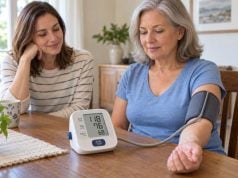
For resting heart rate, a simple manual pulse or validated device is usually enough. The radial pulse at the wrist is easy to check.
To measure manually:
- Sit quietly for at least five minutes.
- Place your index and middle fingers on the thumb side of the opposite wrist.
- Press lightly until you feel the pulse.
- Count beats for 60 seconds if the rhythm seems irregular.
- If the rhythm is regular, counting for 30 seconds and multiplying by two is reasonable.
Do not use your thumb because it has its own pulse.
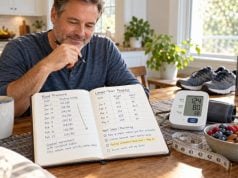
For a true resting baseline, morning measurement before caffeine or activity can be useful. Record several days rather than relying on one value. Illness, a poor night of sleep, and stress can temporarily change the rate.
What about smartwatches?
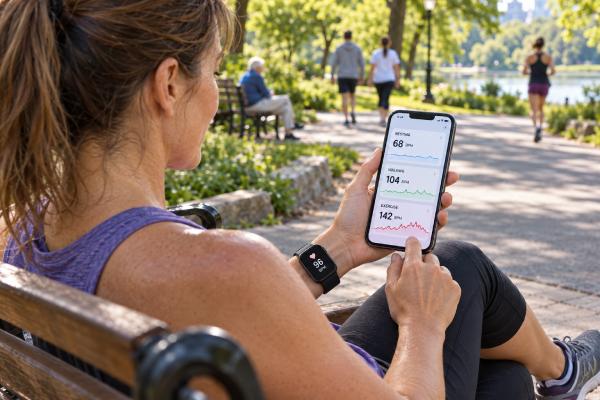
Wrist-worn devices are convenient for trends, but they are not perfect. Most use optical sensors that detect blood-volume changes under the skin. Accuracy can worsen with arm movement, loose fit, very high-intensity exercise, poor skin contact, tattoos, low skin perfusion, and other factors. Research on performance across different skin tones has also found mixed results and highlights the need for better validation.
A wearable that repeatedly shows 160 bpm while you feel fine may be right—or may be seeing motion artifact. Check your pulse manually when practical. If a device repeatedly detects an unexpected fast, slow, or irregular rhythm, especially with symptoms, medical-grade ECG evaluation is more informative than repeatedly refreshing the watch.
When a Heart Rate Is Too High or Too Low
The number becomes more concerning when it is new, persistent, inappropriate for the situation, or accompanied by symptoms.
A resting heart rate above 100 bpm can occur normally for a short time after exercise, stress, caffeine, fever, or dehydration. Persistent resting tachycardia deserves evaluation for causes such as anemia, infection, thyroid disease, medication effects, arrhythmia, or cardiopulmonary illness.
A resting heart rate below 60 bpm can be normal in athletes, during sleep, or in people taking rate-slowing medication. It is more concerning when accompanied by dizziness, fainting, exercise intolerance, confusion, or low blood pressure.
The rhythm itself matters. A sudden heart rate of 150 bpm that starts and stops abruptly may represent a supraventricular tachycardia even if it occurs in an otherwise healthy person. A fast irregular pulse may suggest atrial fibrillation. For symptoms such as racing, fluttering, or pounding, heart palpitations and warning signs can help distinguish common triggers from situations needing evaluation.
There is no safe self-diagnosis based on rate alone. Heart rate should be combined with symptoms, rhythm, blood pressure, medical history, and—when needed—an ECG.
When to Seek Medical Care
Seek urgent help when an abnormal heart rate comes with symptoms suggesting poor blood flow or a serious heart problem.
Call emergency services for a sudden very fast or very slow heart rate with:
- Chest pain or pressure.
- Severe shortness of breath.
- Fainting or near-fainting.
- New confusion.
- Severe weakness.
- Signs of stroke.
- A feeling that something is seriously wrong.
If the pulse is abnormal but you are stable, arrange medical review when a resting heart rate stays above 100 bpm without an obvious temporary cause, is repeatedly below your usual range with symptoms, feels persistently irregular, or changes markedly from your baseline.
For exercise, stop and seek assessment if you develop chest pressure, fainting, severe breathlessness out of proportion to effort, or a sustained racing rhythm. A heart-rate number by itself does not tell you whether exercise is safe.
A normal heart rate is therefore best understood as a range plus context. Resting 60–100 bpm is typical for most adults, walking rates depend on pace and fitness, and exercise zones are age-based estimates. Your personal baseline, symptoms, medications, rhythm, and response to activity are more useful than trying to force every heartbeat into a single chart.
References
- Target Heart Rates Chart 2024 (Official Guidance)
- All About Heart Rate 2024 (Official Guidance)
- 2021 ESC Guidelines on cardiovascular disease prevention in clinical practice 2022 (Guideline)
- Does Exercise Training Improve Cardiac-Parasympathetic Nervous System Activity in Sedentary People? A Systematic Review with Meta-Analysis 2022 (Systematic Review)
- Accuracy of Heart Rate Measurement with Wrist-Worn Wearable Devices in Various Skin Tones: a Systematic Review 2022 (Systematic Review)
- Sex-specific and polygenic effects underlying resting heart rate and associated risk of cardiovascular disease 2024 (Meta-Analysis)
Disclaimer
Heart-rate ranges are general guides and may not apply normally to people taking rate-slowing medication, athletes, pregnant people, or those with heart rhythm or structural heart disease. Seek urgent care for an abnormal heart rate with chest pain, severe shortness of breath, fainting, or neurologic symptoms. A clinician can determine whether a persistent fast, slow, or irregular pulse needs ECG testing or other evaluation.