Leafy green vegetables can support healthy blood pressure, partly because many are rich in natural nitrate that the body can convert to nitric oxide. Nitric oxide helps blood vessels relax, which may lower vascular resistance. Recent randomized-trial reviews suggest dietary nitrate can reduce blood pressure modestly, but the effect varies by dose, food source, baseline pressure, and study length. Leafy greens also provide potassium, magnesium, folate, fiber, and other compounds that make them valuable even when the nitrate effect is small. You do not need to calculate nitrate milligrams at every meal. A practical target is to include about one serving of leafy greens most days—roughly 1 cup raw or 1/2 cup cooked—and often more as part of an overall vegetable-rich diet. Arugula, spinach, lettuce, Swiss chard, and beet greens can all contribute, but nitrate content varies widely. People taking warfarin, those with certain kidney problems, and people prone to calcium-oxalate stones may need individualized choices rather than avoiding greens altogether.
Table of Contents
- How Leafy Greens Can Lower Blood Pressure
- What the Research Shows
- Which Greens Are Highest in Nitrate?
- How Much to Eat
- Easy Meals That Add More Greens
- Safety: Warfarin, Kidneys, and Kidney Stones
- How to Build a Blood-Pressure-Friendly Pattern
How Leafy Greens Can Lower Blood Pressure
Leafy greens help blood pressure through more than one pathway, but dietary nitrate gets the most attention.
After you eat nitrate-rich vegetables, nitrate is absorbed into the bloodstream. Some is concentrated in saliva, where bacteria on the tongue convert nitrate to nitrite. After swallowing, nitrite can be converted to nitric oxide, especially in conditions where oxygen availability is lower. Nitric oxide signals the smooth muscle in blood-vessel walls to relax. Wider vessels can reduce resistance to blood flow and lower pressure.
This nitrate-nitrite-nitric-oxide pathway is different from the L-arginine pathway used by endothelial nitric oxide synthase. That gives vegetables a second route for supporting nitric-oxide biology.
Oral bacteria are part of the process. Strong antiseptic mouthwashes can temporarily reduce nitrate-to-nitrite conversion, which has been shown in mechanistic research to blunt some nitrate effects. That does not mean you should stop medically or dentally indicated mouthwash. Oral health is important. It simply explains why the mouth is biologically involved in the cardiovascular response to dietary nitrate.
Leafy greens also provide nutrients that support blood pressure independently of nitrate. Potassium helps counterbalance sodium and supports normal vascular and kidney function. Magnesium participates in vascular tone. Fiber improves overall diet quality and helps with weight, glucose, and cholesterol management. Folate and numerous phytochemicals add further nutritional value.
This is why whole vegetables are more than a “nitric oxide supplement.” If nitrate content varies from one bunch of spinach to another, the food still contributes useful nutrients.
For a broader list beyond leafy vegetables, see the best vegetables for heart health. The goal is variety, not finding one perfect green.
What the Research Shows
The best evidence suggests that dietary nitrate can produce a modest blood-pressure reduction, but studies do not all agree.
A 2025 GRADE-assessed systematic review and dose-response meta-analysis included 75 randomized controlled trials with more than 1,800 participants. Higher nitrate exposure was associated with lower systolic and diastolic pressure across different study durations, although the size of the effect varied. The analysis also found improvements in some measures of vascular function.
A 2023 meta-analysis of randomized trials found a small reduction in systolic pressure overall, with results differing between healthy participants and people with hypertension. Meanwhile, a 2024 randomized controlled trial in people with early-stage hypertension found no meaningful blood-pressure difference after 16 weeks between high-nitrate and low-nitrate vegetable supplementation.
That apparent contradiction is useful. It tells us nitrate is biologically active but not a guaranteed antihypertensive treatment. Baseline diet, nitrate dose, adherence, oral bacteria, medications, age, and starting blood pressure may all influence the response.
A 2026 systematic review and meta-analysis of green leafy vegetables found favorable associations with cardiovascular disease and mortality in observational studies, while randomized trials did not show consistent significant changes in blood pressure or vascular outcomes. Observational findings can be influenced by the fact that people who eat more vegetables often have healthier lifestyles overall.
So the evidence supports leafy greens as part of a blood-pressure-friendly diet, not as a replacement for medication or a promise of a specific number of mmHg.
The expected change from one food is usually smaller than the combined effect of a strong eating pattern. The DASH diet for high blood pressure, for example, combines vegetables with fruit, whole grains, legumes, low-fat dairy or other nutrient-dense foods, and lower sodium intake.
Which Greens Are Highest in Nitrate?
Nitrate content varies dramatically among vegetables and even among samples of the same vegetable. Soil conditions, fertilizer use, season, light exposure, storage, cooking, and the part of the plant all matter.
Leafy greens that are often relatively high in nitrate include:
- Arugula, also called rocket.
- Spinach.
- Many lettuces.
- Swiss chard.
- Beet greens.
- Mustard greens and some other dark leafy greens.
Arugula is frequently one of the most nitrate-dense common salad greens. That makes it an easy option for people who want to increase vegetable nitrate without drinking beet juice. Arugula and nitrate for blood pressure explains that food in more detail.
Do not treat online nitrate tables as exact dosing guides. A chart might list spinach at a certain number of milligrams per 100 g, but the spinach in your refrigerator could differ substantially. Even clinical studies often analyze the actual nitrate content of intervention foods because visual portion size alone cannot guarantee a dose.
Cooking can also change concentration and total intake in ways that are easy to misunderstand. Boiling may transfer some nitrate into cooking water, while cooking shrinks leaves so you can eat a larger mass in a smaller volume. A half-cup of cooked spinach contains much more leaf material than a half-cup of raw spinach.
Preparation can affect both enjoyment and the nitrate pathway, but there is no need to micromanage cooking. Raw salads preserve crunch and make arugula or lettuce easy to eat in volume. Light sautéing wilts spinach or chard into a much smaller portion, which can help people who struggle to eat large bowls of raw greens. Boiling may move some nitrate into the water; if the cooking liquid is discarded, some nitrate leaves with it. In soups and stews, the liquid is eaten, so that loss matters less.
Storage also changes vegetables over time, but normal refrigeration and food-safety practices are more important than trying to preserve every milligram of nitrate. Buy an amount you can use before it spoils, wash produce appropriately, and choose frozen greens when convenience makes them more likely to be eaten. A reliably eaten frozen spinach portion is more useful than a fresh bag that is repeatedly discarded.
Concentrated nitrate powders and shots are a different category from ordinary vegetables. They can deliver much higher, more standardized doses and may interact more noticeably with blood-pressure medicines. If your goal is simply a heart-healthy diet, whole greens are the safer and more nutritious starting point.
This variability is not a problem for everyday eating. It simply means you should think in terms of repeated vegetable servings rather than trying to hit a medical nitrate target from ordinary foods.
Beets are another nitrate-rich option, but they are not leafy greens unless you eat the beet tops. Concentrated beetroot juice can deliver a more standardized nitrate dose and has its own research base. See beetroot juice for blood pressure if you are comparing food with concentrated products.
How Much to Eat
There is no official “nitrate prescription” for leafy greens and no single serving that has been proven to lower blood pressure in everyone.
For practical meal planning, about 1 cup of raw leafy vegetables or 1/2 cup cooked can count as a useful serving. Many adults can comfortably eat one or two servings of leafy greens on most days as part of a larger vegetable intake. This is a food-pattern target, not a drug-equivalent dose.
A simple way to scale portions is:
- Small add-on: a handful of arugula in a sandwich or omelet.
- One raw serving: about 1 cup of lettuce, spinach, or mixed greens.
- One cooked serving: about 1/2 cup of cooked spinach, chard, or other greens.
- Large salad: 2 or more cups of raw greens plus other vegetables and a protein source.
Clinical nitrate studies often use several millimoles of nitrate per day, sometimes delivered by beetroot juice or carefully measured vegetable products. Converting that into a precise household serving of spinach is unreliable because natural nitrate content varies so widely.
Instead of asking “How many grams of spinach equal the study dose?” ask “Can I make leafy vegetables a routine part of my meals without crowding out other healthy foods?” Consistency is more realistic and gives you benefits from potassium, fiber, and diet quality even on days when nitrate content is lower.
More is not always better. Eating enormous amounts of one green every day can create unnecessary problems for people with medication or kidney-stone considerations and reduces dietary variety. Rotate arugula, romaine, spinach, kale, chard, collards, cabbage-family greens, and other vegetables.
Kale is highly nutritious but is not always among the very highest nitrate greens. That is fine. A vegetable does not have to maximize nitrate to support cardiovascular health.
Easy Meals That Add More Greens
The best portion is the one you can eat regularly. Leafy greens are easiest to sustain when they are built into meals rather than treated as a medicinal side dish.
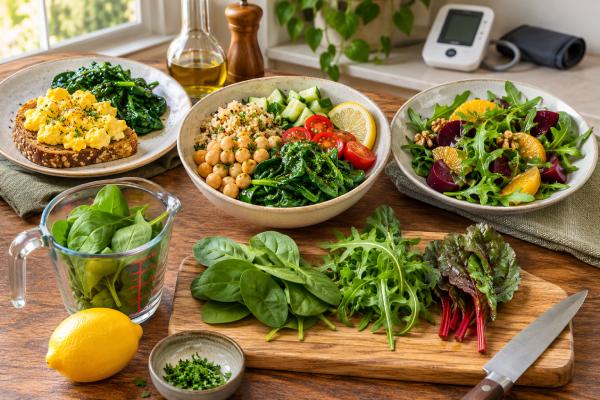
Here are practical combinations:
| Meal | Easy leafy-green addition | Blood-pressure-friendly pairing |
|---|---|---|
| Breakfast | Handful of spinach in eggs or tofu scramble | Whole-grain toast and fruit |
| Breakfast | Arugula on avocado toast | Plain yogurt or a piece of fruit |
| Lunch | 2 cups mixed greens as a salad base | Beans, tuna, salmon, chicken, or tofu |
| Lunch | Romaine and cabbage in a whole-grain wrap | Hummus and sliced vegetables |
| Dinner | 1/2 cup cooked chard or spinach | Lentils, fish, or chicken plus a whole grain |
| Dinner | Arugula stirred into pasta after cooking | Tomato, white beans, olive oil, and herbs |
| Snack | Small salad with fruit and unsalted nuts | Water or unsweetened tea |
Flavor matters. Use lemon juice, vinegar, garlic, herbs, pepper, yogurt-based dressings, tahini, or a modest amount of olive oil. Be careful with bottled dressings, soy sauce, cured meats, salty cheeses, and packaged toppings because they can add enough sodium to offset part of the blood-pressure benefit of the meal.
If greens feel bitter, mix them with sweeter or milder vegetables. Arugula pairs well with pear or tomato; kale can be massaged with lemon and olive oil; spinach disappears easily into soups, curries, pasta, omelets, and bean dishes.
Frozen spinach is convenient and nutritionally useful. It also reduces waste and makes cooked portions easy. Canned greens can work too, but check sodium and choose no-salt-added or lower-sodium versions when possible.
You do not need to drink green juice. Juicing removes much of the fiber and can make it easy to consume a narrow range of produce. Whole vegetables, chopped salads, soups, and cooked greens generally fit a heart-healthy pattern better.
Safety: Warfarin, Kidneys, and Kidney Stones
For most people, leafy greens are very safe. The main cautions involve specific medical situations.
Warfarin: Dark leafy vegetables are rich in vitamin K, which affects warfarin dosing. The usual advice is not to eliminate greens. It is to keep vitamin K intake reasonably consistent from week to week so the medication can be adjusted around a stable diet. A sudden jump from almost no greens to several large servings every day can change the INR. Tell the clinician or anticoagulation service managing warfarin before making a major change. Other anticoagulants do not use vitamin K in the same way, but medication-specific advice still matters.
Kidney disease: Many leafy greens contain substantial potassium. Potassium is beneficial for blood pressure in people with normal kidney handling, but advanced chronic kidney disease and certain medications can make blood potassium rise dangerously. Do not deliberately load potassium-rich foods or supplements without guidance if you have been told to restrict potassium. Potassium and blood pressure explains the balance between benefit and safety.
Calcium-oxalate kidney stones: Spinach is particularly high in oxalate. People with recurrent calcium-oxalate stones may be advised to limit very high-oxalate foods, maintain adequate dietary calcium with meals, hydrate appropriately, and choose lower-oxalate greens more often. You usually do not need to avoid all leafy vegetables.
Low blood pressure or multiple blood-pressure drugs: Food portions of greens are unlikely to cause dramatic hypotension, but someone with already low readings should not stack concentrated nitrate supplements, beet shots, and other vasodilatory products without guidance.
Mouthwash: Antiseptic mouthwash can reduce nitrate-converting oral bacteria, but do not stop a mouthwash recommended for a dental condition just to maximize nitric oxide. Discuss alternatives with a dentist if you use it long term and are concerned.
Finally, nitrates from vegetables should not be confused with the health context of processed meats. Vegetables contain antioxidants and other compounds and are consistently associated with better health patterns; processed meats bring sodium, heme iron, saturated fat, and different processing chemistry.
How to Build a Blood-Pressure-Friendly Pattern
Leafy greens work best as one part of a pattern that addresses the major drivers of blood pressure.
Start with vegetables and fruit, but pair them with sodium control. A giant spinach salad covered in salty deli meat, croutons, cheese, and commercial dressing can contain far more sodium than expected. Read labels and taste before adding extra salt. The guide to sodium intake and high blood pressure can help you identify the biggest sources.
Then add regular physical activity, adequate sleep, moderate alcohol intake, weight management when appropriate, and prescribed medication. These interventions affect blood pressure through different pathways, so their benefits can add up.
If you want to see whether more greens help your own readings, keep the experiment simple. Establish a week of home blood-pressure measurements, then add a consistent serving of leafy greens daily while keeping medication, sodium, caffeine, and exercise habits reasonably stable. Continue measurements for several weeks. Do not expect the effect to appear after one salad.
A meaningful result is a lower average, not the single lowest number. If your systolic pressure moves from an average of 138 to 134 mmHg while you also enjoy the meals and maintain the habit, that is useful. If nothing changes, the vegetables are still nutritionally valuable, but you may need to focus on stronger blood-pressure levers.
Persistent readings above your target deserve medical review. A diet rich in greens cannot compensate for untreated sleep apnea, kidney disease, a medication that raises pressure, severe excess sodium intake, or hypertension that needs prescription treatment.
The simplest long-term approach is variety across meals and seasons: leafy greens several times per week or daily, other vegetables across colors, beans, fruit, whole grains, nuts, seeds, and minimally processed protein foods. Let nitrate be one practical reason to eat greens—not the only reason.
References
- Plasma nitrate, dietary nitrate, blood pressure, and vascular health biomarkers: a GRADE-Assessed systematic review and dose-response meta-analysis of randomized controlled trials 2025 (Systematic Review)
- Associations between Vegetable Nitrate Intake and Cardiovascular Disease Risk and Mortality: A Systematic Review 2024 (Systematic Review)
- Dietary Green Leafy Vegetables and Cardiovascular Disease Risk: A Systematic Review and Meta-Analysis 2026 (Systematic Review)
- Dietary Nitrate from Plant Foods: A Conditionally Essential Nutrient for Cardiovascular Health 2023 (Review)
- No Difference between the Efficacy of High-Nitrate and Low-Nitrate Vegetable Supplementation on Blood Pressure after 16 Weeks in Individuals with Early-Stage Hypertension: An Exploratory, Double-Blinded, Randomized, Controlled Trial 2024 (RCT)
Disclaimer
This article is for general education and does not replace personalized medical or nutrition advice. People taking warfarin, those with advanced kidney disease or potassium restrictions, and people with recurrent kidney stones should discuss major changes in leafy-green intake with the clinician managing those conditions. Do not stop blood-pressure medication or a prescribed dental treatment based on food or nitrate information alone.