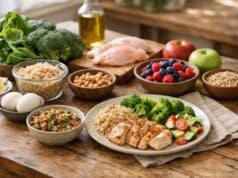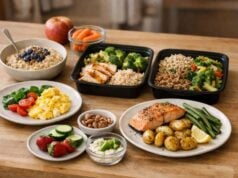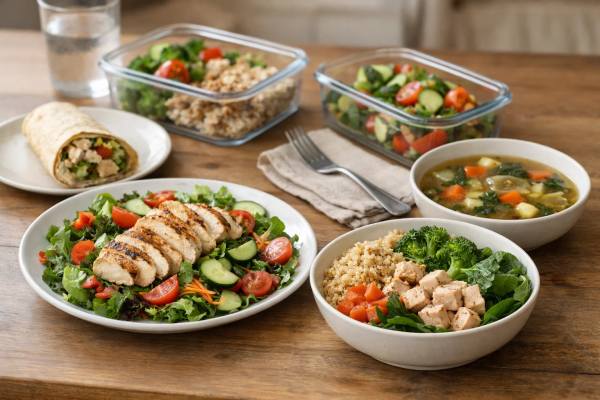
A good weight-loss lunch is not just “low calorie.” It should help you stay in a calorie deficit, keep you full through the afternoon, and make it easier to avoid overeating later. That usually means more protein, more fiber, plenty of volume from vegetables, and enough flavor that the meal still feels satisfying.
The best low-calorie lunches for weight loss are simple, repeatable, and built around foods that give you a lot of fullness for the calories. Below, you will find practical calorie targets, the best foods to use, easy lunch ideas, meal-prep strategies, and a sample lunch plan you can actually use during a busy week.
Table of Contents
- What makes a lunch work in a calorie deficit
- How many calories should lunch have
- Best foods for filling low-calorie lunches
- Best low-calorie lunch ideas
- Meal-prep strategies that save calories
- Common lunch mistakes that slow fat loss
- Five-day low-calorie lunch plan
What makes a lunch work in a calorie deficit
A weight-loss lunch works when it does four things at once:
- It fits your daily calorie budget.
- It gives you enough protein to stay satisfied and protect lean mass.
- It includes fiber and volume so you do not feel done eating after six bites.
- It is realistic enough to repeat several times per week.
That is why the best lunches for a calorie deficit usually look less like a tiny salad and more like a balanced bowl, wrap, soup-and-side combo, or high-protein plate. A lunch that is technically low in calories but leaves you starving by 3 p.m. often backfires. You may end up snacking mindlessly, ordering takeout later, or overeating at dinner and erasing the deficit you created earlier.
In practice, the strongest low-calorie lunches are built around lean protein first. Chicken breast, turkey, tuna, salmon, shrimp, tofu, tempeh, cottage cheese, Greek yogurt, edamame, eggs, and beans all work well. Then you add high-volume foods like chopped greens, cucumbers, tomatoes, cabbage, broccoli, cauliflower, peppers, mushrooms, or soup-based vegetables. Finally, you add a controlled portion of starch or fat to make the meal satisfying instead of punishing.
A useful rule is this: the lunch should feel “substantial” in the container even if it is moderate in calories. Big visual volume matters. A 420-calorie meal with 35 grams of protein, crunchy vegetables, and some smart carbs often feels easier to stick with than a 280-calorie lunch that is mostly crackers, cheese, and dressing.
It also helps to keep your lunch formula simple. If you already know how to build a high-protein plate for weight loss, lunch becomes easier to repeat without constant tracking or decision fatigue. And if your overall goal is sustainable fat loss, the lunch should support your broader calorie deficit strategy, not rely on extreme restriction at midday.
A great lunch does not need to be perfect. It just needs to be filling, controlled, and consistent enough that the rest of your day stays easier.
How many calories should lunch have
For most people, lunch works well when it lands at roughly 25 to 35 percent of the day’s calories. That is not a strict rule, but it is a solid starting point. The right number depends on your total calorie target, your activity level, and whether you prefer a bigger breakfast or dinner.
| Daily calorie target | Suggested lunch range | Who this often suits |
|---|---|---|
| 1,200 to 1,400 | 300 to 400 calories | Smaller eaters or people using a tighter deficit |
| 1,500 to 1,800 | 400 to 550 calories | Many adults aiming for steady fat loss |
| 1,900 to 2,200 | 500 to 650 calories | Taller, more active, or higher-maintenance individuals |
Calories matter, but lunch quality matters too. A smart low-calorie lunch usually hits these rough benchmarks:
- Protein: about 25 to 40 grams
- Fiber: about 8 to 15 grams
- Added fats: enough for flavor, but not so much that calories climb fast
- Carbs: adjusted to your appetite, activity, and overall macro plan
If you often get very hungry in the afternoon, lunch may be too small even if the calorie count looks “good.” In that case, first increase protein and vegetables before cutting more calories elsewhere. A 450-calorie lunch that keeps you stable until dinner is often more effective for fat loss than a 300-calorie lunch followed by a 500-calorie snack spiral.
Protein is especially useful here. Hitting a meaningful amount at lunch can improve fullness and make it easier to keep dinner under control. If you want a more exact target, see how much protein per meal for weight loss. Fiber matters for the same reason, especially when it comes from vegetables, beans, fruit, and whole grains rather than just tiny portions of “healthy” foods. This guide on fiber per meal for weight loss can help you dial that in.
A good lunch target is one you can repeat without feeling deprived. If your lunch calories are so low that you spend half the afternoon thinking about food, the meal is probably underbuilt. The best calorie-deficit lunches are moderate, not microscopic.
Best foods for filling low-calorie lunches
The best low-calorie lunches are usually built from the same small group of foods because they give you the most fullness per calorie.
Lean proteins
These should do most of the heavy lifting in the meal:
- Chicken breast or rotisserie chicken breast
- Turkey breast or extra-lean ground turkey
- Tuna, salmon, shrimp, or white fish
- Nonfat Greek yogurt or cottage cheese
- Tofu, tempeh, and edamame
- Eggs and liquid egg whites
- Beans, lentils, and higher-protein pasta in mixed meals
Protein helps a lunch feel like a meal instead of a snack. It also makes low-calorie lunches more stable. A salad with 4 ounces of chicken eats very differently from a salad with almost no protein.
High-volume vegetables
These are what make a lunch look large without driving calories up:
- Romaine, spinach, cabbage, kale, spring mix
- Cucumbers, tomatoes, bell peppers
- Broccoli, cauliflower, zucchini, mushrooms
- Carrots, snap peas, green beans
- Vegetable soups and broth-based soups
If you need ideas, the best options are usually the ones you can eat in generous portions without much calorie cost, like the foods covered in the best vegetables for weight loss and high-volume, low-calorie foods.
Smart carbs
Carbs are not the problem in a calorie deficit. Oversized portions are. The goal is to choose carbs that add energy and satisfaction without crowding out protein and vegetables.
Good lunch choices include:
- Potatoes
- Brown rice or jasmine rice in measured portions
- Quinoa
- Beans and lentils
- Whole-grain wraps
- Fruit on the side
- Whole-grain bread for sandwiches
- Pasta in smaller amounts mixed with lean protein and vegetables
A practical approach is to keep carb portions moderate. Instead of building lunch around two cups of rice or a giant bakery sandwich, make the starch a supporting player.
Calorie-smart flavor boosters
Many lunches become high calorie because of what gets poured on top. Keep flavor, but be selective:
- Salsa, mustard, hot sauce, vinegar, lemon juice
- Greek yogurt-based dressings
- Herbs, spices, garlic, pickled onions
- Hummus in measured amounts
- Avocado, nuts, seeds, cheese, and olive oil in modest portions
The difference between a 380-calorie lunch and a 680-calorie lunch is often not the chicken or vegetables. It is the dressing, cheese, mayo, oil, chips, and “healthy extras.”
If you stock these food categories, you can build dozens of lunches without overcomplicating the process.
Best low-calorie lunch ideas
The best lunch ideas for a calorie deficit are meals you can assemble quickly, pack easily, and enjoy more than once. Here are strong options with realistic calorie and protein ranges.
- Chicken chopped salad: romaine, cucumber, tomatoes, peppers, chickpeas, grilled chicken, and a light vinaigrette. About 350 to 450 calories and 30 to 40 grams of protein.
- Turkey hummus wrap: high-fiber wrap, sliced turkey, hummus, lettuce, tomato, and pickles. About 350 to 430 calories and 25 to 35 grams of protein.
- Tuna and white bean salad: tuna, white beans, red onion, celery, tomatoes, lemon, and herbs over greens. About 380 to 480 calories and 30 to 40 grams of protein.
- Greek yogurt chicken salad lettuce cups: shredded chicken mixed with Greek yogurt, mustard, celery, and grapes, served in lettuce cups. About 300 to 380 calories and 30 to 35 grams of protein.
- Shrimp rice bowl: shrimp, cauliflower rice mixed with a smaller scoop of regular rice, cabbage slaw, cucumber, and spicy yogurt sauce. About 400 to 500 calories and 30 to 40 grams of protein.
- Tofu edamame slaw bowl: baked tofu, shelled edamame, shredded cabbage, carrots, cucumber, and sesame-ginger dressing used lightly. About 380 to 480 calories and 25 to 35 grams of protein.
- Lentil soup with turkey roll-ups: one large bowl of lentil soup plus sliced turkey rolled with mustard and cucumbers. About 350 to 450 calories and 25 to 35 grams of protein.
- Burrito bowl: lean ground turkey or chicken, fajita vegetables, salsa, black beans, cauliflower rice, and a small scoop of rice or avocado. About 400 to 520 calories and 30 to 40 grams of protein.
- Cottage cheese power bowl: cottage cheese, cherry tomatoes, cucumbers, chickpeas, everything seasoning, and fruit on the side. About 300 to 400 calories and 25 to 35 grams of protein.
- Egg and egg-white lunch box: hard-boiled eggs, extra egg whites, raw vegetables, fruit, and a measured portion of crackers or toast. About 320 to 420 calories and 25 to 30 grams of protein.
- Salmon sushi-style bowl: canned salmon or baked salmon, cucumber, carrots, edamame, seaweed, rice, and light soy-ginger sauce. About 420 to 520 calories and 28 to 38 grams of protein.
- Leftover chili: lean turkey chili with beans and extra vegetables. About 300 to 420 calories and 25 to 35 grams of protein.
A pattern shows up in all of these: each meal combines a serious protein source, plenty of volume, and a controlled amount of starch or fat. That is why they work.
If you want more packable options beyond the ideas here, healthy lunch ideas for weight loss that are packable and make-ahead and high-protein, low-calorie meals for weight loss can give you even more combinations.
The best choice is not the one with the fewest calories. It is the one you can eat regularly without feeling like you are “dieting” every afternoon.
Meal-prep strategies that save calories
Low-calorie lunches are easiest to stick with when they are the default option, not a daily decision. Meal prep does not have to mean cooking seven identical containers on Sunday. It just means reducing friction.
A simple lunch-prep system looks like this:
- Choose two proteins for the week, such as chicken breast and turkey, or tofu and shrimp.
- Prep two vegetables in bulk, such as chopped cucumbers and roasted broccoli.
- Pick one starch you can portion easily, such as rice, potatoes, or wraps.
- Make one low-calorie sauce such as yogurt ranch, salsa-lime dressing, or mustard vinaigrette.
- Pack emergency backups like tuna packets, Greek yogurt, cottage cheese, frozen soup, or deli turkey.
This kind of structure prevents the classic problem where lunch starts well but falls apart by Thursday and turns into random takeout, pastries, or oversized sandwiches.
A few practical tricks help even more:
- Use a food scale for calorie-dense extras like cheese, nuts, granola, avocado, mayo, and dressings.
- Keep at least one freezer-friendly lunch on hand, such as chili, soup, or a cooked burrito bowl component.
- Pre-portion proteins in cooked ounces instead of guessing.
- Build lunch around the protein first, then add the rest.
- Keep crunchy vegetables ready to go so every lunch has volume.
One of the most useful moves is to repeat the same lunch base with small variations. For example, you can prep grilled chicken, chopped lettuce, cucumbers, tomatoes, and rice, then change the flavor profile each day with salsa, Greek yogurt dressing, or lemon herbs. That keeps lunch familiar without feeling monotonous.
If your schedule is hectic, a dedicated high-protein lunch meal prep approach usually works better than trying to improvise each day. And if you want a broader system for the whole week, meal prep for weight loss with a one-hour weekend plan can make lunch much easier to sustain.
The goal is not perfection. It is reducing the odds that hunger and convenience will make the decision for you.
Common lunch mistakes that slow fat loss
Many lunches look healthy but still make a calorie deficit harder. The usual problem is not one ingredient. It is the overall structure.
1. Making lunch too small
A tiny lunch can lead to bigger problems later. If you are regularly raiding snacks by midafternoon or arriving at dinner ravenous, your lunch may not have enough protein, fiber, or total volume.
2. Using salads that are mostly toppings
A salad can be a great weight-loss lunch, but not when it turns into lettuce plus cheese, croutons, nuts, dried fruit, avocado, and heavy dressing. Those ingredients are fine in measured amounts. They just add up quickly.
3. Skipping protein
A lunch built around crackers, fruit, soup alone, or a plain wrap tends to disappear fast. Protein is often the difference between a stable afternoon and constant grazing.
4. Letting sauces do too much
Restaurant dressings, mayo-based spreads, creamy dips, and generous oil pours can quietly double lunch calories. This is one reason a “healthy” grain bowl or salad sometimes stalls progress.
5. Calling calorie-dense foods free foods
Avocado, hummus, nuts, seeds, olive oil, pesto, cheese, and granola are nutritious, but they are not low calorie. A few unmeasured extras can wipe out the advantage of an otherwise solid meal. Learning portion sizes for weight loss is often enough to fix this without changing your food choices dramatically.
6. Relying on restaurant lunches too often
Even meals marketed as light can come with more oil, sugar, larger starch portions, and larger protein portions than you expect. When eating out, keep the lunch formula simple: lean protein, vegetables, controlled starch, dressing on the side.
7. Treating snacks as part of lunch without counting them
Chips, sweet coffee drinks, “healthy” bars, office treats, and handfuls of trail mix often turn a 420-calorie lunch into a 750-calorie midday eating block. If afternoon hunger is real, planned options from low-calorie snacks for weight loss work much better than random extras.
The fix is rarely extreme. It is usually a matter of building lunch more intentionally and measuring the few ingredients that are easy to underestimate.
Five-day low-calorie lunch plan
Here is a simple weekday lunch plan that fits many calorie-deficit diets. The calorie and protein numbers are approximate, but the structure is what matters most.
| Day | Lunch | Approximate calories | Approximate protein |
|---|---|---|---|
| Monday | Chicken chopped salad with chickpeas and light vinaigrette | 410 | 36 g |
| Tuesday | Turkey hummus wrap with cucumber and berries | 430 | 32 g |
| Wednesday | Lentil soup with turkey roll-ups and raw vegetables | 390 | 30 g |
| Thursday | Tuna and white bean salad over greens | 440 | 37 g |
| Friday | Burrito bowl with lean turkey, black beans, fajita vegetables, and salsa | 500 | 39 g |
This kind of plan works because it repeats the same formula without feeling repetitive: protein, vegetables, controlled carbs, and measured flavor. You can rotate the protein, swap the vegetables, and adjust the starch to fit your calorie target.
A few ways to customize it:
- Lower calories by reducing rice, wraps, cheese, or dressing before cutting protein.
- Raise fullness by adding more nonstarchy vegetables or broth-based soup.
- Add carbs if you train around lunch or feel low on energy later in the day.
- Add fruit or a yogurt on the side if your total lunch target is higher.
If you want to expand this into a full week or month, a 30-day weight loss meal plan template or a 30-day high-protein, high-fiber meal plan for weight loss can make the rest of your meals line up with the same lunch strategy.
The key takeaway is simple: the best lunch ideas for a calorie deficit are not the lightest meals you can tolerate. They are the meals that help you stay satisfied enough to keep the rest of the day under control.
References
- Overweight and obesity management | Guidance 2025 (Guideline)
- Dietary Guidelines for Americans, 2020-2025 2021 (Guideline)
- Effects of dietary fibre on metabolic health and obesity 2024 (Review)
- Enhanced protein intake on maintaining muscle mass, strength, and physical function in adults with overweight/obesity: A systematic review and meta-analysis 2024 (Systematic Review)
Disclaimer
This article is for general educational purposes only. It is not medical advice, and it is not a substitute for personalized guidance from a physician or registered dietitian, especially if you have a medical condition, a history of disordered eating, or questions about the calorie level that is appropriate for you.
If you found this article helpful, please share it on Facebook, X, or any platform your friends, clients, or community use.