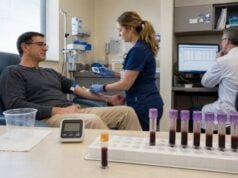
A macroprolactin test helps determine whether a high prolactin result is caused mainly by large prolactin complexes that are measured by the laboratory but often have limited biological activity. The commonest form, macroprolactin, is usually prolactin attached to an immunoglobulin. It remains in the bloodstream longer than ordinary monomeric prolactin and can make total prolactin appear persistently elevated. Identifying it can prevent unnecessary pituitary imaging, medication, and anxiety. The usual screening method is polyethylene glycol precipitation, which removes much of the macroprolactin before prolactin is measured again. The most useful result is the remaining, or post-PEG, monomeric prolactin compared with a method-specific reference interval. Macroprolactin does not automatically explain every symptom, and it can coexist with true monomeric hyperprolactinemia. Results must therefore be interpreted with menstrual, fertility, sexual, medication, pregnancy, thyroid, kidney, and pituitary information.
- Macroprolactin can cause a high total prolactin result without strong prolactin-related symptoms.
- PEG precipitation is the most common screening method; gel filtration chromatography is the reference method.
- The post-PEG monomeric prolactin value is more useful than a recovery percentage alone.
- Macroprolactinemia and true hyperprolactinemia can occur together.
- A macroprolactin result does not rule out a pituitary tumor when symptoms or monomeric prolactin remain concerning.
Table of Contents
- What Macroprolactin Is
- Why Macroprolactin Testing Is Ordered
- How the Test Works
- Preparation and Sample Considerations
- How to Read Macroprolactin Results
- Symptoms, Causes, and Clinical Meaning
- Pitfalls and Related Prolactin Tests
- Follow-Up and Treatment Decisions
What Macroprolactin Is
Prolactin is a pituitary hormone best known for supporting milk production after childbirth. It also influences ovulation, menstrual cycles, testosterone, sexual function, and fertility. Most biologically active circulating prolactin is a small single molecule called monomeric prolactin.
Blood may also contain larger forms. “Big prolactin” is an intermediate form, while “big-big prolactin,” usually called macroprolactin, has a much larger molecular size. In many people, macroprolactin consists of prolactin bound to an immunoglobulin G antibody. The complex is cleared slowly by the kidneys, so it can accumulate and produce a high measured total prolactin.
Many automated prolactin immunoassays detect macroprolactin to some degree. The assay may not distinguish it from monomeric prolactin. This creates an analytical finding called macroprolactinemia, in which a substantial proportion of measured prolactin is macroprolactin.
Macroprolactin is often less able to cross capillary walls and bind receptors in target tissues. Many affected people have few or no symptoms despite an elevated total result. It is therefore sometimes described as biologically inactive or less active. That description is useful but not absolute. Macroprolactin preparations vary, and some people with macroprolactinemia have menstrual changes, infertility, breast discharge, or sexual symptoms.
The presence of symptoms does not prove that macroprolactin is active. Symptoms may have another cause, or the person may also have elevated monomeric prolactin. Conversely, absence of symptoms does not confirm macroprolactinemia. Laboratory separation is needed.
Macroprolactin is not the same as a macroprolactinoma. A macroprolactinoma is a prolactin-secreting pituitary tumor at least 10 millimeters in size. The shared prefix “macro” causes confusion, but one term describes molecular size and the other describes tumor size.
Why Macroprolactin Testing Is Ordered
Macroprolactin testing is usually ordered after total prolactin is above the laboratory reference range. Some laboratories automatically perform it whenever prolactin exceeds a defined threshold. Others require a separate request.
The test is especially helpful when total prolactin is elevated but the clinical picture is mild or inconsistent. Examples include:
- Persistent mild or moderate hyperprolactinemia without breast discharge, menstrual disruption, infertility, low testosterone, or sexual symptoms
- A high prolactin value found incidentally
- Normal pituitary imaging despite unexplained prolactin elevation
- Lack of expected response to dopamine-agonist treatment
- A prolactin result that has remained stable for years without progression
- Avoiding unnecessary MRI in a person with a low-risk presentation
Screening can also be appropriate in symptomatic people because macroprolactin may coexist with elevated monomeric prolactin. Symptoms should not be used as the only gatekeeper for testing.
A clinician may evaluate prolactin because of absent or irregular periods, infertility, unexpected milk production, reduced libido, erectile dysfunction, low testosterone, delayed puberty, headaches, or visual symptoms. Pregnancy, medicines, hypothyroidism, kidney disease, liver disease, stress, and chest-wall stimulation can all elevate total prolactin. Macroprolactin testing addresses only one part of this differential diagnosis.
Routine screening policies differ. Some experts favor checking all confirmed hyperprolactinemia because macroprolactinemia is common enough to alter management. Others target testing based on symptoms and degree of elevation. The laboratory’s assay matters because different platforms have different sensitivity to macroprolactin.
Testing is less useful when prolactin elevation has an obvious short-lived explanation, such as pregnancy or a sample drawn during major physiologic stress, unless the result is unusually high or remains elevated later. It is also not a substitute for urgent pituitary evaluation when severe headache, new vision loss, or neurologic symptoms are present.
How the Test Works
The common screening method uses polyethylene glycol, abbreviated PEG. The laboratory mixes serum with a PEG solution. PEG precipitates immunoglobulins and many large protein complexes, including much of the macroprolactin. The sample is centrifuged, and prolactin is measured in the liquid remaining above the precipitate.
The laboratory may report several values:
- Total prolactin before PEG treatment
- Prolactin after PEG treatment, often called post-PEG or monomeric prolactin
- Percent recovery
- Percent precipitated
- A qualitative interpretation such as macroprolactin present, absent, or indeterminate
Percent recovery estimates how much measured prolactin remains after treatment, adjusted for sample dilution. A low recovery suggests that much of the original result came from a precipitable large form. Historically, laboratories often used recovery thresholds around 40% or 60%, with an intermediate gray zone. Cutoffs vary and should not be transferred between laboratories.
Recovery percentage alone has a major limitation. Suppose total prolactin is extremely high. Even if PEG removes a large fraction, the remaining monomeric concentration may still be above normal. That person has macroprolactin plus true monomeric hyperprolactinemia and may still need evaluation.
For this reason, many laboratory experts favor reporting the post-PEG prolactin with a reference interval established for that specific assay and PEG procedure. PEG removes some monomeric prolactin as well as macroprolactin, so an ordinary untreated prolactin range cannot always be applied to the post-PEG result.
Gel filtration chromatography separates prolactin forms by molecular size and is often considered the reference method. It is more labor-intensive, expensive, and unavailable in many routine laboratories. It may be used when PEG results are unclear, when another large form is suspected, or when the clinical stakes are high.
Other approaches include protein A or protein G binding, ultrafiltration, and specialized immunoassays. No single method is perfectly standardized. Interpretation should use the report issued by the performing laboratory rather than a universal internet cutoff.
Preparation and Sample Considerations
A macroprolactin test uses the same blood sample type as a prolactin test. Often the laboratory can perform PEG treatment on a stored sample without another blood draw. If a new sample is needed, preparation should reduce avoidable prolactin elevation.
Prolactin rises during sleep and can increase temporarily with stress, strenuous exercise, sex, nipple or breast stimulation, venipuncture anxiety, seizures, and some meals. Many clinicians prefer a sample collected at least a few hours after waking, after the person has rested quietly. Exact instructions vary.
Fasting is not always required. A laboratory may request an overnight fast for a repeat borderline result or when other fasting tests are ordered. Follow the local instructions.
Tell the clinician about all medicines and supplements. Drugs that can raise monomeric prolactin include many antipsychotics, metoclopramide, domperidone, some antidepressants, opioids, verapamil, methyldopa, and estrogen-containing treatments. A medication-related elevation can occur alongside macroprolactin.
Do not stop a psychiatric or other prescription without the prescribing clinician. Abrupt withdrawal may be unsafe. When medicine is a possible cause, the care team may repeat testing, adjust treatment, switch to an alternative, or interpret the value in context.
Pregnancy should be considered in anyone who could be pregnant because prolactin normally rises during pregnancy. Routine macroprolactin interpretation is less useful in that setting. Breastfeeding also elevates prolactin through normal nipple-stimulation pathways.
Biotin can interfere with some immunoassays, though the direction depends on assay design. The laboratory may advise pausing high-dose biotin for a specified period. Ordinary dietary biotin is not usually a concern.
A first high prolactin result is often repeated before an extensive workup, especially when elevation is mild. A rested repeat sample can distinguish persistent hyperprolactinemia from a temporary stress response. Macroprolactin testing may be performed on that confirmation sample.
How to Read Macroprolactin Results
The clearest interpretation asks whether monomeric prolactin remains elevated after macroprolactin is removed. The exact wording differs by laboratory.
Macroprolactin present with normal post-PEG prolactin
This pattern means the high total value is largely explained by macroprolactin, while the estimated biologically active monomeric fraction is within the laboratory’s post-PEG range. It is often called isolated macroprolactinemia.
When symptoms are absent and there are no concerning neurologic findings, extensive pituitary investigation may not be necessary. The clinician still reviews pregnancy, thyroid status, medicines, kidney function, and the reason testing was ordered. Symptoms may need evaluation for causes unrelated to prolactin.
Macroprolactin present with high post-PEG prolactin
This pattern means macroprolactin is present, but monomeric prolactin is also elevated. The macroprolactin finding must not end the workup. Causes of true hyperprolactinemia—including medication effects, hypothyroidism, kidney disease, stalk compression, and prolactinoma—remain relevant.
The degree of post-PEG elevation helps guide the next step, but there is overlap among causes. Pituitary imaging may be appropriate after physiologic and medication explanations are assessed.
Macroprolactin not detected
A high total prolactin with normal recovery and high post-PEG prolactin supports genuine monomeric hyperprolactinemia. The clinician evaluates common causes and may repeat the result under controlled conditions.
Indeterminate or gray-zone result
A recovery near the laboratory cutoff may be labeled indeterminate. Repetition, use of the post-PEG value, or gel filtration chromatography may clarify it. Small differences around a percent-recovery threshold should not drive major decisions without considering analytic variation.
| Total prolactin | Post-PEG prolactin | Likely interpretation |
|---|---|---|
| High | Within method-specific range | Isolated macroprolactinemia is likely. |
| High | Still high | Macroprolactin may coexist with true hyperprolactinemia. |
| High | High with little change | Predominantly monomeric hyperprolactinemia is likely. |
| Borderline high | Borderline or uncertain | Repeat testing and laboratory-specific interpretation may be needed. |
There is no single normal macroprolactin percentage. Some laboratories report the proportion precipitated; others report recovery. These are related but opposite-style measures, so reading the label is essential.
Worked examples of post-PEG interpretation
Consider a total prolactin of 55 ng/mL in a person with regular periods and no galactorrhea. After PEG treatment, the laboratory reports a monomeric prolactin of 12 ng/mL, which is within its validated post-PEG interval. This pattern supports isolated macroprolactinemia. If pregnancy, medicines, thyroid disease, kidney disease, and neurologic warning signs are not concerns, the clinician may document the finding and avoid pituitary imaging.
Now consider a total prolactin of 110 ng/mL with post-PEG prolactin of 38 ng/mL when the laboratory’s upper post-PEG limit is 18 ng/mL. The fall shows that macroprolactin contributes to the total, but the remaining monomeric prolactin is genuinely elevated. Calling the result “macroprolactin positive” without noticing the post-PEG elevation could miss a medicine effect, hypothyroidism, stalk compression, or a prolactinoma.
A third example is a total prolactin of 32 ng/mL that remains 27 ng/mL after correction for dilution. Here, little prolactin was removed, so monomeric hormone predominates. Even though the original elevation is mild, it should be interpreted as true hyperprolactinemia if it persists. A rested repeat sample and review of medications may be more useful than immediate MRI.
Results near a threshold need restraint. A recovery of 39% is not biologically different from 41% when analytic variation is considered. The post-PEG concentration, symptoms, and clinical history are more informative than treating a cutoff as an absolute border. When the report provides only a recovery percentage and no post-PEG reference interval, the clinician may contact the laboratory for guidance.
The original total prolactin still matters. Macroprolactin can dominate a sample with a very high total concentration, yet the remaining monomeric value may be clinically important. Conversely, a low recovery from a mildly elevated total may leave a clearly normal monomeric level. This is why results should be read as a pair rather than as a single positive or negative flag.
Symptoms, Causes, and Clinical Meaning
Macroprolactinemia is frequently discovered in people with few symptoms. The immune system may form antibodies against prolactin, creating a large complex with prolonged circulation. Why this happens in a particular person is often unknown.
Macroprolactin has been reported with autoimmune conditions, but an association does not mean that every person requires broad autoimmune testing. Clinical history should guide additional evaluation.
Possible symptoms reported in people with macroprolactinemia include:
- Irregular or absent menstrual periods
- Galactorrhea, or milk discharge unrelated to expected breastfeeding
- Infertility
- Reduced libido
- Erectile dysfunction
- Low testosterone
- Headache
These symptoms overlap with true hyperprolactinemia and many other conditions. Polycystic ovary syndrome, thyroid disease, menopause, medication effects, pregnancy, hypothalamic amenorrhea, and primary gonadal disorders can produce similar problems. If post-PEG prolactin is normal, the clinician should avoid assuming that macroprolactin caused every symptom.
Macroprolactinemia usually does not require dopamine-agonist treatment when monomeric prolactin is normal and no prolactinoma is present. Dopamine agonists lower prolactin secretion but may expose the person to nausea, dizziness, blood-pressure changes, impulse-control effects, and unnecessary monitoring.
Pituitary incidentalomas are common enough that imaging can reveal a small lesion unrelated to the prolactin result. Testing for macroprolactin before MRI can reduce this diagnostic confusion. However, macroprolactin and a pituitary lesion can coexist. Imaging decisions should still account for symptoms, monomeric prolactin, other pituitary hormones, and neurologic signs.
Long-term macroprolactin levels often remain stable. Repeated screening may add little after isolated macroprolactinemia is clearly established, unless symptoms change, total prolactin changes substantially, or a new clinical reason emerges. Local practice varies.
Pitfalls and Related Prolactin Tests
Macroprolactin is only one laboratory issue in prolactin testing. Several other pitfalls can produce misleading conclusions.
Hook effect
Very high prolactin can paradoxically read as only mildly elevated in certain two-site immunoassays. This “high-dose hook effect” may occur with a large prolactinoma. The mismatch is especially concerning when MRI shows a large pituitary mass but prolactin is only modestly elevated. The laboratory can repeat the sample after dilution.
Macroprolactin screening and dilution solve different problems. PEG identifies large complexes; dilution detects assay saturation. One does not replace the other.
Stalk effect
A non-prolactin-secreting pituitary or nearby mass can compress the pituitary stalk and reduce dopamine delivery, causing moderate monomeric prolactin elevation. This is called stalk effect. The value, tumor size, symptoms, and imaging pattern help distinguish it from a prolactinoma, but no single threshold is perfect.
Stress and pulsatility
Venipuncture stress can raise prolactin. In selected cases, repeated samples through an indwelling cannula after rest show whether the elevation persists. This approach is separate from macroprolactin analysis.
Laboratory reference ranges
Prolactin values may be reported in nanograms per milliliter, micrograms per liter, or milli-international units per liter. Conversion factors vary by assay calibration. Pregnancy, lactation, sex, age, and estrogen exposure influence the expected range.
A complete prolactin blood test interpretation may include repeat total prolactin, post-PEG monomeric prolactin, pregnancy testing, TSH and free T4, creatinine, liver tests, medication review, and pituitary MRI when indicated.
Symptoms of low sex hormones may prompt LH, FSH, estradiol, testosterone, and bone-health evaluation. A broader pituitary tumor hormone panel is appropriate when a mass is known or several pituitary functions may be affected.
A useful laboratory report states the untreated total prolactin, post-PEG prolactin, recovery percentage or interpretation, and the reference interval used for the post-treatment sample. Without those elements, a label such as “macroprolactin present” may be incomplete. The clinically important question is whether monomeric prolactin remains elevated after the large complexes are removed.
If symptoms are strong despite a reassuring post-PEG result, clinicians should reconsider pregnancy, thyroid disease, medicines, kidney function, gonadal hormones, and structural pituitary disease rather than attributing everything to macroprolactin. Conversely, an asymptomatic person with normal monomeric prolactin may avoid repeated MRI scans and dopamine-agonist treatment that would not address the laboratory artifact.
Follow-Up and Treatment Decisions
Follow-up depends on the post-PEG monomeric result, symptoms, and clinical setting.
When isolated macroprolactinemia is found and the person is well, the clinician may document the result and avoid MRI or dopamine-agonist treatment. Future clinicians should know that the total prolactin assay detects macroprolactin, because otherwise the same workup may be repeated.
When monomeric prolactin remains high, the usual hyperprolactinemia evaluation continues. Typical steps include:
- Confirm persistent elevation with an appropriately collected sample.
- Exclude pregnancy and normal lactation.
- Review prescription medicines, supplements, and nonprescribed hormones.
- Check thyroid and kidney function and other tests suggested by history.
- Assess menstrual, sexual, fertility, and low-sex-hormone symptoms.
- Consider pituitary MRI when no reversible cause explains the result or neurologic findings are present.
- Use sample dilution when a large mass and modest prolactin raise concern for the hook effect.
Treatment targets the cause of monomeric hyperprolactinemia. Hypothyroidism may respond to thyroid hormone. Medication changes require coordination with the prescriber. Prolactinomas often respond to dopamine agonists such as cabergoline, with monitoring of prolactin, symptoms, and tumor size. Surgery is considered in selected resistant, intolerant, compressive, or preference-sensitive situations.
Seek urgent evaluation for sudden severe headache, new vision loss, double vision, vomiting, confusion, fainting, or weakness. These can signal pituitary apoplexy or another emergency. A macroprolactin result should never delay assessment of acute neurologic symptoms.
A pregnancy plan, infertility, prolonged loss of periods, low testosterone, or low bone density deserves timely follow-up even when macroprolactin is present. The post-PEG result and the broader reproductive evaluation determine whether prolactin is contributing.
The result should be preserved with its assay name because recovery cutoffs are not interchangeable between laboratories.
References
- Macroprolactinemia: a mini-review and update on clinical practice 2023 (Review)
- Position statement on macroprolactinemia from the Brazilian Society of Endocrinology and Metabolism and the Brazilian Society of Clinical Pathology/Laboratory Medicine 2025 (Position Statement)
- Establishment of reference intervals of monomeric prolactin to identify macroprolactinemia in Chinese patients with increased total prolactin 2021 (Original Research)
- The frequency of macroprolactinemia among patients with hyperprolactinemia in a clinical laboratory 2024 (Original Research)
- Diagnosis and management of prolactin-secreting pituitary adenomas: a Pituitary Society international Consensus Statement 2023 (Consensus Statement)
Disclaimer
Macroprolactin results depend on the assay, PEG method, and laboratory-specific post-PEG reference interval. This article is educational and cannot determine whether an elevated prolactin result needs imaging or treatment. Discuss persistent elevation, symptoms, pregnancy plans, and medication changes with a qualified clinician or endocrinologist.