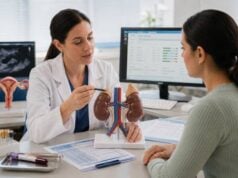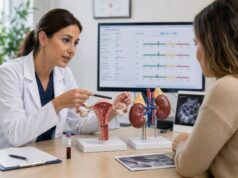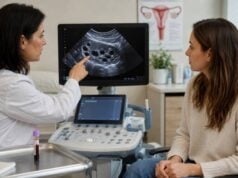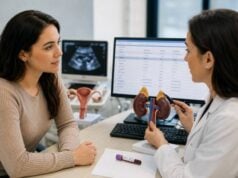
Hormone tests taken while using an oral contraceptive usually show the effect of the medication, not an untreated picture of natural ovarian function. Combined birth control pills suppress FSH and LH, prevent the usual ovulatory hormone pattern, reduce ovarian androgen production, and raise sex hormone-binding globulin, or SHBG. As a result, free testosterone often falls, total testosterone may change, and estradiol results cannot be read like those from a natural menstrual cycle. Standard estradiol tests also do not reliably measure the synthetic estrogen in most pills. These changes are expected and help explain why pills can improve acne, excess hair growth, heavy bleeding, or irregular cycles. Routine hormone testing is not required to start or monitor most oral contraceptives. Testing becomes useful when there is a specific concern, such as possible pregnancy, severe or rapidly changing androgen symptoms, thyroid or prolactin disease, liver problems, or a need to evaluate PCOS after medication effects have cleared. Never stop contraception solely for a laboratory test without arranging another reliable method.
- Combined oral contraceptives commonly raise SHBG and lower free testosterone, so androgen results do not represent untreated baseline levels.
- Routine estrogen, progesterone, FSH, LH, or testosterone testing is not needed to prove that a birth control pill is working.
- A standard estradiol assay measures endogenous estradiol, not the ethinyl estradiol dose listed on most pill packs.
- When biochemical androgen testing is essential, guidelines commonly recommend at least 3 months off a combined pill with alternative contraception.
- Pregnancy testing, blood pressure review, and symptom-focused evaluation are usually more useful than broad hormone panels during pill use.
Table of Contents
- How Oral Contraceptives Change Hormones
- When Hormone Testing Is Useful
- SHBG and Testosterone Results
- Estrogen, Progesterone, FSH, and LH
- Testing for PCOS and Androgen Excess
- Preparation, Stopping the Pill, and Timing
- Other Tests and Safety Monitoring
- Results, Questions, and Common Mistakes
How Oral Contraceptives Change Hormones
Oral contraceptives include combined pills containing an estrogen plus a progestin and progestin-only pills. Their effects on laboratory results differ, so the exact product matters.
Combined pills prevent pregnancy mainly by suppressing the hypothalamic-pituitary-ovarian system. The estrogen and progestin provide negative feedback to the brain and pituitary, reducing FSH and LH. Follicles do not develop through the usual cycle, the mid-cycle LH surge is prevented, and ovulation is usually suppressed. Cervical mucus becomes less penetrable to sperm, and the uterine lining stays thin.
The estrogen component also increases liver production of SHBG. SHBG binds testosterone and estradiol in the bloodstream. When more testosterone is bound, the free or biologically available fraction falls. Combined pills can additionally reduce ovarian androgen production by suppressing LH. Some progestins have more androgenic activity than others, while others have antiandrogenic properties, so the size of the effect varies by formulation.
The scheduled bleed during placebo pills is a withdrawal bleed, not proof of a natural ovulatory cycle. Hormone levels fall during the hormone-free interval, causing the endometrium to shed. People using continuous or extended regimens may have few or no scheduled bleeds without this indicating menopause, infertility, or harmful “build-up.”
Progestin-only pills primarily alter cervical mucus and the endometrium; some formulations suppress ovulation more consistently than others. They may affect gonadotropins and ovarian hormones, but they generally do not create the same estrogen-driven SHBG increase as a combined pill.
Formulation details matter even within combined pills. Ethinyl estradiol has a strong liver effect and can raise binding proteins more than its small dose might suggest. Pills containing estradiol or estetrol may produce different laboratory changes, and progestins differ in androgenic, antiandrogenic, and mineralocorticoid activity. These differences can influence acne, fluid symptoms, bleeding, and SHBG, but a laboratory panel cannot rank which pill will feel best for an individual. Clinical response, contraceptive goals, side effects, and safety remain the deciding factors when choosing or changing a formulation over time in clinical practice.
The placebo week also does not fully erase medication effects. FSH and follicle activity can begin to rise, especially when active pills were missed or the hormone-free interval is extended, yet SHBG and other liver proteins change more slowly. A sample taken during placebo tablets is therefore still an on-treatment result. Labeling the exact tablet day helps prevent a temporary shift from being mistaken for a natural baseline.
These medication effects mean that hormone results should be interpreted according to the pill being used, how consistently it is taken, where the person is in the active or placebo tablets, and why the test was ordered.
When Hormone Testing Is Useful
Most people do not need a hormone panel before starting or while continuing an oral contraceptive. A medical history, medication review, pregnancy assessment when indicated, and blood pressure measurement are more important for choosing a safe combined method. Routine testing for thrombophilia, diabetes, lipids, liver function, or reproductive hormones is not required for every healthy user.
Testing may be appropriate when it addresses a specific problem:
- A missed withdrawal bleed after pill errors or possible pregnancy exposure
- New milk discharge, severe headaches, visual changes, or symptoms suggesting high prolactin
- Marked fatigue, temperature intolerance, or menstrual symptoms that predated the pill and suggest thyroid disease
- Rapidly progressive facial or body hair, voice deepening, clitoral enlargement, or other signs of severe androgen excess
- Jaundice, dark urine, persistent upper abdominal pain, or known liver disease
- Unexpected bleeding that is heavy, prolonged, or accompanied by pain
- Evaluation for PCOS or another endocrine condition when the original symptoms were never assessed before treatment
- Fertility planning after stopping contraception
Hormone testing is usually not the first response to common early side effects such as mild spotting, breast tenderness, nausea, or temporary headaches. These often improve over the first few packs. Persistent or severe symptoms still deserve clinical review, but the useful evaluation may involve blood pressure, a pregnancy test, infection testing, medication interaction review, or examination rather than reproductive hormone levels.
Testing also does not measure contraceptive protection. There is no target blood estrogen or progestin concentration that patients need to maintain. Effectiveness depends mainly on correct use, absorption, and interactions with certain medicines or herbal products.
A broad female hormone test panel taken during combined-pill use can generate many abnormal-looking values that are actually expected medication effects. A narrower, question-driven approach is more informative.
SHBG and Testosterone Results
SHBG and androgen tests are among the results most altered by combined oral contraceptives. Estrogen stimulates hepatic SHBG production, while suppression of LH reduces ovarian testosterone synthesis. Together, these effects commonly lower free testosterone.
SHBG
SHBG is reported in nmol/L, and reference ranges differ by laboratory. A high result during combined-pill use is often expected rather than a sign of disease. The degree of elevation depends on estrogen dose, estrogen type, progestin, liver response, thyroid status, and individual variation.
High SHBG means a larger proportion of circulating testosterone is bound. This can lower calculated free testosterone and the free androgen index, which is derived from total testosterone and SHBG. The effect is one reason combined pills help many people with acne and hirsutism, though visible hair improvement takes months because hair follicles follow long growth cycles.
SHBG can also rise with pregnancy, hyperthyroidism, liver conditions, and some medicines. It can be lower with insulin resistance, obesity, hypothyroidism, androgen excess, and some metabolic conditions. While on a combined pill, medication effect can obscure these associations.
The SHBG test in women guide explains how SHBG changes total-versus-free hormone interpretation.
Total and free testosterone
Total testosterone includes protein-bound and free hormone. A combined pill may reduce total testosterone, but SHBG elevation can make the relationship complicated. Free testosterone generally falls more clearly. Direct free-testosterone immunoassays can be inaccurate at the low concentrations found in women; calculated free testosterone or equilibrium dialysis may be more reliable when high-quality total testosterone and SHBG measurements are available.
| Marker during combined-pill use | Common direction | Main interpretation limit |
|---|---|---|
| SHBG | Higher | Medication effect can mask a naturally low SHBG pattern |
| Free testosterone | Lower | Does not show untreated androgen production |
| Total testosterone | Often lower, but variable | Changes in SHBG and assay method affect the number |
| Free androgen index | Lower | Strongly influenced by pill-related SHBG elevation |
| DHEA-S | May decrease modestly | Primarily adrenal, but still affected by treatment and age |
A normal or low androgen result on the pill cannot rule out pre-existing PCOS. Conversely, a mildly unusual result should not automatically lead to stopping a well-tolerated contraceptive. The decision depends on the severity and speed of symptoms and whether a definitive biochemical diagnosis would change care.
Estrogen, Progesterone, FSH, and LH
Combined oral contraceptives flatten the natural cycle pattern, making routine reproductive hormone ranges difficult to apply.
Estradiol: Standard laboratory estradiol assays are designed to measure endogenous 17β-estradiol. They do not provide a meaningful blood level for the ethinyl estradiol amount printed on a pill package, and cross-reactivity varies by assay. A low endogenous estradiol level can be expected because follicle development is suppressed. It does not mean the pill contains no estrogen or that the user is necessarily estrogen deficient.
Progesterone: Natural progesterone rises after ovulation. Because combined pills suppress ovulation, serum progesterone is typically low. Progestins in contraceptives are chemically related to progesterone but are not reliably measured as progesterone by standard assays. Therefore, a low progesterone result does not mean the pill has failed and cannot be used to assess a “luteal phase” that the medication is designed to prevent.
FSH and LH: Both are commonly suppressed during active combined-pill use. Values cannot be interpreted as a natural early-cycle ovarian reserve panel. During the placebo interval, levels may begin to recover, but a brief hormone-free period does not provide a clean untreated baseline. FSH testing while using a combined pill is also unreliable for diagnosing menopause.
AMH: Anti-Müllerian hormone is less cycle-dependent than FSH, but hormonal contraception can lower measured AMH and antral follicle count in some users. These changes may be reversible after stopping. An AMH result obtained on contraception should be interpreted cautiously, especially when used to estimate ovarian response.
A low estradiol, progesterone, FSH, or LH result during combined-pill use is therefore usually a pharmacologic pattern, not evidence that the ovaries have permanently stopped working. The estradiol test in women guide provides additional context on assay units and natural-cycle timing.
Testing for PCOS and Androgen Excess
Combined pills are commonly prescribed for irregular cycles, acne, or hirsutism—symptoms that may also occur with PCOS. Once treatment begins, it can make biochemical assessment more difficult by raising SHBG, lowering free testosterone, and suppressing ovarian androgen production.
PCOS does not require a high LH/FSH ratio, and testing that ratio on the pill is especially unhelpful because both hormones are suppressed. Diagnosis is based on the clinical history and accepted features of ovulatory dysfunction, androgen excess, and ovarian morphology or an accepted alternative marker, after other causes are excluded.
Useful information that predates the pill may include:
- Typical cycle length and frequency before contraception
- Whether periods were absent for months at a time
- Onset and progression of hirsutism, acne, or scalp hair thinning
- Previous testosterone, SHBG, DHEA-S, TSH, or prolactin results
- Prior pelvic ultrasound findings
- Weight, blood pressure, glucose, and lipid history
- Family history of PCOS, diabetes, or early cardiovascular disease
When the clinical history and signs already establish androgen excess, stopping effective contraception only to obtain a number may not be necessary. If biochemical assessment is essential, international guidance advises withdrawing a combined oral contraceptive for at least three months and arranging another contraceptive method during that time. This allows SHBG and gonadotropin-dependent androgen production to move closer to baseline, though recovery varies.
Testing should be expedited rather than delayed when symptoms are severe or rapidly progressing. Markedly elevated testosterone or DHEA-S, voice deepening, increased muscle mass, clitoral enlargement, or symptoms of cortisol excess can indicate uncommon ovarian, adrenal, or endocrine disorders. A clinician may test immediately despite pill use because detecting a major abnormality matters more than obtaining a perfect untreated baseline.
The PCOS blood test panel article explains which results are diagnostic, supportive, or mainly used to exclude look-alike conditions.
Preparation, Stopping the Pill, and Timing
Do not stop an oral contraceptive without considering pregnancy prevention and the reason it was prescribed. Stopping can allow ovulation to return before the first natural period. It can also bring back heavy bleeding, endometriosis pain, acne, or other treated symptoms.
When a clinician decides that off-pill hormone testing is necessary, the plan should specify:
- Which test requires an untreated baseline
- How long to wait after the last active pill
- Which alternative contraceptive method to use
- Whether testing should occur on a particular cycle day
- What to do if periods do not return
For androgen evaluation, a minimum of three months off a combined pill is commonly recommended when feasible. For ovarian reserve or natural-cycle assessment, the ideal wait depends on the test and urgency. AMH and antral follicle count may take several months to rebound in some long-term users, while fertility evaluation should not be delayed unnecessarily in older patients or those with known risk factors.
After spontaneous cycles resume, early-follicular testing is often done on cycle day 2–5 for FSH, LH, and estradiol. Testosterone is commonly collected in the morning, especially when precise comparison is needed, because levels can vary with time of day. Laboratories using liquid chromatography–tandem mass spectrometry generally measure low female testosterone concentrations more accurately than many routine immunoassays.
Not everyone has a period immediately after stopping. Ovulation may return within weeks, but the first cycles can be irregular, particularly when irregularity existed before the pill. If menstruation has not returned within about three months and pregnancy testing is negative, a clinician may evaluate for thyroid disease, high prolactin, PCOS, hypothalamic suppression, or ovarian insufficiency. Waiting longer is not necessary when there are severe symptoms or known fertility concerns.
Tell the laboratory and clinician the exact pill name, dose, last active-tablet date, whether any tablets were missed, and all other medicines or supplements. Biotin may interfere with some immunoassays. Do not stop prescribed medication or supplements unless the testing service provides instructions.
If pregnancy is possible, perform a pregnancy test at the appropriate interval and follow missed-pill guidance. Hormone panels are not a substitute for hCG testing.
Other Tests and Safety Monitoring
Safe oral-contraceptive care focuses more on clinical risk review than repeated sex-hormone measurement.
Before and during combined hormonal contraception, blood pressure is important. Medical eligibility should also consider migraine with aura, smoking, age, prior blood clots, cardiovascular disease, severe hypertension, certain liver conditions, breast cancer history, postpartum status, and interacting medicines. Body mass index may contribute to risk assessment but should be considered with the whole health profile.
Routine annual review commonly addresses adherence, side effects, satisfaction, blood pressure, new diagnoses, and new medications. Tests are then added only when indicated:
- Pregnancy test: missed pills, delayed start, vomiting or diarrhea, interacting medication, or absent expected bleeding with pregnancy risk
- TSH and free T4: symptoms of thyroid dysfunction
- Prolactin: milk discharge, amenorrhea after stopping the pill, or pituitary-related symptoms
- CBC and iron studies: heavy or prolonged bleeding, fatigue, or suspected anemia
- Liver tests: jaundice, liver symptoms, or known disease
- Glucose and lipids: PCOS or cardiometabolic risk assessment, not routine proof of pill safety in every user
- STI testing: exposure risk, symptoms, or recommended screening intervals
Some antiseizure medicines, rifampin-like antibiotics, and St. John’s wort can reduce contraceptive effectiveness through enzyme induction. Vomiting or severe diarrhea can impair absorption. These situations require method-specific advice; measuring reproductive hormones does not confirm protection.
Seek urgent medical help for chest pain, sudden shortness of breath, coughing blood, one-sided leg swelling, sudden neurological symptoms, or a severe new headache with focal signs. These can indicate rare but serious complications and should not wait for laboratory testing.
Results, Questions, and Common Mistakes
Why is my SHBG high?
A combined pill commonly raises SHBG through its estrogen effect on the liver. The result may be expected. Other causes become more relevant when the value is extreme, symptoms do not fit, liver or thyroid tests are abnormal, or SHBG stays high after the medication effect should have cleared.
Can a low testosterone result explain low libido?
Not by itself. Combined pills can lower free testosterone, but sexual desire is influenced by relationship factors, stress, pain, mood, sleep, medicines, body image, and other health issues. Testosterone assays at low female concentrations are also difficult to interpret. Clinical assessment is more useful than treating a number alone.
Can hormone tests show whether the pill is too strong?
No validated blood target defines a pill as too strong or too weak. Formulation choice is guided by effectiveness, side effects, bleeding pattern, health risks, and preferences—not by achieving a specific estrogen or progesterone level.
Does low FSH mean infertility?
Not while using a combined pill. Suppression of FSH is part of how the medication prevents follicle development. Natural fertility often returns after discontinuation, although age and pre-existing conditions still matter.
Can I test for menopause while on the pill?
Combined pills suppress FSH and can create scheduled withdrawal bleeding, so FSH and bleeding patterns are unreliable for diagnosing menopause during use. Contraceptive planning around midlife should follow age, health risks, and method-specific guidance.
The most common mistakes are comparing on-pill results with natural-cycle ranges, assuming synthetic hormones appear directly in standard assays, stopping contraception without backup, and ordering repeated broad panels that will not change treatment. The clearest interpretation begins with the exact product and the reason for testing. Clinical context matters.
References
- Recommendations From the 2023 International Evidence-based Guideline for the Assessment and Management of Polycystic Ovary Syndrome — 2023, international clinical practice guideline.
- FSRH Guideline: Combined Hormonal Contraception — 2023, clinical guideline.
- U.S. Medical Eligibility Criteria for Contraceptive Use, 2024 — 2024, Centers for Disease Control and Prevention guideline.
- U.S. Selected Practice Recommendations for Contraceptive Use, 2024 — 2024, Centers for Disease Control and Prevention guideline.
- Metformin and Combined Oral Contraceptive Pills in the Management of Polycystic Ovary Syndrome: A Systematic Review and Meta-analysis — 2024, systematic review and meta-analysis.
- The effect of combined oral contraception on testosterone levels in healthy women: a systematic review and meta-analysis — 2014, systematic review and meta-analysis retained for direct hormone-effect evidence.
Disclaimer
This article provides general information and does not determine whether a contraceptive is safe or appropriate for an individual. Hormone results must be interpreted with the exact product, adherence, symptoms, medical history, and laboratory method. Do not stop contraception or other prescribed treatment without arranging a plan with a qualified clinician.