
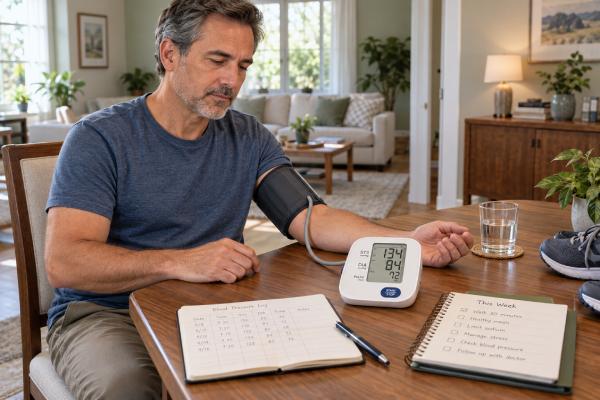
Stage 1 hypertension means your blood pressure is repeatedly in the 130–139 mm Hg systolic range, the 80–89 mm Hg diastolic range, or both. It is not usually an emergency, but it is worth taking seriously because years of higher pressure can damage arteries, the heart, kidneys, brain, and eyes. The key word is repeatedly: one stressful office reading does not establish a diagnosis.
The next steps are to confirm the pattern, estimate your overall cardiovascular risk, and start changes that lower blood pressure. Under the 2025 U.S. guideline, medication is recommended sooner for people with stage 1 hypertension who already have cardiovascular disease, chronic kidney disease, diabetes, or a higher 10-year cardiovascular risk. Lower-risk adults generally begin with lifestyle treatment, then consider medication if blood pressure remains at or above 130/80 mm Hg after about three to six months. Most people should aim for a sustained blood pressure below 130/80 mm Hg, with treatment individualized for tolerance, age, and other conditions.
Table of Contents
- What Stage 1 Hypertension Means
- Confirm the Reading Before You Act
- Why Stage 1 Hypertension Matters
- What to Do First: Lifestyle Changes That Work
- When Medication Is Needed
- Tests, Monitoring, and Follow-Up
- When to Seek Urgent Care
What Stage 1 Hypertension Means
In current U.S. guidance, blood pressure categories for adults are based on the higher category reached by either number:
| Category | Systolic | Diastolic |
|---|---|---|
| Normal | Less than 120 mm Hg | Less than 80 mm Hg |
| Elevated | 120–129 mm Hg | Less than 80 mm Hg |
| Stage 1 hypertension | 130–139 mm Hg | 80–89 mm Hg |
| Stage 2 hypertension | 140 mm Hg or higher | 90 mm Hg or higher |
You do not need both numbers to be high. A reading of 134/76 mm Hg falls into stage 1 because the systolic number is 130–139. A reading of 122/84 mm Hg also falls into stage 1 because the diastolic number is 80–89.
The label is different in some international guidelines. For example, the 2024 European Society of Cardiology guideline uses the term “elevated blood pressure” for some values that the U.S. guideline calls stage 1 hypertension. That difference is mostly about classification. Both approaches recognize that cardiovascular risk rises progressively as blood pressure rises and that overall risk should influence treatment decisions.
If you are trying to understand what your numbers mean in context, a broader guide to normal blood pressure readings can help separate category labels from the effects of age and health history.
Confirm the Reading Before You Act
A diagnosis should be based on a pattern of properly measured blood pressure, not one isolated reading. Blood pressure changes from minute to minute with stress, pain, caffeine, exercise, conversation, temperature, bladder fullness, and even how you are sitting.
Measure correctly at home
A validated upper-arm monitor is usually the best home choice. Before measuring:
- Avoid caffeine, nicotine, and exercise for about 30 minutes.
- Empty your bladder.
- Sit quietly for at least five minutes.
- Keep your back supported and both feet flat on the floor.
- Rest your arm on a surface so the cuff is at heart level.
- Use the correct cuff size on bare skin.
- Do not talk, text, or watch something stressful during the reading.
For a useful baseline, many clinicians ask for two readings about one minute apart in the morning and evening for several days, then review the average. A consistent home blood pressure monitoring schedule reduces the chance that one unusual number drives the decision.
Watch for white coat and masked hypertension
Some people have high readings in a clinic but normal readings at home. This is called white coat hypertension. Others have normal clinic readings but high readings outside the office, called masked hypertension. Both patterns matter because they can change diagnosis and treatment.
When the picture remains unclear, 24-hour ambulatory blood pressure monitoring can measure daytime and nighttime pressure while you follow your usual routine.
Bring your home monitor to an appointment at least once if possible. Comparing it with the clinic device helps verify that the machine and cuff are working properly.
Common measurement mistakes that can add points
Small technique errors can move a reading enough to change its category. A cuff that is too small tends to read high. Crossing your legs, letting your arm hang below heart level, talking during the measurement, or checking immediately after climbing stairs can also push the number upward. Measuring over a thick sleeve is another avoidable source of error.
Try not to react to every reading by measuring again and again. Repeated checking can increase anxiety and produce a string of numbers that are difficult to interpret. A planned schedule produces better information. If one reading is unexpectedly high, wait quietly for several minutes, repeat it once or twice, and then return to your usual schedule unless the number is extremely high or you have concerning symptoms.
Why Stage 1 Hypertension Matters
Stage 1 hypertension often causes no symptoms. That is exactly why it can be easy to ignore. The concern is cumulative exposure: arteries and organs experience higher pressure day after day, often for years.
Large observational studies show that people with blood pressure in the stage 1 range have higher long-term rates of heart attack, stroke, heart failure, kidney disease, and cardiovascular death than people with lower blood pressure. The absolute risk varies widely, however. A 32-year-old nonsmoker with no diabetes and a reading of 132/82 has a different short-term risk from a 68-year-old with kidney disease and the same reading.
That is why the 2025 U.S. guideline uses the PREVENT cardiovascular risk equations rather than treating every stage 1 reading identically. PREVENT estimates 10-year cardiovascular risk using factors such as age, sex, cholesterol, blood pressure, diabetes, kidney function, and smoking status. For adults with stage 1 hypertension, a 10-year total cardiovascular disease risk of 7.5% or higher is one trigger for starting medication along with lifestyle treatment.
Medication is also recommended at stage 1 for people who already have clinical cardiovascular disease, chronic kidney disease, or diabetes, because their baseline risk is higher even without a calculator.
For lower-risk adults, the new approach is still active rather than passive. If blood pressure remains at or above 130/80 mm Hg after roughly three to six months of lifestyle changes, medication becomes reasonable even when 10-year risk is below 7.5%.
Risk is not just about the next 10 years
Young adults often have a low 10-year risk because age weighs heavily in prediction models. But persistent high blood pressure can still increase lifetime risk. A 2024 modeling study projected meaningful population-level reductions in cardiovascular events if lower-risk U.S. adults with stage 1 hypertension successfully adopted nonpharmacologic treatment.
So “low risk” should not be interpreted as “no need to act.” It usually means there is time to focus intensively on lifestyle, confirm the diagnosis, and reassess rather than immediately starting medication.
What to Do First: Lifestyle Changes That Work
For stage 1 hypertension, the best first moves are the same behaviors that lower cardiovascular risk overall. You do not need to change everything overnight. Choose the factors most relevant to you and make them measurable.
Reduce excess sodium
Sodium reduction can lower blood pressure, especially in people who are salt sensitive. The biggest sources are often restaurant food, packaged meals, breads, processed meats, sauces, soups, snacks, and cheese rather than the salt shaker alone.
If your current intake is high, even a moderate reduction may help. Compare labels, choose lower-sodium versions of foods you eat often, and cook more meals from basic ingredients. A focused guide to sodium and high blood pressure can help identify the highest-impact sources.
Follow a DASH-style eating pattern
The Dietary Approaches to Stop Hypertension pattern is rich in vegetables, fruit, whole grains, beans, nuts, seeds, and lower-fat dairy, with less saturated fat and highly processed food. It naturally increases potassium, magnesium, fiber, and other nutrients associated with healthier blood pressure.
The DASH diet for high blood pressure is more effective when combined with lower sodium intake than when either strategy is used alone.
Move most days of the week
Regular aerobic exercise lowers resting blood pressure and improves vascular function, fitness, insulin sensitivity, and weight control. A realistic target is at least 150 minutes per week of moderate-intensity activity, such as brisk walking, cycling, or swimming, plus strength training on two or more days if appropriate for you.
You can start much smaller. Ten-minute walks after meals, a daily step goal, or short cycling sessions can build consistency. A 2024 meta-analysis of randomized trials found that structured physical activity interventions produce meaningful blood-pressure reductions across diverse populations.
For people who have been sedentary, progression matters more than intensity at the beginning. Add five to ten minutes at a time, and aim to finish most moderate sessions able to speak in short sentences. If you have chest pain with activity, unexplained fainting, severe breathlessness, or known heart disease, ask your clinician what intensity is appropriate before starting vigorous exercise.
Lose weight if excess body weight is contributing
Blood pressure often improves with modest weight loss. There is no universal amount required. Even a 5% to 10% reduction in body weight can improve several cardiovascular risk factors in people with overweight or obesity.
Focus on habits that can last: adequate protein and fiber, minimally processed foods, appropriate portions, regular activity, and enough sleep. Extreme diets are rarely necessary.
Limit alcohol and avoid tobacco
Alcohol can raise blood pressure, particularly at higher intake. If you drink, reducing the amount or having alcohol-free days can make a measurable difference. Tobacco and nicotine products acutely increase heart rate and blood pressure and substantially increase cardiovascular risk, even when resting blood pressure is only mildly elevated.
Protect sleep
Chronic short sleep and untreated sleep apnea can make blood pressure harder to control. Loud snoring, witnessed pauses in breathing, morning headaches, and daytime sleepiness are reasons to discuss sleep apnea testing with a clinician.
When Medication Is Needed
Whether stage 1 hypertension needs medication depends on confirmed blood pressure plus overall cardiovascular risk.
Under the 2025 U.S. guideline, medication plus lifestyle treatment is recommended for stage 1 hypertension when you have any of the following:
- Known cardiovascular disease, such as coronary disease or prior stroke
- Chronic kidney disease
- Diabetes
- Estimated 10-year total cardiovascular disease risk of 7.5% or higher using PREVENT
For adults with stage 1 hypertension and lower 10-year risk, lifestyle therapy is generally tried first. If blood pressure is still at or above 130/80 mm Hg after about three to six months, medication is considered reasonable.
What medicines are commonly used?
First-line blood pressure drugs include:
- Thiazide-type diuretics
- ACE inhibitors
- Angiotensin receptor blockers, or ARBs
- Calcium channel blockers
The best choice depends on age, kidney function, potassium level, pregnancy potential, diabetes, other medications, side-effect history, and related conditions. Some people need one drug; others need more than one.
Do not stop a prescribed blood pressure medicine just because your home readings improve. Good readings may mean the treatment is working. Changes in dose should be discussed with the prescribing clinician.
What is the target?
For most adults, the 2025 U.S. guideline recommends a treatment goal below 130/80 mm Hg, while recognizing that targets need to be individualized. Frailty, dizziness, falls, orthostatic symptoms, pregnancy, and certain medical conditions may change what is safe and realistic.
Tests, Monitoring, and Follow-Up
Once hypertension is confirmed, the goal is not only to lower the number but also to look for causes, related risk factors, and signs of organ stress.
A typical evaluation may include:
- Medical and family history
- Medication and supplement review
- Smoking, alcohol, diet, exercise, and sleep history
- Blood tests for electrolytes, kidney function, glucose or A1C, and cholesterol
- Urinalysis or urine albumin testing when indicated
- Electrocardiogram in selected patients
Your clinician may investigate secondary causes when hypertension begins unusually young, becomes severe suddenly, resists several medicines, or is accompanied by clues such as low potassium, kidney abnormalities, episodic headaches and palpitations, or symptoms of sleep apnea.
Review medicines and supplements that can raise blood pressure
Common examples include NSAID pain relievers, decongestants containing pseudoephedrine, stimulant medications, some hormonal therapies, corticosteroids, certain antidepressants, licorice products, and some weight-loss or pre-workout supplements.
Do not stop a necessary prescription on your own. Instead, bring a complete list to your appointment and ask whether any item could be contributing.
Track trends, not individual spikes
Write down your readings or sync them from a validated monitor. Include the date, time, and any unusual circumstance such as illness, poor sleep, pain, or missed medication. A week of consistent data is much more useful than repeated checking throughout one anxious afternoon.
After starting or changing medication, follow-up is often sooner so your clinician can assess response, side effects, kidney function, or electrolytes when needed. Once blood pressure is stable, visits may become less frequent.
A practical first-month plan
If you have just discovered stage 1 readings, a simple first month can make the situation much clearer. During week one, confirm your home technique and record morning and evening readings on several days. During week two, identify the two largest lifestyle opportunities, such as restaurant sodium and inactivity, rather than trying to overhaul everything. During weeks three and four, keep the changes consistent and continue a structured blood-pressure log.
At the end of the month, look at the average rather than the best or worst day. Bring the log, your medication and supplement list, and any family history of early heart disease or stroke to your appointment. If your average remains in the stage 1 range, the next decision should be based on your overall cardiovascular risk and how much progress is realistic over the next several months. This approach turns a vague warning into a measurable plan.
When to Seek Urgent Care
Stage 1 hypertension by itself is not an emergency. A reading such as 134/86 mm Hg does not require urgent treatment if you feel well.
Seek emergency care for very high blood pressure accompanied by symptoms suggesting acute organ injury, such as:
- Chest pain or pressure
- Severe shortness of breath
- New weakness, numbness, facial droop, or trouble speaking
- New confusion, fainting, or seizure
- Sudden severe headache with neurologic symptoms
- Sudden vision loss
If a home reading is extremely high, sit quietly and repeat it using proper technique. Persistent readings around 180/120 mm Hg or higher need prompt medical guidance, and emergency symptoms require immediate care regardless of the exact number.
For most people with stage 1 hypertension, however, the path forward is steady rather than dramatic: confirm the diagnosis, improve the highest-impact habits, understand your cardiovascular risk, and reassess on a defined timeline. Early action is valuable precisely because the numbers are still in a range where modest, sustainable changes can make a meaningful difference.
References
- 2025 AHA/ACC/AANP/AAPA/ABC/ACCP/ACPM/AGS/AMA/ASPC/NMA/PCNA/SGIM Guideline for the Prevention, Detection, Evaluation and Management of High Blood Pressure in Adults: A Report of the American College of Cardiology/American Heart Association Joint Committee on Clinical Practice Guidelines 2025 (Guideline)
- 2024 ESC Guidelines for the management of elevated blood pressure and hypertension 2024 (Guideline)
- Projected Impact of Nonpharmacologic Management of Stage 1 Hypertension Among Lower-Risk US Adults 2024 (Study)
- Implementing the 2025 Guideline for the Prevention, Detection, Evaluation, and Management of High Blood Pressure in Adults: Leveraging Evidence to Push the Boundaries of Clinical Care 2025 (Review)
- The effect of physical activity intervention on blood pressure in 18 low and middle-income countries: a systematic review and meta-analysis of randomized controlled trials 2024 (Systematic Review)
Disclaimer
This article is for general education and does not diagnose or treat hypertension. Blood pressure targets and medication decisions should be individualized with a qualified healthcare professional, especially if you have cardiovascular disease, kidney disease, diabetes, pregnancy, dizziness, or very high readings. Call emergency services for severe symptoms such as chest pain, major breathing difficulty, or signs of stroke.





