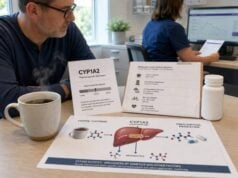
A statin pharmacogenetic test examines inherited variants that can change how the body transports or metabolizes cholesterol-lowering medicines. The most clinically established finding is reduced SLCO1B1 function, which can increase blood exposure to several statins and raise the likelihood of statin-associated muscle symptoms. Broader reports may also include ABCG2, which is especially relevant to rosuvastatin exposure, and CYP2C9, which can affect fluvastatin metabolism. Results are often translated into function categories and medication-specific recommendations rather than a simple positive or negative answer. Testing cannot prove that existing muscle pain was caused by a statin, and it does not determine whether treatment is necessary. Its purpose is to help a clinician choose a statin and dose that can achieve the required LDL cholesterol reduction while limiting avoidable adverse effects. The result is most useful when combined with the person’s cardiovascular risk, treatment history, kidney and liver function, interacting medicines, and symptom pattern.
- Most actionable gene: SLCO1B1 has the strongest evidence, particularly for simvastatin-associated muscle-risk.
- Other useful findings: ABCG2 can guide rosuvastatin dosing, while CYP2C9 can guide fluvastatin dosing.
- What results predict: Genotype can alter expected drug exposure; it does not predict muscle pain with certainty.
- What testing should accomplish: Support a tolerable, effective lipid-lowering plan rather than discourage statin treatment.
- What still matters: Statin choice, dose, interactions, age, medical conditions, exercise, and prior symptoms remain essential.
Table of Contents
- What a Statin Pharmacogenetic Test Can Answer
- Genes That Change Statin Exposure
- When Testing May Be Useful
- What Happens Before and During Testing
- How to Read a Statin PGx Report
- Matching Genetic Results to Individual Statins
- Evaluating Muscle Pain Safely
- Benefits, Limitations, and Practical Decisions
What a Statin Pharmacogenetic Test Can Answer
Statins lower LDL cholesterol by reducing cholesterol synthesis in the liver. They are used to prevent heart attack, ischemic stroke, and other complications of atherosclerotic cardiovascular disease. To work safely, each statin must reach the liver in an appropriate amount and then be transported, metabolized, and eliminated through pathways that vary from drug to drug.
Pharmacogenetic testing looks for inherited DNA differences in those pathways. The test can help answer questions such as:
- Is this person expected to have higher-than-usual exposure to a particular statin?
- Does a proposed dose carry additional genetically influenced muscle-risk?
- Would another statin provide similar LDL lowering through a less affected pathway?
- Could a previous intolerance history be managed with a more tailored selection?
- Does an existing panel result need to be considered before prescribing?
The test cannot answer whether a person needs a statin. That decision depends on factors such as existing cardiovascular disease, LDL level, diabetes, familial hypercholesterolemia, age, smoking, blood pressure, and estimated short- and long-term risk. Genetic testing also cannot measure whether a statin is working. A lipid panel remains necessary after treatment begins.
Nor is the test a definitive “statin intolerance” test. Muscle symptoms can occur for many reasons, and many people with a higher-risk genotype tolerate statins. Conversely, people without an identified risk variant can develop symptoms. The result changes probability; it does not declare an outcome.
The most useful reports connect a specific gene result to a specific drug. A broad warning such as “increased statin risk” is incomplete because simvastatin, atorvastatin, rosuvastatin, pravastatin, pitavastatin, lovastatin, and fluvastatin do not rely on identical transport and metabolic pathways. The required intensity of LDL reduction also differs among patients. An acceptable low dose for one person may be inadequate for another with established coronary disease.
A pharmacogenetic test therefore informs the route to treatment, not the need for treatment itself. Its success is measured by whether the patient can stay on an effective regimen with fewer avoidable problems.
Genes That Change Statin Exposure
Current clinical guidance focuses primarily on three genes: SLCO1B1, ABCG2, and CYP2C9. They affect different steps in statin disposition.
SLCO1B1 and liver uptake
SLCO1B1 encodes the OATP1B1 transporter on liver cells. OATP1B1 moves statins from the bloodstream into the liver, where they exert their cholesterol-lowering effect and undergo further processing. Reduced transporter function can leave more drug in the circulation, increasing systemic exposure and the amount reaching skeletal muscle.
The best-known variant is c.521T>C, or rs4149056. It is included in reduced-function alleles such as SLCO1B1*5 and *15. Reports may translate the two inherited alleles into normal, decreased, or poor function. The clearest clinical association is with simvastatin, but SLCO1B1 function can influence exposure to multiple statins.
ABCG2 and drug efflux
ABCG2 encodes the breast cancer resistance protein, or BCRP, an efflux transporter found in the intestine, liver, and other tissues. It helps move certain medicines out of cells. The commonly tested ABCG2 c.421C>A variant, rs2231142, can reduce transporter activity. Reduced function increases rosuvastatin exposure and may require a lower starting or maximum dose in some settings.
ABCG2 results are not usually used to adjust every statin. Their strongest actionable role in current statin guidance is rosuvastatin. The result may be reported as normal, decreased, or poor function, although wording varies by laboratory.
CYP2C9 and fluvastatin metabolism
CYP2C9 encodes a liver enzyme that metabolizes many medicines. Fluvastatin depends substantially on CYP2C9. Reduced-function alleles, especially *2 and *3 in many tested populations, can slow metabolism, increase exposure, and raise the risk of adverse effects at standard doses.
CYP2C9 phenotypes commonly include normal, intermediate, and poor metabolizer. These categories are relevant to fluvastatin but should not be applied indiscriminately to other statins. For example, simvastatin is more strongly affected by SLCO1B1 and CYP3A-mediated interactions than by CYP2C9 genotype.
Other genes are sometimes included on commercial panels, including CYP3A4, CYP3A5, HMGCR, APOE, ABCB1, and genes proposed to influence muscle effects or LDL response. Some associations are biologically plausible or supported by research, but current prescribing guidance does not treat all of them as clinically actionable. A longer gene list does not necessarily produce a better medication decision.
When Testing May Be Useful
Testing is not universally required before starting a statin. It becomes more valuable when the result is likely to alter a choice that matters.
One common situation is a history of muscle symptoms that interrupted therapy. A patient may have stopped simvastatin, tried another statin briefly, and become reluctant to restart. Testing can help identify whether reduced SLCO1B1 function makes certain regimens less attractive and can support a structured alternative rather than repeated unsupervised trials.
Testing may also be considered when:
- a high-exposure statin regimen is being considered;
- several medicines create interaction concerns;
- a patient has multiple clinical risk factors for muscle toxicity;
- a preemptive panel result already exists in the electronic record;
- a transplant, cardiology, lipid, or primary-care program uses genotype-guided prescribing;
- previous side effects threaten long-term adherence; or
- the patient and clinician are choosing among similarly effective statin options.
The value is lower if a patient has tolerated the current regimen for a long time and is meeting the LDL goal. A higher-risk genotype discovered later does not necessarily justify changing a successful treatment. Duration of tolerance, dose, symptoms, and current interactions all influence the decision.
Testing is also unlikely to resolve acute severe muscle symptoms. Urgent clinical assessment, medication review, creatine kinase measurement, kidney evaluation, and treatment should not wait for DNA results. Pharmacogenetics is a planning tool, not an emergency test.
Patients with a strong indication for intensive LDL lowering should not be left untreated while seeking a perfect genetic match. A clinician can select a reasonable statin based on known clinical factors, then adjust when the result arrives. Alternatives and add-on therapies can help reach LDL targets when a genotype-guided statin dose alone is insufficient.
The decision to test should include what will happen afterward. A result has little value if no one interprets it, if the prescriber never sees it, or if it is not connected to the medication list. Before ordering, identify who will review the report, how recommendations will be documented, and how follow-up lipids and symptoms will be assessed.
What Happens Before and During Testing
Before ordering a panel, the clinician should define the clinical question. Is the aim to select a first statin, investigate previous intolerance, evaluate a proposed simvastatin prescription, or use an existing panel more effectively? That question determines whether a targeted SLCO1B1 assay or a broader test is more appropriate.
A useful pretest review includes:
- the names, doses, and dates of prior statins;
- the nature and timing of any symptoms;
- whether symptoms improved after stopping and returned after restarting;
- creatine kinase or other laboratory findings;
- current kidney, liver, and thyroid status;
- all prescriptions, over-the-counter medicines, and supplements;
- the LDL goal and intensity of lowering required; and
- family or personal history of muscle disease.
Testing usually uses blood, saliva, or a cheek swab. The sample is sent to a laboratory that performs targeted genotyping, an array, or sequencing. A targeted assay may examine one common variant, while a panel can identify multiple variants and genes. The laboratory then assigns alleles and predicted phenotypes.
Turnaround can range from days to weeks. DNA generally remains stable throughout life, so retesting is not routinely needed. Interpretation, however, may evolve. Allele definitions can be revised, and new guidelines may alter how a stored genotype is translated into a medication recommendation.
Patients should ask which variants the assay covers. A report stating that no decreased-function variant was detected does not mean every possible variant was excluded. Rare variants, structural changes, and ancestry-specific alleles may not be included. Sequencing can broaden detection but may also reveal variants whose function is uncertain.
The report should be stored with enough detail to be reusable. The original genotype or diplotype is more durable than a single colored category such as green, yellow, or red. Color systems are proprietary and may bundle different levels of evidence. Future clinicians need the gene, allele calls, phenotype, test method, and date of interpretation.
Consumer raw data require special caution. A genotype from an ancestry service may not have been generated or interpreted for clinical prescribing. Confirmatory testing may be appropriate when the result would materially change treatment. A clinician should not infer a full star-allele diplotype from one isolated DNA variant result without knowing the assay’s quality and coverage.
How to Read a Statin PGx Report
Statin pharmacogenetic reports often contain four layers of information: the DNA finding, the assigned allele pair, the predicted function, and the drug recommendation. Reading them in that order reduces confusion.
| Report layer | Example | Question to ask |
|---|---|---|
| Variant or genotype | SLCO1B1 c.521T>C, TC | Which exact DNA changes were detected? |
| Diplotype | Two named star alleles | Were enough variants tested to assign these alleles confidently? |
| Phenotype | Decreased OATP1B1 function | How is transporter or enzyme activity expected to differ? |
| Drug guidance | Use a lower-risk simvastatin regimen or choose an alternative | Does this recommendation apply to the specific statin and dose? |
For SLCO1B1, normal function suggests usual genetically predicted transporter activity. Decreased function generally means one or a combination of alleles lowers activity. Poor function indicates a greater reduction. These categories describe expected transport, not the overall health of the liver.
For ABCG2, decreased or poor function may increase rosuvastatin exposure. For CYP2C9, intermediate or poor metabolizer status can increase fluvastatin exposure. A report may list several genes, but only the gene–drug pair relevant to the chosen statin should drive the recommendation.
Some reports use terms such as “use with caution,” “consider alternative,” or “dose adjustment recommended.” Those phrases are not interchangeable. Review the evidence level and source guideline. A recommendation supported by a current consensus guideline carries more weight than a preliminary association from a small study.
A “normal” panel does not rule out statin-associated muscle symptoms. The test covers only known variants and pathways. Clinical risk can remain elevated because of dose, an interacting drug, kidney impairment, hypothyroidism, frailty, acute illness, or intense physical activity.
An “increased-risk” result likewise does not mean statins are contraindicated. The finding can often be managed by selecting a different statin, avoiding a high dose, correcting interactions, or combining a tolerated statin dose with a non-statin medicine. The result is a decision aid, not a warning to avoid an entire drug class.
Variant frequencies differ among ancestry groups, and some panels perform better in populations that were well represented in the studies used to define alleles. Laboratories should not use race as a substitute for genotype, but they should be transparent about coverage and uncertainty. An indeterminate result may require expert review rather than an improvised medication change.
Matching Genetic Results to Individual Statins
The practical meaning of a result depends on the statin under consideration. Current guidance provides the strongest recommendations for SLCO1B1 across several statins, ABCG2 with rosuvastatin, and CYP2C9 with fluvastatin.
Simvastatin
Simvastatin has the clearest association between reduced SLCO1B1 function, higher systemic exposure, and muscle toxicity. When function is decreased or poor, clinicians often favor a lower-risk dose or another statin. The concern becomes greater as dose and interacting-drug exposure rise. Poor-function patients are generally not ideal candidates for a high-exposure simvastatin regimen.
Atorvastatin
Reduced SLCO1B1 function can increase atorvastatin exposure, but the effect and recommendation differ from simvastatin. Dose, CYP3A interactions, age, and other clinical factors are important. A clinician may use a lower starting dose, select another statin, or monitor more closely when genotype and clinical risk point in the same direction.
Rosuvastatin
Rosuvastatin is affected by both SLCO1B1 and ABCG2 transport. Reduced function in either pathway can increase exposure. When both results are available, they should be considered together. Recommendations may limit dose or favor careful titration in people with substantially increased predicted exposure. Kidney function and ancestry-associated prescribing considerations also remain relevant.
Fluvastatin
Fluvastatin is the principal statin for which CYP2C9 genotype guides therapy. Intermediate and poor metabolizers may have increased exposure. The recommendation can involve a lower dose or an alternative statin, particularly when reduced metabolism is pronounced or additional muscle-risk factors are present.
Pravastatin, pitavastatin, and lovastatin
SLCO1B1 can influence exposure to these agents, but the magnitude and recommended response vary. Pravastatin is often considered when avoiding CYP-mediated interactions, though transporter effects and clinical factors still matter. Pitavastatin may be an option in some patients but is not genetically neutral. Lovastatin shares some similarities with simvastatin and is also sensitive to interaction-related increases in exposure.
A genotype-guided switch should preserve the treatment goal. Statin doses are not milligram-for-milligram equivalent. Changing from one drug to another requires matching expected LDL-lowering intensity, checking interactions, and repeating a lipid panel. If the tolerated statin dose cannot achieve the target, a clinician may add ezetimibe, a PCSK9-directed therapy, bempedoic acid, or another appropriate agent based on the patient’s condition and local guidance.
The best regimen is one the patient can take consistently and that produces adequate LDL reduction. Pharmacogenetics can narrow the choices, but measured response completes the decision.
Evaluating Muscle Pain Safely
Muscle symptoms during statin therapy range from mild aching to rare, life-threatening rhabdomyolysis. A careful evaluation protects patients from both unnecessary statin withdrawal and missed muscle injury.
The clinician will usually ask when symptoms began, which muscles are affected, whether symptoms are on both sides, whether weakness is present, and whether the pattern changed after the statin was stopped or restarted. Recent exercise, injury, infection, surgery, dehydration, and new medicines are important clues.
Possible laboratory tests include creatine kinase, kidney function, thyroid-stimulating hormone, liver enzymes, and urine testing. The selection depends on severity and context. Many patients with statin-associated aches have a normal creatine kinase level, so a normal result does not prove that the symptoms are unrelated. Conversely, a modest creatine kinase rise after strenuous exercise may not indicate statin toxicity.
Common non-genetic risk factors include:
- high statin dose;
- interacting medicines that raise statin concentration;
- gemfibrozil or other problematic combinations;
- advanced age or frailty;
- kidney or liver impairment;
- untreated hypothyroidism;
- low body mass;
- heavy unaccustomed exercise;
- prior muscle disease; and
- acute systemic illness.
A medication interaction may outweigh genotype. Strong inhibitors can sharply increase exposure to simvastatin or lovastatin, and some combinations are contraindicated. Other drugs impose dose limits. Because a medicine list changes over time, a previously tolerated statin can become risky when a new prescription is added.
Severe weakness, intense pain, dark urine, reduced urine output, fever, confusion, or rapid worsening requires urgent medical care. These features may indicate rhabdomyolysis or another serious disorder. Do not wait for pharmacogenetic testing before seeking assessment.
Persistent weakness and high creatine kinase after statin withdrawal can rarely indicate immune-mediated necrotizing myopathy. This condition is not diagnosed by SLCO1B1, ABCG2, or CYP2C9 testing and usually requires specialist evaluation.
For less severe symptoms, the plan may involve a temporary pause, treatment of reversible causes, a different statin, a lower dose, or a monitored rechallenge. Patients should contact the prescriber rather than repeatedly stopping and restarting on their own. Clear documentation of the symptom pattern and the successful alternative helps prevent future confusion.
Benefits, Limitations, and Practical Decisions
The main potential benefit of statin pharmacogenetic testing is more informed selection. It can identify a predictable reason to avoid a particular high-exposure regimen, reduce trial and error, support confidence after a prior adverse experience, and make an existing panel result clinically useful. When integrated into prescribing software, it can alert clinicians at the moment a relevant statin is ordered.
However, evidence that testing improves long-term outcomes in every setting remains incomplete. Clinical studies show that genotype information can influence prescribing, but results for muscle symptoms, adherence, LDL control, and routine population-wide testing are not uniformly positive. Publication bias and differences in how muscle symptoms are defined complicate estimates of effect.
Panels also differ substantially. One laboratory may test only SLCO1B1 c.521T>C, while another assigns multiple star alleles and includes ABCG2 and CYP2C9. A third may add many exploratory genes. Compare the assay’s coverage, analytical validation, phenotype translation, and cited guidance rather than the number of genes advertised.
Cost and coverage vary. A targeted assay may be less expensive than a broad panel, but a broader result can have future value for other medications. Insurance may require a specific indication or may not cover testing. Patients should ask about the full laboratory charge, interpretation fee, billing policy, and whether confirmatory testing could be needed.
Privacy is another consideration. Pharmacogenetic results are inherited and may have implications beyond a single prescription. Consent should explain sample storage, research use, data sharing, and access. Genetic privacy protections differ by jurisdiction and may not apply equally to health, life, disability, or long-term-care insurance.
A practical post-result conversation should cover five points:
- The treatment goal: What LDL level or percentage reduction is needed?
- The actionable pair: Which gene result applies to the chosen statin?
- The complete risk profile: Are there interactions, illnesses, or prior symptoms that change the plan?
- The selected regimen: What drug, dose, and alternatives are reasonable?
- The follow-up: When will lipids, symptoms, adherence, and relevant laboratory tests be reviewed?
Do not treat the report as static. Preserve the genotype and revisit interpretation if guidelines change or a different statin is considered. A result generated today may support multiple future decisions, but only when the original details remain accessible.
Most importantly, pharmacogenetic risk should not be confused with cardiovascular benefit. Statins prevent serious events in appropriately selected patients. The purpose of testing is to make that protection easier to deliver safely. A carefully interpreted result can help replace an unsuitable statin or dose with a better one, while clinical monitoring confirms that the final regimen is both tolerated and effective.
References
- The Clinical Pharmacogenetics Implementation Consortium Guideline for SLCO1B1, ABCG2, and CYP2C9 Genotypes and Statin-Associated Musculoskeletal Symptoms (2022, Clinical Guideline)
- Real-World Pharmacogenetics of Statin Intolerance: Effects of SLCO1B1, ABCG2, and CYP2C9 Variants (2023, Observational Study)
- Dutch Pharmacogenetics Working Group Guideline for the Gene–Drug Interaction Between SLCO1B1 and Statins and CYP2C9 and Sulfonylureas (2025, Clinical Guideline)
- Simvastatin Therapy and SLCO1B1 Genotype (2024, Medical Genetics Summary)
- Retrospective Evaluation of the Impact of SLCO1B1 Variation on Statin Effectiveness, Statin-Associated Muscle Symptoms, and Adherence (2025, Clinical Study)
- Table of Pharmacogenetic Associations (2022, Regulatory Resource)
Disclaimer
This article is for general education and does not replace individualized medical advice, diagnosis, or treatment. Do not stop, restart, switch, or change the dose of a statin based solely on a pharmacogenetic report; a clinician should integrate the result with cardiovascular risk, LDL goals, medical history, laboratory findings, and drug interactions. Severe weakness, dark urine, or rapidly worsening muscle symptoms require prompt medical assessment.