


Pharmacogenetic Tests
Home Pharmacogenetic Tests
Pharmacogenetic testing connects inherited gene variants with the way the body absorbs, activates, breaks down, or responds to medicines. This category covers both broad medication-response panels and focused tests used to guide treatment choices, starting doses, safety monitoring, and alternatives when a drug may be ineffective or unusually risky.
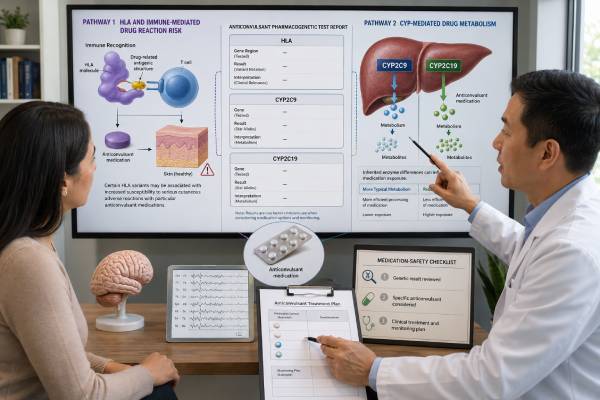
Topics include CYP2D6, CYP2C19, CYP2C9, CYP2B6, CYP3A4, CYP3A5, CYP1A2, NAT2, and other drug-metabolism genes, along with clinically important markers such as DPYD, TPMT, NUDT15, UGT1A1, SLCO1B1, VKORC1, CYP4F2, G6PD, BCHE, RYR1, CACNA1S, IFNL3, and selected HLA variants. Detailed guides explain testing for antidepressants, antipsychotics, opioids, anticonvulsants, statins, warfarin, tacrolimus, thiopurines, fluoropyrimidines, irinotecan, clopidogrel, abacavir, carbamazepine, isoniazid, and other commonly prescribed therapies.
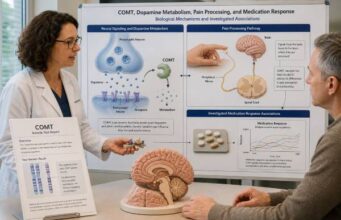
Each article explains what the test measures, who may benefit, how samples are collected, what metabolizer or risk categories mean, and how results may affect prescribing. The collection also examines serotonin, dopamine, and opioid-response markers—including SLC6A4, HTR2A, COMT, and OPRM1—while distinguishing established clinical guidance from associations with limited prescribing value. Practical sections address test limitations, ancestry-related coverage, drug interactions, laboratory monitoring, severe hypersensitivity or anesthesia risks, and why lifelong genetic results should support rather than replace clinical judgment. Readers can use these guides to prepare informed questions for prescribers, pharmacists, genetic specialists, and anesthesia teams.