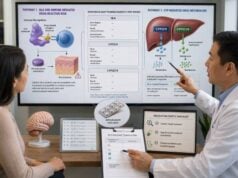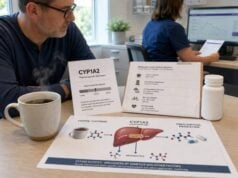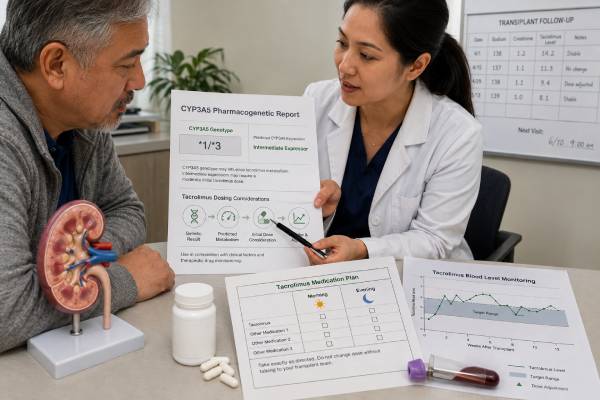
A tacrolimus pharmacogenetic test examines CYP3A5, a gene that strongly influences how quickly many transplant recipients clear tacrolimus. People who make functional CYP3A5 enzyme—called CYP3A5 expressers—usually need a higher starting dose to reach the same blood concentration as nonexpressers. People with two no-function alleles, most commonly CYP3A53/3, generally need a lower dose than expressers because tacrolimus is cleared more slowly. The result is most useful before or at the start of therapy, when it can improve the initial dose estimate and reduce early underexposure. It does not replace tacrolimus trough levels, clinical assessment, or repeated dose adjustment. Tacrolimus has a narrow therapeutic range: concentrations that are too low may permit rejection, while excessive exposure can damage the kidneys and cause neurologic, metabolic, or infectious complications. Genotype is therefore an opening calculation, not a final prescription. Formulation, transplant type, age, ancestry, interacting medicines, organ function, hematocrit, adherence, and time after transplantation all continue to shape the dose.
- Main gene: CYP3A5 predicts whether a patient expresses functional enzyme and tends to clear tacrolimus faster or slower.
- Typical action: CYP3A5 expressers often start at 1.5–2 times the usual starting dose, within clinical dose limits.
- Essential safeguard: Therapeutic drug monitoring remains mandatory regardless of genotype.
- Best timing: Testing is most useful before transplantation or before the first tacrolimus doses.
- Key limitation: A result cannot account for changing interactions, organ function, absorption, adherence, or post-transplant physiology.
Table of Contents
- Why Tacrolimus Dosing Is Difficult
- How CYP3A5 Changes Tacrolimus Clearance
- Who Is Most Likely to Benefit From Testing
- Sample Collection and Test Timing
- Interpreting CYP3A5 Results
- Turning the Result Into a Starting Dose
- Therapeutic Drug Monitoring and Dose Changes
- Limitations, Special Situations, and Next Steps
Why Tacrolimus Dosing Is Difficult
Tacrolimus suppresses T-cell activation and is a central component of immunosuppression after kidney, liver, heart, lung, and other solid-organ transplants. It is also used in some hematopoietic cell transplant regimens. Its effectiveness comes with a difficult dosing problem: the amount required to reach a target concentration varies widely among patients, and that requirement changes over time.
Too little tacrolimus can leave the immune system insufficiently suppressed, increasing the risk of acute rejection and graft injury. Too much can cause nephrotoxicity, tremor, headache, seizures, high blood pressure, high potassium, low magnesium, glucose intolerance or diabetes, and greater vulnerability to infection. Some effects overlap with complications of transplantation itself, making concentration data and clinical context especially important.
Several features create this variability:
- intestinal absorption is incomplete and inconsistent;
- tacrolimus is metabolized by CYP3A enzymes in both the intestine and liver;
- food and formulation affect absorption;
- concentrations change with hematocrit and blood-protein binding;
- kidney and liver function evolve after transplantation;
- corticosteroid tapering can alter drug handling;
- diarrhea and gastrointestinal illness can unexpectedly raise or lower exposure;
- many antifungals, antibiotics, antivirals, seizure medicines, and other drugs interact with CYP3A; and
- adherence and exact dose timing influence measured trough levels.
Traditional starting doses rely heavily on body weight and transplant-center protocols. Those estimates are then corrected through therapeutic drug monitoring. The challenge is that a patient can spend the first days outside the desired range while clinicians wait for enough concentration data to guide changes.
CYP3A5 genotype explains a meaningful portion of early dose variation. Adding it to the starting calculation can reduce a predictable source of under- or overexposure. This is the core value of a pharmacogenetic test for tacrolimus: it improves the first estimate while preserving every later safety check.
How CYP3A5 Changes Tacrolimus Clearance
CYP3A5 encodes an enzyme found mainly in the liver and intestine. Together with CYP3A4, it metabolizes tacrolimus. Whether a person makes functional CYP3A5 enzyme depends strongly on inherited alleles.
The most commonly discussed alleles are:
- CYP3A5*1: A function allele associated with production of active CYP3A5 enzyme.
- CYP3A5*3: A no-function allele caused by altered RNA splicing; it is common in many populations.
- CYP3A5*6 and *7: No-function alleles found more often in people with African ancestry and in some other populations.
A person inherits one allele from each biological parent. Anyone with at least one function allele is generally classified as a CYP3A5 expresser. Expressers metabolize tacrolimus more efficiently and tend to have lower concentration-to-dose ratios. They usually require a larger daily dose to reach the target trough.
People with two no-function alleles are nonexpressers. Their CYP3A5 contribution to tacrolimus clearance is minimal, so standard weight-based doses often produce higher concentrations than in expressers. They usually reach targets with lower doses.
This relationship is pharmacokinetic: genotype affects drug exposure. It does not directly measure immune rejection risk or toxicity. Those clinical outcomes depend on the achieved concentration, variability, duration outside target, coexisting illness, and the full immunosuppressive regimen.
Allele frequencies differ substantially among populations. CYP3A5 expression is more common in many people with sub-Saharan African ancestry than in many people with European ancestry, but ancestry cannot reliably predict an individual result. Testing is preferable to assumptions based on race or appearance. Panels must also include relevant no-function alleles; testing only *3 can misclassify some patients whose ancestry makes *6 or *7 more likely.
Other genetic findings, including CYP3A4*22 and variants in transport or regulatory genes, may add information in selected settings. However, current widely used dosing guidance is centered on CYP3A5. A commercial report that assigns major clinical weight to many exploratory markers should show which recommendations are guideline-supported and which remain investigational.
Who Is Most Likely to Benefit From Testing
CYP3A5 testing has its greatest potential when the result is available before the first tacrolimus dose. Transplant candidates can be tested during evaluation or while on a waiting list. Living-donor procedures offer a predictable window, but rapid testing can also be integrated into deceased-donor workflows if the laboratory and clinical system can return results promptly.
Testing may be particularly useful for:
- kidney transplant recipients beginning immediate-release tacrolimus;
- patients in programs with a validated genotype-guided protocol;
- pediatric recipients, whose dose requirements can vary widely;
- patients from populations in which CYP3A5 expression is common;
- recipients with prior difficulty reaching target concentrations;
- people changing to tacrolimus after another immunosuppressant; and
- patients who already have a CYP3A5 result from a preemptive panel.
Most evidence comes from kidney transplantation, so recommendations are most established there. The biological effect of CYP3A5 exists in other transplant settings, but the strength of dosing evidence, formulations, target ranges, and relevant genotype can differ.
In liver transplantation, a special issue arises: the transplanted liver carries the donor’s genes. The donor liver CYP3A5 genotype can influence hepatic metabolism after transplantation, while the recipient’s intestinal genotype can still influence first-pass metabolism. The relative contribution can change as the graft recovers. A single recipient-only result may therefore be incomplete for liver recipients.
In hematopoietic cell transplantation, recipient and donor genetics may also have different implications depending on which tissue determines the pathway. Tacrolimus protocols and interacting antifungal use differ from solid-organ transplantation, so a transplant pharmacology team should interpret the result.
Testing after tacrolimus has already been stabilized can still explain an unusually high or low dose requirement, but it is less likely to change management because measured concentrations already reveal the patient’s current exposure. Genotype may remain useful if formulation changes, major interactions occur, or future clinicians need to understand why the dose differs from typical practice.
Testing is not an alternative to immediate monitoring in an unstable patient. If concentrations are dangerously high or low, clinicians should act on the measured level, symptoms, timing, and interactions rather than waiting for a genotype.
Sample Collection and Test Timing
CYP3A5 testing usually requires a blood sample, cheek swab, or saliva sample. Because inherited DNA is stable, the sample can be collected before transplantation, during preoperative assessment, or after treatment has begun. The clinical advantage comes from having the result early enough to affect the initial prescription.
A laboratory may perform targeted genotyping for common alleles or include CYP3A5 in a broader pharmacogenetic panel. A useful assay should state:
- which alleles are tested;
- whether *3, *6, and *7 are included;
- the analytical method and limitations;
- the reported diplotype;
- the predicted metabolizer phenotype; and
- the clinical guideline used for translation.
Targeted testing is fast and focused but can miss rare alleles. A result of 1/1 is only as reliable as the panel’s ability to exclude no-function variants relevant to that patient. Some laboratories use sequencing or expanded panels, which improve coverage but can identify variants with uncertain function.
Before testing, the transplant team should decide where the result will appear. A PDF in a scanned-document folder may not be visible when tacrolimus is ordered. Ideally, the genotype and phenotype are stored as structured data and linked to a transplant-specific dosing protocol. The protocol should name the formulation, starting-dose range, maximum dose, trough target, and monitoring schedule.
Turnaround matters. A test returned after several measured troughs may have less impact on the initial dosing period. Some centers use in-house rapid genotyping; others obtain preemptive results weeks before transplantation. When a result is unavailable, clinicians should use the standard protocol and adjust through concentration monitoring rather than delay immunosuppression.
The test normally needs to be performed only once. However, the report should be preserved because phenotype terminology and recommendations may change. The original allele calls are more durable than a simplified “fast” or “slow” label.
Consent should address genetic privacy, data storage, sample retention, and potential secondary use. CYP3A5 is primarily being tested for medication response, not to diagnose a hereditary disease. Even so, it is inherited information, and local privacy rules apply.
Interpreting CYP3A5 Results
A CYP3A5 report usually lists two alleles and assigns one of three phenotypes. The central question is whether at least one function allele is present.
| Common diplotype examples | Phenotype | Expected tacrolimus handling | General starting implication |
|---|---|---|---|
| *1/*1 | Normal metabolizer, CYP3A5 expresser | Faster clearance and lower concentrations per milligram | Higher initial dose is often needed, followed by close monitoring |
| *1/*3, *1/*6, or *1/*7 | Intermediate metabolizer, CYP3A5 expresser | Faster clearance than a nonexpresser | Higher initial dose is often needed, followed by close monitoring |
| Two no-function alleles, such as *3/*3 | Poor metabolizer, CYP3A5 nonexpresser | Slower clearance and higher concentrations per milligram | Use the conventional starting dose, then adjust by measured levels |
| Rare or incompletely characterized allele combination | Indeterminate | Cannot be predicted confidently | Use the standard clinical protocol and seek specialist interpretation |
The word “poor metabolizer” can sound alarming, but it is not a diagnosis of poor liver health. It describes reduced activity of one inherited enzyme pathway. For tacrolimus, nonexpressers generally need less drug to reach the same concentration.
Likewise, “normal metabolizer” does not mean the standard dose is automatically correct. In CYP3A5 terminology, normal metabolizers are expressers who may clear tacrolimus relatively quickly. Without genotype-guided adjustment, they are at greater risk of early subtherapeutic exposure.
Intermediate and normal metabolizers often receive the same broad CPIC recommendation because both express CYP3A5. The exact dose requirement can still differ. A person with one function allele may not clear tacrolimus identically to a person with two, and non-genetic factors may overwhelm that distinction.
Reports may use “extensive metabolizer,” “expresser,” or other older labels. The prescriber should map the report to a current guideline rather than rely on everyday meanings of the words. The genotype itself should be retained in the record.
A result is not “positive” or “negative” in the disease-testing sense. All patients have CYP3A5 alleles. The clinically relevant finding is the predicted enzyme-expression status and its connection to the exact tacrolimus formulation and protocol.
Turning the Result Into a Starting Dose
For a CYP3A5 expresser, CPIC guidance recommends increasing the recommended starting dose by approximately 1.5 to 2 times, while not exceeding 0.3 mg/kg per day, and then using therapeutic drug monitoring to refine the dose. For a nonexpresser, the conventional recommended starting dose is used, again followed by therapeutic drug monitoring.
That recommendation must be applied within the transplant center’s protocol. It is not a stand-alone dose for self-use. The center may use different starting doses based on organ type, induction regimen, age, formulation, route, target trough, kidney or liver function, and interacting medicines.
A simplified example illustrates the concept. Suppose a kidney transplant protocol normally starts immediate-release tacrolimus at a weight-based dose. A patient with 1/3 is an expresser and is expected to clear tacrolimus faster. The team may select a genotype-adjusted higher starting amount within protocol limits. A patient with 3/3 receives the usual starting calculation. Both patients then have trough concentrations checked and doses changed as needed.
Several safeguards are essential:
- Do not exceed the protocol’s maximum dose merely to follow a genetic multiplier.
- Do not apply immediate-release recommendations automatically to extended-release products.
- Account for strong CYP3A inhibitors or inducers before choosing the dose.
- Use actual concentration results as soon as they are available.
- Confirm whether the measured sample was a true trough.
- Consider the entire immunosuppressive regimen and clinical status.
Strong CYP3A inhibitors, such as many azole antifungals and some macrolide antibiotics, can markedly raise tacrolimus exposure. CYP3A inducers can lower it. In some cases, the interaction is so large that it dominates genotype. Grapefruit and certain herbal products can also affect exposure. The transplant team should approve all new prescriptions, supplements, and major dietary products.
Formulation matters because immediate-release and extended-release tacrolimus products differ in absorption and are not interchangeable milligram for milligram without supervision. A genotype-guided protocol must identify the specific product. Switching formulations requires a planned conversion and renewed concentration monitoring.
Genotype-guided starting doses may help patients reach target faster, but clinical trials have not uniformly shown better rejection, graft, or toxicity outcomes. One reason is that therapeutic drug monitoring corrects dosing errors in both genotype-guided and standard-care groups. The most defensible benefit is a better first estimate, not freedom from monitoring.
Therapeutic Drug Monitoring and Dose Changes
Tacrolimus dosing is ultimately guided by measured whole-blood concentrations. Most centers use a pre-dose trough concentration, commonly called C0. The target depends on transplant type, time since transplantation, rejection risk, other immunosuppressants, infection risk, and center policy.
A valid trough is drawn immediately before the next scheduled dose. If blood is collected too early or after the dose, the number may be misleading. Patients should tell the team exactly when the previous dose was taken and whether any doses were missed, delayed, vomited, or doubled.
Early after transplantation, monitoring is frequent because clearance and absorption are changing rapidly. Dose adjustments may be needed after:
- a new antifungal, antibiotic, antiviral, seizure medicine, or blood-pressure medicine;
- diarrhea, vomiting, or reduced oral intake;
- a change in liver function, kidney function, or hematocrit;
- conversion between tacrolimus formulations;
- corticosteroid dose changes;
- hospital admission or acute infection;
- a suspected adherence problem; or
- unexplained neurologic or renal symptoms.
A concentration should never be interpreted alone. A high trough with rising creatinine, tremor, headache, high potassium, or low magnesium may support toxicity. A low trough may reflect rapid metabolism, an inducer, missed doses, timing error, malabsorption, or an insufficient prescription. The response differs depending on the cause.
Within-patient variability also matters. Repeated swings between low and high levels can threaten graft outcomes even when the average appears acceptable. Causes include inconsistent dose timing, food effects, interactions, gastrointestinal illness, and laboratory timing. Genotype is stable and therefore does not explain sudden fluctuations.
Patients can improve monitoring accuracy by taking tacrolimus at consistent times, following the same relationship to food specified by the transplant team, using the exact formulation prescribed, and bringing an updated medicine list to every visit. They should never compensate for a missed dose without instructions.
A CYP3A5 result remains useful in the background. It can explain why one patient consistently needs more or less drug than another and can prevent clinicians from mistaking a high dose requirement in an expresser for nonadherence. But once multiple reliable troughs are available, those measured data carry more immediate weight than the original genetic estimate.
Limitations, Special Situations, and Next Steps
CYP3A5 testing explains only part of tacrolimus variability. CYP3A4 activity, interacting medicines, age, body size, organ function, inflammation, hematocrit, albumin, gastrointestinal function, time after transplant, formulation, and adherence all contribute. Even patients with the same diplotype can require very different doses.
Evidence is also strongest for specific settings. Kidney transplant data dominate the literature. Pediatric, liver, heart, lung, and hematopoietic transplant populations may require different models. In liver recipients, donor and recipient genotypes can both matter. In patients receiving strong azole therapy, interaction-adjusted protocols may be more important than the usual genotype multiplier.
Test quality varies. A panel that examines only *3 may not adequately classify patients carrying *6, *7, or rare alleles. An uncertain allele should not be forced into an expresser or nonexpresser category. Laboratories should provide transparent coverage and use validated genotype-to-phenotype rules.
Cost depends on whether testing is targeted, panel-based, urgent, or performed in-house. Insurance coverage varies by health system and country. The practical value rises when the result is available before dosing, interpreted automatically, and linked to a clinical protocol. A delayed report without decision support may add little beyond ordinary concentration monitoring.
After receiving a result, the transplant team should:
- Verify the allele call and phenotype.
- Confirm that the assay covers alleles relevant to the patient.
- Identify the exact tacrolimus formulation and center protocol.
- Review CYP3A inhibitors, inducers, supplements, and dietary exposures.
- Choose a starting dose within established limits.
- Schedule the first trough and clarify dose timing instructions.
- Adjust promptly using measured concentrations and clinical findings.
- Store the genotype in a searchable, lifelong section of the medical record.
Patients should carry an updated transplant medicine list and contact the transplant team before starting or stopping any drug or supplement. New severe tremor, confusion, seizure, marked reduction in urine, persistent vomiting or diarrhea, fever, or inability to take immunosuppression requires prompt advice.
The central message is straightforward: CYP3A5 testing can improve the starting point, especially for expressers who otherwise risk early underdosing. It cannot safely run the course by itself. The combination of a genetically informed first dose, disciplined therapeutic drug monitoring, interaction management, and transplant-specific clinical judgment provides the most reliable path to stable tacrolimus exposure.
References
- Clinical Pharmacogenetics Implementation Consortium Guidelines for CYP3A5 Genotype and Tacrolimus Dosing (2015, Clinical Guideline)
- A Systematic Review and Meta-Analysis Recite the Efficacy of CYP3A5 Genetic Variant Analysis in Personalizing Tacrolimus Dose Determination in Renal Transplant Patients (2023, Systematic Review)
- Early CYP3A5 Genotype-Based Adjustment of Tacrolimus Dosage Reduces Risk of De Novo Donor-Specific HLA Antibodies and Rejection Among CYP3A5-Expressing Renal Transplant Recipients (2024, Clinical Study)
- Establishing a CYP3A5 Genotype-Guided Tacrolimus Dosing Protocol in Adult Kidney Transplant Recipients (2025, Implementation Study)
- Survey of the Utilization of Genotype-Guided Tacrolimus Dosing in Solid Organ Transplantation (2025, Practice Survey)
- Refining Tacrolimus Dosing Through CYP3A5 Pharmacogenetics in Taiwanese Renal Transplant Recipients (2025, Cohort Study)
Disclaimer
This article is for general education and does not provide an individual tacrolimus dose or replace a transplant team’s instructions. Tacrolimus has a narrow therapeutic range, and genotype-guided dosing must always be followed by therapeutic drug monitoring, interaction review, and clinical assessment. Never change, skip, double, or switch tacrolimus doses or formulations without direct guidance from the transplant team.